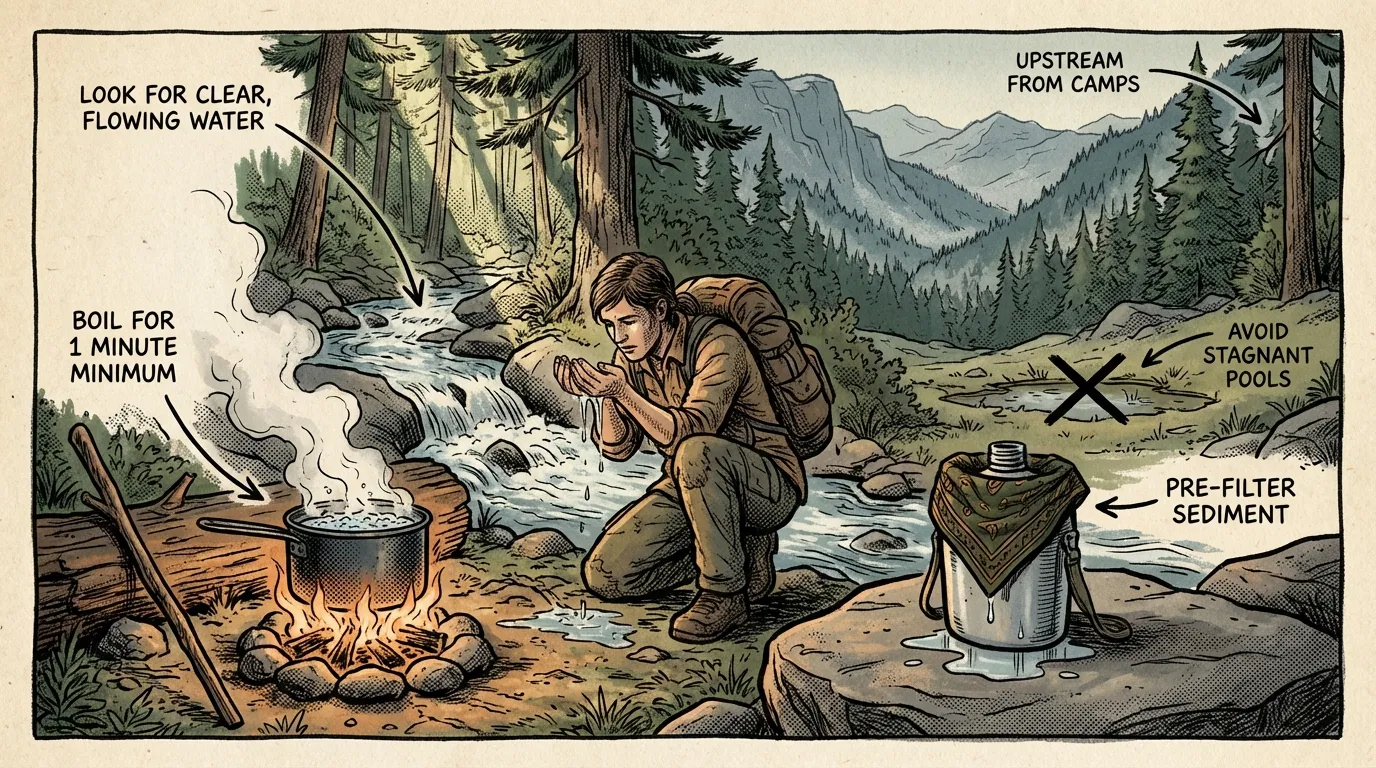
To identify safer drinking water in the wild, choose the cleanest available source—preferably clear, flowing water from a stream, river, or spring—and avoid stagnant water or sources near contamination. Because even clear water can contain pathogens, purify it before drinking by boiling, filtering, using chemical tablets, or other proven treatment methods.
Key Takeaways
- Boil water for at least 1 minute, or 3 minutes at high altitude, to kill pathogens.
- Pre-filter cloudy water through a bandana or coffee filter before applying chemical or UV treatment.
- Choose sources in this priority order: spring, flowing stream, rain, lake or pond.
- Carry at least two purification methods, such as a mechanical filter plus chlorine dioxide tablets.
- Avoid collecting water near carcasses, livestock, farms, mines, or roads to reduce contamination risk.
How to Identify Safe Drinking Water in the Wild: A Practical Guide for New Preppers
Quick answer
- Choose the cleanest available source (spring > flowing stream > rain > lake/pond). 2) Avoid obvious contamination such as animal carcasses, farms, and roads. 3) Pre-filter cloudy water. 4) Purify by boiling, a mechanical filter, chemical disinfectant, or UV. 5) Carry at least two treatment methods and a container.
If you remember one thing: identify safe drinking water and always purify before you drink. “Looks clean” does not equal “is safe.”
Short definition
- Safe drinking water: water that does not contain disease-causing pathogens (bacteria, viruses, protozoa) at harmful levels and has acceptably low levels of harmful chemicals such as heavy metals, pesticides, and nitrates. In practice, “safe” means the water has been treated with a method suited to the likely hazards.
- Turbidity: cloudiness from suspended particles. High turbidity reduces the effectiveness of chemical and UV treatments. Pre-filter cloudy water.
Quick steps to identify safe drinking water
- Prioritize naturally filtered or moving sources.
- Use environmental clues to avoid contamination.
- Pre-filter turbid water.
- Purify by boiling, filtration, chemicals, or UV.
- Carry backups and practice methods before an emergency.
Why this matters
Water sustains life. Dehydration degrades decision making and physical performance quickly. Contaminated water causes gastrointestinal illness that can become dangerous in the field. Knowing how to identify safe drinking water and how to treat it saves lives.
Priority natural sources (best to worst)
Always treat water, even from the best sources. Collect from the best available, then purify.
-
Springs and seeps
- Groundwater receives natural filtration through soil and rock. Collect at the emergence point and avoid surface pools near the spring.
- Springs can still carry pathogens from animals or upstream contamination.
-
Flowing streams and rivers
- Moving water is normally lower risk than stagnant water. Collect from faster sections and upstream of campsites, trails, livestock, or roads.
- Watch for runoff after heavy rain and upstream pollution.
-
Rainwater
- Rain has a low biological load when captured cleanly. Use a clean catchment; avoid roof runoff or dirty collectors.
-
Lakes, ponds, puddles
- These often contain algae, protozoa, and sediment. Only use if you can pre-filter and purify thoroughly.
-
Snow, ice, dew
- Melt snow or ice before drinking to avoid lowering body temperature. Dew yields little water and takes effort.
Field indicators to choose the least risky source
You cannot confirm safety by sight alone, but these clues reduce risk:
- Clarity and movement: clear, flowing water is preferable to still, cloudy water.
- Surroundings: avoid water near carcasses, livestock, farms, mines, roads, or industrial sites.
- Recent weather: heavy rain increases runoff and turbidity. Wait or pre-filter after storms.
- Smell and surface clues: foul odors, algal mats, oily sheens, or dense insect activity are red flags.
- Collect upstream of obvious contamination.
Do not taste water to test safety.
Common contaminants and treatment implications
-
Microbial pathogens (bacteria, viruses, protozoa)
- Mechanical filters rated 0.1 to 0.2 micrometers block most bacteria and protozoa but not all viruses.
- Viruses require smaller-pore filtration, effective chemical disinfectants, or UV treatment.
-
Turbidity and sediment
- Suspended solids can shield microbes from chemical and UV treatment. Pre-filter turbid water with cloth or sediment methods.
-
Chemical contaminants (pesticides, nitrates, heavy metals)
- Boiling and simple biological treatments do not remove most chemicals. Activated carbon, ion-exchange, or distillation are needed.
Field test kits such as turbidity tubes, TDS meters, and chemical strips indicate risk but do not replace laboratory testing for specific contaminants.
Filtration and purification: concise guide
Treat all water even if it looks clean. Combining methods increases protection.
Practical routine:
- Choose the best available source.
- Pre-filter turbid water using a bandana, coffee filter, or improvised sand and gravel settler.
- Purify using one or more methods below.
- Store treated water in a clean container.
Methods and key points:
-
Boiling
- Bring to a rolling boil for at least 1 minute. At high altitude, boil for 3 minutes.
- Boiling kills bacteria, viruses, and protozoa but does not remove chemicals or turbidity.
-
Mechanical filters
- Filters rated 0.1 to 0.2 micrometers remove most bacteria and protozoa. Check filter specifications for virus protection.
- Common types: hollow-fiber, ceramic, and pump filters. Some include activated carbon to reduce taste and some chemical contaminants.
-
Chemical disinfectants
- Chlorine (household bleach), chlorine dioxide, and iodine inactivate many bacteria and viruses. They are less effective against some protozoa and do not remove chemicals.
- Chemical performance drops with turbidity and cold water. Follow product instructions and wait times.
-
UV and solar methods
- UV-C devices and solar disinfection (SODIS) inactivate microbes when water is clear. Pre-filter first. UV does not remove chemicals.
Combine pre-filtering with a mechanical filter and carry a chemical or UV backup for redundancy.
Practical gear checklist
- Clean water containers: collapsible bladders and durable bottles.
- Portable mechanical filter (hollow-fiber or pump); check whether it protects against viruses.
- Chemical treatment such as chlorine dioxide tablets and clear instructions.
- Metal pot and heat source for boiling.
- UV pen purifier or plan for solar disinfection.
- Pre-filter materials: bandana, coffee filter, or cloth.
- Optional tools: turbidity indicator, TDS meter, chemical test strips.
Verify product specifications and certifications before purchase.
Emergency techniques when clean sources are scarce
- Collect rain in clean containers during storms.
- Harvest dew with cloths and wring into a bottle.
- Use a solar still or transpiration bag over non-toxic plants for last-resort water. Yields are low.
- Dig for seepage in dry stream beds, let the water settle, then pre-filter and purify.
- Balance effort and hydration needs. Do not expend energy that increases dehydration risk.
Risks and symptoms of drinking unsafe water
Common symptoms include diarrhea, vomiting, cramps, fever, weakness, and rapid dehydration. In survival contexts, even moderate gastrointestinal illness can become dangerous.
Quick FAQ
-
Can you drink clear stream water without treating it?
- No. Clear is a visual cue only. Always purify when possible.
-
What is the safest natural water source?
- Springs and cleanly collected rain are generally better, but no source is guaranteed safe without treatment.
-
How long should you boil water?
- Boil at least 1 minute. At high altitude, boil 3 minutes.
-
Can I test water quality without specialized equipment?
- You can assess risk by sight, smell, and surroundings, but you cannot confirm microbial or chemical safety without proper testing or reliable purification.
Field formula
Choose the best source, avoid contamination, pre-filter cloudy water, and apply reliable purification. Practice your plan and carry redundancy.
Notes and flagged claims
- Global statistic: “2.2 billion people lack access to safe drinking water” comes from the WHO/UNICEF Joint Monitoring Programme; verify the latest figure for formal citation.
- Expect chemical contamination near agricultural, mining, or industrial areas. Field treatments like boiling usually do not remove chemicals.
- Follow manufacturers’ instructions for tablets and UV devices. Effectiveness and wait times vary.
Further reading and skills to build
- Becoming a Prepper: The Beginner’s Guide to Survival Readiness
- How to Build a Bug Out Bag: Essentials for a Quick Getaway
- Water, Water Everywhere: How to Store H2O Without Losing Your Sanity
Recommended gear categories: portable filters, purification tablets, metal pot, UV pen purifiers, and clean storage containers. Research certification and performance before buying.
The Complete
Prepper's Reference.
149 articles synthesized into one comprehensive PDF — twelve chapters covering water, food, shelter, first aid, comms, and scenario-specific preparedness. Free with your email.
Unsubscribe anytime · We never share your email
You're in. Check your inbox.
Keep Reading
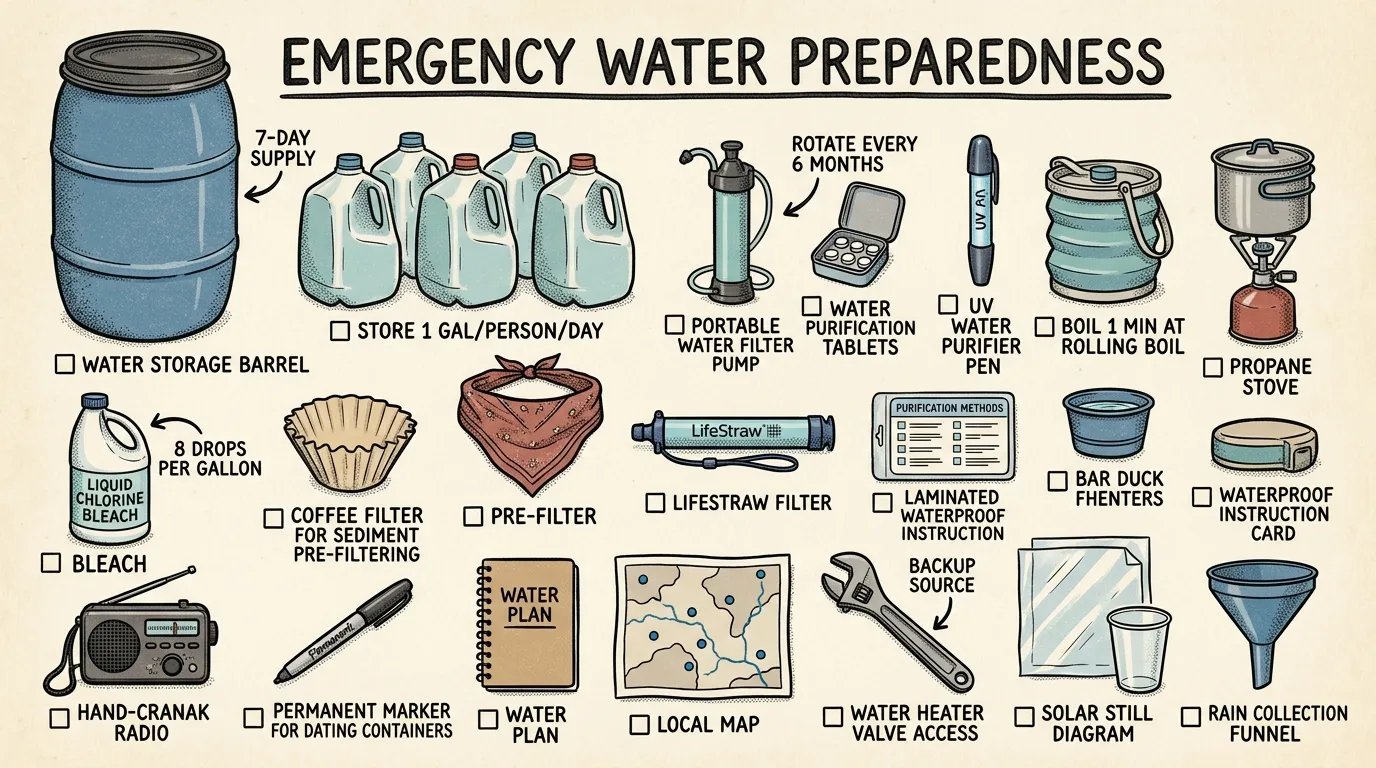
Emergency Water Preparedness: Store, Purify & Plan
Build your emergency water preparedness plan with proven strategies for storage, purification, and rationing. Start your water plan today.
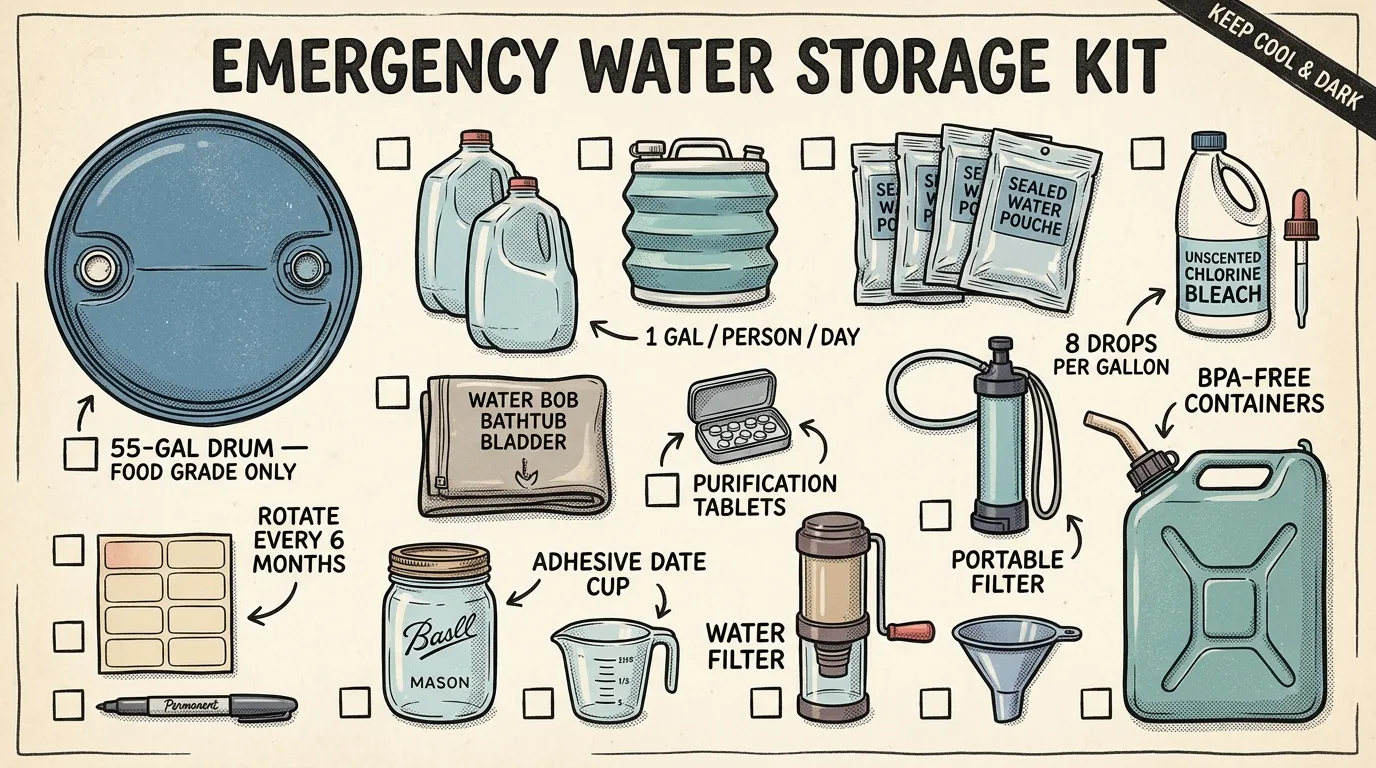
How to Store Water for Emergencies: Complete Guide
Learn how to store water for emergencies — the right containers, purification methods, rotation tips, and a budget plan. Start your supply today.
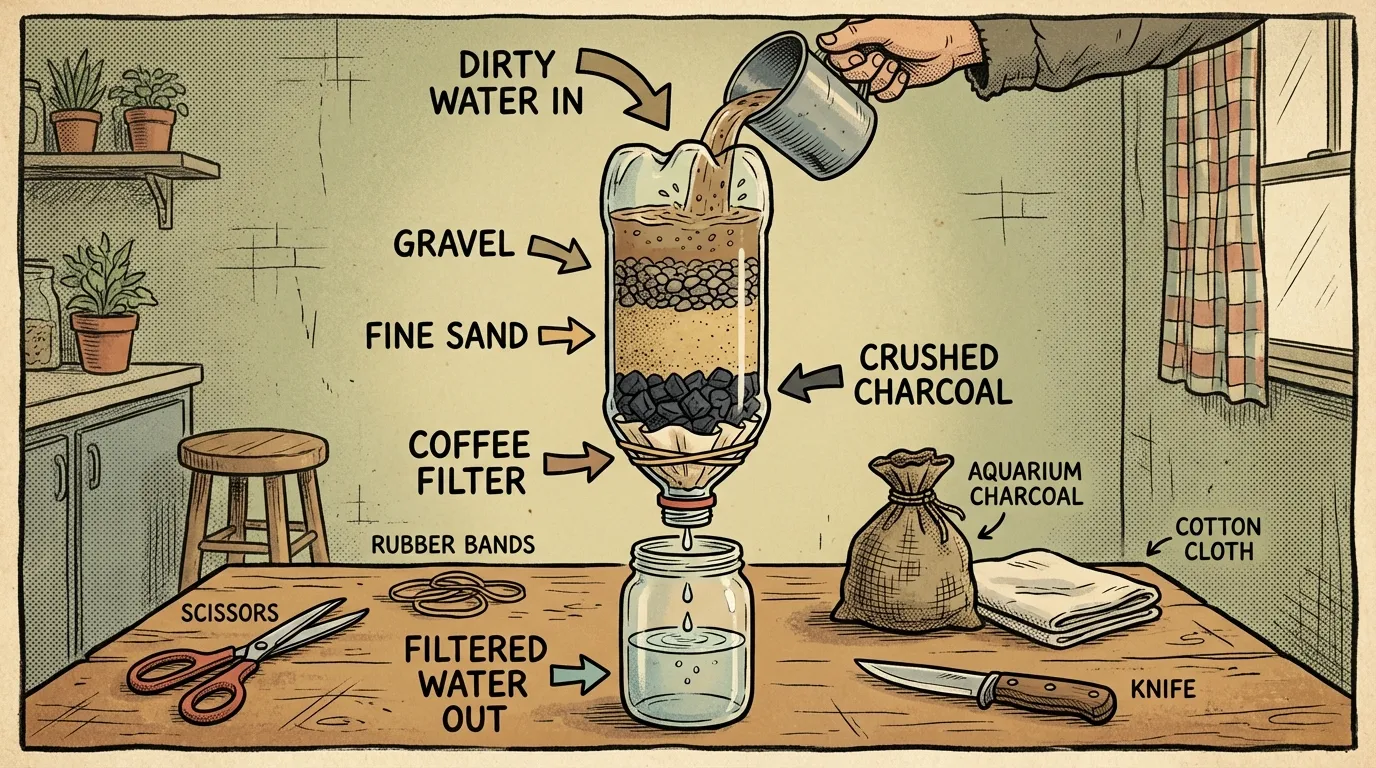
How to Make a DIY Water Filter Using Household Items
Learn how to make a DIY water filter with household items, plus safety tips, step-by-step instructions, and how to make water safer to drink.