How Much Water Do You Actually Need?
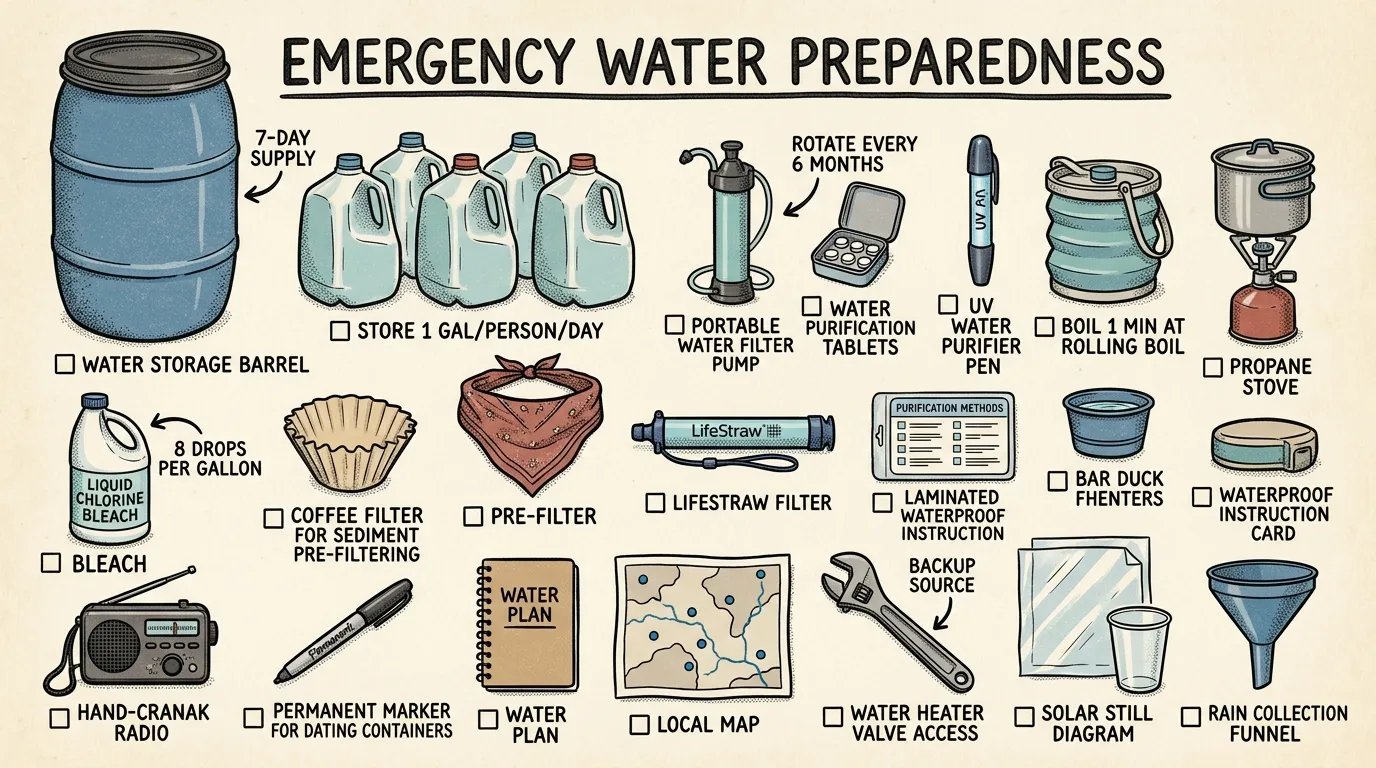
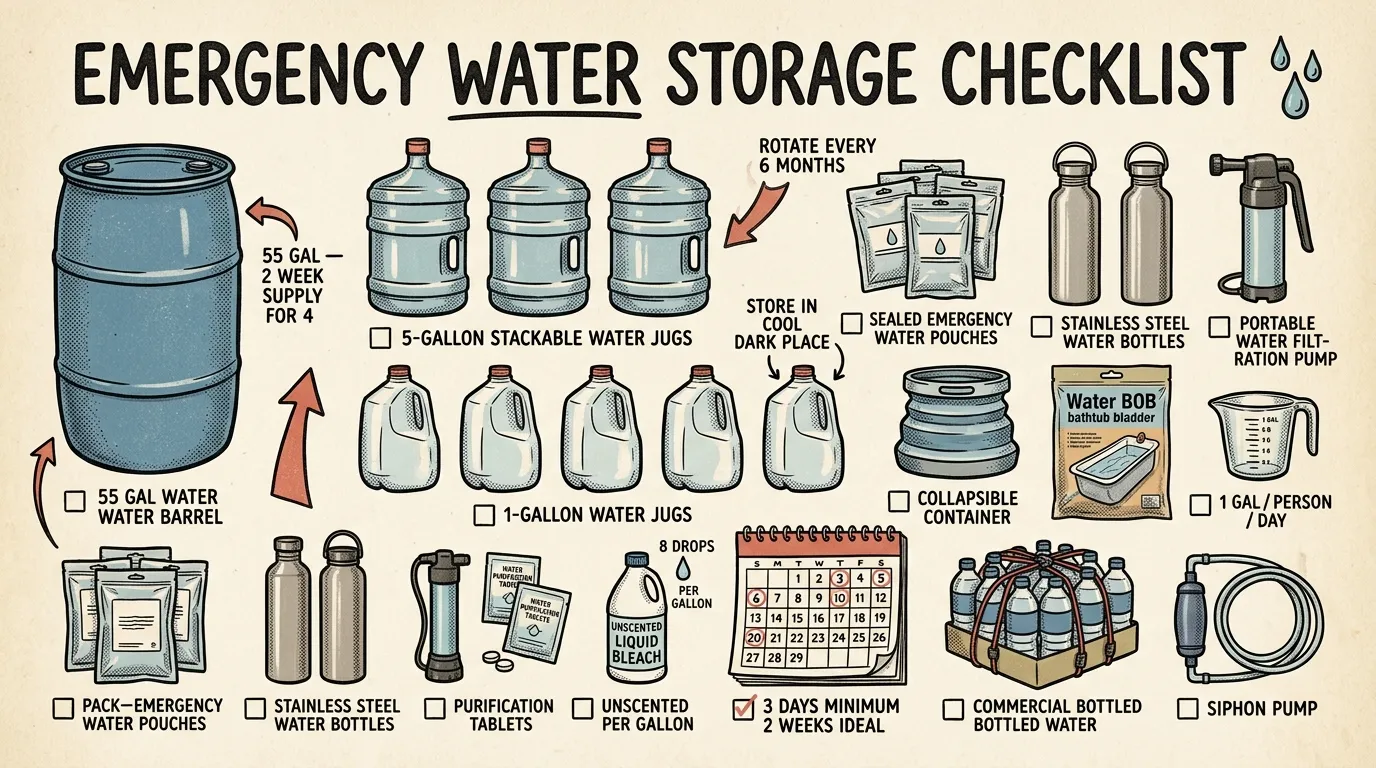
FEMA's baseline is 1 gallon per person per day, and that number is a bare survival minimum. A realistic emergency — especially one involving heat, physical exertion, or families with young children — pushes that closer to 3 gallons per person per day once you account for cooking, sanitation, and hydration needs. For a family of four preparing for a two-week disruption, you're looking at roughly 84–168 gallons. Start by calculating your household's needs using FEMA's per-person formula, then multiply for your target duration. Don't forget to factor in pets, medications that require water, and anyone with medical conditions. A written plan with exact numbers beats a vague intention every time.
Choosing the Right Water Storage Containers and Tanks
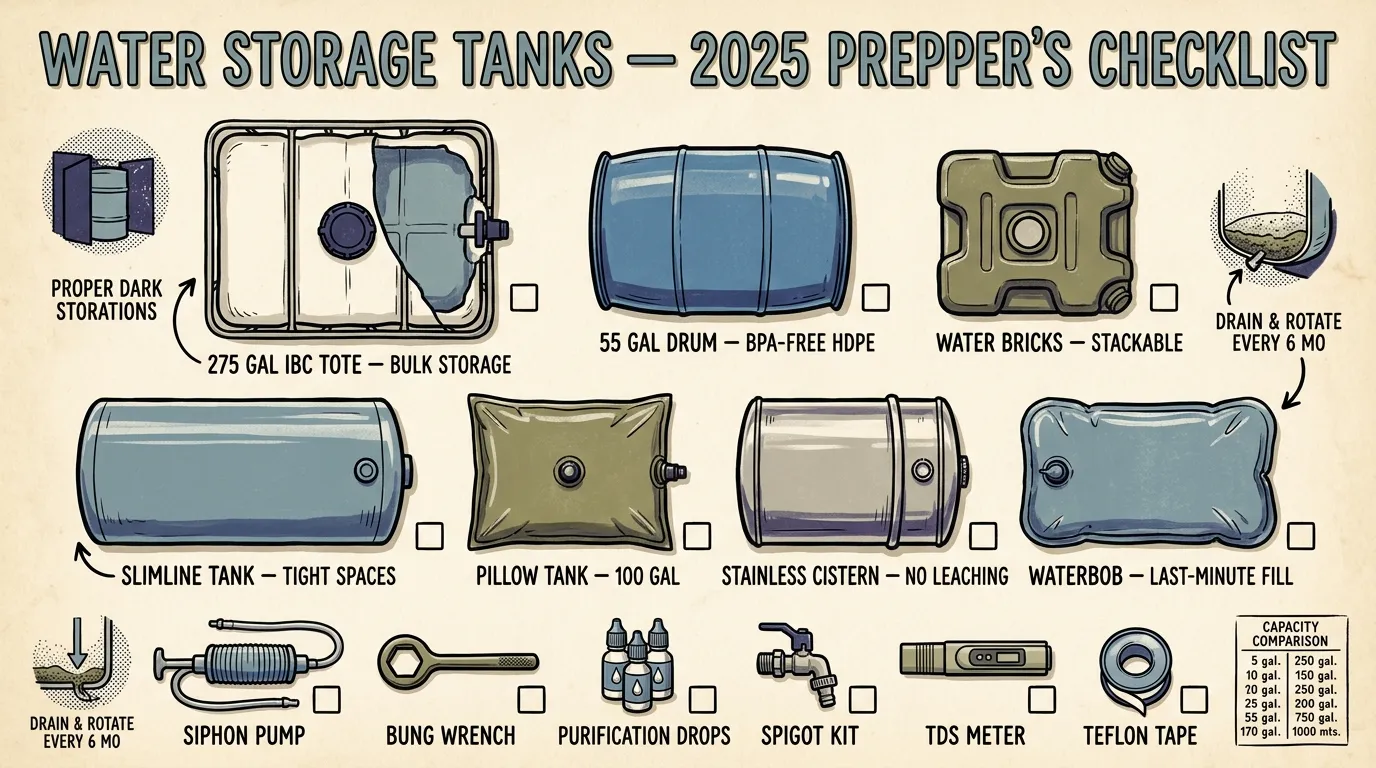
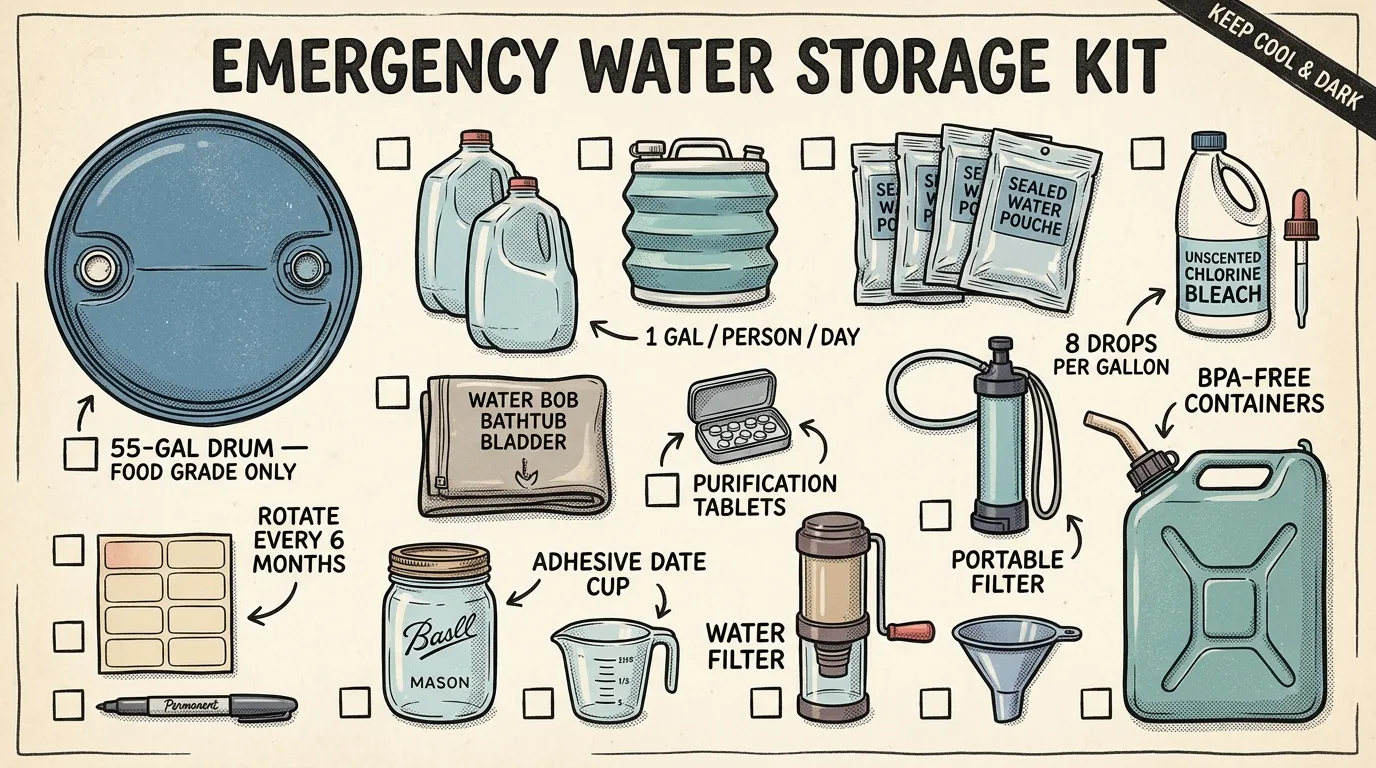
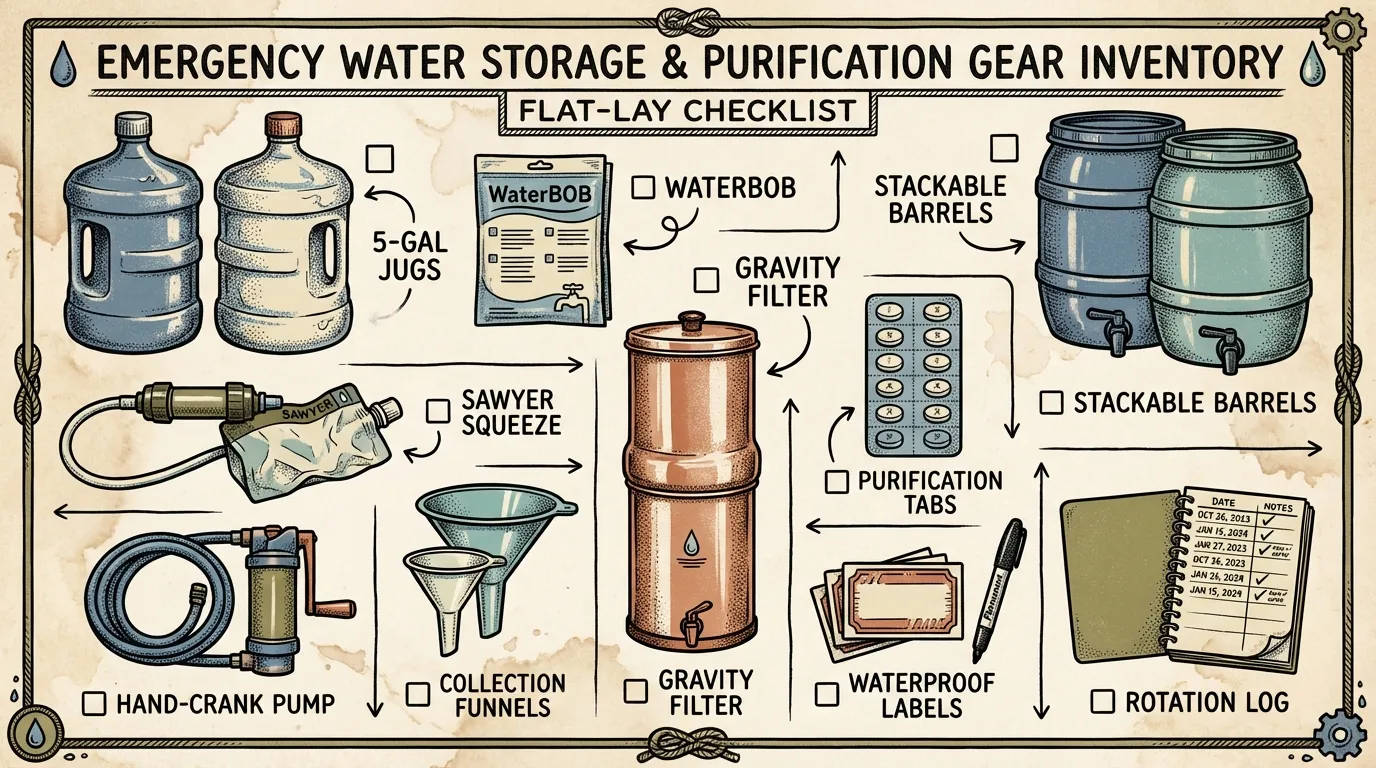
Your container choice matters as much as the water inside it. For most beginners, food-grade HDPE (#2 recycling symbol) containers are the gold standard — they won't leach chemicals and hold up over years of storage. Options range from stackable 5-gallon jugs for apartment dwellers to 55-gallon drums and even 250+ gallon tanks for homesteads. Key considerations include:
- Space: Measure your storage area before buying. Water weighs about 8.3 lbs per gallon.
- Accessibility: Store containers where you can actually reach them — not behind a wall of gear.
- Maintenance: Clean and sanitize containers before filling. Rotate water every 6–12 months.
- Budget: Start small with a few 5-gallon jugs and scale up. A phased approach keeps costs manageable.
Never use containers that previously held non-food liquids, and avoid thin milk jugs — they degrade and leak.
Water Purification and Filtration Methods
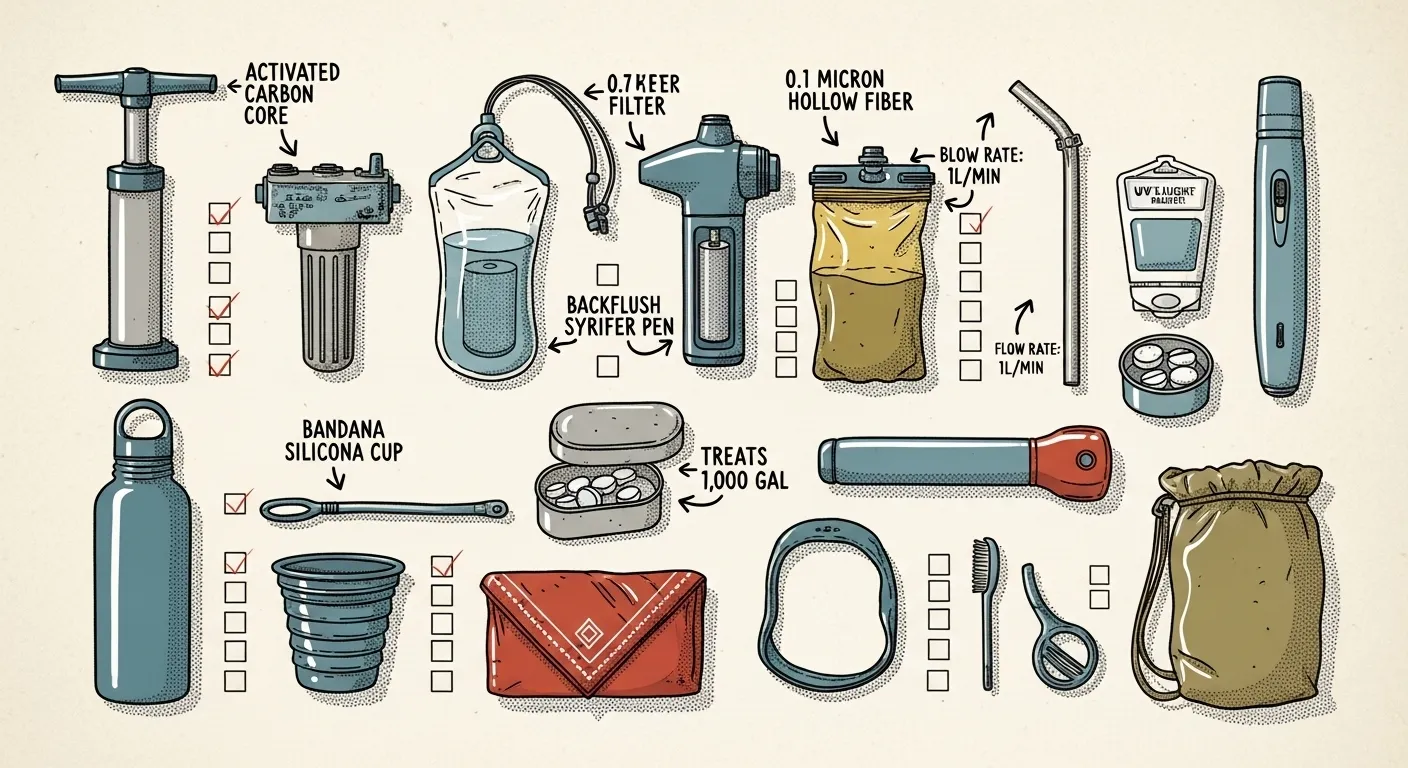
Stored water covers you for a set duration, but a solid purification strategy extends your supply indefinitely. There are several proven methods, and the smartest approach is layering more than one:
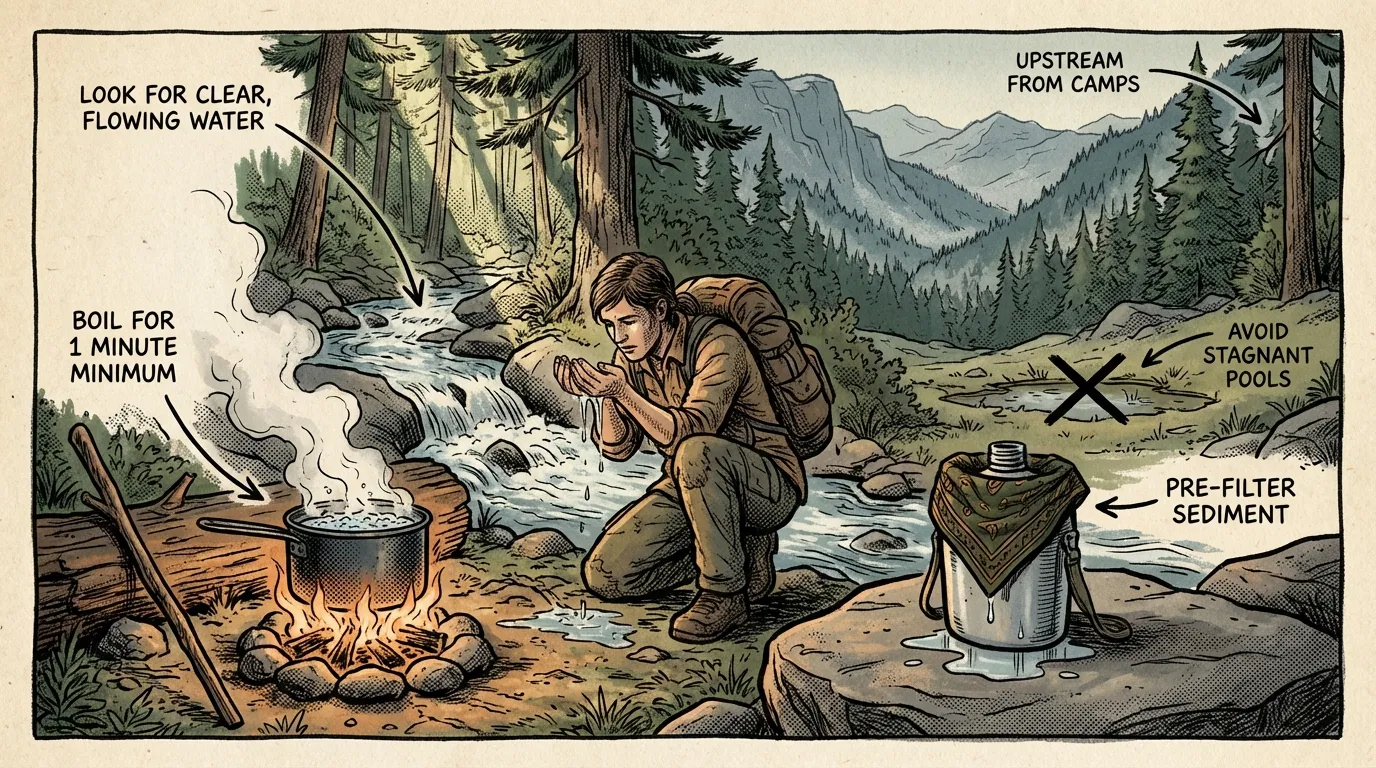
- Boiling: A rolling boil for 1–3 minutes kills bacteria, viruses, and parasites. It's the most reliable field method but requires fuel.
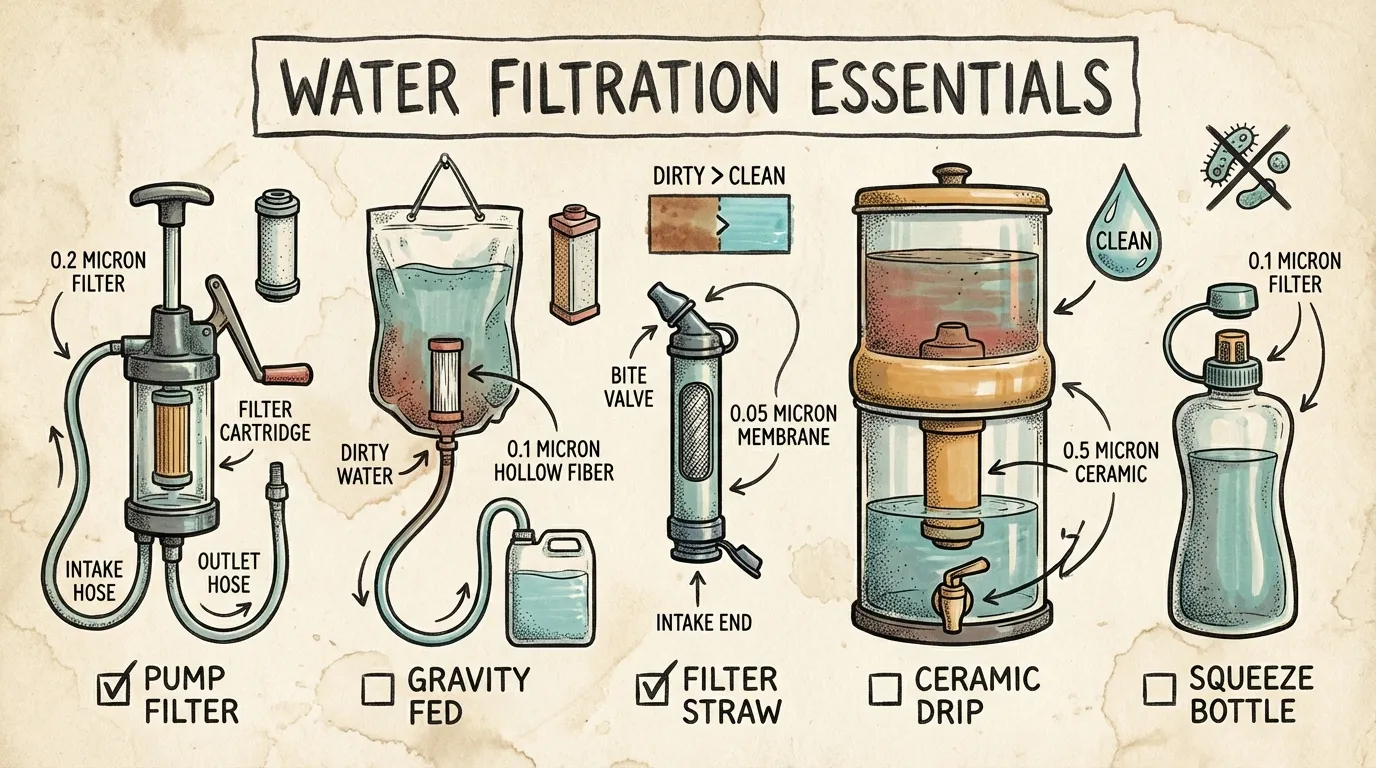
- Portable water filters: Look for models rated to remove bacteria and protozoa at minimum (0.2 micron or smaller). Top-rated filters for beginners balance ease of use, flow rate, and filter lifespan.
- Chemical treatment: Unscented household bleach (8 drops per gallon) or purification tablets work as a backup but won't remove chemical contaminants.
- UV purifiers: Effective against biologicals but dependent on batteries and clear water.
No single method handles every threat. Filtering first, then treating chemically or boiling, gives you the highest margin of safety.
DIY Water Filtration in a Pinch
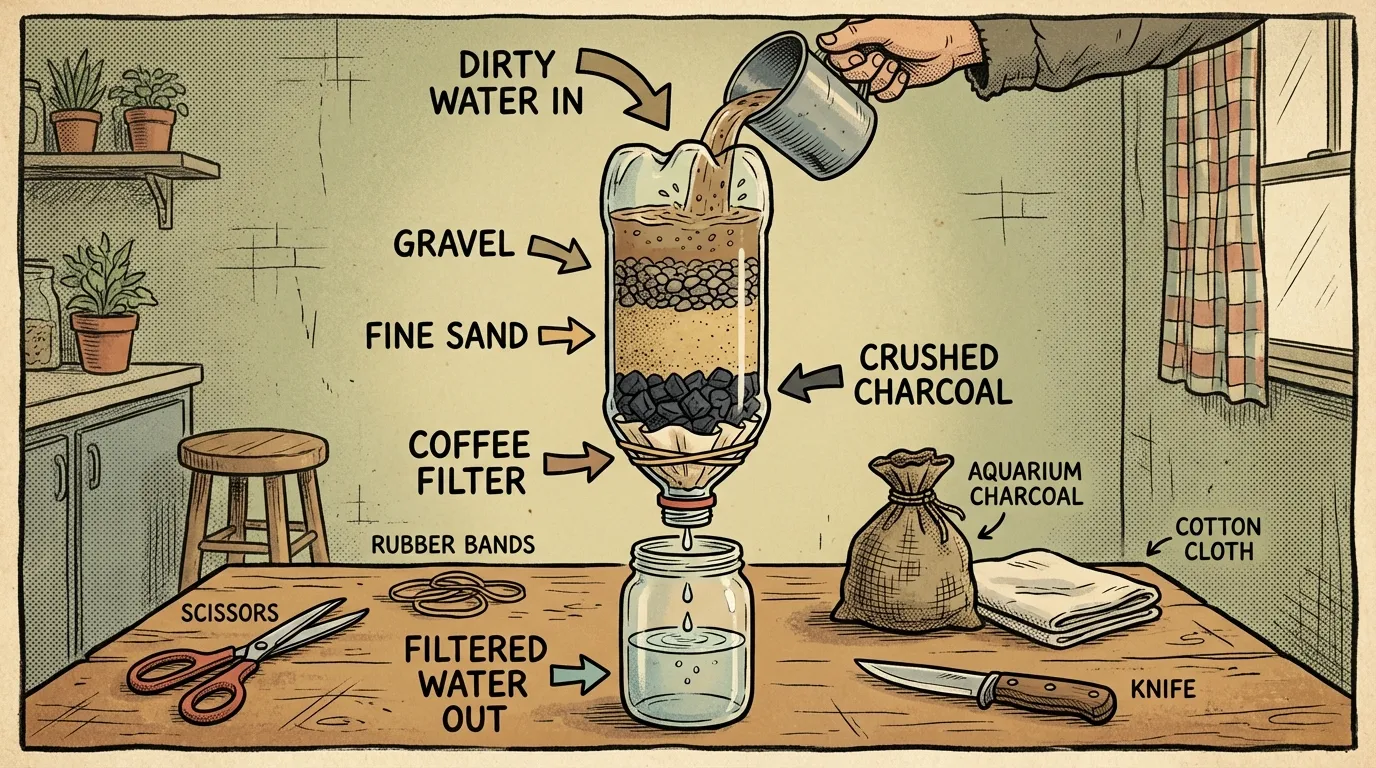
When commercial filters aren't available, you can build a functional DIY water filter from common household items. A layered approach using a container (like a cut plastic bottle), cotton fabric, activated charcoal, sand, and gravel can remove sediment and improve taste. The key layers work like this: gravel catches large debris, sand traps finer particles, and activated charcoal adsorbs some chemicals and odors. However — and this is critical — a DIY filter does not make water safe to drink on its own. It's a pre-treatment step. You still need to boil or chemically treat the filtered water to kill pathogens. Think of a DIY filter as one link in a chain, not the whole solution. It's a valuable skill to practice before you actually need it.
Rainwater Harvesting as a Backup Supply
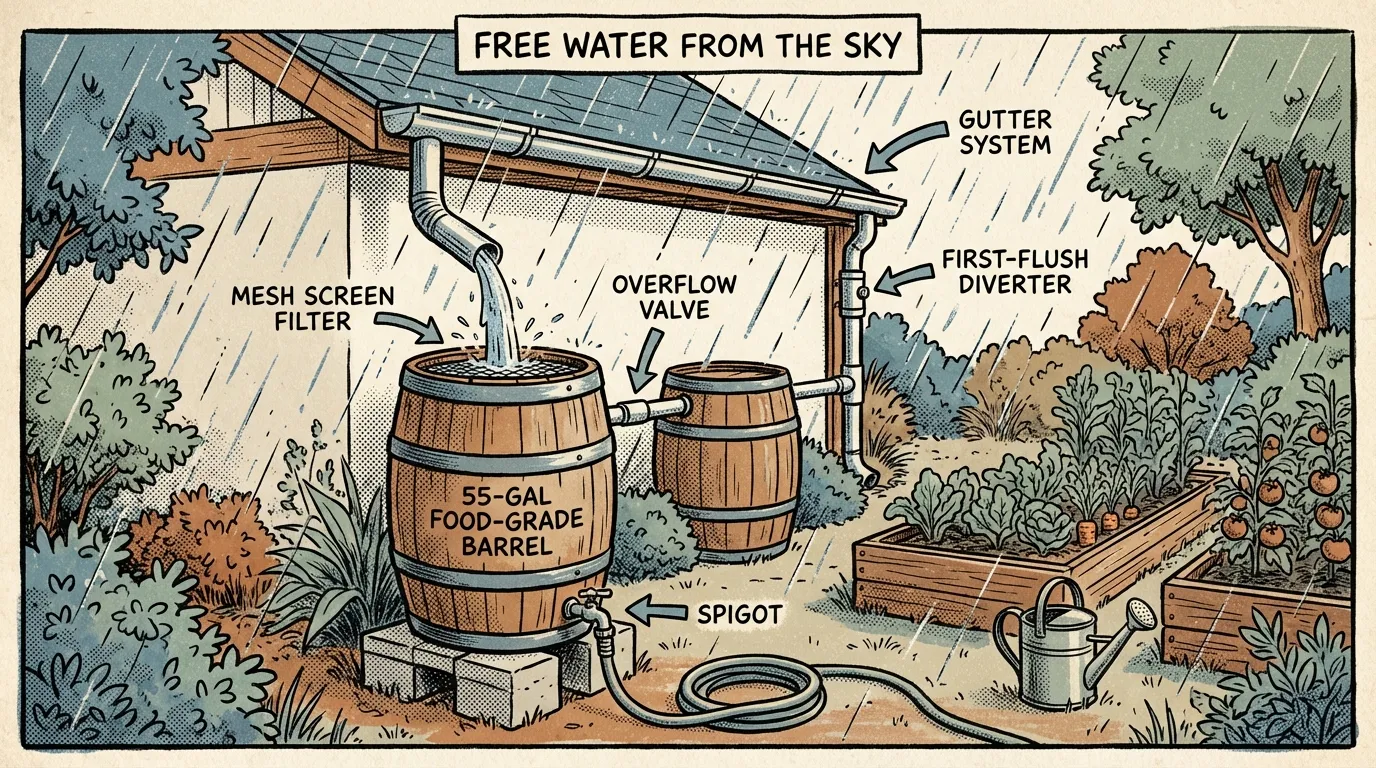
Rainwater harvesting is one of the most underused backup water sources for preppers, and in the Pacific Northwest, it's practically free. A basic system involves routing your roof's downspout into a food-grade collection barrel with a screen to keep out debris. Even a modest roof can capture hundreds of gallons from a single storm. Before setting up your system, check your local regulations — some states restrict or regulate rainwater collection. Key tips:
- Use a "first flush" diverter to discard the initial dirty runoff from your roof.
- Keep barrels sealed and screened to prevent mosquito breeding and contamination.
- Always purify collected rainwater before drinking — roofing materials and bird droppings introduce contaminants.
Rainwater harvesting pairs perfectly with a stored water supply, giving you a renewable source when your primary reserves run low.
Finding and Identifying Safe Water in the Wild
If you're forced to source water from the environment — whether bugging out or facing infrastructure collapse — knowing how to find and evaluate wild water sources is a survival essential. Moving water (streams, springs) is generally safer than stagnant water (ponds, puddles), but no wild source should be trusted without treatment. Look for clear, flowing water away from agricultural runoff, roads, and human activity. Springs emerging directly from the ground are often your best bet. Warning signs to avoid include:
- Unusual color, foam, or chemical odors
- Dead vegetation or lack of animal activity nearby
- Water downstream of industrial or mining sites
Even crystal-clear mountain streams can harbor Giardia and other parasites. Always filter and purify. Carry at least one backup purification method in your kit — two is safer.
Start with stored water, build in filtration as a second layer, and learn to source water from the environment as a third. Most people buy one case of bottled water and call it done — that's a two-day plan at best. The families who come through emergencies in good shape are the ones who did the math, invested in real containers and filters, and actually practiced their plan before they needed it.