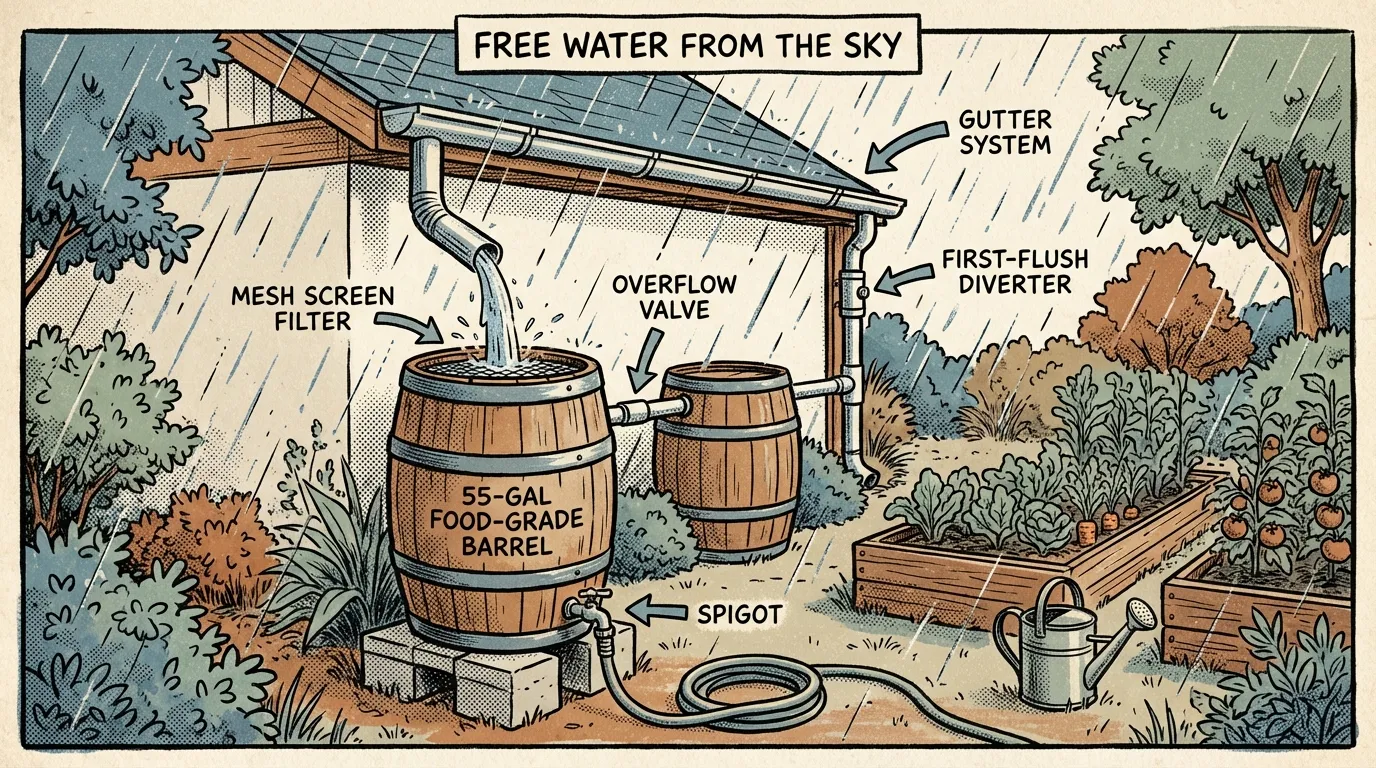
Rainwater harvesting is the practice of collecting and storing rainwater, usually from a roof, for later use. For new preppers, a simple system with gutters, a downspout diverter, a food-grade barrel, and a purification method provides an affordable backup water source for emergencies.
Key Takeaways
- Calculate your yield using: Roof area (sq ft) × Rainfall (in) × 0.623, then multiply by 0.75.
- Start with one food-grade 50-55 gallon barrel elevated on a stable base for gravity flow.
- Install a screened inlet and first-flush diverter to remove leaves, insects, and initial dirty runoff.
- Boil water at least one minute at sea level before drinking; filter first through a 1-5 micron sediment filter.
- Check local permits, volume limits, and HOA rules before installing any rainwater harvesting system.
Rainwater Harvesting for Beginners: A Practical Guide to Collecting and Using Rainwater
Quick answer
- Rainwater harvesting for beginners means capturing roof runoff, filtering it, and storing it for later use. A starter setup uses gutters, a screened inlet, a first-flush diverter, and a food-grade 50-55 gallon barrel.
- Estimate yield with this formula: Gallons = Roof area (sq ft) × Rainfall (in) × 0.623. Example: 1,000 sq ft × 1 in × 0.623 = 623 gallons before losses.
- Start with one barrel, follow local rules, and add filtration and disinfection if you plan to drink the water.
Clear definitions
- Rainwater harvesting: collecting and storing rain runoff, usually from roofs, for reuse.
- Catchment surface: the area that sheds water into your system, commonly a roof.
- First-flush diverter: discards the initial, dirtiest portion of runoff.
- Collection efficiency: the percent of theoretical rainfall captured. Typical practical range is about 75% to 90% depending on your setup.
- Potable vs non-potable: potable means drinkable to health standards. Use non-potable water for irrigation, flushing toilets, and cleaning.
How much water you can collect
Use this formula: Gallons = Roof area (sq ft) × Rainfall (in) × 0.623.
Example: a 1,000 sq ft roof with 1 inch of rain yields about 623 gallons before losses. Multiply by a collection efficiency, for example 0.75, to estimate usable water.
Calculate with your roof area and local rainfall to get accurate numbers.
Practical benefits of rainwater harvesting for beginners
- Water for a garden. A single 50-gallon barrel can water a small vegetable bed several times between rains.
- Easy to scale. Start with one barrel and add more. Link two or three barrels for greater capacity, or install a 200- to 1,000-gallon tank when you want long-term storage.
- Lower outdoor water use. Capture rain for irrigation and car washing to reduce municipal water use.
- Emergency backup. Stored rainwater can supply basic needs in short outages.
Check local codes, permits, and HOA rules before installing.
Starter system: step-by-step
-
Choose a catchment surface
- Use a sound roof. Avoid surfaces with heavy contamination. Metal and tile roofs often shed fewer particulates; test if you intend to drink the water.
-
Route water with gutters and a downspout
- Repair leaks, clear debris, and direct flow to the collection point.
-
Install a screened inlet and first-flush diverter
- Screen out leaves and insects. The diverter discards the first, dirtiest runoff.
-
Select and place storage
- Beginner option: 50-55 gallon food-grade barrel. Larger options include 100-300 gallon poly tanks or concrete cisterns.
- Elevate the barrel on a stable base for gravity flow.
-
Manage overflow and discharge
- Redirect overflow away from foundations or link to another tank or a soakaway per local rules.
-
Access and distribution
- Add a bottom spigot for gravity use. Use a pump and backflow prevention for household distribution.
Beginner checklist:
- Sound roof and clean gutters
- Downspout diverter
- Screened inlet
- Food-grade barrel or tank
- Overflow hose or fitting
- Spigot or pump
- Filtration and disinfection plan
Essential components and common tools
Components:
- Catchment (roof), gutters and downspouts
- Leaf screen or gutter guard, first-flush diverter
- Storage: food-grade barrels, poly tanks, cisterns
- Spigot, hose bib or pump, overflow outlet
- Filters (sediment, activated carbon) and disinfection options such as boiling, bleach, or UV
Tools: drill, hole saws, level, sealant, wrench, measuring tape.
Buy from home improvement stores, plumbing suppliers, farm stores, online retailers, or local classifieds. If you buy used barrels, verify what they previously held.
Legal considerations and best practices
Check local authorities for:
- Whether capture is permitted and any volume or usage limits
- Permits for larger tanks or plumbing connections
- Restrictions on potable connections and required backflow prevention
- HOA rules about visible tanks or barrels
Best practices:
- Use covered, sealed containers to prevent mosquitoes.
- Label non-potable water clearly.
- Direct overflow away from foundations.
- Do not connect to potable plumbing without code-compliant backflow devices.
- Consult your building department or water authority if you are unsure.
Making collected rainwater safe to use
Collected rainwater is not automatically potable. Common contaminants include bird droppings, dust, roof materials, and airborne pollution.
Layered treatment:
- Pre-filtration: screened inlet and first-flush diverter.
- Filtration: sediment filters rated 1 to 5 micron where needed, and activated carbon for organic tastes and odors.
- Disinfection: boiling for at least one minute at sea level (three minutes above about 2,000 meters), chemical disinfection with unscented household bleach using CDC guidance, or UV systems. UV requires low turbidity and stable power.
- Testing and storage: use a certified lab to test water if you plan long-term potable use, and store water in clean, sealed food-grade containers.
Follow EPA or local health department standards for potable water.
Maintenance tips
- Clean gutters and screens seasonally and after big storms.
- Inspect diverters, spigots, lids, and seals for damage.
- Drain and rinse barrels periodically to remove sediment.
- Replace filters per manufacturer recommendations.
- Track chemical treatment dates and test results.
- Winterize in freezing climates: drain small barrels and insulate piping.
- Keep a maintenance log with cleaning dates, filter changes, repairs, and test results.
FAQ: Rainwater harvesting for beginners
Q: How much water can I collect from my roof? A: Use the formula: Roof area × Rainfall (in) × 0.623, then apply collection efficiency of about 0.75 to 0.90.
Q: Is a single barrel worth it? A: Yes. A 50-55 gallon barrel is inexpensive, useful for irrigation, and helps you learn the basics.
Q: Can I drink straight from the barrel? A: No. Filter, disinfect, and test before using rainwater as a long-term potable source.
Q: Do I need a pump? A: Not for basic irrigation. Pumps are needed for pressurized household use.
Q: What about mosquitoes? A: Use sealed lids and fine mesh screens. Do not allow standing, uncovered water.
Start small and build confidence.
Install one downspout and a single barrel. Add a screen and first-flush diverter. Plan filtration and disinfection for the uses you want, and expand the system as you gain experience.
Further notes:
- Consider starter kits and certified food-grade barrels from reputable vendors.
- Claims such as collecting “hundreds of gallons from a single storm” depend on roof size and local rainfall. Use the formula and local data.
- Verify legal and health requirements with local authorities before connecting rainwater to potable systems.
The Complete
Prepper's Reference.
149 articles synthesized into one comprehensive PDF — twelve chapters covering water, food, shelter, first aid, comms, and scenario-specific preparedness. Free with your email.
Unsubscribe anytime · We never share your email
You're in. Check your inbox.
Keep Reading
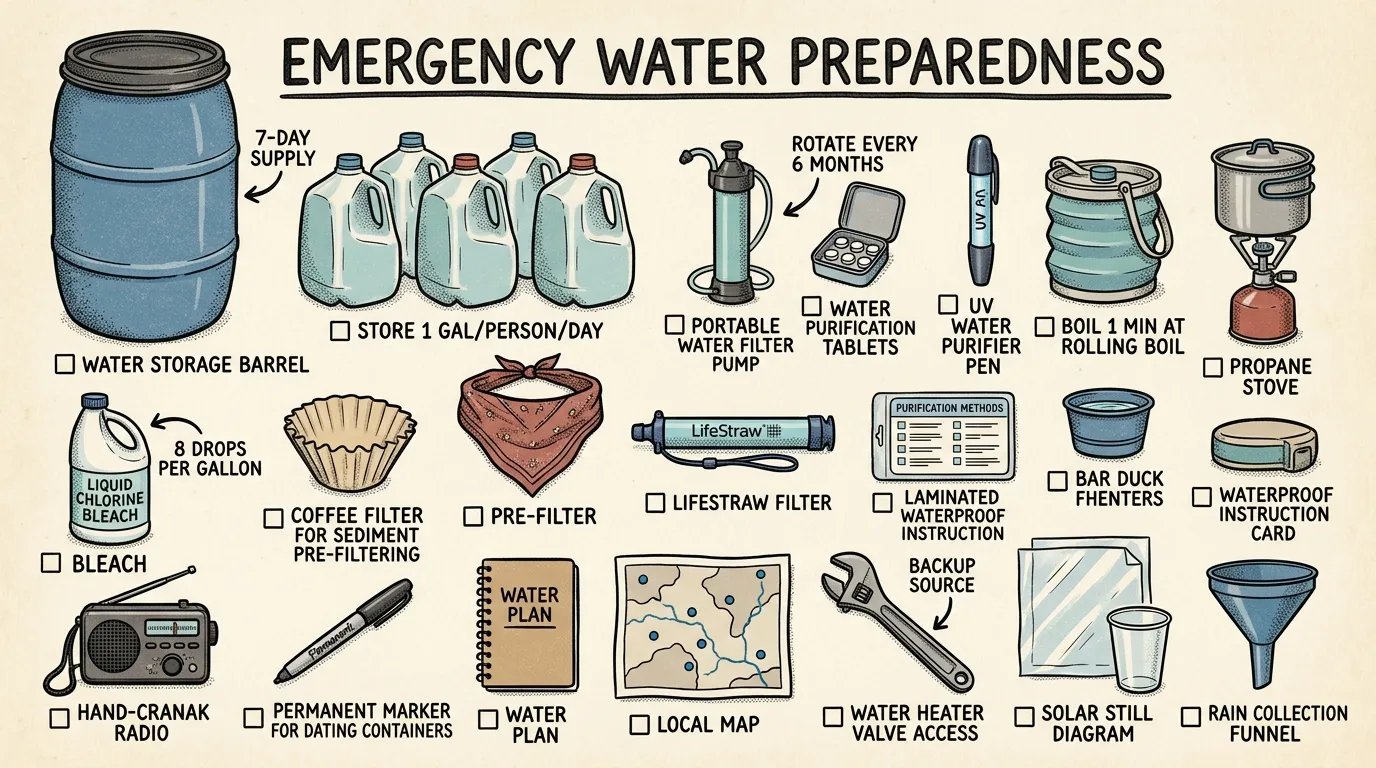
Emergency Water Preparedness: Store, Purify & Plan
Build your emergency water preparedness plan with proven strategies for storage, purification, and rationing. Start your water plan today.
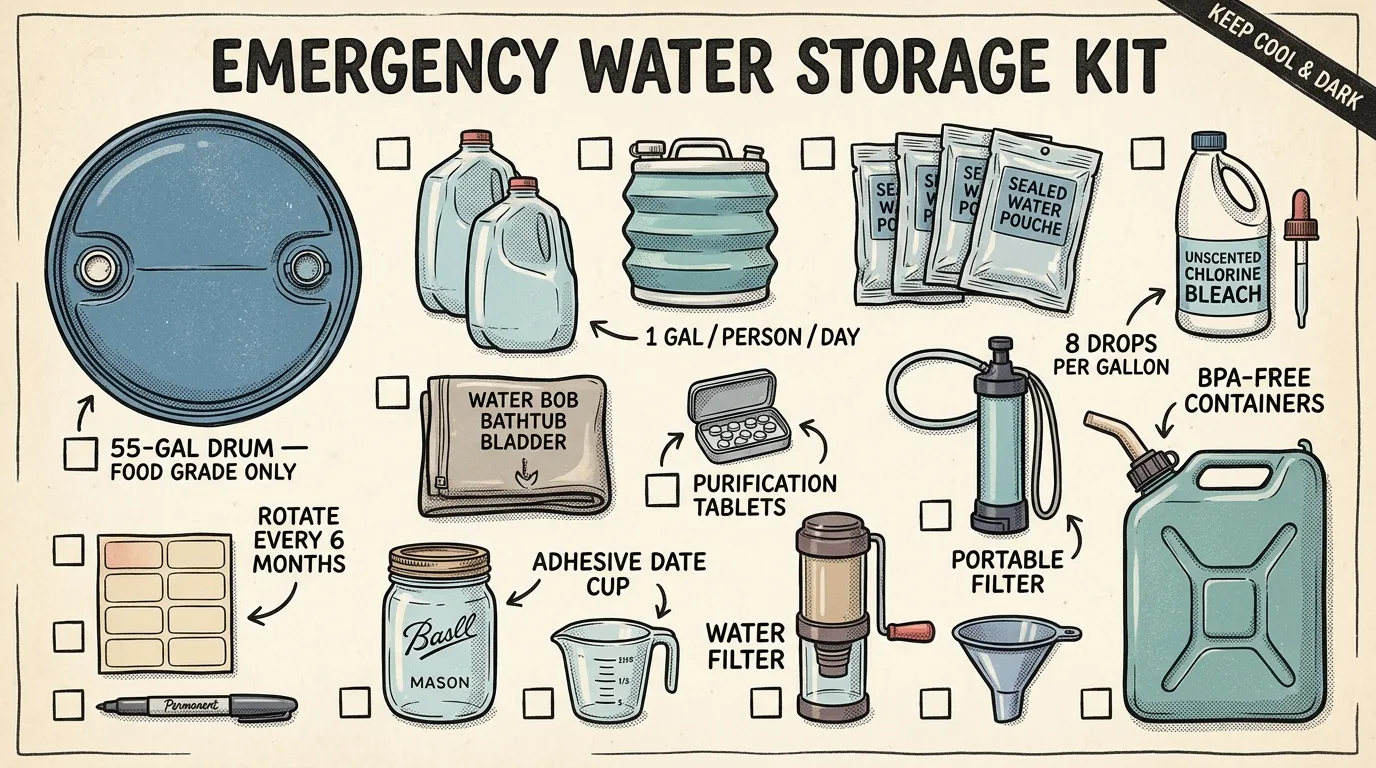
How to Store Water for Emergencies: Complete Guide
Learn how to store water for emergencies — the right containers, purification methods, rotation tips, and a budget plan. Start your supply today.
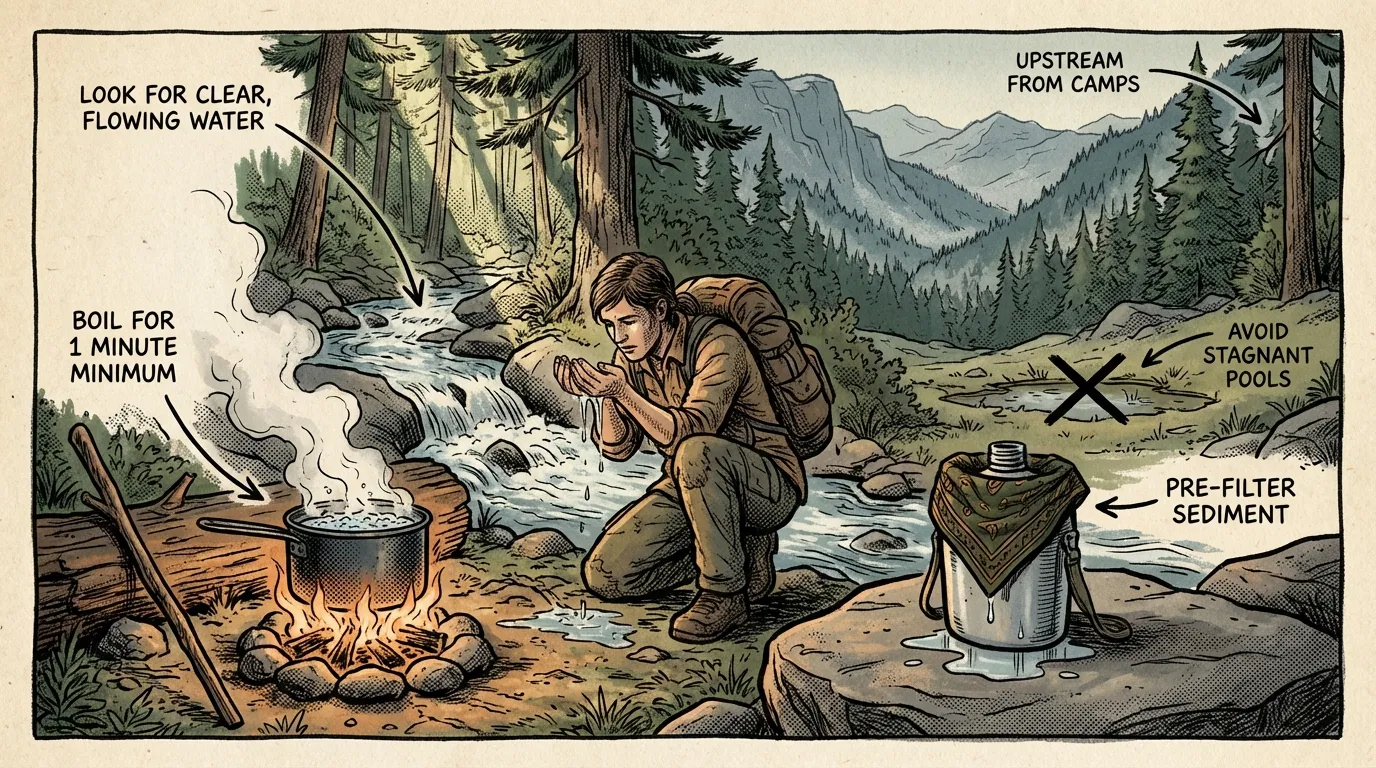
How to Identify Safe Drinking Water in the Wild
Learn how to find, judge, and purify drinking water in the wild with beginner-friendly survival tips for safer hydration anywhere.