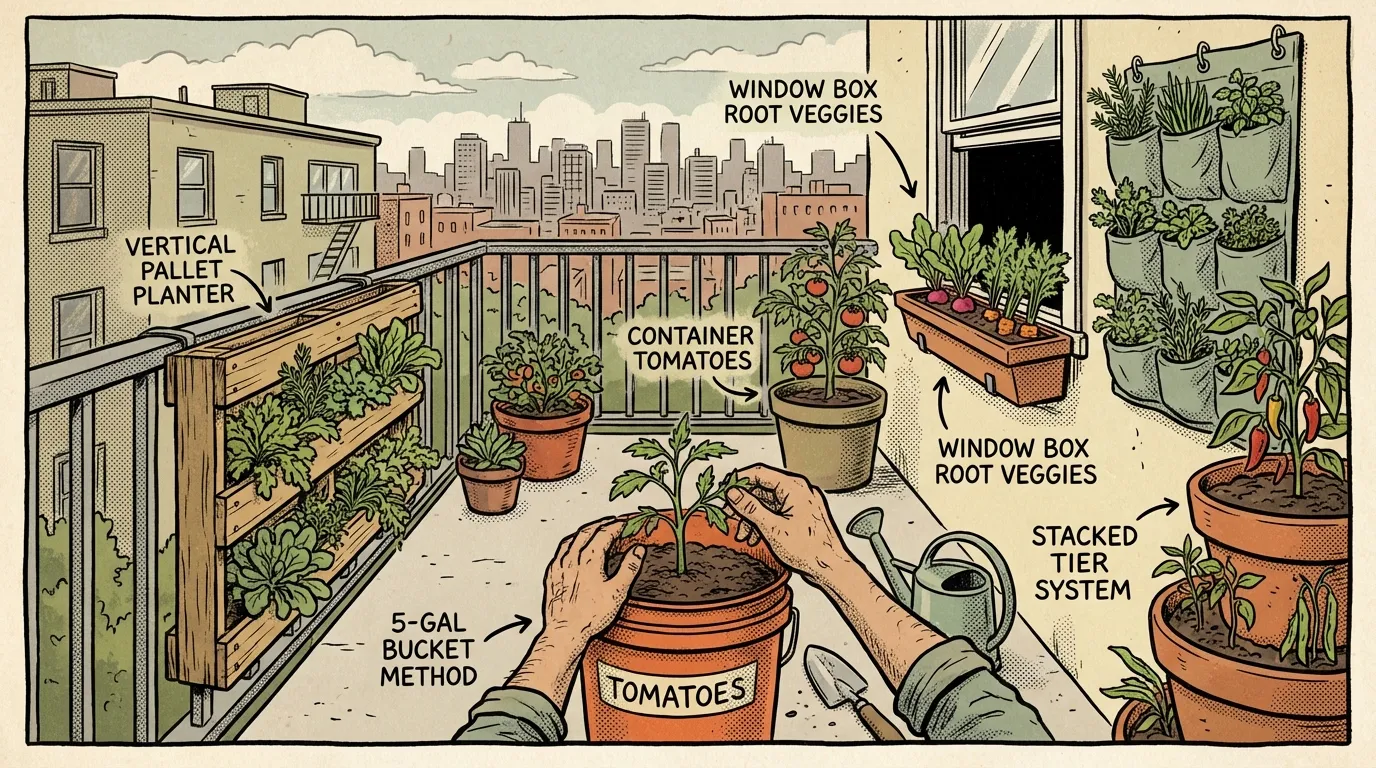
You can build a productive prepper garden in a small space by using containers, vertical gardening, and high-yield crops like greens, herbs, beans, tomatoes, and root vegetables. Focus on smart space use, efficient watering, composting, and succession planting to create a sustainable, resilient food source.
Key Takeaways
- Start with 3 to 5 space-efficient crops you actually eat, like lettuce, radishes, and bush beans.
- Add trellises, wall pockets, and stacked planters to multiply vertical growing area immediately.
- Mix potting soil as 50% coir, 30% compost, and 20% perlite for healthy container plants.
- Feed containers lightly every 2 to 4 weeks and side-dress tomatoes with compost midseason.
- Save seed from open-pollinated beans, peas, lettuce, and tomatoes stored cool and dry each season.
Small Space Prepper Garden: How to Grow Food in Tight Quarters
TL;DR
Yes. A small space prepper garden can supply meaningful fresh food and add resilience when you choose space-efficient crops, use vertical and container systems, manage soil and water, and practice seed-saving and preservation. Expect modest yields that supplement groceries and build useful skills.
A small space prepper garden focuses on high-return plants and systems that fit patios, balconies, rooftops, windowsills, or a postage-stamp yard. With the right choices you can harvest fresh greens, herbs, and some calorie crops from just a few containers.
Note on yields
- “Meaningful food” depends on climate, container size, variety, and gardener skill.
- Treat projected yields as estimates and record your results each season.
Quick start
- Pick 3 to 5 reliable, space-efficient crops you will actually eat: leafy greens, radishes, herbs, bush beans, compact tomatoes.
- Add vertical supports and stacked containers to multiply growing area.
- Use a good potting mix, water consistently, and learn basic preservation and seed-saving.
- Scale and refine based on real household use.
What this garden is
- A compact food system designed to improve short-term self-sufficiency.
- It favors plants that produce well per square foot and that adapt to containers or vertical growing.
- It relies on straightforward practices: succession planting, soil care, basic pest controls, and saving seed from open-pollinated varieties.
Maximizing space: practical tactics
- Go vertical with trellises, wall pockets, ladders, stacked planters, railing boxes, and tower systems. Pole beans, peas, cucumbers, vining strawberries, and cherry tomatoes climb well.
- Use containers like grow bags, 5-gallon buckets (with drainage), raised boxes, and self-watering pots. Larger containers give healthier roots and steadier moisture. Small pots dry out fast.
- Use every sunny inch: south-facing walls, balconies, rooftops where allowed, fence lines, and bright windowsills.
- Layer planting: floor containers, shelving, hanging baskets, and wall planters work together to multiply usable area.
Container quick reference
| Container | Typical uses | Notes |
|---|---|---|
| 5-gallon bucket | Tomatoes, peppers, small potato trials | Drill drainage holes; suitable for one-season or short-term use |
| Grow bag (10–20 gal) | Potatoes, carrots, bush beans | Good for root crops; reduces root circling |
| Window box (12–18” deep) | Lettuce, spinach, scallions, herbs | Best for shallow-rooted crops; place in sun |
| Hanging basket | Strawberries, trailing herbs | Keeps fruit off the ground; monitor water needs |
Container suitability varies by variety and climate.
Choosing plants for a small space prepper garden
Selection criteria
- Productive per square foot.
- Nutrient-dense or calorie-supportive when space allows.
- Easy to preserve or save seed from.
- Suited to containers or vertical training.
Recommended groups
- Leafy greens: lettuce, spinach, Swiss chard, arugula. Harvest leaf-by-leaf for continuous production.
- Herbs: basil, parsley, cilantro, chives, thyme. Dry or freeze them.
- Root crops: radishes, carrots, beets, green onions, garlic. Use deep containers or grow bags for roots.
- Beans and peas: pole beans for vertical space, bush beans for containers, snap peas for early-season harvests.
- Tomatoes and peppers: cherry tomatoes, patio/determinate tomatoes, jalapeños, bell peppers. Choose compact varieties.
- Compact calorie crops: potatoes in grow bags, sweet potatoes in large containers, dwarf squash, and dry beans if you have room.
Focus on what your household will actually eat to avoid waste.
Companion planting, rotation, and seed saving
- Pair basil with tomatoes and plant lettuce under taller crops to use shade and space efficiently.
- Use radishes to fill gaps between slower-growing plants. Marigolds and nasturtiums attract pollinators and can deter some pests.
- Rotate container crops by family to reduce pest buildup. In tiny setups, refresh potting mix each season.
- Save seed from open-pollinated varieties. Beans, peas, lettuce, and tomatoes are good beginner seed-saving crops. Learn basic isolation, drying, and cool/dry storage.
Maintaining your small space prepper garden
Low-maintenance systems make the garden more reliable.
Soil and fertility
- Use a well-draining potting mix: coir or peat mixed with compost and perlite or pumice.
- Amend with compost and worm castings. Side-dress heavy feeders like tomatoes midseason.
Water management
- Containers dry faster than beds. Mulch container tops to reduce evaporation. Group containers by moisture needs. Water deeply and less often. Water in the morning.
- Consider self-watering pots, capillary mats, or drip irrigation to reduce daily chores.
Composting in small spaces
- Use countertop collectors, bokashi, worm bins, or compact tumblers. Compost returns nutrients to containers and cuts household waste.
Pest and disease management
- Inspect plants regularly and remove infected tissue quickly. Hand-pick pests and use netting or row covers when needed.
- Encourage beneficial insects with small patches of pollinator flowers. Use organic treatments only when other measures fail.
Succession planting
- Sow new crops as others finish to maintain steady production. Example: early spring radishes, then bush beans, then late-summer greens.
- Succession keeps small beds productive instead of idle.
Practical tips and quick reference
- Simple potting mix: 50% quality potting mix or coconut coir, 30% compost, 20% perlite or pumice.
- Sun needs: full sun equals six or more hours; part sun is three to six hours. Check your microclimate throughout the day.
- Container care: ensure drainage, avoid tiny pots for main crops, use opaque containers to reduce root heat, and use saucers sparingly.
- Fertility: feed containers lightly every two to four weeks; side-dress tomatoes midseason.
- Preservation: dry herbs, freeze chopped tomatoes and peppers, can beans, and cure and store root crops in a cool, dry place.
Next steps and resources
- Start with three to five crops you will use and expand season by season.
- Learn seed saving, vermicomposting, simple drip irrigation, and how to choose heirloom versus hybrid varieties.
- Combine the garden with basic food storage and water plans to improve short-term readiness.
FAQ: Small-space prepper gardening
Q: What is a prepper garden? A: A garden that increases household self-sufficiency during supply disruptions. It emphasizes practical crops, preservation methods, and useful skills.
Q: Can a small garden make a difference? A: Yes. It supplies fresh produce, reduces grocery trips, and builds skills. It rarely feeds a household year-round from a very small footprint, but it makes a tangible difference.
Q: What are the easiest crops for beginners? A: Lettuce, radishes, herbs, bush beans, cherry tomatoes, and green onions.
Q: Is vertical gardening worth it? A: Yes. It expands usable area, improves airflow, reduces ground pests, and makes harvesting vining crops easier.
Q: How often should I water containers? A: Check daily in hot weather. Water deeply when the top inch of soil is dry. Large containers and self-watering systems cut watering frequency.
Q: What should I buy first? A: Start with larger quality containers, a good potting mix, seeds or seedlings for reliable crops, and basic watering tools. Add vertical supports and a compost system as you go.
Start small. Track what works in your microclimate. Prioritize the crops you eat. Build skills season by season. A well-planned small space prepper garden improves everyday meals and strengthens short-term readiness.
The Complete
Prepper's Reference.
149 articles synthesized into one comprehensive PDF — twelve chapters covering water, food, shelter, first aid, comms, and scenario-specific preparedness. Free with your email.
Unsubscribe anytime · We never share your email
You're in. Check your inbox.
Keep Reading
Meal Prepping Ideas That Build Long-Term Food Security
Meal prepping ideas that go past Sunday batch-cooking — build rotating stockpiles, cut costs, and prep for real emergencies. See how.
Mylar Bags for Food Storage: Complete Guide (2026)
Learn how to use mylar bags for food storage to preserve dry goods 25+ years. Expert guide covers thickness, sealing, oxygen absorbers & mistakes to avoid.
Canned vs. Freeze-Dried: The Ultimate Prepper Showdown
Canned vs. freeze-dried food: compare shelf life, cost, nutrition, storage, and convenience so beginner preppers can build smarter emergency supplies.