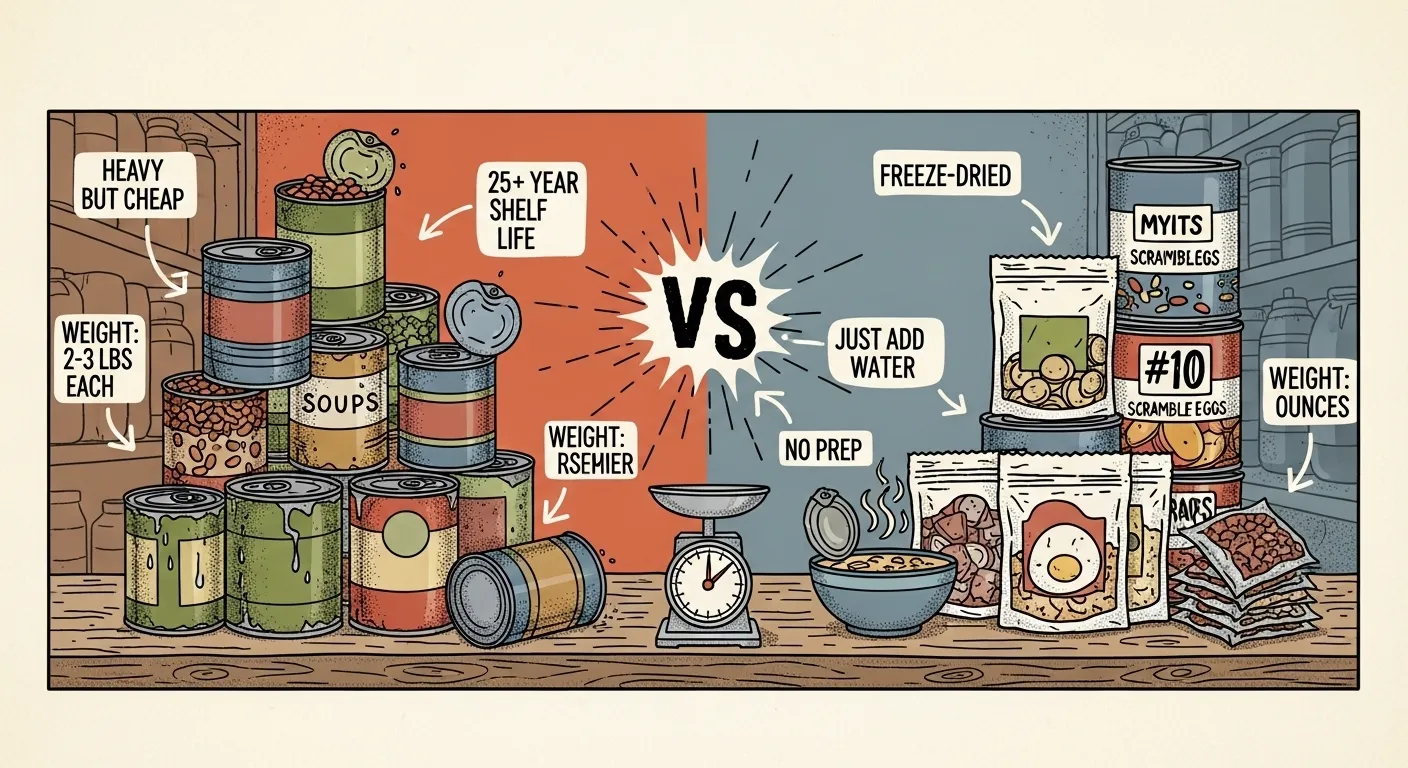
Canned food is best for beginner preppers who want affordable, ready-to-eat emergency food with easy grocery-store access. Freeze-dried food is better for long-term storage, lighter weight, and higher nutrient retention, so the best strategy for most people is to use both.
Key Takeaways
- Build your first 30-90 days of food storage from canned and dry staples you already eat — it's cheaper and needs zero prep skill.
- Layer in freeze-dried meals for anything beyond 90 days or anything going in a bug-out bag, since weight and shelf life matter more there.
- Budget roughly 1-2 cups of water per freeze-dried entree and store water accordingly — it's useless without it.
- Store everything between 50-70°F in a dark, dry space; heat kills shelf life faster than time does.
- Label every can and pouch with purchase date and rotate first-in, first-out — food you forget about is food you throw away.
Canned vs. Freeze-Dried Food: The Ultimate Prepper Showdown
Canned or freeze-dried? People want a single winner. There isn’t one. Building out pantries for families on tight budgets looks different from building bug-out kits for solo hikers, and the honest answer is that these two food types solve different problems. Pick wrong and you either overspend on food you’ll never carry anywhere, or you build a 72-hour kit that weighs as much as a car battery.
Let’s break down where each one earns its shelf space.
Quick Summary
- Canned food is cheap, ready to eat, and easy to rotate through meals you already cook — it’s the right starting point for most beginners.
- Freeze-dried food costs more per calorie but can last 20-30+ years and weighs a fraction of what canned goods weigh, making it the right call for bug-out bags and long-term reserves.
- Nutrient retention leans slightly toward freeze-dried for heat-sensitive vitamins, but the difference won’t make or break your emergency diet.
- Most freeze-dried meals need 1-2 cups of water to rehydrate — factor that into your water storage plan, not just your food plan.
- The smartest approach for almost everyone is a mixed pantry: canned and dry goods for the first few months, freeze-dried for the long haul and anything mobile.
What Are We Actually Comparing?
Canned Food, Defined
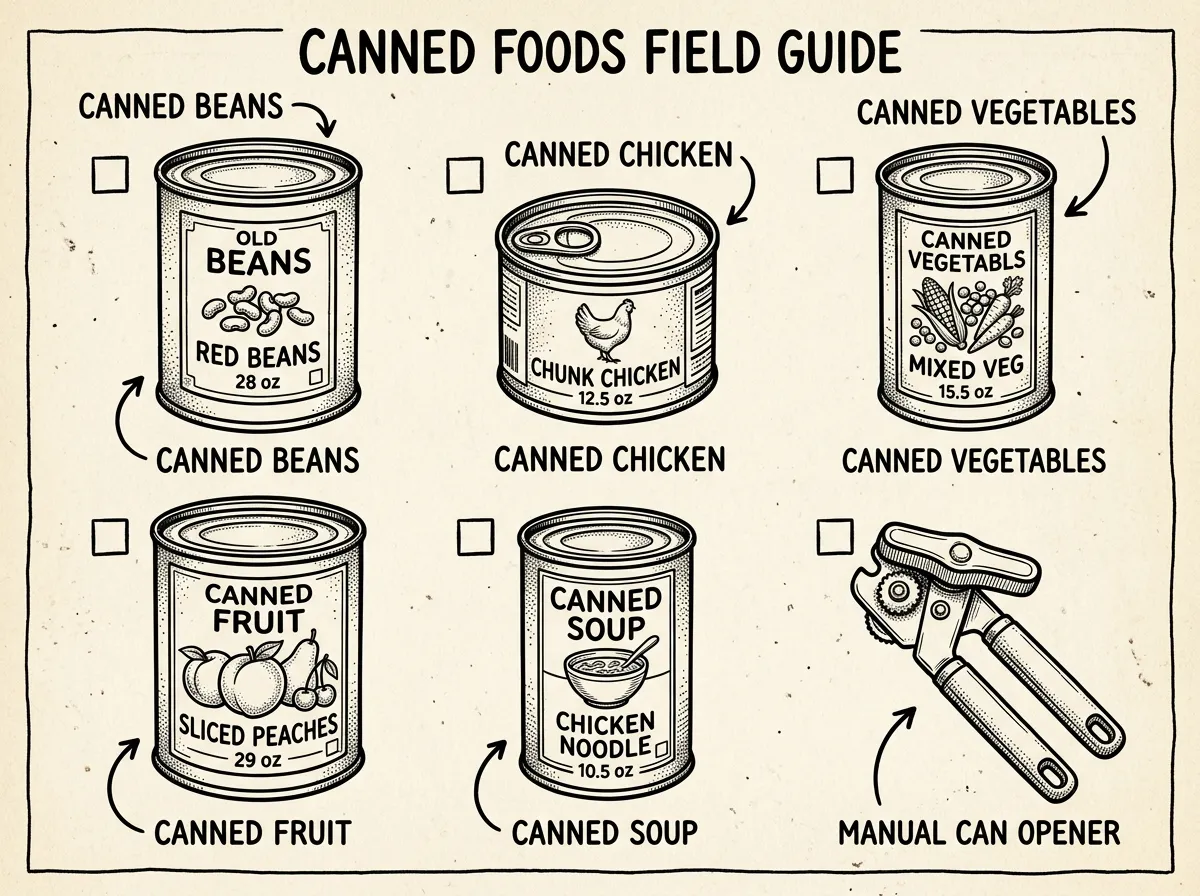 Essential canned goods for emergency food storage
Canned food is exactly what it sounds like — food sealed in a metal can and heat-processed until it’s shelf-stable. Most of what you’ll stock (beans, chicken, soups, vegetables, fruit) is fully cooked already. Open the can, and you’re eating. No water, no stove, no waiting.
Freeze-Dried Food, Defined
Freeze-drying is a slower, more technical process. Food gets frozen solid, then placed under vacuum so the ice sublimates — it goes straight from solid to vapor without ever becoming liquid. That’s what keeps the structure and a lot of the nutrients intact. What you’re left with is incredibly light, almost papery food that needs water added back before you eat it.
Canned vs. Freeze-Dried at a Glance
| Feature | Canned Food | Freeze-Dried Food |
|---|---|---|
| Typical shelf life | 1-5 years (varies by food and storage) | 20-30+ years with oxygen absorbers, stored cool and dry |
| Weight | Heavy and bulky | Very lightweight and compact |
| Prep | Usually ready to eat | Usually needs water to rehydrate |
| Cost per calorie | Low | Higher |
| Nutrient retention | Heat processing lowers some vitamins | Gentler on heat-sensitive nutrients, varies by food |
| Best use | Short-term pantry, everyday rotation | Long-term storage, bug-out kits |
Shelf Life: The Real Numbers
Canned Food’s Shelf Life
Most canned goods are good for 1 to 5 years past the pack date, and well-stored low-acid canned meats and vegetables can remain safe well beyond that. That said, don’t treat “indefinite” shelf life claims you see floating around online as gospel. Dented, rusted, or bulging cans get tossed, period — no exceptions, no “it’s probably fine.”
Storage temperature does more work than most people realize. Keep cans in a cool, dry, dark space between roughly 50 and 70°F. A garage that swings from freezing to 100°F in summer will cook the shelf life out of your canned goods faster than the calendar suggests.
Freeze-Dried Food’s Shelf Life
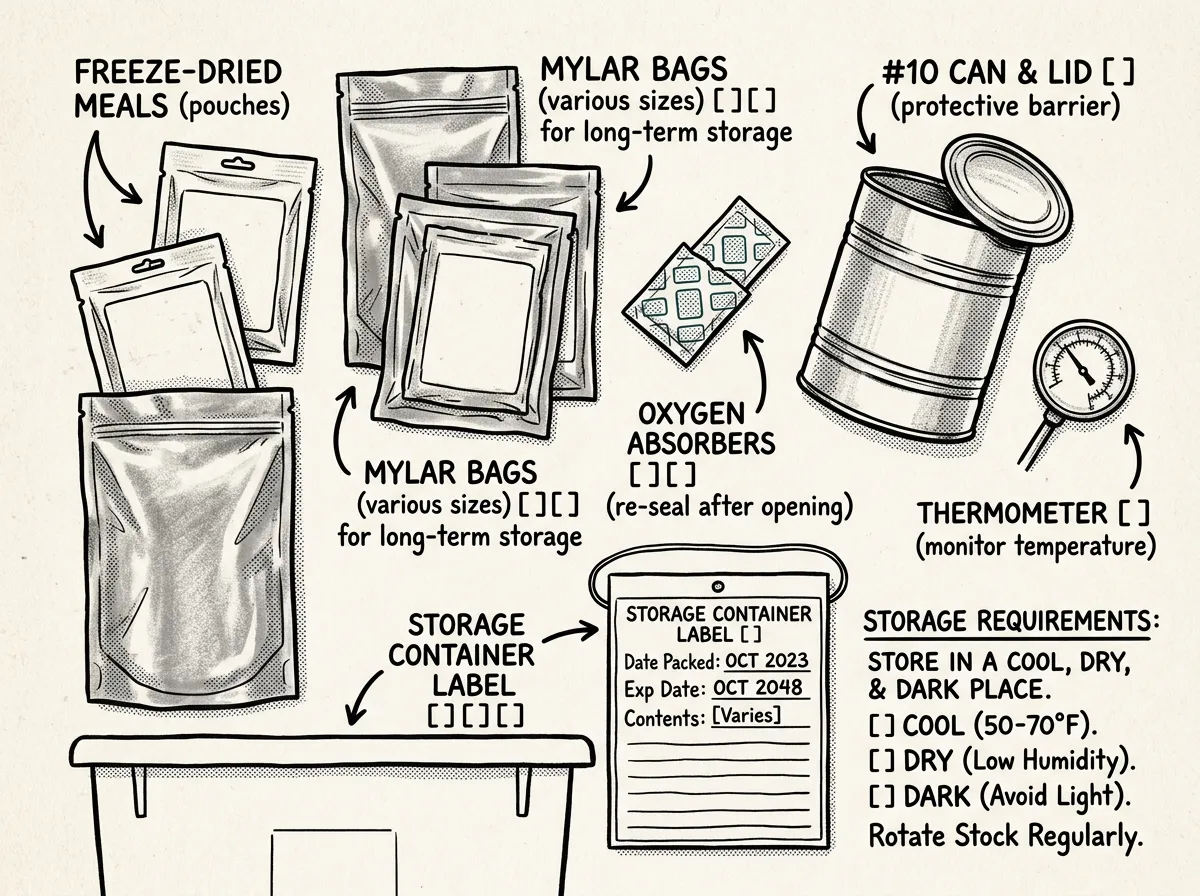 Freeze-dried food storage essentials for long-term preservation
This is where freeze-dried earns its reputation. Many products list 20 to 30+ years when sealed with oxygen absorbers in Mylar pouches or metal #10 cans and stored properly. That’s not marketing fluff — it’s the whole point of the process. Removing nearly all the moisture starves the bacteria and mold that spoil food in the first place.
A common mistake among new preppers is buying freeze-dried buckets, opening one pouch, resealing it loosely with a chip clip, and wondering why it goes stale in six months. Once you break that oxygen barrier, the clock starts over. Use it up or reseal it properly with a fresh oxygen absorber and a heat sealer.
Weight, Storage Space, and Portability
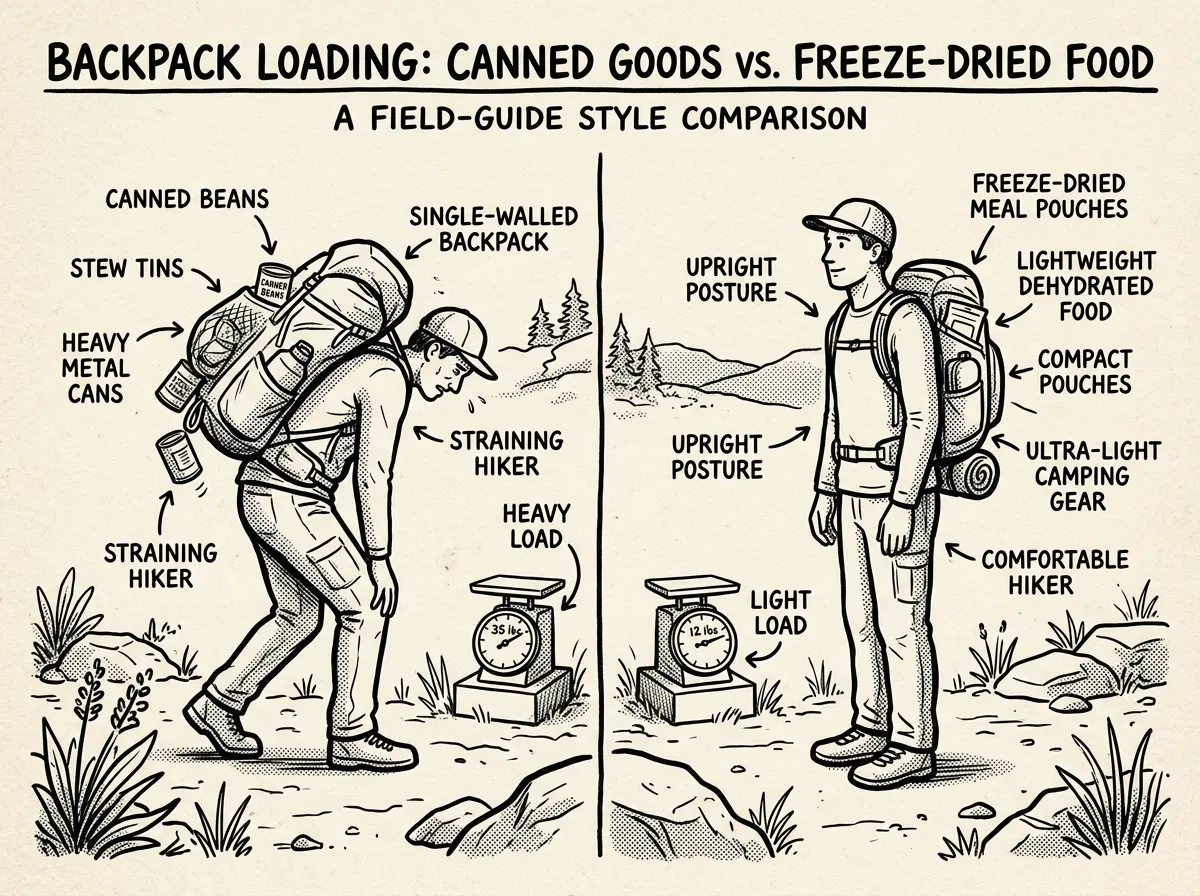 Comparing weight and bulk of canned versus freeze-dried meals
Here’s the question you’re probably asking if you’re building a bug-out bag: how much can I actually carry? Canned food is dense — a single can of chicken can weigh close to a pound, and that’s one meal for maybe two people. Freeze-dried meals in pouches weigh a few ounces each and pack flat, which means you can carry five days of food in the space one canned meal takes up.
Packing both food types into a 72-hour kit makes the difference obvious. A bag stuffed with canned goods pulls at the shoulders after just a couple of miles, while freeze-dried meals let you carry a week of calories at the weight of a single day’s worth of canned food. If a kit needs to move, freeze-dried isn’t optional — it’s the whole point.
For a stationary pantry in your basement, though, weight barely matters. That’s where canned food’s low cost and zero-prep convenience really shine.
Cost Per Calorie
Canned food wins on price almost every time. A can of beans or chicken from a grocery store runs a couple of dollars and delivers real calories and protein without any special ordering. Freeze-dried meals cost more — a single-serving pouch from a brand like Mountain House runs around $8-10, and a bucket with a couple dozen servings can run $80-100 depending on the entree mix.
That price gap is the tradeoff you’re paying for: decades of shelf life and a fraction of the weight. Freeze-dried isn’t necessarily overpriced — it’s often misunderstood. You’re not paying for calories. You’re paying for storage life and portability.
Buy a single-serving sample pack before committing to a bulk bucket. Some buyers spend $300 on a freeze-dried case only to discover they hate the texture of the eggs. Test first, buy in bulk second.
Nutrition and Taste
Nutrient retention depends heavily on the specific food and process, but freeze-drying tends to be gentler on heat-sensitive vitamins like vitamin C compared to the high-heat canning process. That’s a real advantage, but don’t overstate it — it’s not going to be the difference between scurvy and health in a short-term emergency. Read the nutrition label on whatever you buy rather than assuming one method automatically wins.
Taste and texture is where personal preference takes over. Canned food delivers familiar textures because, frankly, it’s just cooked food in a can. Freeze-dried rehydrates well when done right, but quality varies a lot by brand. Cheaper freeze-dried eggs tend to rehydrate rubbery, while better brands get closer to fresh scrambled eggs.
One thing worth checking regardless of which you buy: sodium. Plenty of canned meals and freeze-dried entrees run high on salt for flavor and preservation. If you’re managing blood pressure or just don’t want to feel bloated after every emergency meal, read the label before you stock a case of anything.
Preparation and Convenience
- Boil or heat water — roughly 1 to 2 cups per serving depending on the meal
- Pour water directly into the pouch or a bowl with the freeze-dried contents
- Stir, then seal or cover and let sit 10-15 minutes
- Stir again and check texture before eating — add a splash more hot water if it’s still firm
Canned food skips all of that. Open it, heat it if you want to, eat it. That simplicity matters more than people give it credit for during an actual emergency, when you’re stressed, maybe without power, and not exactly in the mood to follow a rehydration process. Keep a manual can opener — a basic OXO Good Grips model runs around $12-15 — in every kit you own. It’s common for people to stock cases of canned food and forget the opener entirely. Don’t be that person.
Building Your Strategy: A Practical Starter Plan
- 30-90 days of canned and dry staples you already eat
- Freeze-dried entrees and proteins for long-term backup, sealed with oxygen absorbers
- Manual can opener stored with your food, not buried in a drawer
- Water storage sized for both drinking and rehydrating freeze-dried meals
- Basic cookware — a pot and a heat source — for anything that needs boiling water
- Labels with purchase dates on every container, rotated first-in, first-out
Your area gets hit by a winter storm and the grid stays down for ten days. Your canned pantry covers the first week easily, no prep needed. By day eight you’re reaching into the freeze-dried bucket, boiling water on a camp stove, and stretching your canned reserves for the days you can’t fully rehydrate a meal.
This is exactly why building in that order — canned first, freeze-dried second — makes sense. Most emergencies resolve inside a couple of weeks. Your canned pantry should carry you through the likely scenario. Freeze-dried is your insurance for the unlikely one.
Which One Should You Buy First?
If you’re just starting out and money’s tight, canned food is your on-ramp. It’s available at every grocery store, doesn’t require special ordering, and you’re probably already eating half of what you’d stock. Rotate it into normal meals and you’ll never waste a dollar.
If you’re specifically building a bug-out bag or you’ve already got 90 days of pantry staples covered, freeze-dried is where your next dollars should go. It’s the tool for mobility and multi-decade storage, not everyday eating.
Canned food feeds you today. Freeze-dried food protects you for decades — pick your priority, then build toward it.
Storage Best Practices
Wherever you land on the canned-versus-freeze-dried question, storage conditions decide whether your food survives to the date on the label. Keep both types in a space that stays between roughly 50 and 70°F, out of direct sunlight, and away from humidity swings. A basement or interior closet usually beats a garage or attic by a wide margin.
If you’re in a humid Gulf Coast climate, pay extra attention to your freeze-dried packaging — any pinhole in a Mylar pouch lets moisture creep in over months, and you won’t know until you open it and find clumping. High desert storage is a different problem entirely; temperature swings between day and night stress packaging seals over years. Check your stock at least once a year regardless of where you live.
Label every can and pouch with the purchase date the day it comes into your house. Forgetting to date food is a common source of wasted stock, especially early on. Rotate on a strict first-in, first-out basis and you’ll rarely throw anything away.
Frequently Asked Questions
Is canned or freeze-dried food better for emergency preparedness?
Neither wins outright — it depends on your budget, storage space, and the scenario you’re planning for. Most people end up needing both.
Which lasts longer?
Freeze-dried, when sealed with oxygen absorbers and stored cool and dry, typically outlasts canned food by a wide margin — 20-30+ years versus 1-5 years. Always check the manufacture date and storage instructions rather than assuming a printed number applies no matter how you store it.
Which is cheaper for beginners?
Canned food, by a clear margin. It’s also easier to source locally and rotate through meals you’re already cooking, which makes it the smarter first investment.
Do I need water for freeze-dried food?
Yes, almost always. Budget roughly 1-2 cups of water per entree and make sure your water storage plan accounts for cooking and rehydrating, not just drinking.
A mixed pantry gives you the most flexibility for most households. Canned food covers your first few weeks with zero prep skill required. Freeze-dried covers the months beyond that and anything that needs to travel in a bag. Start with what you’ll actually eat, rotate it honestly, and add freeze-dried where it solves a real problem — weight, mobility, or decades of storage — rather than because it sounds impressive on a shelf.
Becoming a Prepper: The Beginner’s Guide to Survival Readiness How to Build a Bug Out Bag: Essentials for a Quick Getaway Water, Water Everywhere: How to Store H2O Without Losing Your Sanity
The Complete
Prepper's Reference.
149 articles synthesized into one comprehensive PDF — twelve chapters covering water, food, shelter, first aid, comms, and scenario-specific preparedness. Free with your email.
Unsubscribe anytime · We never share your email
You're in. Check your inbox.
Keep Reading
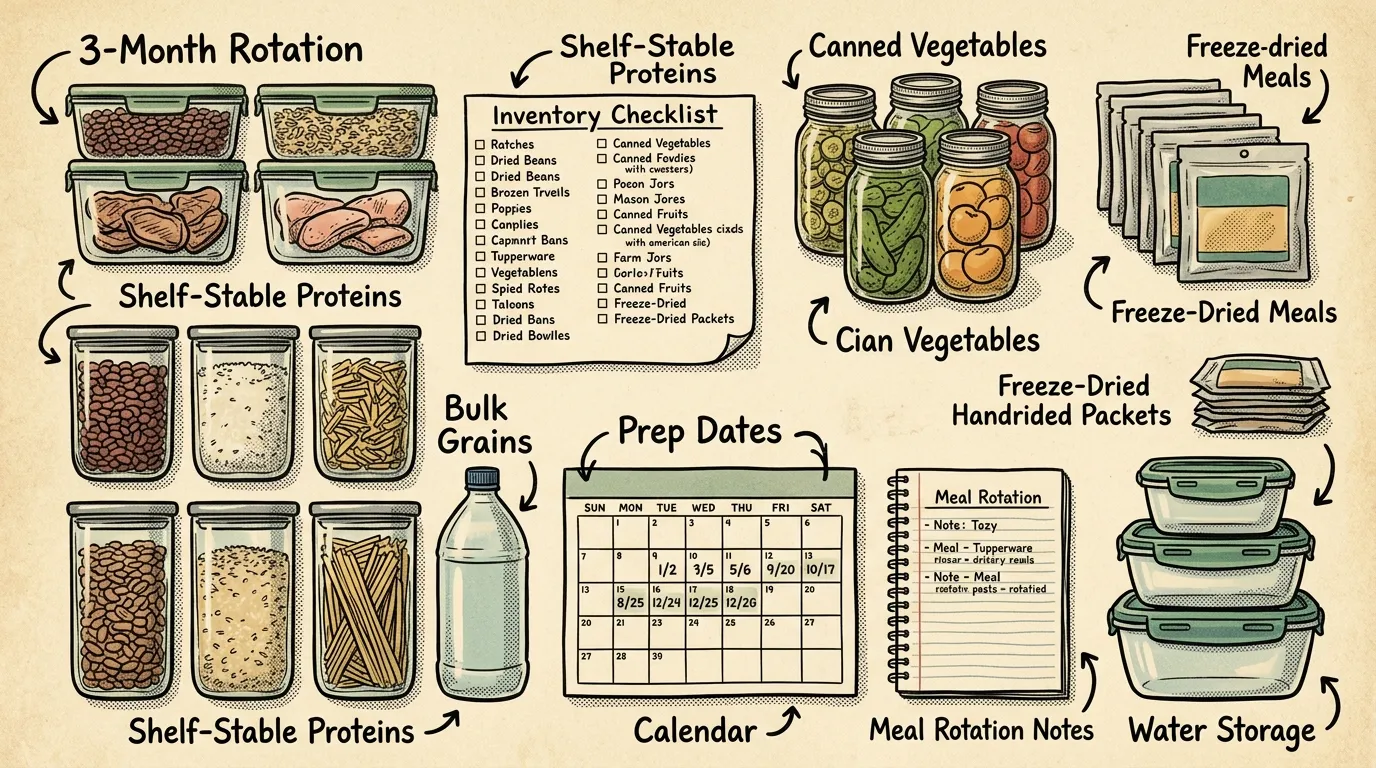
Meal Prepping Ideas That Build Long-Term Food Security
Meal prepping ideas that go past Sunday batch-cooking — build rotating stockpiles, cut costs, and prep for real emergencies. See how.
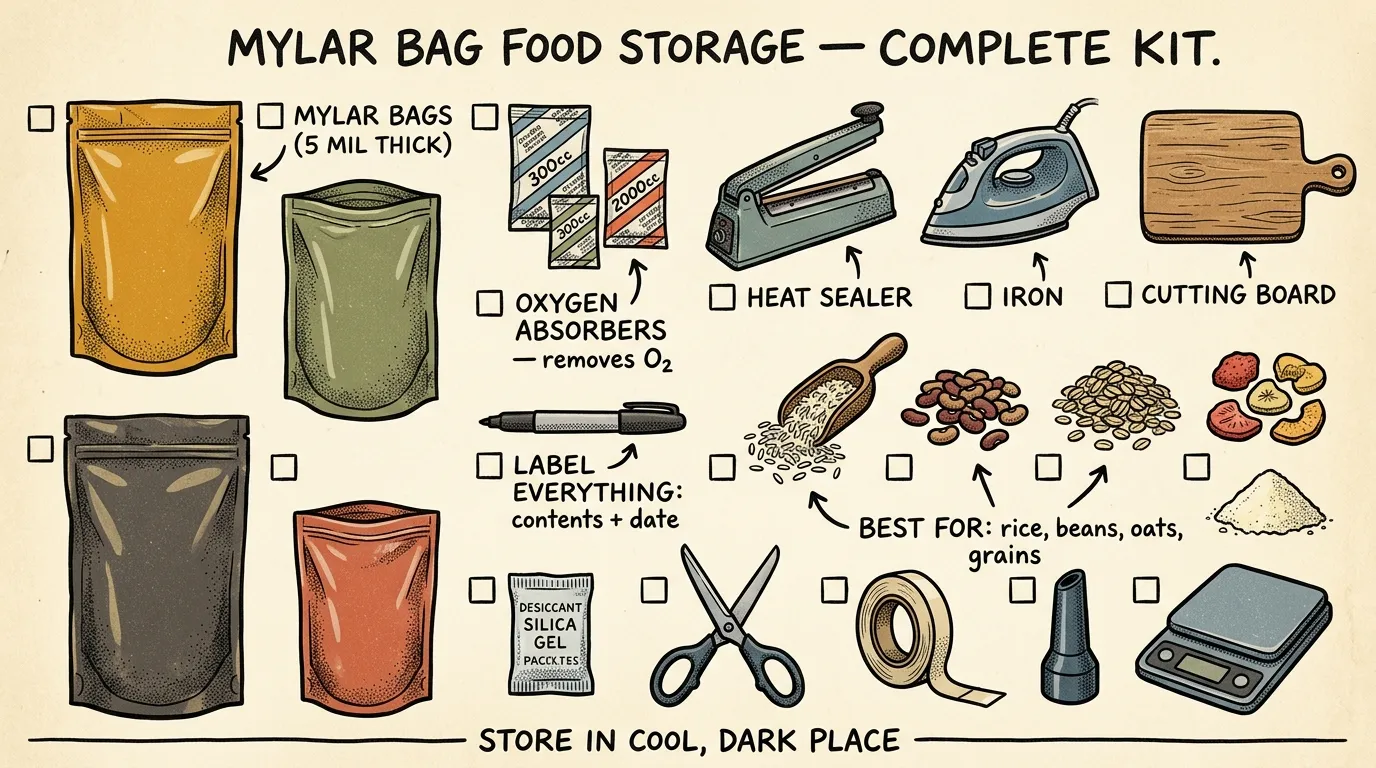
Mylar Bags for Food Storage: Complete Guide (2026)
Learn how to use mylar bags for food storage to preserve dry goods 25+ years. Expert guide covers thickness, sealing, oxygen absorbers & mistakes to avoid.
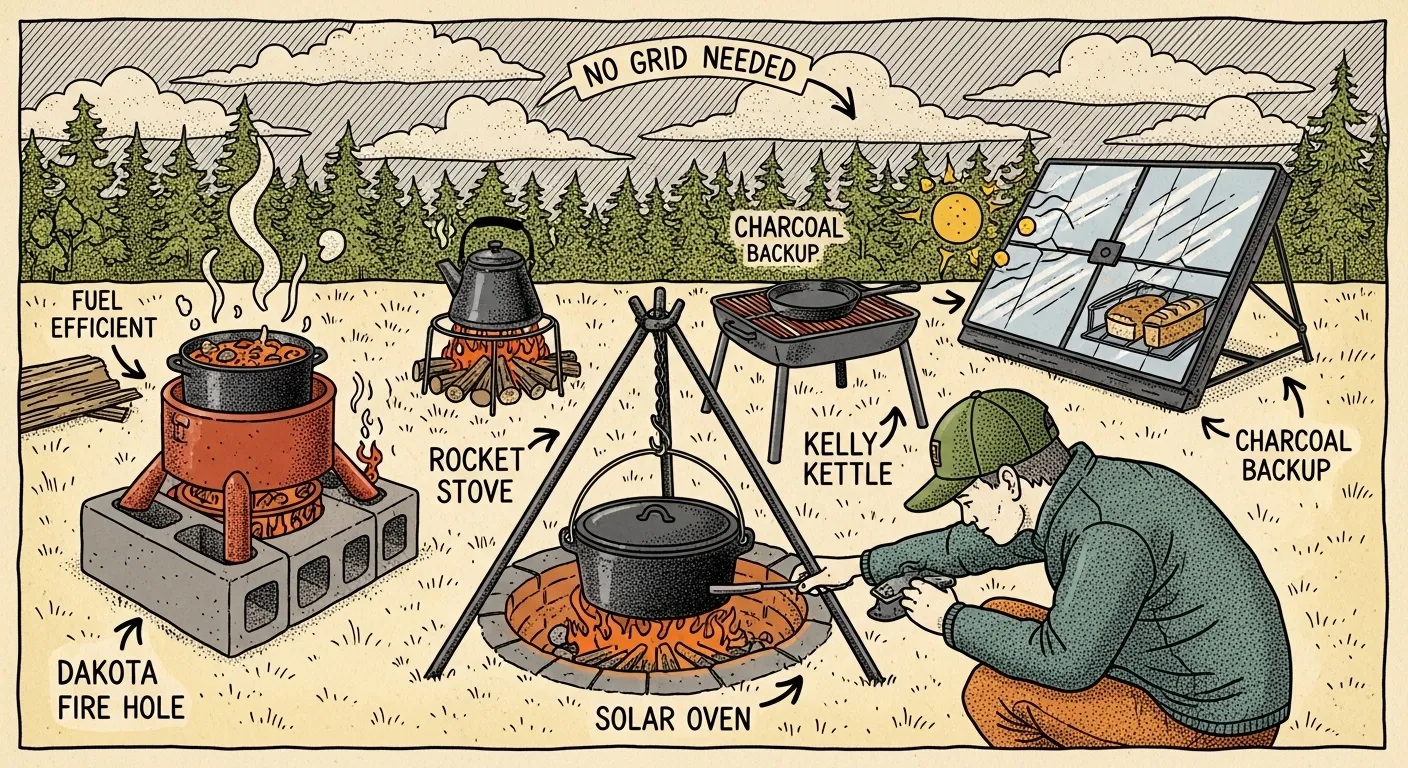
Alternative Cooking Methods for Preppers
Learn practical off-grid cooking methods for beginners, including solar ovens, rocket stoves, Dutch ovens, campfires, and alcohol stoves.