Understanding the Winter Storm Threat
Winter storms are deceptively dangerous because they combine multiple hazards at once: extreme cold, heavy snow or ice accumulation, high winds, and prolonged power outages. According to NOAA, winter storms contribute to roughly 70 deaths per year in the U.S. from hypothermia alone — and hundreds more from carbon monoxide poisoning caused by improper indoor heating.
The threats you need to plan for:
- Power outages — Ice-laden trees and high winds snap power lines. Outages lasting 3–7 days are common in severe storms.
- Loss of heating — Most furnaces require electricity, even gas-powered ones.
- Road closures — Snow and ice can make roads impassable for days, cutting off access to stores, pharmacies, and hospitals.
- Frozen pipes — Burst pipes cause billions in damage annually and can leave you without running water.
- Roof collapse — Heavy, wet snow loads can exceed structural limits, especially on flat or aging roofs.
The key mindset shift: plan to be entirely self-sufficient in your home for at least 72 hours, ideally five days.
Shelter-in-Place and Evacuation Planning
In most winter storms, sheltering in place is your best strategy — but only if your home is prepared. If your heating system fails entirely and indoor temperatures drop below 50°F with no backup, evacuation to a warming center or a friend's home with heat becomes the safer choice.
Shelter-in-place priorities:
- Designate one room as your "warm room." Choose a small interior room you can close off and heat with a single safe source. Bedrooms work well.
- Seal drafts around windows and doors with towels, plastic sheeting, or removable caulk before the storm hits.
- Move sleeping supplies — sleeping bags rated to 20°F or below, wool blankets, and sleeping pads — into the warm room.
Evacuation triggers:
- Indoor temperature drops below 45°F and you have no safe backup heating.
- A household member has a medical condition sensitive to cold (infants, elderly, chronic illness).
- Structural damage to your home from ice or fallen trees.
Identify two evacuation destinations before the storm: one nearby (neighbor or local shelter) and one 30+ miles away in case the storm's impact is regional. Keep your vehicle's gas tank above half from November through February.
Your Winter Emergency Kit — Specifics That Matter
Generic lists won't keep you warm. Here's what FEMA and Red Cross winter-outage guidance actually recommends:
Water: Store 1 gallon per person per day for 5 days. If pipes freeze, you'll need water for drinking, cooking, and sanitation. Fill bathtubs before the storm as backup non-potable water.
Food: Stock 5 days of calorie-dense, no-cook food. Think peanut butter, canned chili and soups (with a manual can opener), granola bars, dried fruit, crackers, and canned tuna. If you have a gas stove or camp stove you can safely use, add instant oatmeal, ramen, and coffee — morale matters.
Heating alternatives:
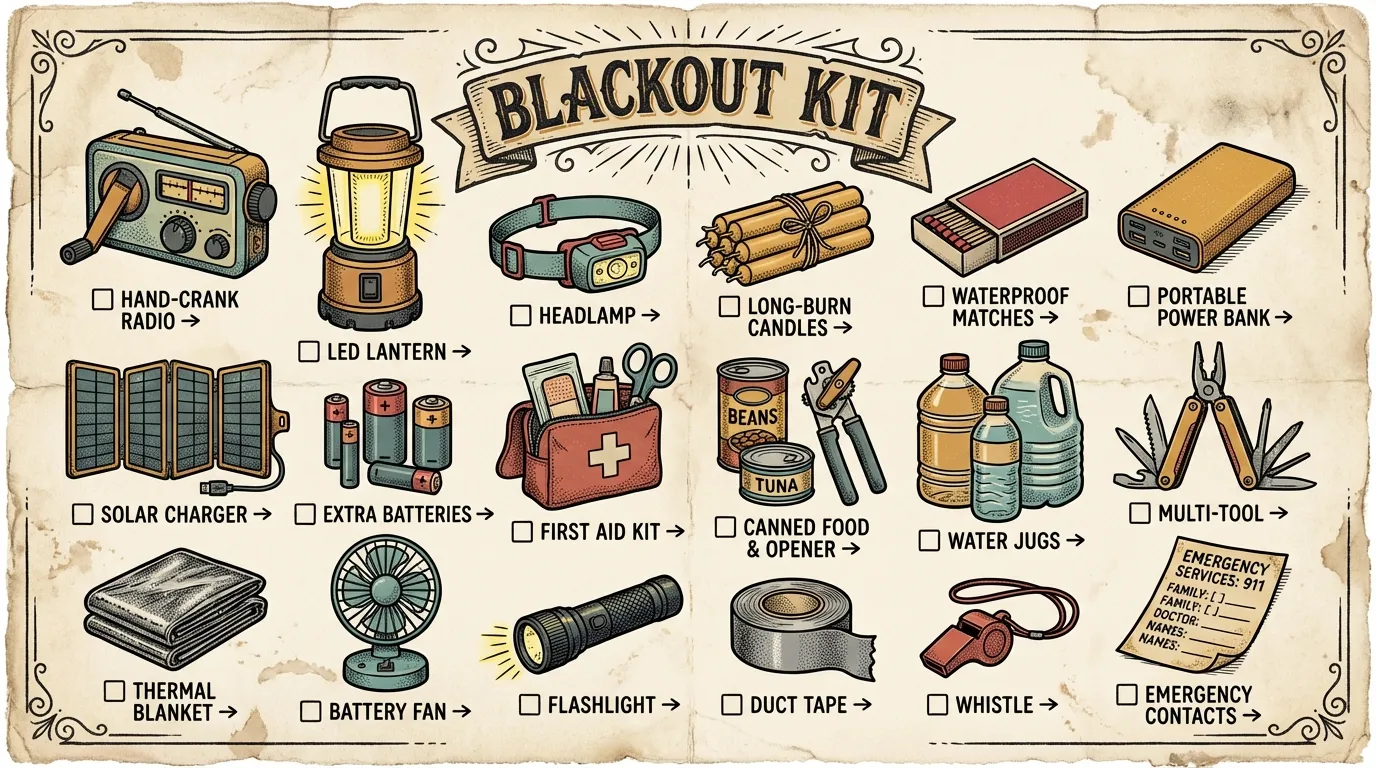
- Indoor-safe propane heater (like a Mr. Heater Buddy) with 4–6 extra 1-lb propane canisters. Always use with a carbon monoxide detector in the room.
- Kerosene heater — effective but requires ventilation. Store 5 gallons of K-1 kerosene.
- Wood stove or fireplace — have your chimney inspected annually and store at least a half-cord of seasoned firewood under cover.
Never use: charcoal grills, gas ovens, or generators indoors. Carbon monoxide is odorless and kills quickly.
Lighting and power:
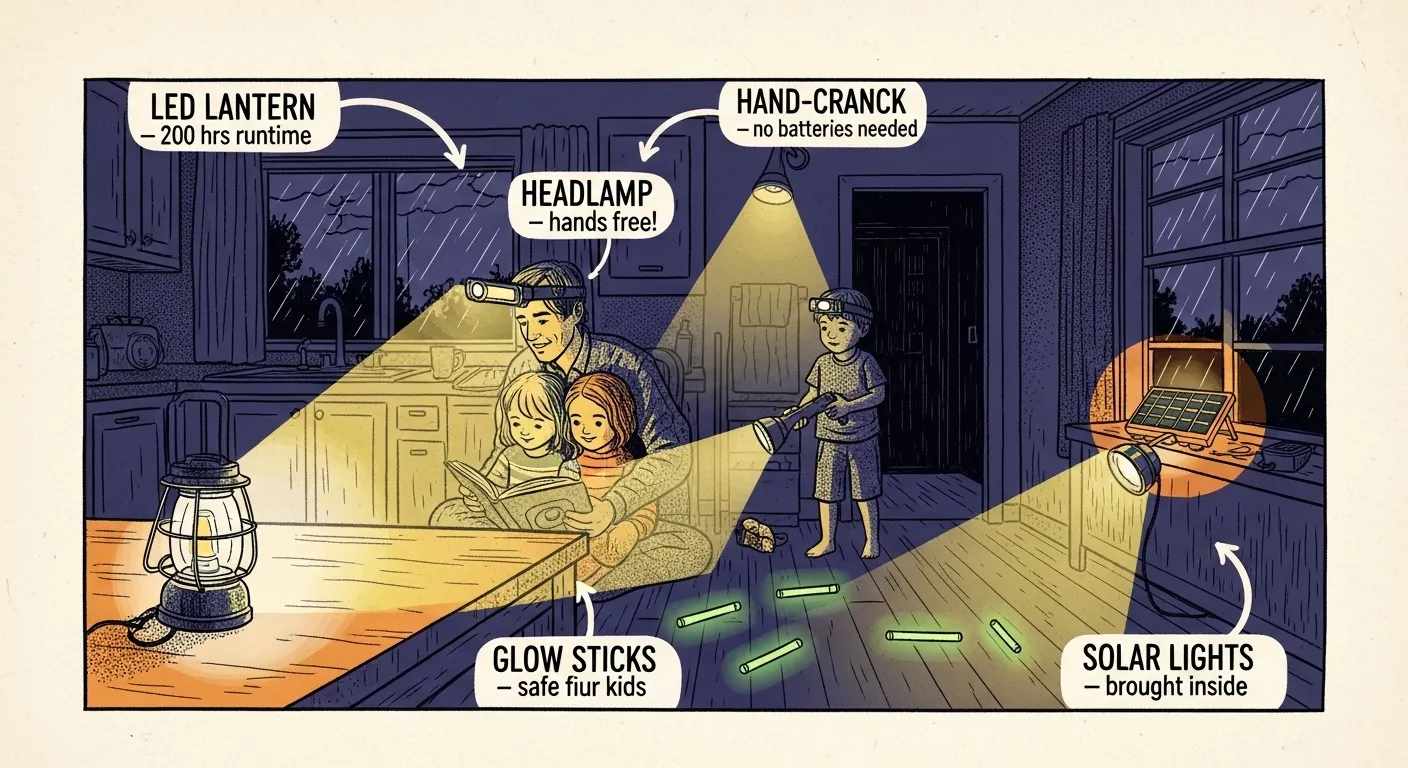
- LED headlamps (one per person) with extra lithium batteries — they outperform flashlights in every way.
- A battery bank (20,000+ mAh) charged before the storm for phones.
- Battery-powered or hand-crank NOAA weather radio.
Communication Plan and Information Access
When the power goes out, your normal communication channels may go with it. Cell towers have backup batteries that last roughly 4–8 hours. Wi-Fi routers go down immediately. You need a plan that doesn't depend on the internet.
Before the storm:
- Designate an out-of-area contact — someone not affected by the same storm — who serves as a communication hub. Every family member checks in with this person.
- Write down critical phone numbers on paper. When your phone dies, you need to know your doctor's number, your insurance company, and your out-of-area contact by hand.
- Download offline maps of your area to your phone.
- Charge all devices to 100% and switch to low-power mode as the storm approaches.
During the storm:
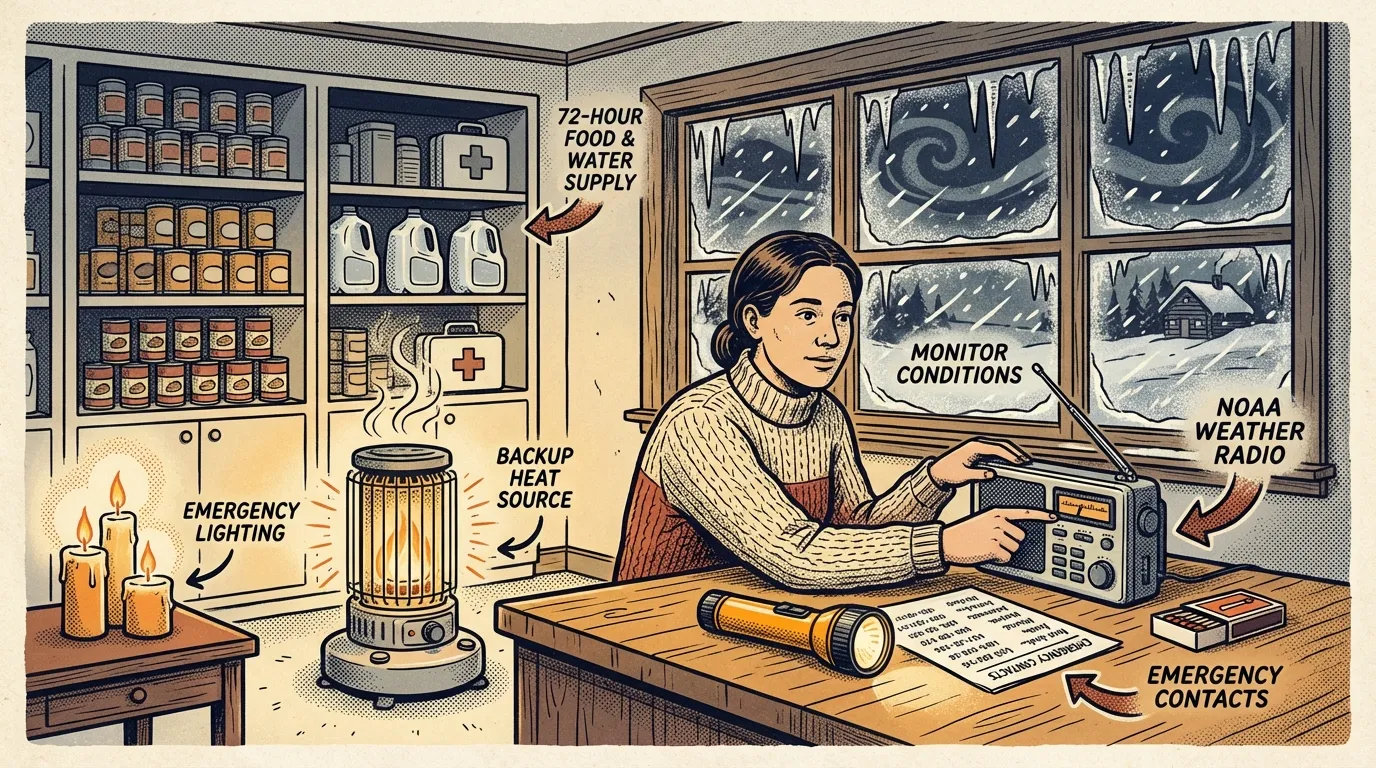
- Monitor NOAA Weather Radio for watches, warnings, and emergency instructions. This is the most reliable source when everything else fails.
- Check on neighbors — especially elderly or homebound residents — in person if safe to do so.
- If you lose cell service, text instead of calling. Texts require far less bandwidth and often get through when voice calls won't.
Preparing Your Family and Household
Gear alone doesn't make you prepared — your household needs to know the plan before the storm hits.
Have a household meeting. Walk through the basics: where's the warm room, where are the supplies, what's the evacuation plan, who's the out-of-area contact. Do this once in early November. It takes 15 minutes.
Infants and young children: Stock extra formula, diapers, and warm layers. Babies lose body heat faster than adults. A good rule: dress them in one more layer than you're wearing.
Elderly family members: Ensure at least a 7-day supply of all prescription medications. Cold weather worsens circulation issues and respiratory conditions. If they use oxygen or electric medical equipment, register with your utility company's life-support program so they're prioritized for power restoration.
Pets: Store 5 days of pet food and ensure you have a warm, draft-free spot for them. Bring outdoor animals inside — period.
Pipes and home prep:
- Know where your main water shut-off valve is and how to use it.
- Insulate exposed pipes in basements, crawlspaces, and garages with foam sleeves.
- During extreme cold, open cabinet doors under sinks on exterior walls and let faucets drip slightly to prevent freezing.
- Clear gutters and trim branches overhanging your roof and power lines before November.
Generator Safety and Backup Power
Generators save lives during extended winter outages — but they're also one of the leading causes of storm-related carbon monoxide deaths. The same tragic headlines repeat after every major storm. Here's how to use them safely.
Placement: Run generators outdoors only, at least 20 feet from any window, door, or vent. Point the exhaust away from the house. Never run one in a garage, even with the door open — CO accumulates faster than you think.
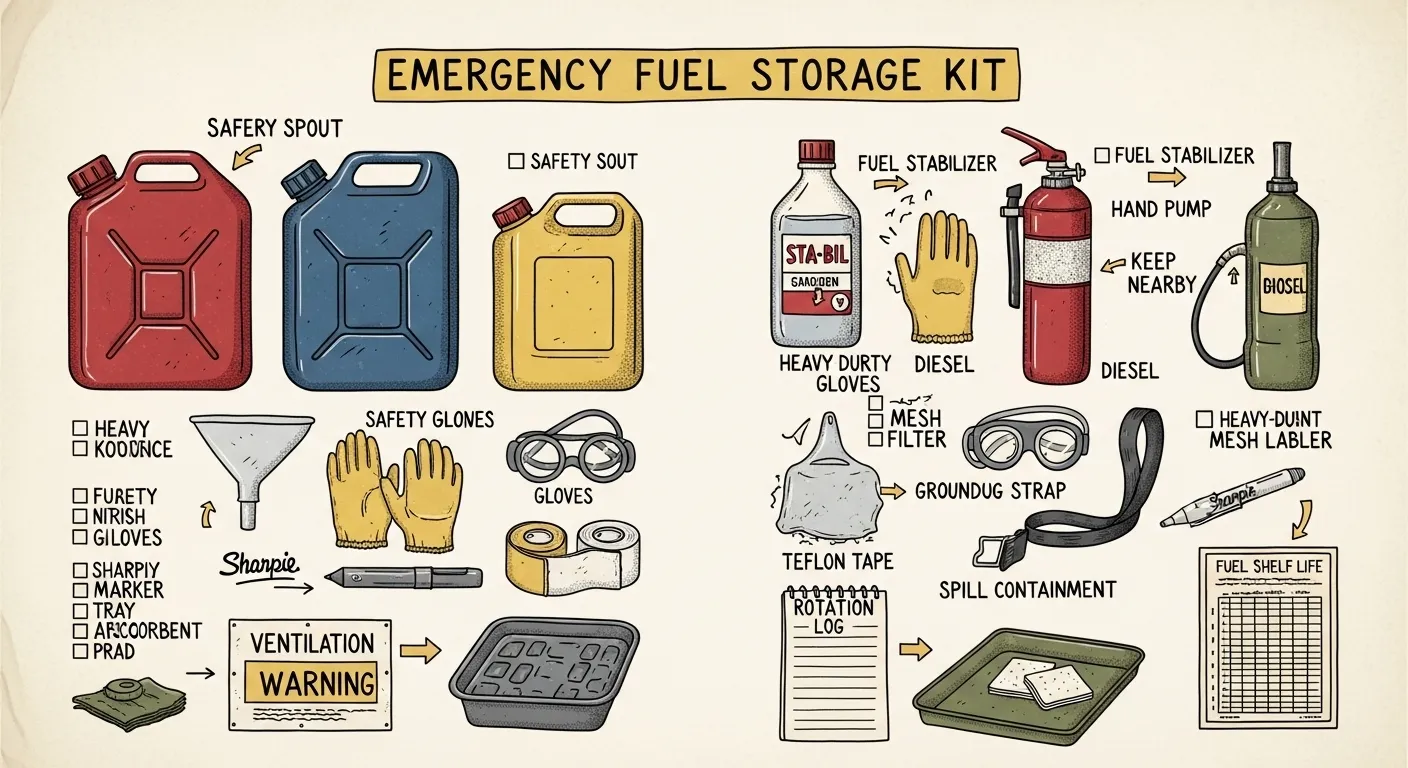
Fuel: Store gasoline in approved containers in a well-ventilated area away from your home. Stabilize fuel with a product like STA-BIL if storing for more than 30 days. For a typical portable generator, plan on 10–15 gallons for 3 days of intermittent use.
Capacity planning: You probably can't run everything. Prioritize: refrigerator, a few lights, phone charging, and medical equipment. A 3,500–5,000 watt generator handles these essentials. Don't backfeed into your home's electrical panel without a transfer switch installed by a licensed electrician — you can electrocute utility workers.
Portable power stations (like Jackery or EcoFlow units) are an excellent alternative for apartments or smaller needs — silent, no fumes, rechargeable via solar panels.
The Bottom Line
Preparation isn't about being paranoid — it's about being comfortable when everyone else is miserable. The families who have a warm room plan, a stocked pantry, and a charged weather radio ride out winter storms with hot soup and board games. The ones who don't end up cold, scared, and scrambling. There is time right now. Use it.
The number one mistake every winter is treating a gas oven or charcoal grill as a backup heater — don't do it, it can kill in hours. An indoor-safe propane heater and a carbon monoxide detector solve the biggest vulnerability for about $100. Do it this weekend, not the day the forecast turns ugly.