What Is a Bug-Out Bag and Why You Need One
A bug-out bag (BOB) is a pre-packed, grab-and-go kit designed to sustain you for at least 72 hours when you need to evacuate fast. Whether it's a wildfire, earthquake, flood, or infrastructure failure, the goal is simple: keep you alive and moving until you reach safety or help arrives. The 72-hour window isn't arbitrary — it's the standard timeframe emergency services use to establish response operations. Your bag bridges that gap. It's not a camping setup or a doomsday bunker on your back. It's a focused, lightweight survival system built around your specific needs, environment, and physical ability. If you've never built one, start here and build up deliberately.
Bug-Out Bag Essentials: What to Pack
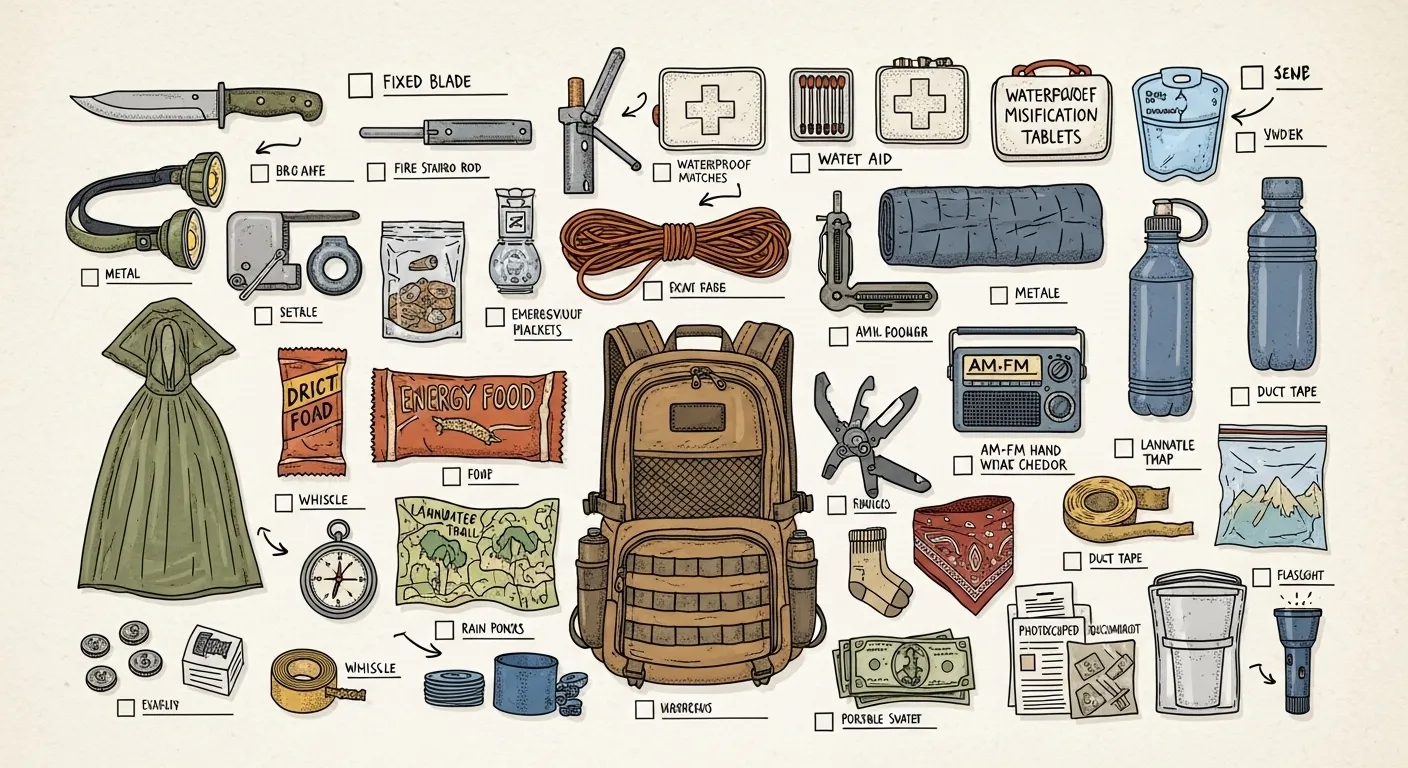
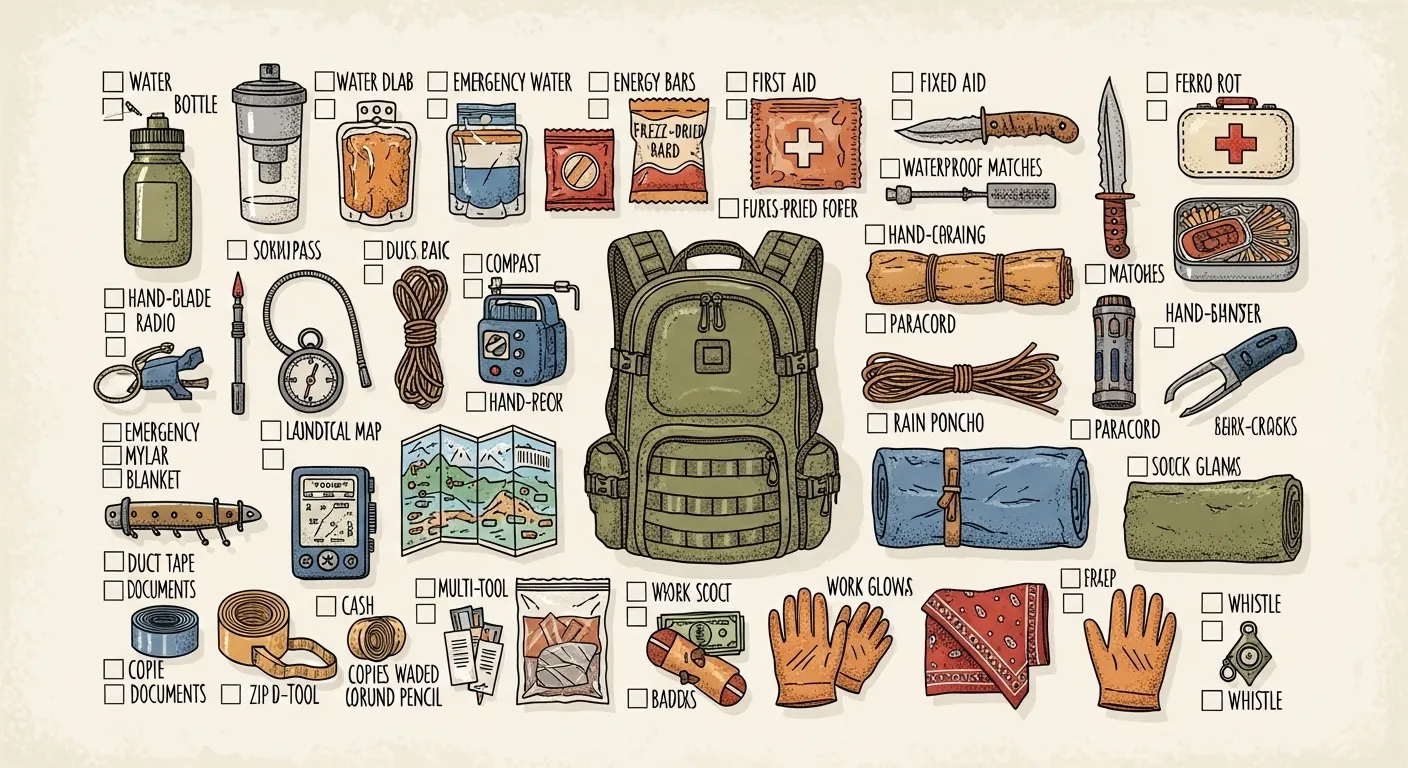
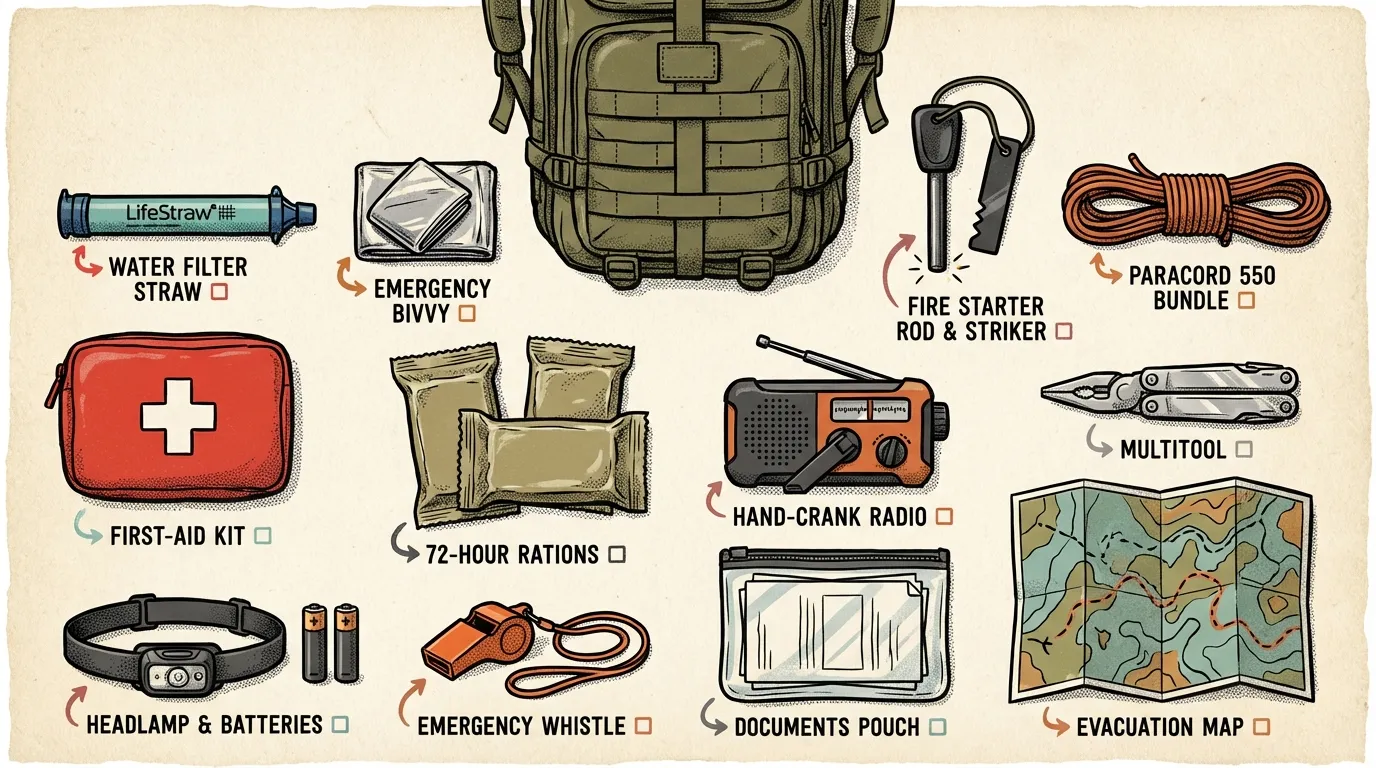
Every bug-out bag should cover five core survival categories. Pack smart by prioritizing multi-use items and eliminating redundancy.
- Water: Carry at least 1 liter and include a portable filter or purification tablets. Water is weight, so filtration extends your supply without the bulk.
- Food: High-calorie, non-perishable options like energy bars, freeze-dried meals, and trail mix. Aim for 2,000+ calories per day.
- Shelter & Warmth: Emergency bivvy or compact tarp, extra socks, a base layer, and a fire-starting kit (lighter plus ferro rod backup).
- First Aid: A quality kit with trauma supplies — not just bandages. Include personal medications.
- Navigation & Communication: Physical map and compass, plus a hand-crank or battery-powered radio. Don't rely solely on your phone.
Building Your First Bug-Out Bag: A Beginner's Shopping List
If you're new to prepping, the gear market can be overwhelming. Start with a solid, comfortable backpack in the 35-45 liter range — your bag is your foundation, and a poor-fitting pack will wreck your mobility. Shop smart by buying quality basics first and upgrading over time rather than buying everything at once.
- A durable, water-resistant backpack with hip belt support
- 1-liter water bottle plus a Sawyer Mini or similar filter
- 3 days of calorie-dense food (bars, jerky, electrolyte packets)
- Emergency blanket or compact sleeping bag
- Headlamp with extra batteries
- Multi-tool and fixed-blade knife
- Copies of critical documents in a waterproof bag
Common beginner mistakes include overpacking gear you've never tested, ignoring weight limits, and forgetting to rotate perishable supplies. Build your bag, then take it on a walk. You'll learn fast what stays and what goes.
Everyday Carry (EDC) and How It Layers with Your Bug-Out Bag
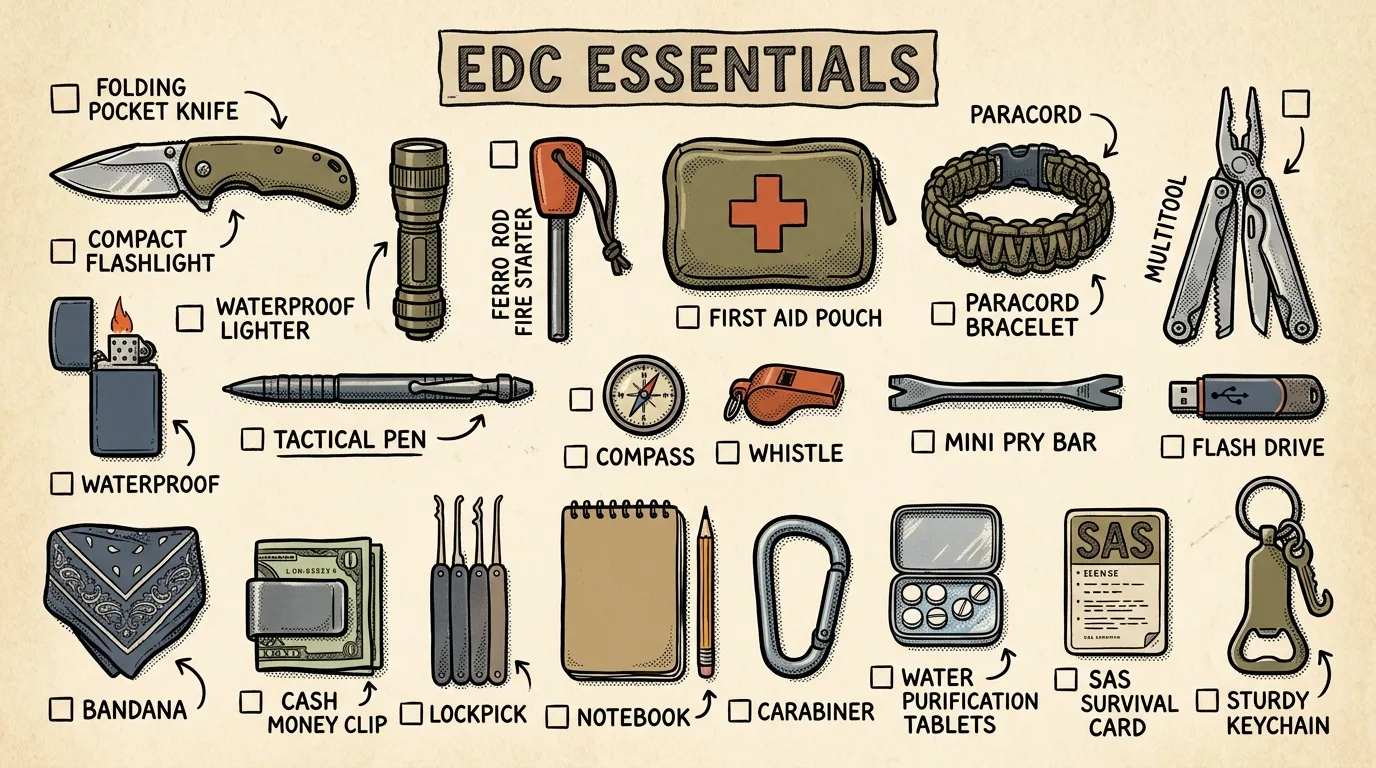
Your everyday carry kit is the first layer of preparedness — the gear on your person at all times, whether you're at work, commuting, or running errands. A well-built EDC means you're never starting from zero. It complements your bug-out bag by covering immediate needs so your BOB can focus on sustained survival.
- Core EDC essentials: folding knife or multi-tool, flashlight, lighter, cash, phone charger, and a compact first aid pouch
- Personalization matters: Your EDC should reflect your daily environment, medical needs, and routine. An office worker's kit looks different from a field technician's.
- Budget-friendly approach: Start with a quality multi-tool and a reliable flashlight — those two items cover an outsized number of scenarios.
Think of it this way: EDC handles the first hour, your bug-out bag handles the first 72. Together, they form a seamless preparedness system with no gaps.
Packing Smart: Weight, Organization, and Common Mistakes
The fastest way to sabotage your bug-out plan is to build a bag you can't actually carry. It's common to pack a 40-pound bag and give out within the first mile. The rule is simple: under 25 lbs for adults, under 10 lbs for kids. Every item needs to justify its weight through genuine survival utility or multi-function capability.
- Use packing cubes or dry bags to organize by category (water, shelter, food, medical, tools)
- Place heavy items close to your back and centered between your shoulders and hips
- Eliminate duplicates — one quality knife beats three cheap ones
- Test your loaded bag on a 3-mile walk before you call it done
Rotate food and batteries every 6 months. Check medications for expiration. A bag that sits in a closet untouched for two years isn't a survival tool — it's a time capsule. Maintain it like the life-saving equipment it is.
Personalizing Your Bug-Out Bag for Your Environment and Family
There's no universal bug-out bag — and anyone selling you a one-size-fits-all solution is cutting corners. Your bag needs to reflect your actual threat landscape, physical fitness, climate, and family situation. In wetter regions like the Pacific Northwest, prioritize rain protection, hypothermia prevention, and navigation for dense terrain. In hot, arid regions like the desert Southwest, prioritize sun protection, extra water capacity, and electrolyte management.
- Families: Build individual bags for every member old enough to carry one. Kids' bags should hold their own water, snacks, a light layer, and a comfort item.
- Medical needs: Prescription medications, glasses, EpiPens, and inhalers are non-negotiable personal items.
- Seasonal review: Swap out layers and adjust water/calorie loads as seasons change.
The best bug-out bag is the one you've practiced with, adjusted, and made truly yours. Cookie-cutter kits are a starting point, not a finish line.
The perfect bug-out bag doesn't come off a shelf — it's built through testing, trimming, and honest self-assessment. Stop chasing gear lists and start walking with a loaded pack. A short test hike teaches more than a hundred forum threads ever will.