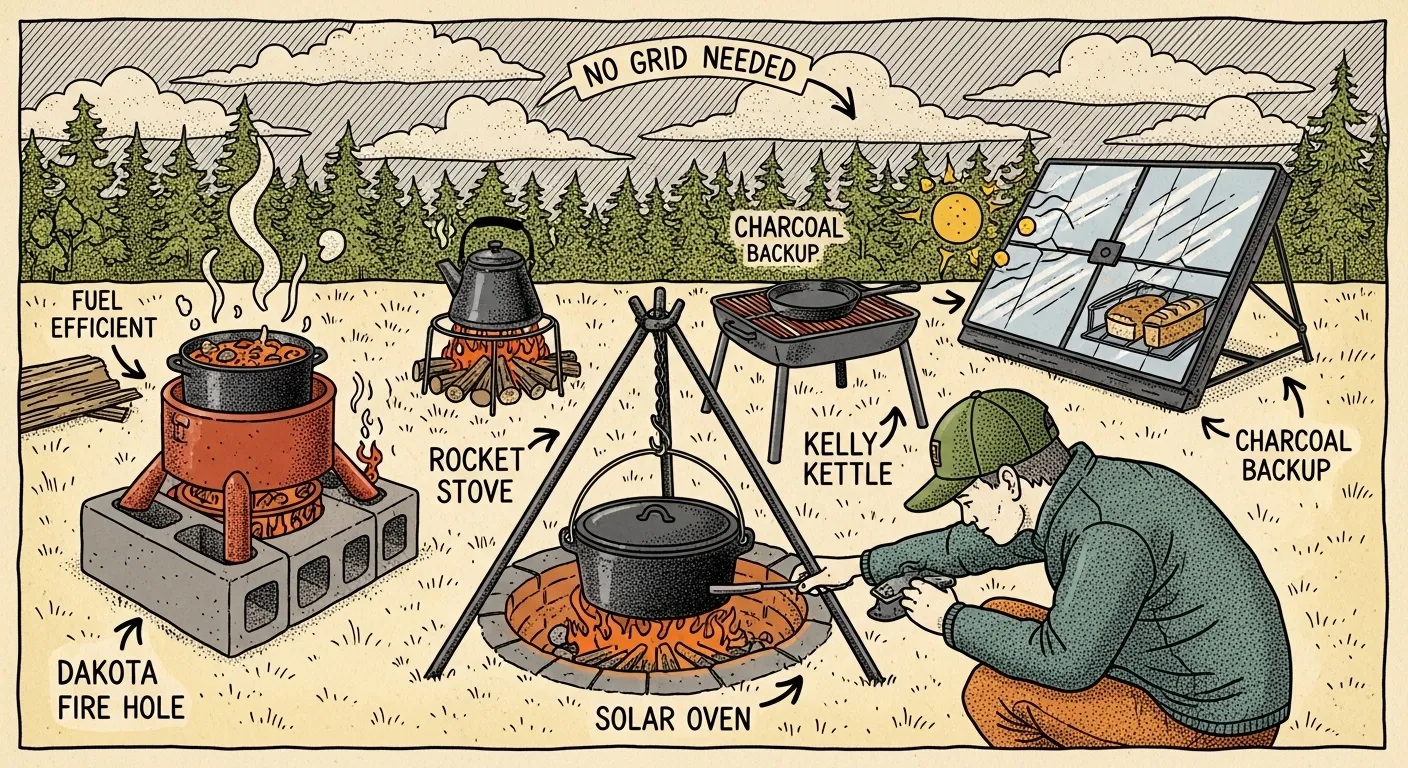
Beginners can cook without electricity or gas using solar cookers, rocket stoves, Dutch ovens, campfires, and alcohol stoves. The best choice depends on your climate, portability needs, fuel availability, and whether you need a home backup system or a mobile emergency option.
Key Takeaways
- Build a three-method system: one home backup, one portable option, and one low-fuel long-term solution.
- A rocket stove will boil water faster than an open campfire while burning a fraction of the wood.
- Solar cookers reach roughly 250–400°F in direct sun — great for stews and pasteurizing water, useless on cloudy days.
- Never run an open-flame or solid-fuel stove indoors without ventilation and a working carbon monoxide alarm.
- Test every method at home first — time your boils, weigh your fuel, and find the failure points before an emergency does it for you.
Alternative Cooking Methods for Preppers: Off-Grid Cooking Options
Power outages make one thing clear fast: food storage on its own isn’t enough — you also need a working way to heat that food. You can stockpile all the rice and beans you want. If you can’t cook them, you’re eating them cold or not eating them at all.
What follows focuses on methods that actually perform well in practice — not just what looks good on a gear list.
Quick Summary
- A rocket stove burns small twigs for a fast, efficient boil — it’ll outperform an open campfire on fuel economy every time.
- Solar cookers are fuel-free but weather-dependent — useless on cloudy days, so never rely on one alone.
- Dutch ovens handle baking, stews, and big-batch meals but they’re heavy and need practice managing coals.
- Alcohol stoves are the lightest option for bug-out bags — a few ounces, quiet, but slower to boil.
- Build a three-method system: one home backup, one portable option, one low-fuel or long-term solution.
- Never run an open-flame or unvented stove indoors — carbon monoxide doesn’t announce itself before it kills you.
Why Alternative Cooking Methods Actually Matter
A common question is whether you really need more than one cooking method. Yes. Absolutely yes. Grid power fails. Gas lines get shut off after earthquakes. Propane trucks can’t get down flooded roads. In disaster shelters, families have had to eat MREs cold for days at a time when their only cooking option was an electric stove that had stopped working when the storm hit.
Alternative cooking methods give you redundancy. They let you boil water for purification, rehydrate freeze-dried meals, bake bread, and cook real dinners when the grid is down for a day, a week, or longer. The trick isn’t buying every gadget on the market — it’s matching two or three tools to your actual climate, living situation, and mobility needs.
A common mistake is buying a rocket stove, storing it away, and never lighting it until the power’s already out. Airflow matters: feeding small sticks in at an angle produces a cleaner, more efficient burn than jamming them in flat. That’s a lesson worth learning before an actual emergency, not during one.
At-a-Glance Comparison
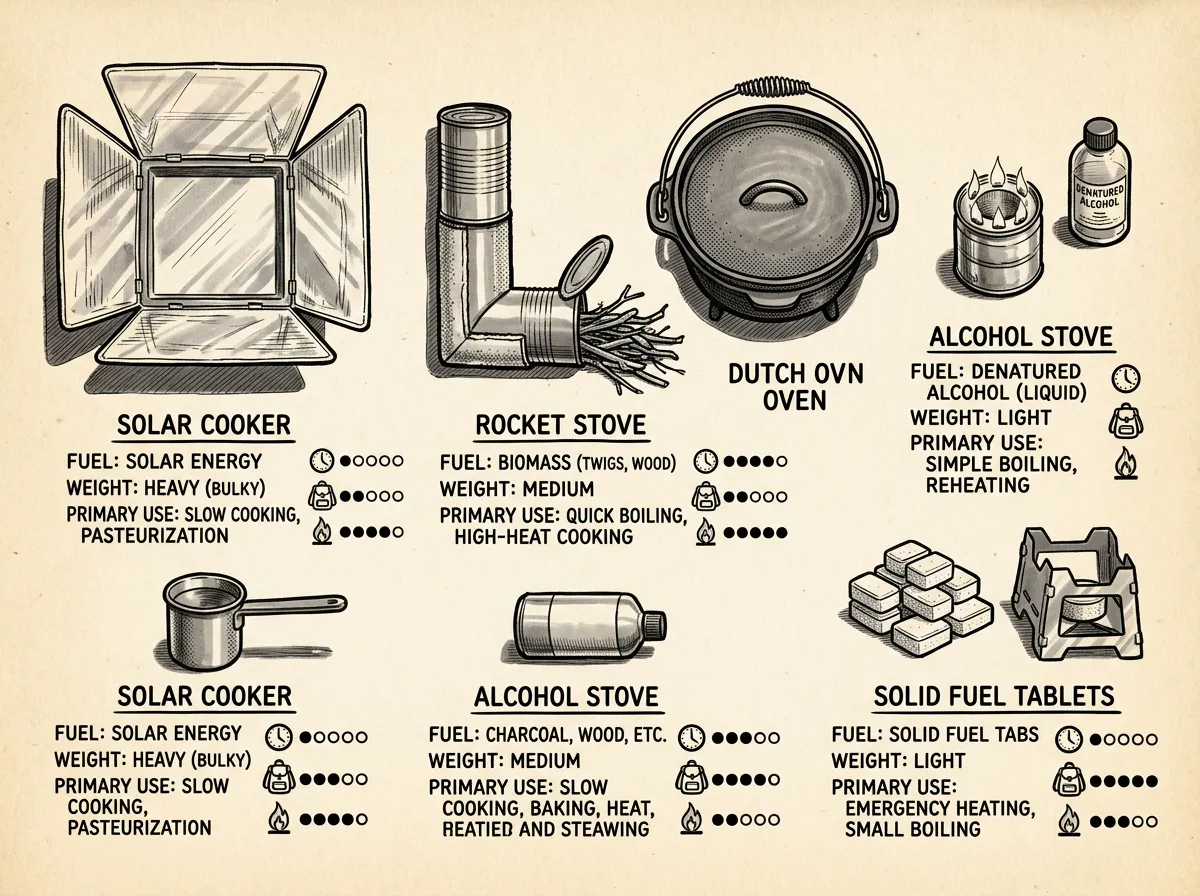 All alternative cooking methods side-by-side
| Method | Fuel / Input | Best For | Pros | Cons |
|---|---|---|---|---|
| Solar cooker | Sunlight | Slow-cooking, baking, water pasteurization | No fuel cost, no smoke | Weather-dependent, slow |
| Rocket stove | Small biomass (twigs) | Rapid boiling, frying | Boils water with far less fuel than an open fire | Needs dry fuel, soot on cookware |
| Dutch oven | Charcoal, embers, wood | Baking, stews, large meals | High heat retention, even baking | Heavy, requires ember management |
| Campfire | Wood logs | Flexible outdoor cooking | Fuel is often free and abundant | Inefficient, visible smoke, often regulated |
| Alcohol stove | Denatured alcohol, ethanol | Boiling water, rehydrating meals | Very light, compact fuel bottles | Lower peak heat, slower boils |
| Solid fuel tablets | Hexamine or similar | Short-term emergency heat | Compact, long shelf life | Limited burn time, leaves residue |
Solar Cooking
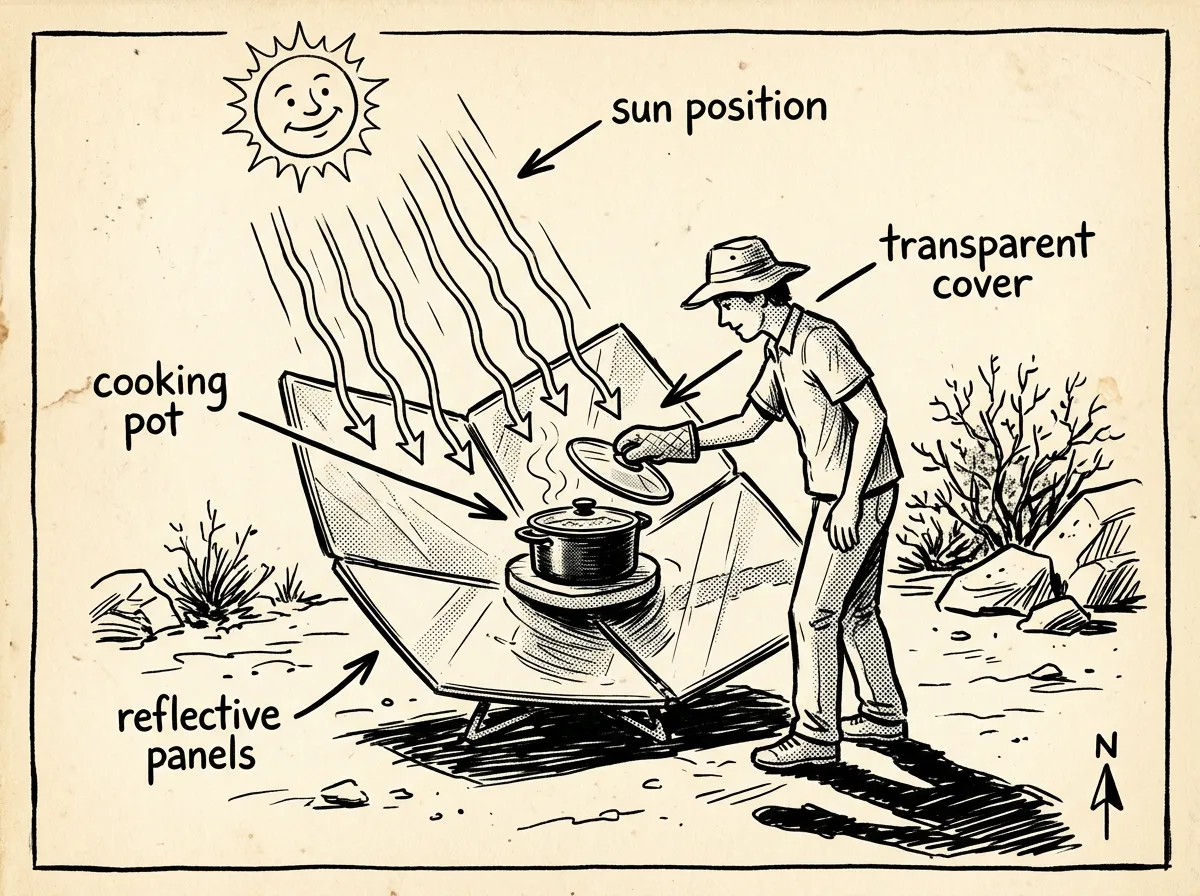 Solar cooker in use during peak sun hours
Ever wonder if you could cook dinner using nothing but sunlight? You can, and it’s one of the most satisfying “prepper wins” out there — but it comes with a catch.
A solar cooker uses reflectors or a parabolic dish to concentrate sunlight onto a dark pot. In strong, direct sun, you’ll reach roughly 250–400°F inside the cooking chamber. That’s plenty of heat for rice, stews, slow-baked bread, and pasteurizing water. It’s genuinely one of the only cooking methods that produces zero smoke and costs zero dollars to run once you own the unit.
The catch is obvious the second clouds roll in. Solar cookers are entirely weather-dependent, and they cook noticeably slower than a flame. A stew that takes 45 minutes on a rocket stove might take three or four hours in a solar cooker. If you’re in the desert Southwest with 300+ sunny days a year, this thing earns its shelf space. If you’re in Seattle or coastal Alaska, treat it as a bonus tool, never your primary plan.
Use a dark-colored, tight-lidded pot and check your cooker with a cheap oven thermometer the first few times. It’s the fastest way to learn how your specific unit performs in your specific climate.
Rocket Stoves
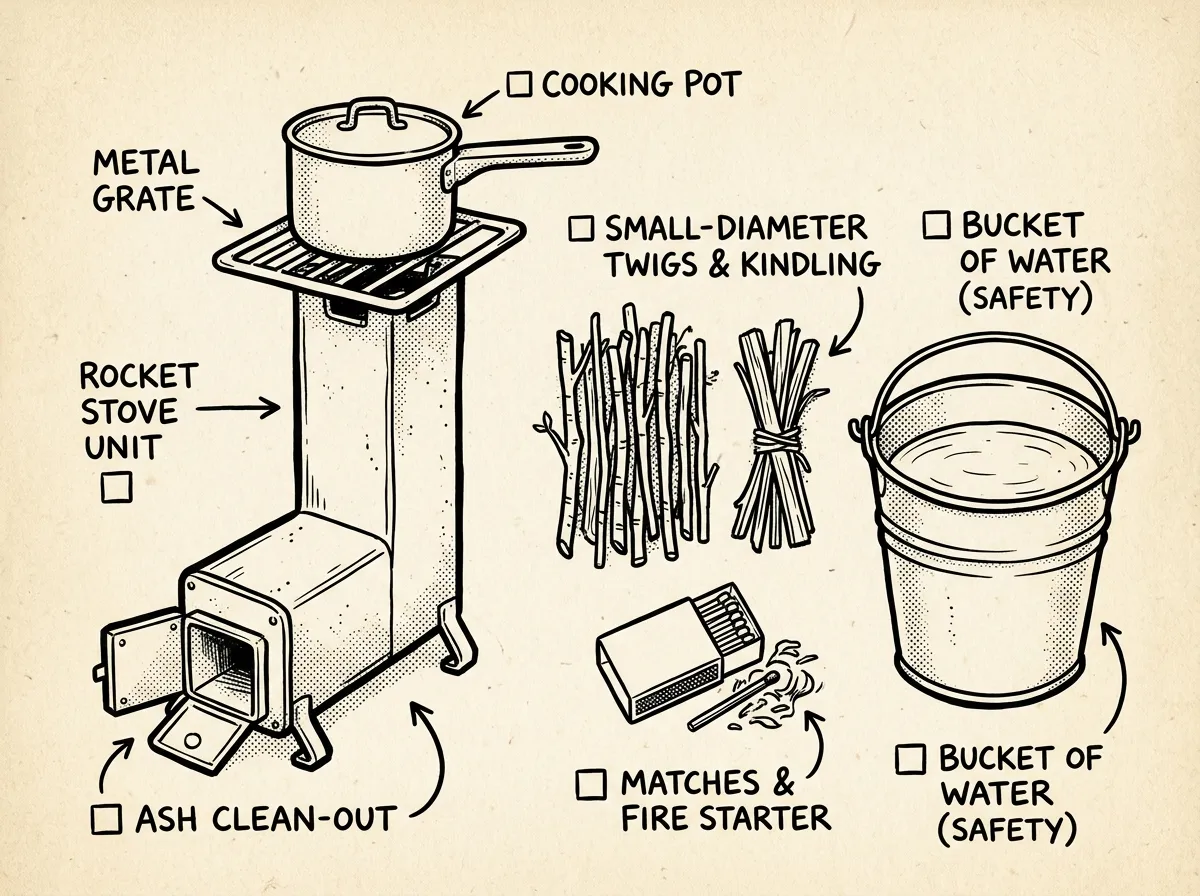 Complete rocket stove system and fuel components
A rocket stove is often recommended as the best starting point for beginners. It burns small-diameter biomass — twigs, sticks, dry brush — inside an insulated combustion chamber that channels heat upward through a narrow chimney. That design creates a hotter, cleaner burn than an open fire ever will, using a fraction of the wood.
A rocket stove will bring a liter of water to a boil noticeably faster than a comparable campfire, using only a handful of pencil-thin twigs instead of split logs. That efficiency matters enormously when fuel is limited or when you’re trying to keep smoke signature low.
Expect some soot buildup on the bottom of your pots — that’s just how these stoves work. Set it up on a nonflammable surface, keep water or a fire extinguisher nearby, and never use an unvented model indoors. If you want an indoor-capable version, look for one specifically certified for indoor use, and pair it with a running carbon monoxide alarm — no exceptions.
- Gather pencil-thin dry twigs and tinder — you need less than you think
- Load the feed tube loosely, angled slightly downward for airflow
- Light the tinder at the base and let the chimney draft take over
- Feed small sticks continuously in short bursts rather than one big load
- Let coals settle before cooking to avoid scorching your pot bottom
You can also build one yourself for the cost of a coffee can and some sheet metal — check out our guide on how to make a DIY rocket stove for efficient cooking if you’d rather build than buy.
Dutch Ovens: The Underrated Workhorse
A cast-iron Dutch oven is the closest thing to a real kitchen oven you’ll get off-grid. Set over coals or buried in embers, it bakes bread, roasts meat, and simmers stews evenly for hours. It’s not flashy, but it’s the piece of gear that turns “surviving” into “actually eating well.”
The learning curve is coal placement. Too much heat on the bottom scorches your food before it’s cooked through. A common ratio for baking is roughly two-thirds of the coals on top of the lid and one-third underneath, adjusting as needed. Rotate the pot occasionally to avoid hot spots — leaving the oven in one spot for the entire cook often results in one side burnt and the other undercooked.
Cast iron is heavy — plan for that weight if you’re thinking bug-out bag rather than home base. Dry it thoroughly after washing and give it a light oil coat to keep rust off. A well-seasoned Dutch oven can last generations; a neglected one rusts solid in a single wet season.
A 12-inch cast iron Dutch oven can produce excellent baked results over coals, rivaling a standard kitchen oven. The trade-off is weight — a 12-inch model can weigh close to fifteen pounds empty, which makes it a better fit for a home cooking setup than a bug-out kit. For a mobile kit, a lighter option like an alcohol stove is usually the better choice.
Campfire Cooking
Campfire cooking covers a wide range of techniques — grilling directly over flame, skillet frying, foil-packet meals, and pot cooking suspended over coals. If you’re going to cook over an open fire, cook over the coal bed rather than the flames themselves. Flames scorch the outside of food while leaving the inside undercooked; steady coals give you even, controllable heat.
Campfires make sense where wood is genuinely abundant — most of the rural West, the Southeast, and forested parts of the Midwest all qualify. They’re flexible and require no specialized gear beyond what you probably already own. The downsides are real, though: campfires burn through wood fast, throw visible smoke that can be seen for miles, and in many areas are restricted or banned outright during dry seasons. Always check local burn regulations, and keep tools on hand to fully extinguish your fire — water, dirt, and a shovel, minimum.
Alcohol Stoves and Ultralight Options
Ever tried to shave weight off a bug-out bag and hit a wall because your stove alone weighs a pound and a half? That’s exactly the problem an alcohol stove solves.
These stoves burn denatured alcohol, ethanol, or methanol and weigh only a few ounces — some homemade versions are little more than a modified soda can. Fuel stores in small, lightweight bottles, which makes this the go-to choice for rehydrating freeze-dried meals on the move. They’re also nearly silent and produce almost no visible flame footprint, which matters if you’re trying to keep a low profile.
The trade-off is heat output. Alcohol stoves run cooler than rocket stoves or canister stoves, so expect longer boil times — sometimes double what you’d get from a butane canister. Use only approved fuels, never refill a burner that’s still warm, and always set the stove on stable, level ground before lighting it. Burning alcohol spreads fast and is nearly invisible in daylight, which makes an accidental spill more dangerous than it looks — keep loose fuel bottles and lighters well clear of a lit stove.
A simple titanium alcohol stove, typically $15–25 depending on the brand, paired with a 12-ounce fuel bottle, is a common choice for bug-out kits. It won’t sear a steak, but it will reliably boil water for coffee and rehydrate a meal pouch — which is the job it needs to do.
Other Fuel Options Worth Knowing
- Charcoal — steady, controllable heat for grills and Dutch ovens. Store it somewhere bone dry; damp charcoal lights poorly and burns unevenly.
- Solid fuel tablets — hexamine or similar compressed fuel tablets are compact, shelf-stable for years, and ignite easily even in damp conditions. Burn time per tablet is short, so they’re better for a quick boil than a full meal.
- Gas canisters (butane/propane) — convenient and easy to control, but you’re dependent on resupply, which is exactly the vulnerability you’re trying to prep around.
- Biomass — twigs, dry brush, and small branches for rocket stoves and campfires. Free, renewable, but weather and location dependent.
Check what’s actually available where you live before buying gear built around a fuel you can’t easily source.
How to Choose the Right Combination
Don’t try to master every method on this list. Pick a small set that covers your real scenarios and get good at those.
- Define each tool’s job: home backup, apartment-safe, bug-out kit, or long-term off-grid
- Check local rules on open flame and fuel gathering in your area
- Confirm which fuels you can reliably source — sun, wood, alcohol, or canisters
- Size your cookware to your household, not just to what looked good online
- Weigh stealth against speed — alcohol stoves are quiet, rocket stoves are fast, Dutch ovens hold volume
- Practice every method at home before you need it for real
A solid starter combination: a rocket stove for speed and fuel efficiency, a Dutch oven for real meals at home, and an alcohol stove for the bug-out bag. If you live somewhere sunny — high desert, the Southwest, most of California — add a solar cooker as a fuel-free bonus for slow days.
Safety and Indoor-Use Warnings
Carbon monoxide safety deserves particular attention here. Most open-flame and solid-fuel devices produce carbon monoxide, and CO doesn’t smell, doesn’t announce itself, and can put you to sleep before you realize something’s wrong. Do not run these devices in unvented indoor spaces — garages, basements, closed tents, none of it.
Only cook indoors with a device explicitly rated by the manufacturer as indoor-safe, with real ventilation, and with a working carbon monoxide alarm running the entire time. Keep basic fire suppression — water, a small extinguisher, sand — within arm’s reach any time you’ve got an open flame going, and never walk away from an active stove, even for “just a minute.”
FAQ
What are practical alternative cooking methods for preppers? Solar cookers, rocket stoves, Dutch ovens, campfire techniques, alcohol stoves, charcoal, and solid fuel tablets all work well depending on your setup. The right choice comes down to your climate, how much you need to carry, and how much fuel you can reliably source.
How does a rocket stove work for off-grid cooking? It burns small-diameter biomass like twigs inside an insulated combustion chamber that channels heat upward for a hotter, cleaner burn. It’ll boil water faster than an open campfire while using far less fuel. Set it on a nonflammable surface and keep water or a fire extinguisher within reach.
Can you cook with a solar cooker in cloudy weather? No. Solar cookers need clear skies and direct sun to reach cooking temperatures around 250–400°F. They’re slower than flame-based methods even in good conditions, so always keep a backup method ready for overcast days.
What is the lightest emergency cooking option for a bug-out bag? Alcohol stoves. They weigh only a few ounces, run on denatured alcohol or ethanol, and are ideal for boiling water and rehydrating freeze-dried meals. Solid fuel tablets are another compact, long-shelf-life option, though their burn time per tablet is limited.
Next Steps
Pick two or three methods that actually fit your climate and how you move through the world — don’t buy based on what looks impressive in a gear photo. Then test everything at home, not during an actual emergency. Time your boils. Weigh your fuel before and after a cook. Figure out where the soot ends up and how long a tank of alcohol actually lasts you.
Build your ventilation and CO safety habits now, store your fuels properly, and rotate them on a schedule. The gear sitting in your closet is worthless until you’ve actually lit it, cooked on it, and know exactly what it can and can’t do. Do that homework before the day you’re relying on it for real.
The Complete
Prepper's Reference.
149 articles synthesized into one comprehensive PDF — twelve chapters covering water, food, shelter, first aid, comms, and scenario-specific preparedness. Free with your email.
Unsubscribe anytime · We never share your email
You're in. Check your inbox.
Keep Reading
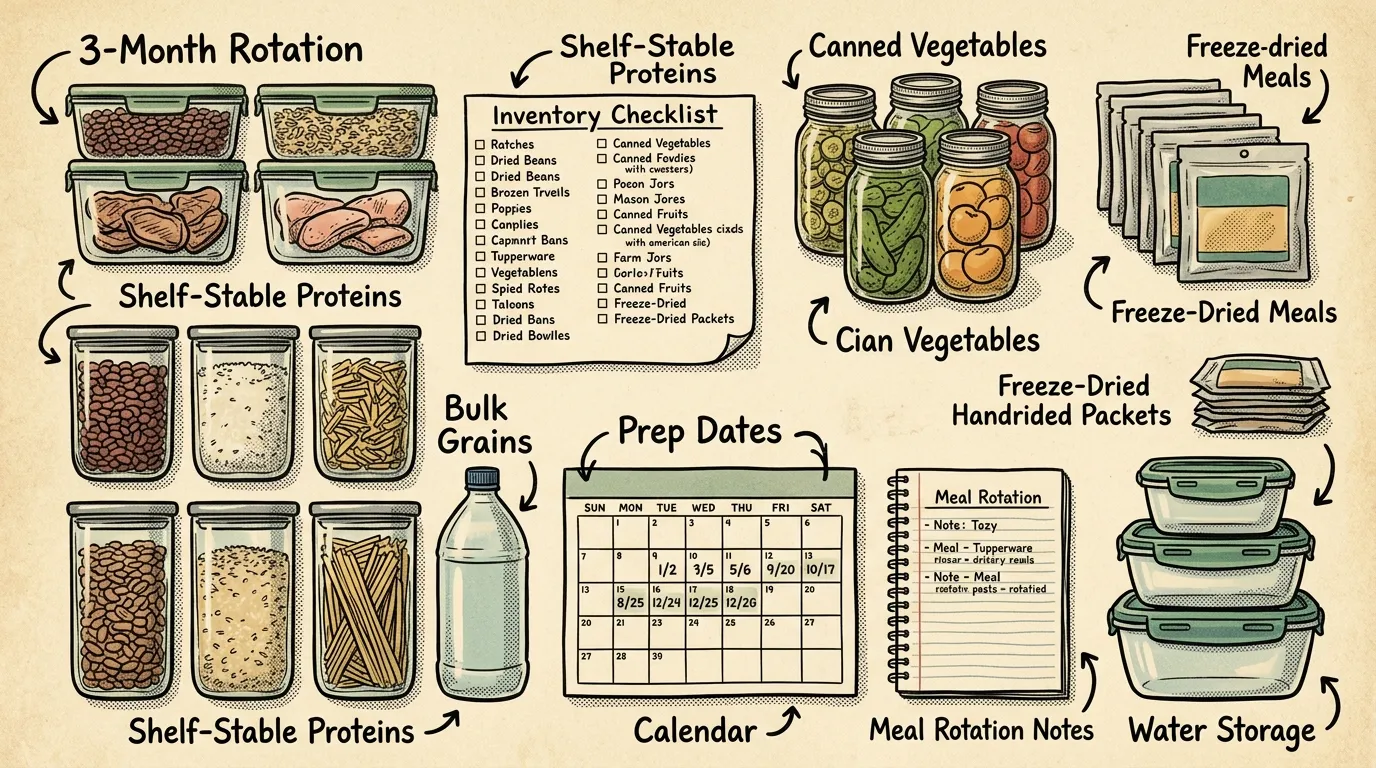
Meal Prepping Ideas That Build Long-Term Food Security
Meal prepping ideas that go past Sunday batch-cooking — build rotating stockpiles, cut costs, and prep for real emergencies. See how.
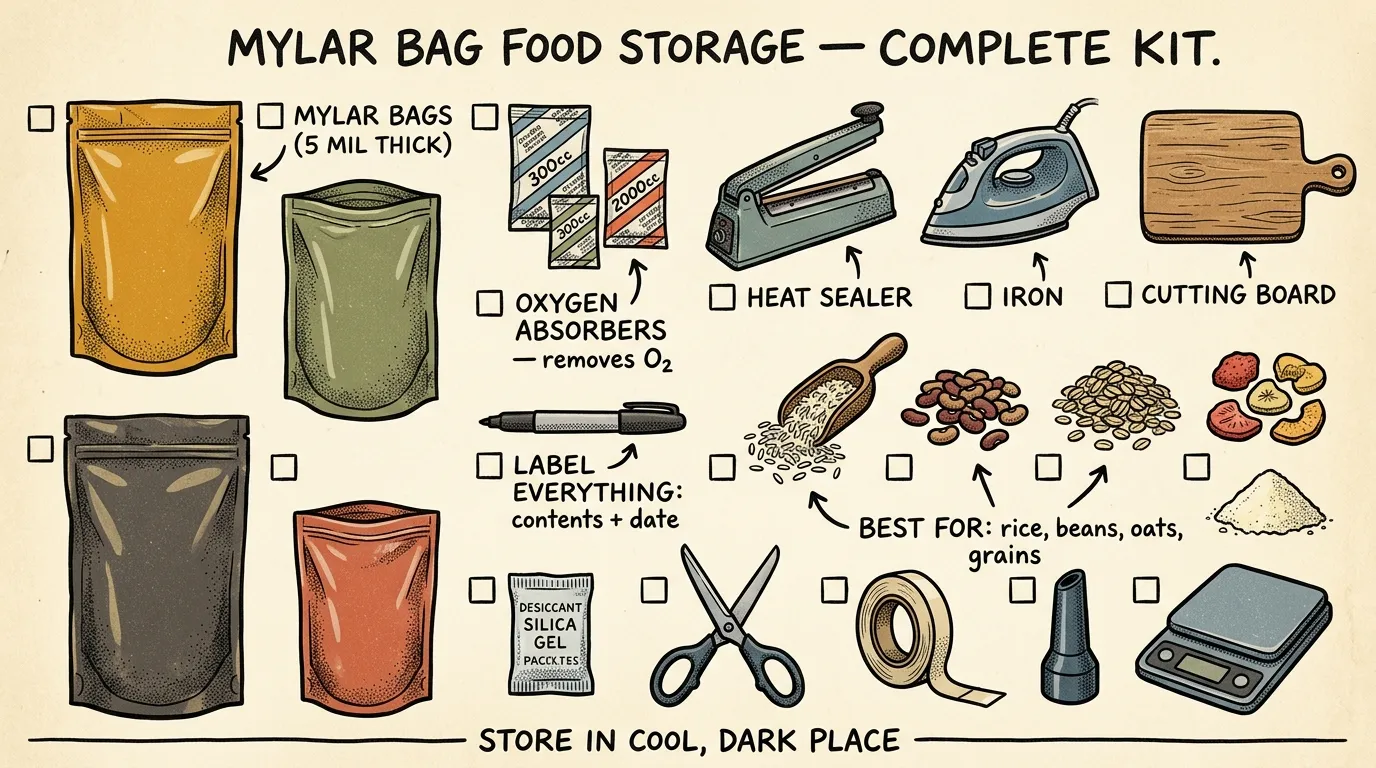
Mylar Bags for Food Storage: Complete Guide (2026)
Learn how to use mylar bags for food storage to preserve dry goods 25+ years. Expert guide covers thickness, sealing, oxygen absorbers & mistakes to avoid.
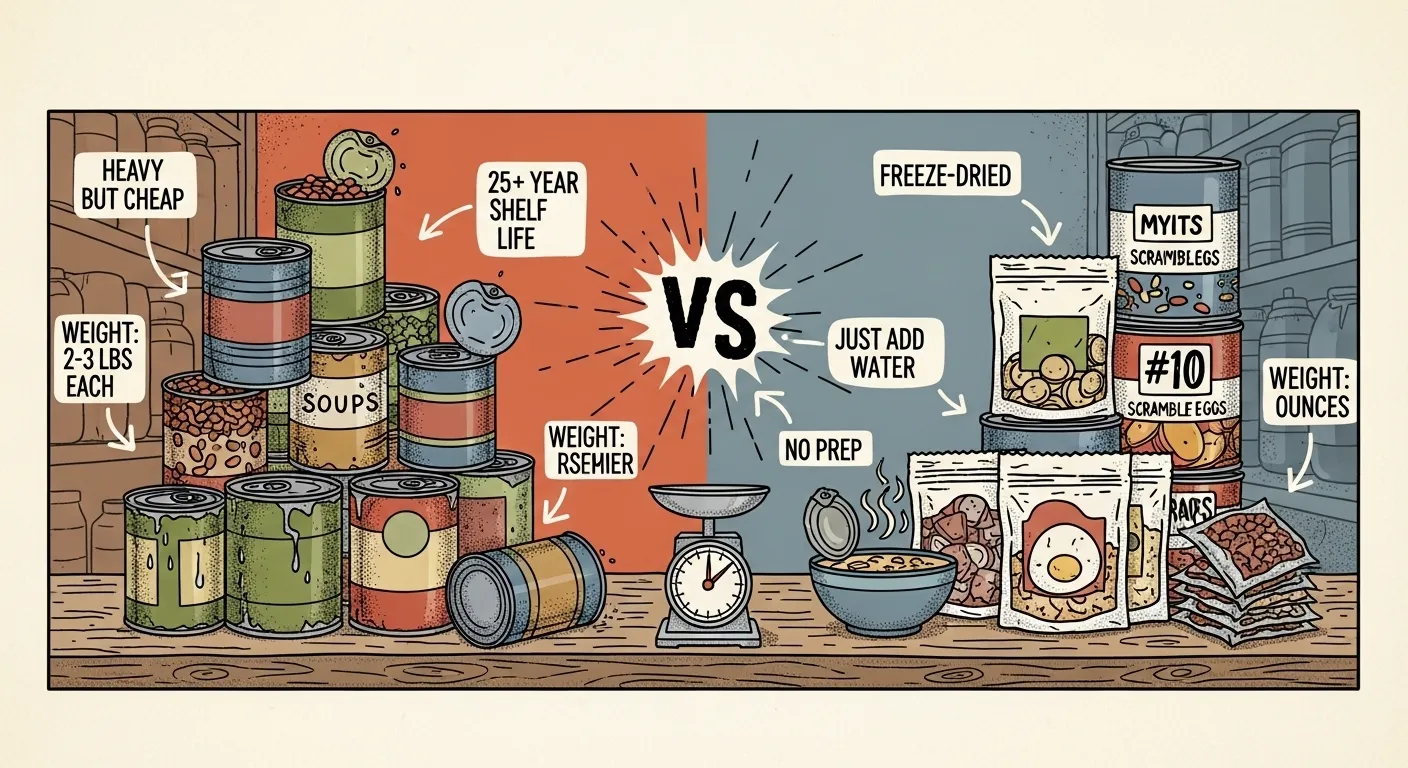
Canned vs. Freeze-Dried: The Ultimate Prepper Showdown
Canned vs. freeze-dried food: compare shelf life, cost, nutrition, storage, and convenience so beginner preppers can build smarter emergency supplies.