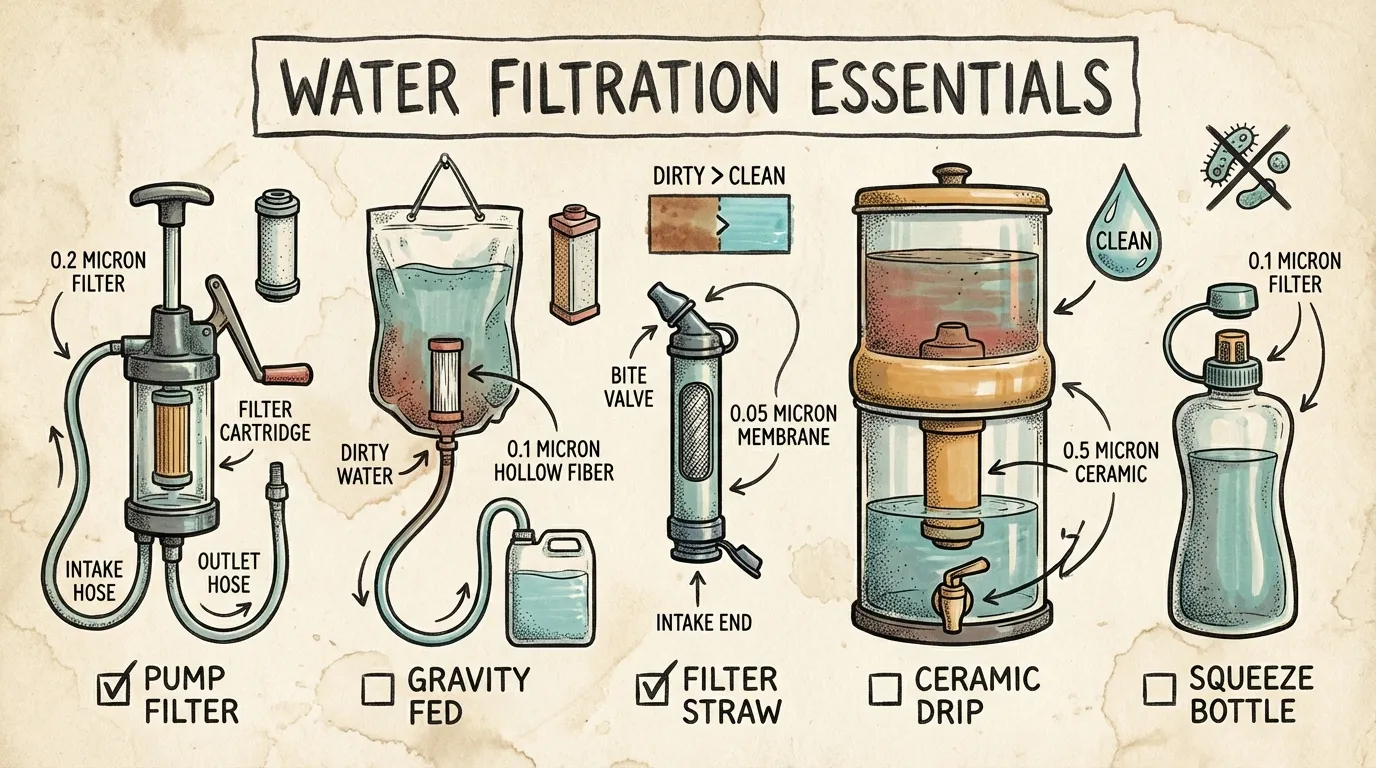
The best water filtration systems for new preppers are beginner-friendly options that balance effectiveness, portability, and cost. Top picks include a Berkey-style gravity filter for home use, Sawyer MINI and LifeStraw for portable backup, Katadyn Hiker Pro for manual field filtering, and Grayl GeoPress for on-the-go purification including viruses.
Key Takeaways
- Build a two-layer system: one high-capacity home gravity filter plus one portable personal purifier.
- Store at least 1 gallon (3.8 L) of water per person per day for drinking and sanitation.
- Buy and store at least one spare filter cartridge for each system you own.
- Boil water at a rolling boil for 1 minute at sea level when no filter is available.
- Rotate stored water every 12 months and practice using each filtration device before emergencies.
Affiliate Disclosure: This post contains affiliate links. Purchases may earn a commission at no extra cost to you. Recommendations favor gear suitable for beginner preparedness.
Best Water Filtration for Preppers: 5 Top Systems for New Preppers
Quick summary
- The best water filtration for preppers removes common pathogens, fits your kit, and has replacement parts you can actually buy.
- Practical setup: one high-capacity home system plus one portable personal system.
- Top picks for new preppers: Berkey-style gravity (home), Sawyer MINI (lightweight backup), LifeStraw (simple emergency straw), Katadyn Hiker Pro (pump), Grayl GeoPress (portable purifier bottle).
Direct answer-first summary
A two-layer approach works best for most beginner preppers: a gravity or household system for family needs and a small personal purifier for grab-and-go situations. Choose products that list exactly what they remove and that have accessible replacement parts. Practice with each device until you can operate and maintain it under stress.
The phrase best water filtration for preppers means gear you can rely on when stored water runs out and you must treat new sources.
Why water filtration matters (concise)
- People can survive weeks without food but only days without water. Shortage is dangerous.
- Stored water runs out. Treating streams, rainwater, ponds, and taps expands supply and cuts disease risk.
- Not all systems handle the same hazards. Confirm whether a device treats bacteria, protozoa, viruses, chemicals, or heavy metals.
Clear definitions (quick reference)
- Filter vs purifier: a filter removes particles, bacteria, and protozoa. A purifier also targets viruses using special media, chemicals, or UV.
- Hollow-fiber membrane: pores small enough to block bacteria and protozoa.
- Ceramic: traps pathogens and can often be cleaned; usually paired with carbon for taste.
- Activated carbon: removes chlorine, bad tastes, and some organic chemicals.
- UV (SteriPEN): disables microbes but requires clear water and power.
- Reverse osmosis: removes dissolved contaminants; needs pressure, storage, and regular maintenance.
Criteria to choose the best water filtration for preppers (actionable checklist)
- Filtration capability: list what the device removes (bacteria, protozoa, viruses, chemicals, heavy metals, sediment).
- Technology: hollow-fiber, ceramic, carbon, chemical, UV, RO, or a combination.
- Certifications: NSF/ANSI, NSF P231, or equivalent third-party test results.
- Portability: gravity systems for home; straw or mini filters for packs; pumps for groups; purifier bottles for travel.
- Ease of use and maintenance: look for backflushing, spare parts, and freeze tolerance.
- Cost: include replacement element cost and availability.
- Capacity and flow rate: household vs individual needs.
Top 5 systems for new preppers (short, answer-first)
- Berkey-style Gravity Water Filter: Best for home preparedness
- Best use: household sheltering and family use.
- What it handles: removes sediment, bacteria, and protozoa; many elements include carbon for taste.
- Pros: no power needed and high daily capacity.
- Cons: bulky and higher upfront cost. Virus protection depends on element selection and third-party test data.
- Sawyer MINI: Best lightweight backup for bug-out bags
- Best use: bug-out bags and ultralight kits.
- What it handles: hollow-fiber membrane removes bacteria and protozoa; backflushable to restore flow.
- Pros: tiny, inexpensive, and easy to attach to bottles or hydration bladders.
- Cons: does not remove viruses and flow slows without a squeeze pouch.
- LifeStraw Personal: Best simple emergency straw
- Best use: single-person emergency backup.
- What it handles: straw-style hollow-fiber filter removes bacteria and protozoa.
- Pros: extremely light and intuitive to use.
- Cons: single-user only, not for filling containers, no virus removal.
- Katadyn Hiker Pro: Best pump filter for versatility
- Best use: outdoor group use and frequent container fills.
- What it handles: ceramic or hollow-fiber plus activated carbon improves taste and odor.
- Pros: fast for filling water jugs. Field-proven design.
- Cons: heavier than straw-style options and needs more maintenance. No virus removal by itself.
- Grayl GeoPress: Best portable purifier bottle for viruses
- Best use: travel, urban emergencies, and solo rapid purification.
- What it handles: combined mechanical and adsorption media targeting bacteria, protozoa, viruses, and many chemicals.
- Pros: press-to-purify bottle. Fast and simple.
- Cons: cartridges cost more and the bottle is heavier than a straw filter. Check cartridge test data for specific claims.
Comparison at a glance
| System | Best Use | Bacteria/Protozoa | Viruses | Portability | Ease | Cost |
|---|---|---|---|---|---|---|
| Berkey-style Gravity | Home/family | Yes | Depends on elements | Low | Very easy | High |
| Sawyer MINI | Bug-out/backup | Yes | No | Excellent | Moderate | Low |
| LifeStraw | Individual backup | Yes | No | Excellent | Very easy | Low |
| Katadyn Hiker Pro | Outdoor/group | Yes | No | Good | Moderate | Medium |
| Grayl GeoPress | Travel/urban | Yes | Yes | Good | Easy | Medium-High |
Maintenance and storage (practical checklist)
- Read and practice the manual before an emergency.
- Backflush hollow-fiber filters regularly to restore flow.
- Buy and store matched spare cartridges or elements.
- Store filters dry if the manufacturer requires it. Protect filters from freezing unless rated for it.
- Clean spigots and chambers on gravity systems.
- Keep a basic maintenance log with installation and replacement dates.
Treatment layers and backups
- Stored potable water rotated every 12 months, sooner for treated or flavored water.
- Boiling: rolling boil for 1 minute at sea level; increase time at higher elevation.
- Chemical disinfectants: chlorine or chlorine dioxide tablets. Follow dosage and contact times precisely.
- UV devices: good for clear water but need batteries or other power.
- Metal containers and camp stoves: useful for boiling when electricity is out.
Layer approaches. Redundancy matters.
Common prepper mistakes to avoid
- Buying only on price and ignoring replacement costs.
- Assuming all filters remove viruses. Always confirm test results.
- Using a straw filter as the primary household system.
- Not practicing with gear before an emergency.
- Neglecting maintenance and spare parts.
- Trusting visually clear water without treatment.
FAQ (concise answers)
Q: What is the best water filtration system for beginner preppers?
A: For home use, a gravity system provides simplicity and capacity. For portability, choose based on the threat: Sawyer MINI for ultralight backup, Grayl GeoPress for virus protection.
Q: Do preppers need both storage and filtration?
A: Yes. Stored water is immediate. Filtration and purification let you use collected sources safely.
Q: What is the difference between a filter and a purifier?
A: Filters remove sediment, bacteria, and protozoa. Purifiers also address viruses using cartridges, chemicals, or UV. Confirm claims with third-party testing.
Q: How much water should I plan for?
A: Plan at least 1 gallon (about 3.8 L) per person per day for drinking and basic sanitation. Increase for hot climates, high activity, or medical needs.
Practical next steps for new preppers
- Choose one home-capacity option this week: gravity, RO, or a large under-sink system depending on budget.
- Add one portable backup to your bug-out bag: Sawyer MINI, LifeStraw, Grayl, or a small pump.
- Buy at least one spare filter or cartridge for each system.
- Practice using and maintaining each device at home. Practice first. Repeat.
- Keep a short maintenance log and check filters annually.
Check these before relying on claims
- Verify the latest WHO/UNICEF Joint Monitoring Programme data if you reference global water statistics.
- Confirm virus removal claims for Berkey-style elements, Grayl cartridges, and other brands with third-party test reports.
- Look for NSF/ANSI or equivalent testing and readable documentation.
Further reading
- Water, Water Everywhere: How to Store H2O Without Losing Your Sanity (/water-storage)
- How to Build a Bug Out Bag: Essentials for a Quick Getaway (/bug-out-bag)
- Becoming a Prepper: The Beginner’s Guide to Survival Readiness (/beginner-prepper)
Stay prepared and stay hydrated.
The Complete
Prepper's Reference.
149 articles synthesized into one comprehensive PDF — twelve chapters covering water, food, shelter, first aid, comms, and scenario-specific preparedness. Free with your email.
Unsubscribe anytime · We never share your email
You're in. Check your inbox.
Keep Reading
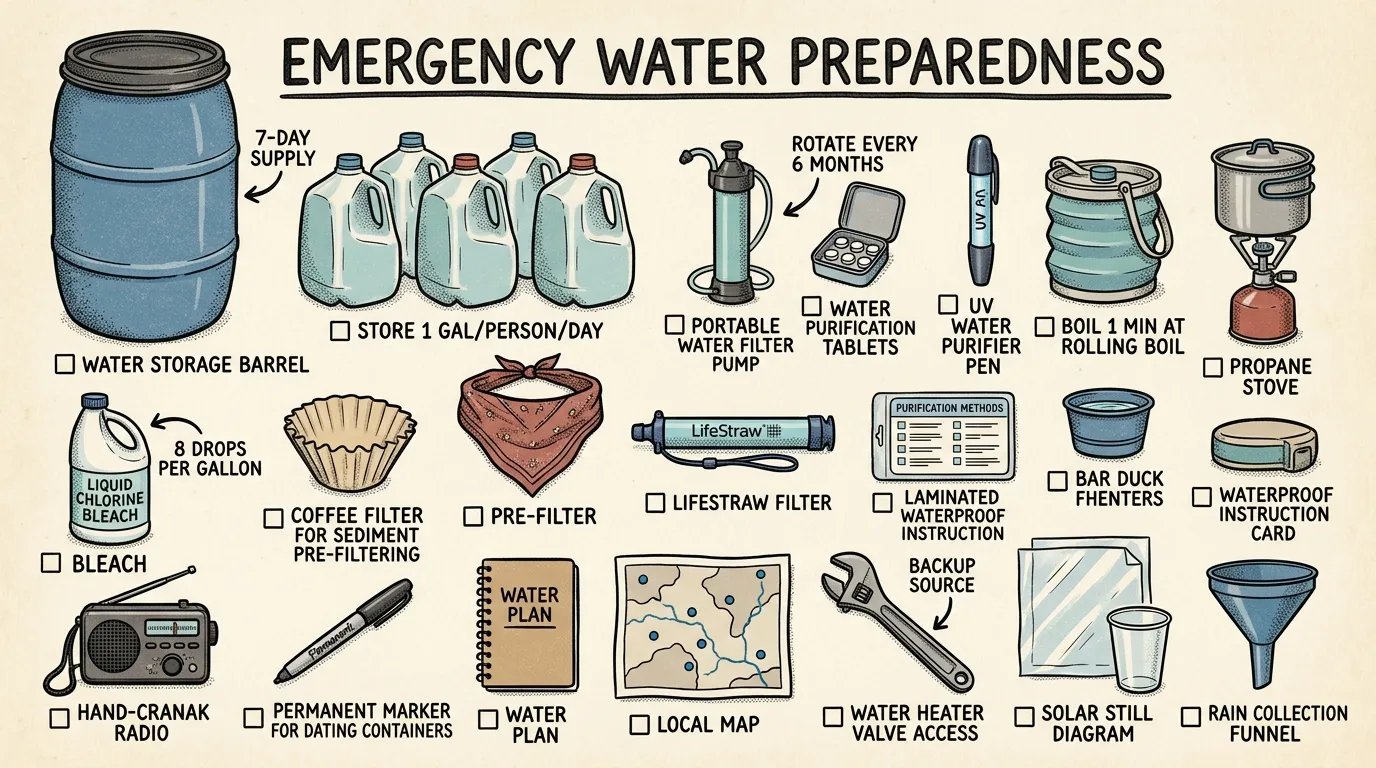
Emergency Water Preparedness: Store, Purify & Plan
Build your emergency water preparedness plan with proven strategies for storage, purification, and rationing. Start your water plan today.
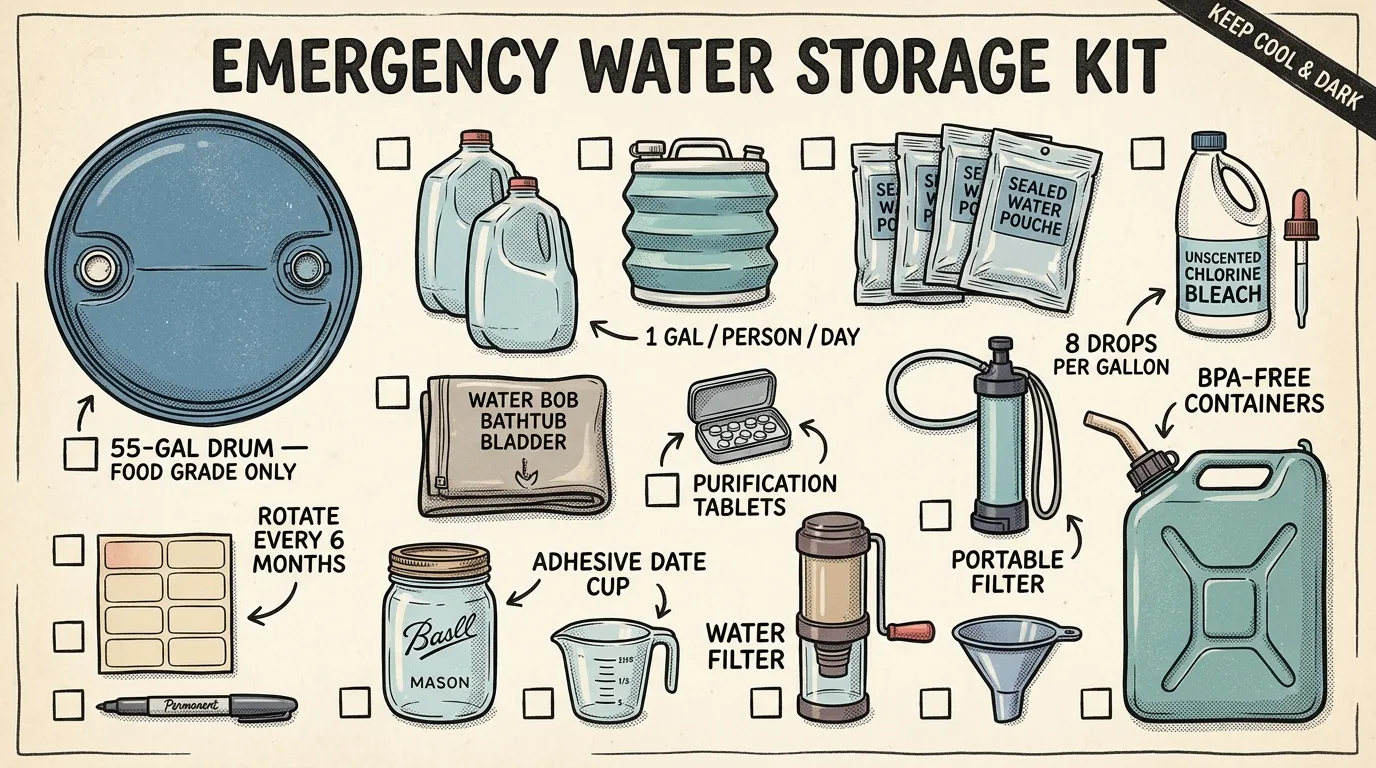
How to Store Water for Emergencies: Complete Guide
Learn how to store water for emergencies — the right containers, purification methods, rotation tips, and a budget plan. Start your supply today.
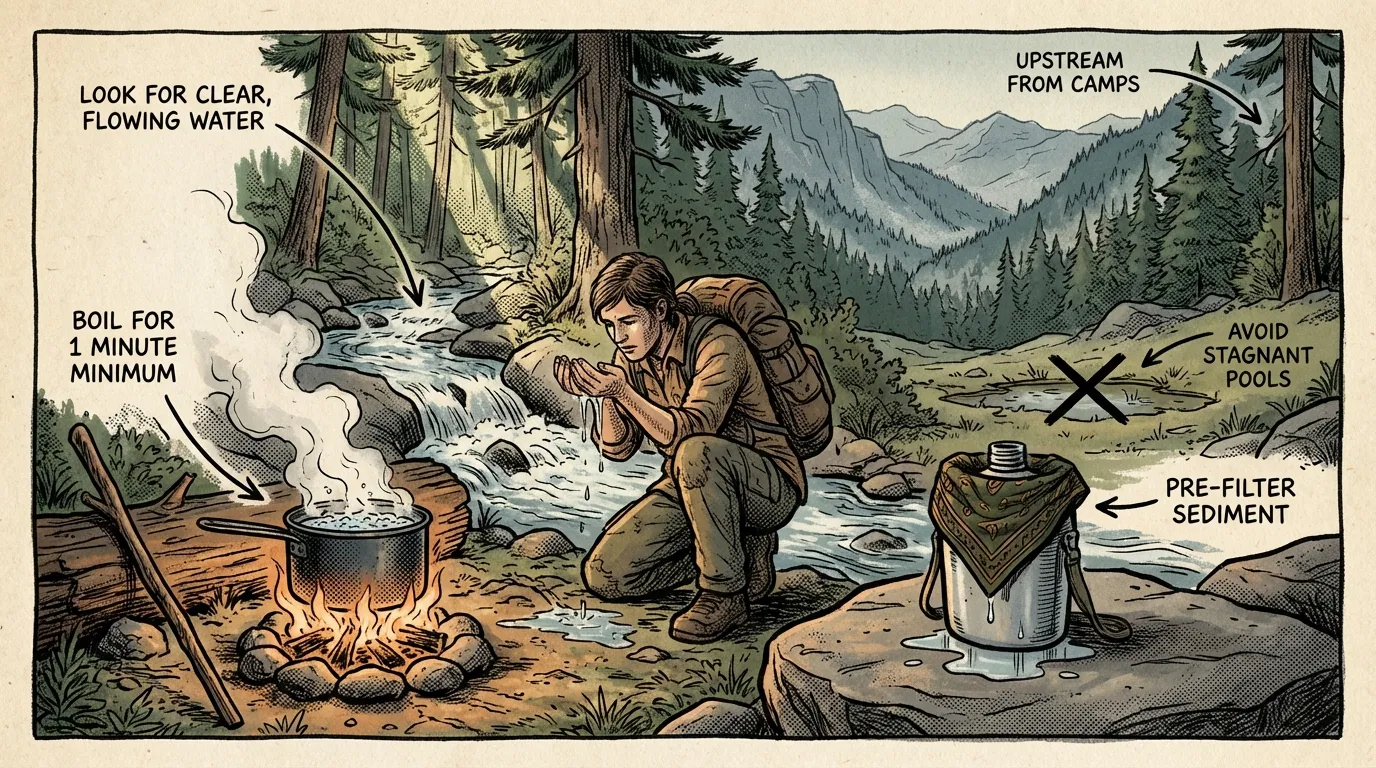
How to Identify Safe Drinking Water in the Wild
Learn how to find, judge, and purify drinking water in the wild with beginner-friendly survival tips for safer hydration anywhere.