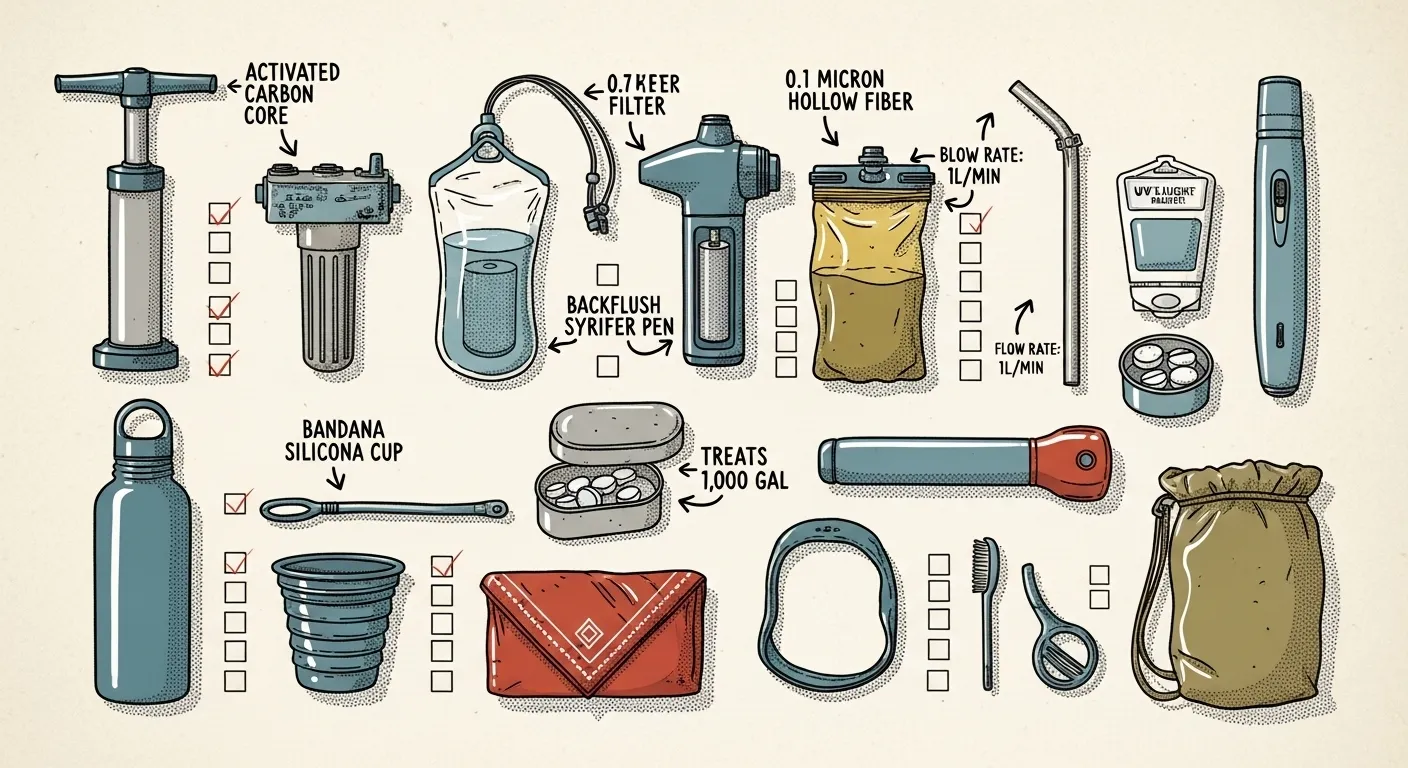
Key Takeaways
- Match the filter type to the actual threat — hollow-fiber handles bacteria and protozoa, but you need a purifier-rated device or a UV/chemical backup for viruses.
- Backflush hollow-fiber filters after every trip, not just when flow slows down — waiting until it's clogged shortens the filter's life.
- Ask manufacturers for the full third-party lab report with log-reduction values before trusting any device for viral or chemical claims.
- Never let a hollow-fiber filter freeze with water inside — it cracks the membrane permanently and you won't know until it fails in the field.
- Carry a compact backup — tablets or a UV pen — for the day your primary filter clogs, freezes, or can't handle what's actually in the water.
The Best Portable Water Filters for Safe Drinking
Drinking from creeks, questionable municipal taps, and post-disaster water sources carries real risk, but most illness in these situations traces back to lax maintenance rather than gear failure. That’s the real lesson buried in this whole category: the best portable water filter is the one you actually understand and maintain, not the one with the flashiest marketing claim on the box.
This isn’t a “buy the most expensive thing” situation. It’s a “match the tool to the threat” situation. Let’s get into it.
Quick Summary
- Best overall: Sawyer Squeeze (around $20–$40) — hollow-fiber squeeze filter, backflushable, rated for tens of thousands of gallons.
- Best ultralight backup: LifeStraw Personal (around $15–$20) — straw-style filter for solo emergency sips, not a full solution.
- Best fast-trail flow: Katadyn BeFree (around $40–$50) — soft-flask hollow-fiber, quick refills, high flow rate.
- Best premium convenience: GRAYL GeoPress (around $90–$100) — press-and-drink purifier, but verify the lab data on any viral or chemical claim.
- Best for groups: MSR MiniWorks EX (around $100–$130) — field-serviceable ceramic pump, built for basecamp use.
- Viruses are the blind spot in most hollow-fiber filters — if that’s a real risk where you’re headed, you need a purifier-rated device or a layered approach with UV or chemical treatment.
Filter vs. Purifier: What You’re Actually Buying
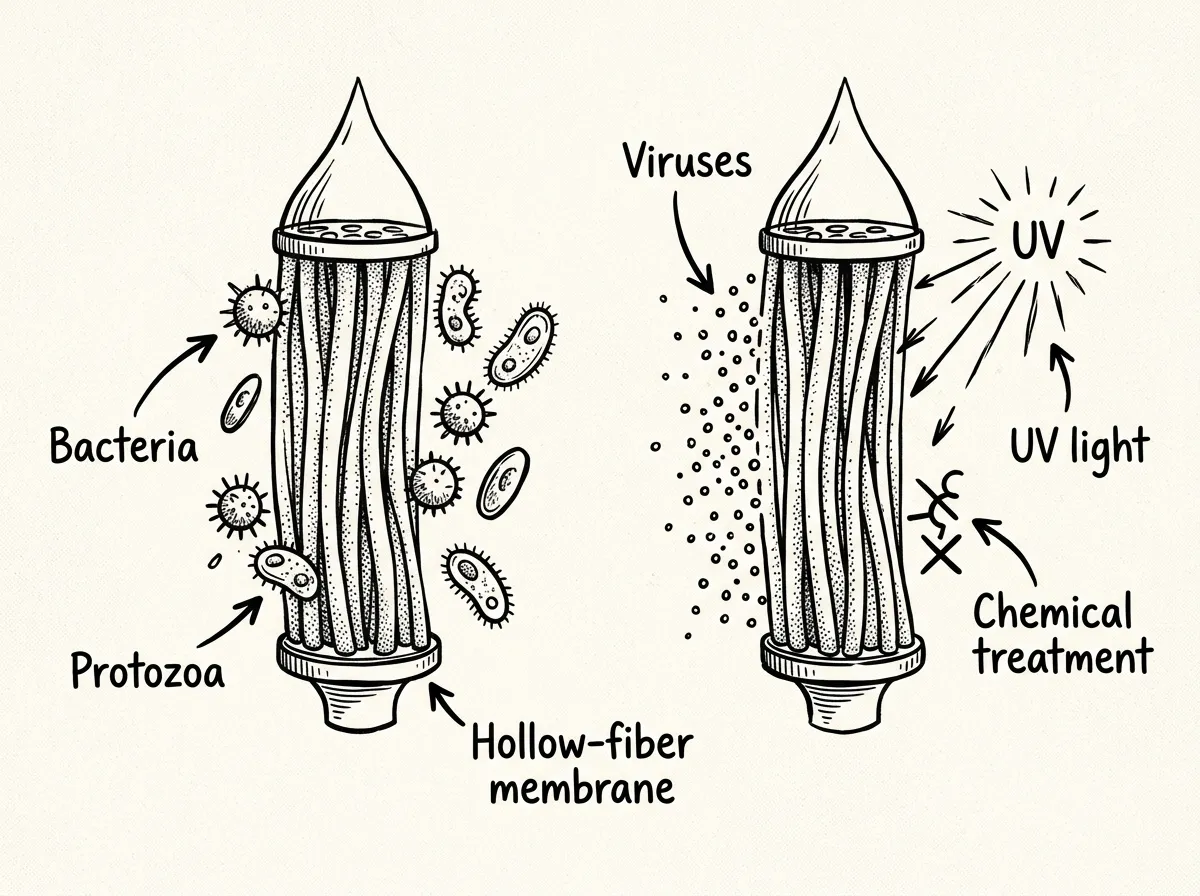 How filters and purifiers work at different scales
A common mistake, even among people with a fair amount of backcountry travel experience, is buying a “filter,” assuming it handles everything, and never checking what it’s actually rated to remove.
A filter removes particles, bacteria, and protozoa through mechanical means — usually tiny hollow-fiber membranes with pores around 0.1 to 0.2 microns. That’s small enough to block Giardia and E. coli, but not small enough to stop a virus, which is roughly ten to a hundred times smaller.
A purifier does everything a filter does, plus removes or inactivates viruses. That distinction matters a lot more than most gear reviews let on.
If a product page doesn’t specify a log-reduction value for viruses, assume it doesn’t remove them. Silence on a spec sheet is not a good sign.
Log reduction is the number you actually want to see. A 3-log reduction means 99.9% of that organism is gone. A 4-log reduction (the EPA standard for viral purifiers) means 99.99%. Anything less and you’re rolling dice with pathogens that are still very much present in your water.
What Common Filter Technologies Actually Remove
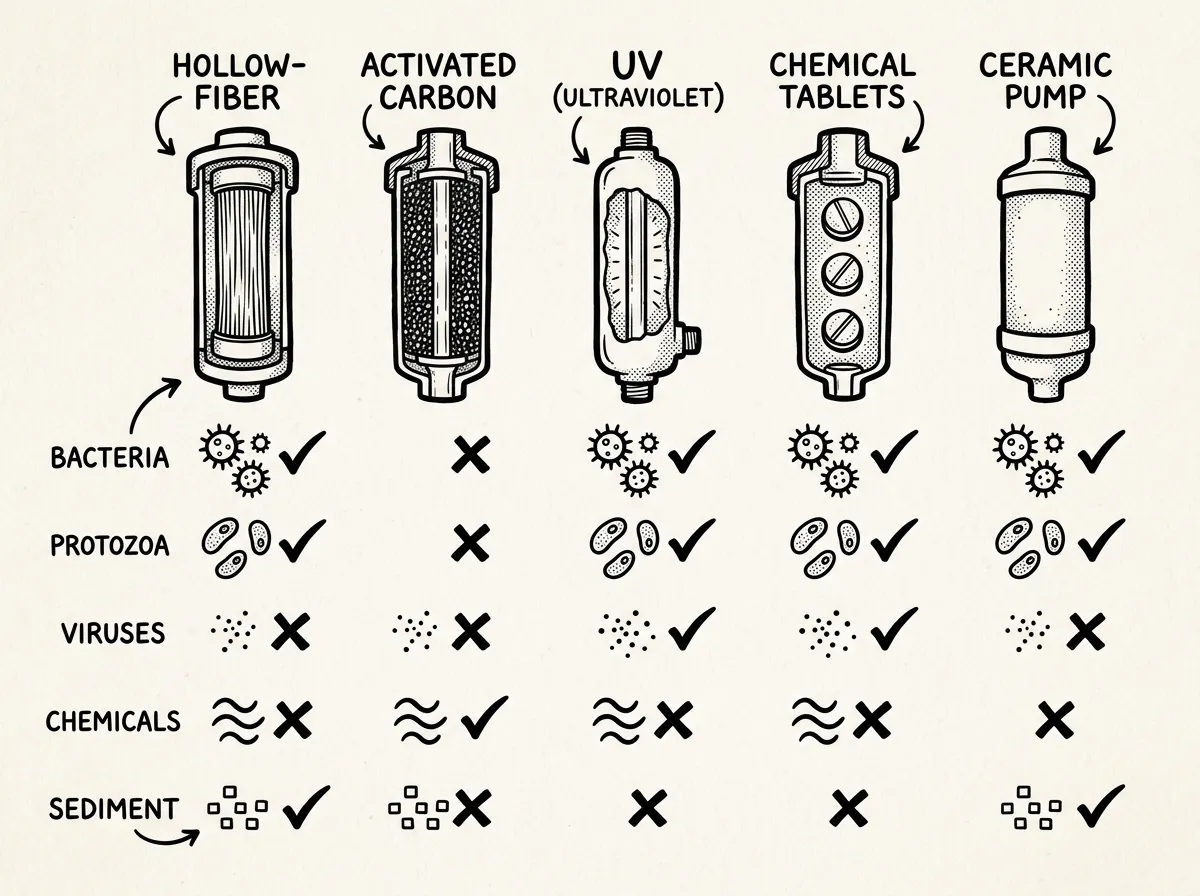 Contaminant removal chart by filter type
Not all filtration methods work the same way, and that’s exactly why one device can be great for a Pacific Northwest creek and useless for tap water in a country with unreliable sanitation.
| Technology | Mechanism | Typically removes | Won’t reliably remove |
|---|---|---|---|
| Hollow-fiber membrane | ~0.1–0.2 μm pores | Bacteria, protozoa, sediment | Viruses, dissolved chemicals, heavy metals |
| Ceramic element | Microporous ceramic, cleanable | Bacteria, protozoa, sediment | Viruses, most chemicals unless paired with carbon |
| Activated carbon | Adsorption | Chlorine taste, some organics | Microbes on its own, salts, most metals |
| Press-style cartridges | Varies by chemistry | Depends on cartridge — verify claims | Anything not specifically tested and published |
| UV devices | UV-C inactivation | Bacteria, protozoa, most viruses in clear water | Particulates, dissolved chemicals |
If you’re pulling water from a mountain stream in the high Cascades, bacteria and protozoa are your main concern, and a hollow-fiber filter handles that fine. If you’re filling up from a questionable tap during international travel, or from floodwater after a hurricane where sewage contamination is likely, you’re in a different category of risk entirely and need something rated for viruses.
Top Picks, Ranked by Situation
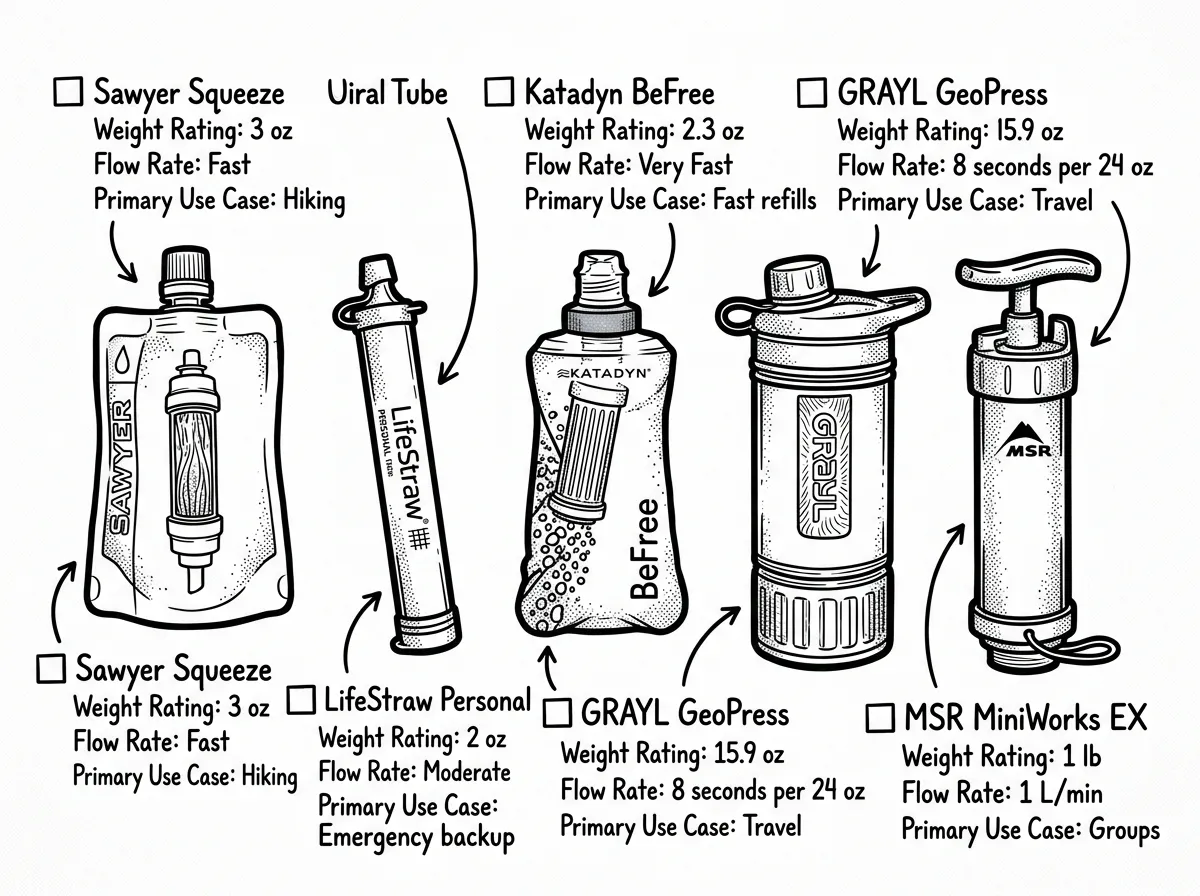 Five portable water filters arranged by use case
Sawyer Squeeze — Best Overall
This is a widely recommended starting point for most people. It’s a hollow-fiber squeeze filter, meaning you screw it onto a pouch or a standard plastic water bottle and squeeze the water through. It removes bacteria, protozoa, and sediment, weighs almost nothing, and per the manufacturer’s instructions, can be backflushed in the field with the included syringe to restore flow.
Regular backflushing after every use is the key to keeping flow rate consistent over time. Skipping it for extended periods, especially after use in silty water, is a common cause of flow dropping off sharply. The maintenance isn’t optional — it’s the main reason this style of filter reaches its rated lifespan.
LifeStraw Personal — Best Ultralight Backup
The LifeStraw is fine as what it’s designed to be: an emergency sip-through-a-straw device, not a full water treatment system. You can’t fill a bottle with it, you can’t treat water for a group, and it doesn’t touch viruses or chemicals. It’s a reasonable addition to an emergency kit because it weighs almost nothing and needs zero setup, but it shouldn’t be treated as a primary plan.
Katadyn BeFree — Best for Fast Trail Refills
The soft-flask design on the BeFree allows for faster scoop-and-drink refills than many alternatives, with a flow rate that outpaces the Sawyer Squeeze according to manufacturer specifications. The tradeoff is durability. The flask material isn’t as tough as a hard bottle, and flow rate drops faster in silty water than the Sawyer does.
GRAYL GeoPress — Best for Travel Convenience
Press it down like a French press, and 15–20 seconds later you’ve got treated water. It’s genuinely convenient for international travel where you want speed and don’t want to mess with squeeze bags. The caution here: verify the specific lab data for whatever cartridge version you’re buying before trusting it against viruses or heavy chemical contamination. Cartridge chemistry has changed over the product’s lifespan, and marketing language on the box doesn’t always match the fine print.
MSR MiniWorks EX — Best for Groups and Basecamps
This is a hand pump with a ceramic element and a carbon core, well suited to a group trip or an extended stay somewhere without reliable water. It’s heavier — you’re pumping, not squeezing — but it’s field-serviceable, meaning the ceramic cartridge can be scrubbed clean in the field instead of replacing the whole unit. That matters if you’re somewhere resupply isn’t an option.
The best filter isn’t the one with the highest flow rate on paper — it’s the one you’ll actually maintain correctly when you’re tired, cold, and just want water.
How to Choose the Right Filter for Your Situation
Ask the question before you buy the gear: what am I actually filtering out?
- Identify the likely hazards on your route — bacteria and protozoa from natural water, or viruses and chemicals from compromised municipal or flood sources
- If viruses or chemicals are a realistic concern, choose a purifier-rated device or add UV/chemical treatment to a mechanical filter
- Match the form factor to your use case — straw for backup, squeeze or soft-flask for solo trips, pump for groups, press bottle for travel
- Weigh portability against maintenance needs — backflushing frequency, spare parts, rated lifetime
- Get the independent lab report and check log-reduction numbers before trusting the device for anything beyond bacteria and protozoa
If you’re in a humid Gulf Coast climate dealing with hurricane season prep, your bigger concern after a storm is often flood water mixed with sewage — that’s a virus and bacteria problem, and it changes what you should pack. High desert Southwest travel is a different problem entirely: water sources are scarcer, but when you do find them, they’re usually cleaner of pathogens and dirtier with sediment and minerals.
Certifications and Lab Testing You Should Actually Check
A brand slaps “NSF certified” on the box, and buyers often assume that covers everything.
- NSF/ANSI 42 and 53 cover taste, odor, and some chemical reduction — not microbiological purification.
- NSF P231 is the standard that actually covers microbiological purifiers, with specific log-reduction claims for bacteria, protozoa, and viruses.
- Look for testing from recognized independent labs — Intertek, SGS, Eurofins, NSF itself, or a university/government lab — not just an in-house claim.
Email the manufacturer and ask directly for the full third-party lab report, not just the summary page. Reputable companies will send it without hesitation. If they stall or dodge, that tells you something.
Maintenance and Realistic Lifespan
Filter flow can stop working mid-hike for a simple, avoidable reason: nobody told the user that backflushing was a required step.
Lifespan ratings — often quoted in thousands of liters or gallons — are baseline numbers assuming reasonably clean source water and regular maintenance. Turbid, silty water shortens that lifespan fast. So does skipping maintenance.
- Backflush hollow-fiber filters after every outing, not just when flow slows
- Pre-filter visibly dirty water through a bandana or coffee filter before it hits your main filter
- Store filters where they won’t freeze — a cracked hollow-fiber membrane won’t show damage until it fails
- Replace cartridges on schedule for carbon and ceramic elements, don’t wait for a taste change
- Keep a spare O-ring or seal on hand for pump-style filters on extended trips
A common failure mode with hollow-fiber filters specifically: leaving one in a cold car overnight during a shoulder-season trip, water still inside, and the membrane cracks. The damage isn’t visible. It typically shows up weeks later as bacteria getting through when they shouldn’t. Drain it, dry it, and if there’s any chance of freezing temps, store it somewhere warmer than a trunk.
Filters vs. Boiling vs. UV vs. Chemical Treatment
Why not just boil everything and skip the gear entirely? Boiling reliably kills bacteria, protozoa, and viruses when done for the right time at the right temperature. It doesn’t remove sediment or chemicals, and it requires fuel and time that may not be available in a fast-moving situation.
Chemical treatments — iodine, chlorine dioxide tablets — work against most microbes including many viruses, given correct contact time, usually 30 minutes or more. They perform poorly in cloudy water and can leave an aftertaste some people can’t stand.
UV devices inactivate microbes fast in clear water but need battery power and won’t touch particulates or dissolved chemicals.
A sound general approach: filter first to clear out sediment and the larger pathogens, then layer UV or chemical treatment on top when viruses are a realistic concern. That combination covers nearly every scenario, from backcountry travel to disaster response after flooding.
Practical Buying Tips
Do some homework before buying. It can prevent purchasing gear that looks great online but performs poorly in the field.
- Read multiple independent reviews, not just the manufacturer’s own testing summary.
- Confirm replacement cartridges are actually available and reasonably priced before you commit to a system.
- Practice using the filter at home, under no pressure, before you need it in the field.
- Always carry a backup treatment method — tablets, a UV device, or a way to boil water.
- Check current CDC, EPA, and WHO travel advisories if you’re heading somewhere with known water quality issues, and pack accordingly.
Which One Should You Actually Buy
If you’re just getting into outdoor prep and want one solid, do-everything filter: Sawyer Squeeze. It’s proven, light, and easy to maintain.
If you want a compact emergency backup for a bug-out bag or car kit: LifeStraw, paired with tablets.
If you’re moving fast on trail and hate squeezing bags: Katadyn BeFree.
If you’re traveling internationally and want speed without fuss: GRAYL GeoPress, with the lab report checked ahead of time.
If you’re outfitting a group or a basecamp for an extended stay: MSR MiniWorks EX.
None of these are wrong choices. They’re just built for different problems. The mistake isn’t picking the “wrong” filter — it’s picking one without understanding what it can’t do, and finding that out the hard way when it matters.
The Complete
Prepper's Reference.
149 articles synthesized into one comprehensive PDF — twelve chapters covering water, food, shelter, first aid, comms, and scenario-specific preparedness. Free with your email.
Unsubscribe anytime · We never share your email
You're in. Check your inbox.
Keep Reading
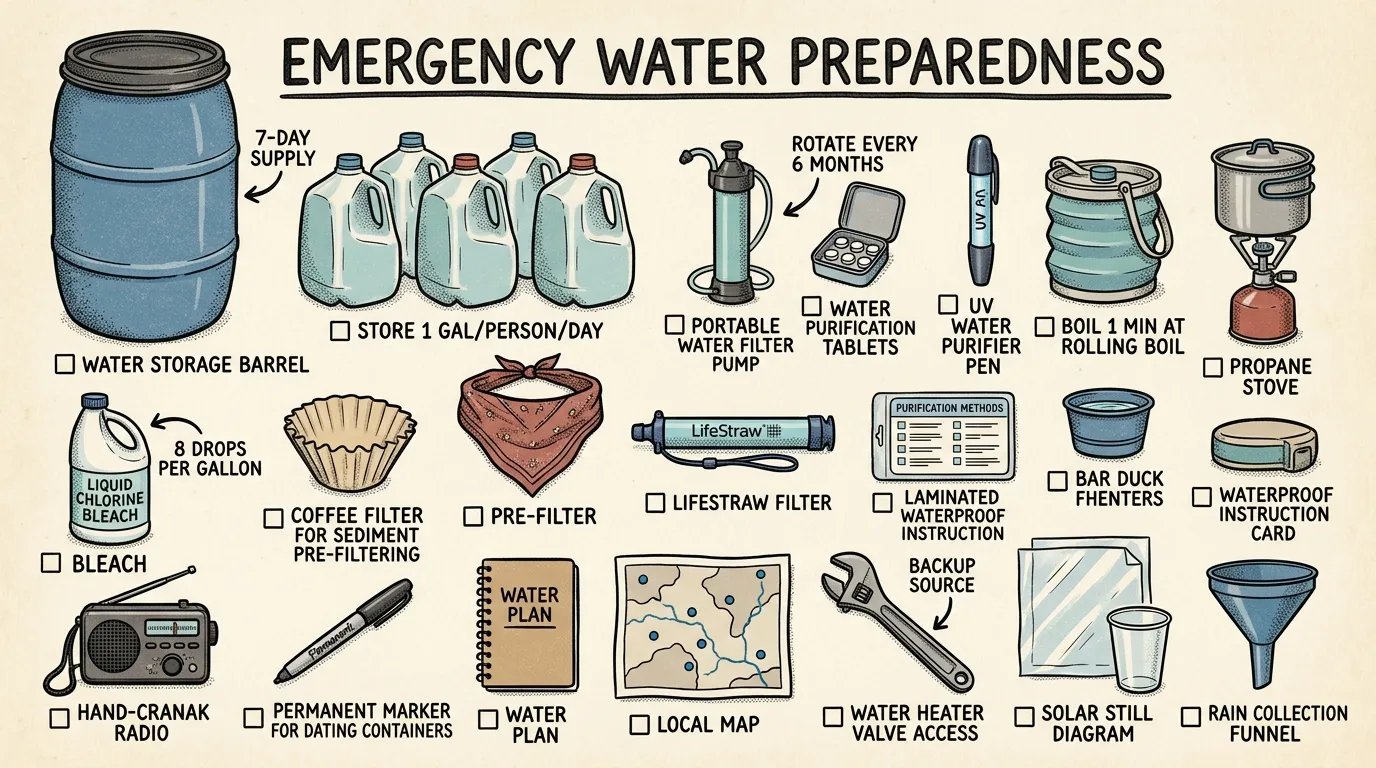
Emergency Water Preparedness: Store, Purify & Plan
Build your emergency water preparedness plan with proven strategies for storage, purification, and rationing. Start your water plan today.
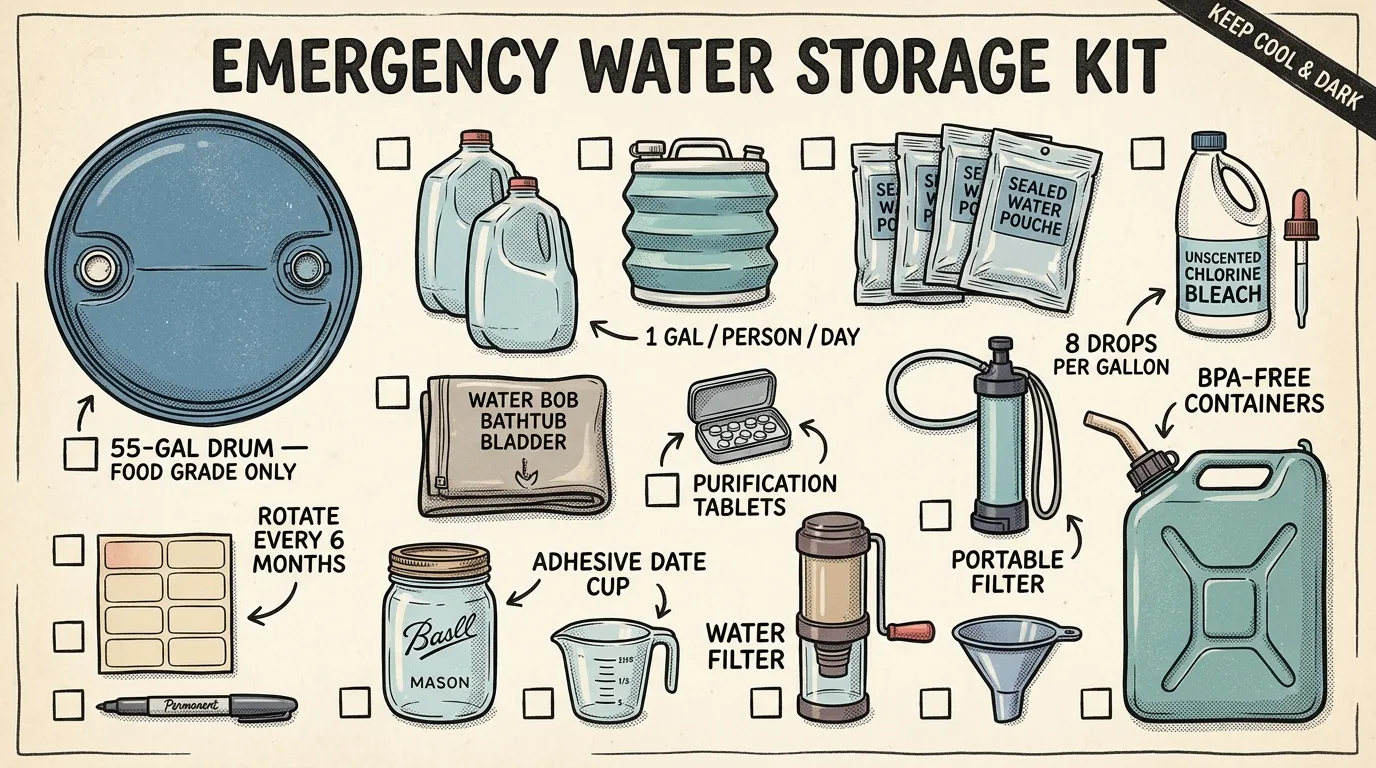
How to Store Water for Emergencies: Complete Guide
Learn how to store water for emergencies — the right containers, purification methods, rotation tips, and a budget plan. Start your supply today.
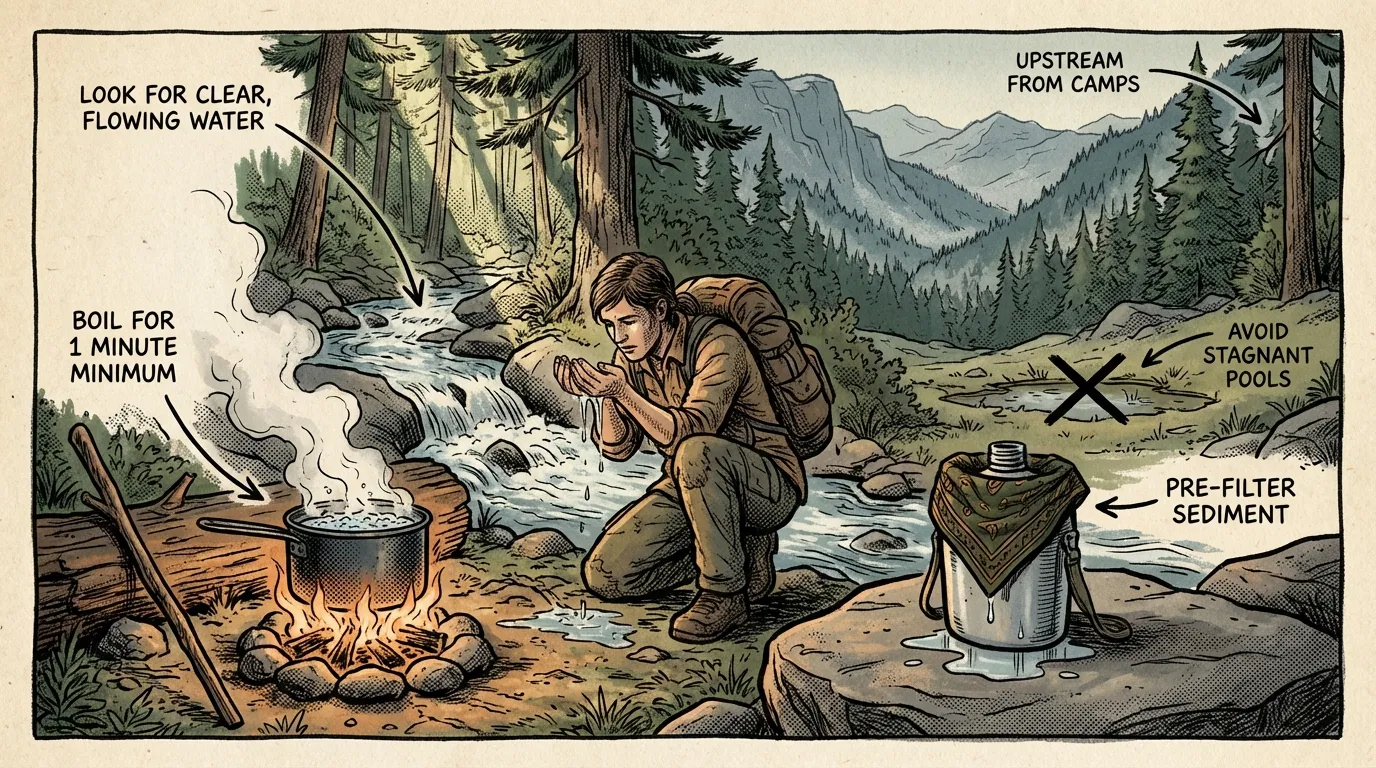
How to Identify Safe Drinking Water in the Wild
Learn how to find, judge, and purify drinking water in the wild with beginner-friendly survival tips for safer hydration anywhere.