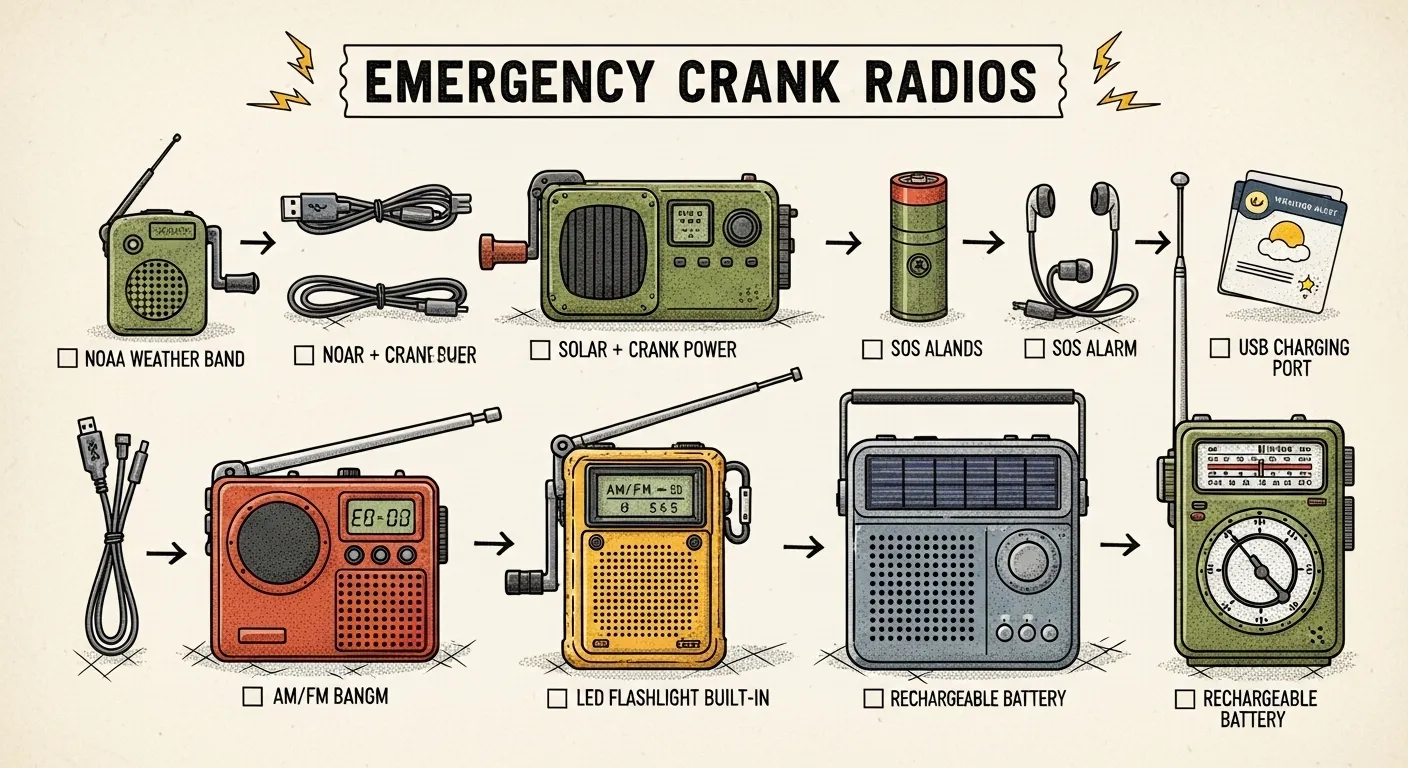
The best hand crank radios for emergencies offer NOAA weather access, multiple charging options, dependable reception, and durable construction. Top beginner-friendly choices include the Midland ER310, Eton FRX3+, RunningSnail, FosPower, and Kaito KA500.
Key Takeaways
- Choose a hand crank radio with SAME-capable NOAA alerts so you get county-specific warnings, not every alert in your broadcast region.
- Check the USB output voltage, current, and internal battery capacity (mAh or Wh) before buying — most crank radios only give a partial phone charge.
- Test your radio monthly: crank it, confirm reception, run the flashlight, check USB output. Dead crank mechanisms are the #1 failure I see.
- Keep spare charging cables and AAA or AA batteries on hand if your model supports them — don't rely on the internal battery alone.
- Tape a printed quick-start card inside the radio's storage bag so anyone in your household can operate it without reading a manual first.
Best Hand Crank Radios for Emergencies: Top Picks & Buying Guide
During extended power outages — ice storms, wind events that take down lines for days — the first thing worth reaching for isn’t your phone. It’s the radio. Cell towers get overloaded or knocked offline, but NOAA Weather Radio just keeps broadcasting. A hand crank radio is the one piece of gear in your kit that doesn’t care if the grid is down, your battery bank is empty, or the sun hasn’t come up yet.
Some are genuinely good. A lot of them are cheap plastic boxes with a crank glued on for marketing. This guide walks through what actually matters and which models earn a spot in your kit.
Quick Summary
- The best hand crank radios combine NOAA/NWS weather alerts, AM/FM reception, and at least three charging methods — hand crank, solar, and USB.
- SAME (Specific Area Message Encoding) support is the single most useful feature most people overlook. It filters alerts down to your county.
- Don’t expect a full phone charge from cranking. Expect a partial top-up — check mAh/Wh capacity and USB output before buying.
- The top pick for most households is the Midland ER310 (around $50-60). For go-bags, the Eton FRX3+ or FosPower are better fits.
- Test your radio monthly. A crank mechanism that’s never been used is a crank mechanism you can’t trust in an emergency.
Why a Hand Crank Radio Actually Matters
Here’s the thing people get wrong: they think of a hand crank radio as a nice-to-have, something that lives in the junk drawer next to old batteries. In an emergency kit, it belongs with the first three things you grab, right behind water and a headlamp.
Power’s out, cell service is spotty, and you don’t know if the storm is passing or getting worse. Your phone is at 40% and you need to save it. You crank the radio for thirty seconds, flip to the weather band, and get a clear NOAA update on timing and expected duration — no data plan required.
A good crank radio gives you three things at once: information, light, and a limited emergency power source. NOAA Weather Radio broadcasts continuously, 24/7, whether or not there’s a warning active. That constant signal is what makes it more reliable than social media or a news app during a real event — no algorithm, no server outage, just a transmitter and your receiver.
What to Look for When Choosing the Best Hand Crank Radios
Power and Charging Options
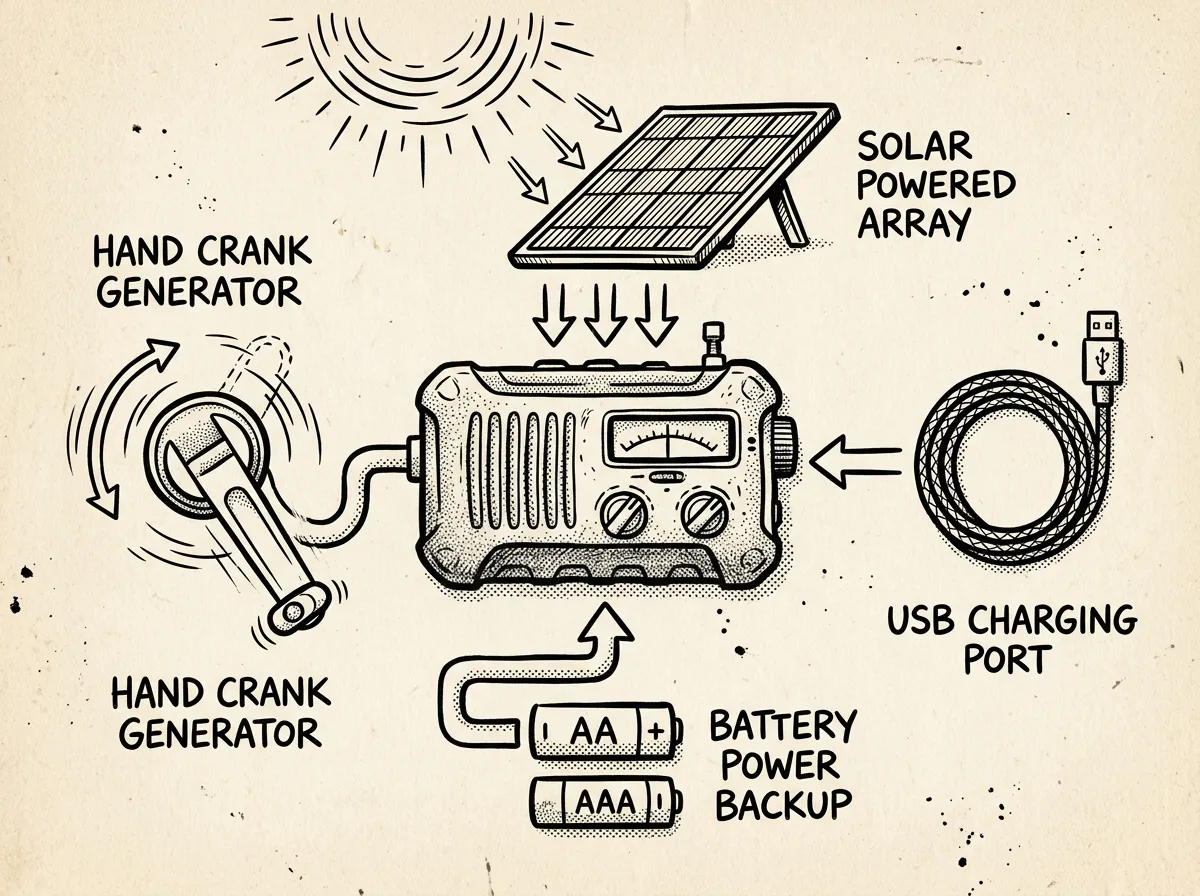 Hand crank radio charging methods comparison
The crank itself is table stakes at this point — nearly every radio in this category has one. What separates a good unit from a mediocre one is what happens when the crank isn’t your only option.
- Hand crank dynamo: Generates power mechanically. Look for a smooth, geared crank — not one that feels like you’re grinding coffee beans.
- Solar panel: Genuinely useful for multi-day outages. Don’t expect fast charging; think slow trickle over hours of sun exposure.
- USB output: Check the voltage, current (amps), and the radio’s internal battery capacity in mAh or Wh. A radio with a tiny 1000mAh battery isn’t going to do much for a modern smartphone.
- Battery type: Li-ion packs more energy into less space. NiMH or standard AAA/AA cells are easier to replace when you’re three days into an outage and the internal battery is cooked.
Budget crank radios’ USB output is limited by design: a minute or two of cranking typically yields only a small percentage of a phone charge, not a meaningful top-up. That’s not a knock on the category — it’s physics. A hand crank is never going to out-produce a proper power bank. Use it for emergency top-ups only, and keep a dedicated USB battery pack in your kit for real charging needs.
NOAA/NWS Reception and SAME Alerts
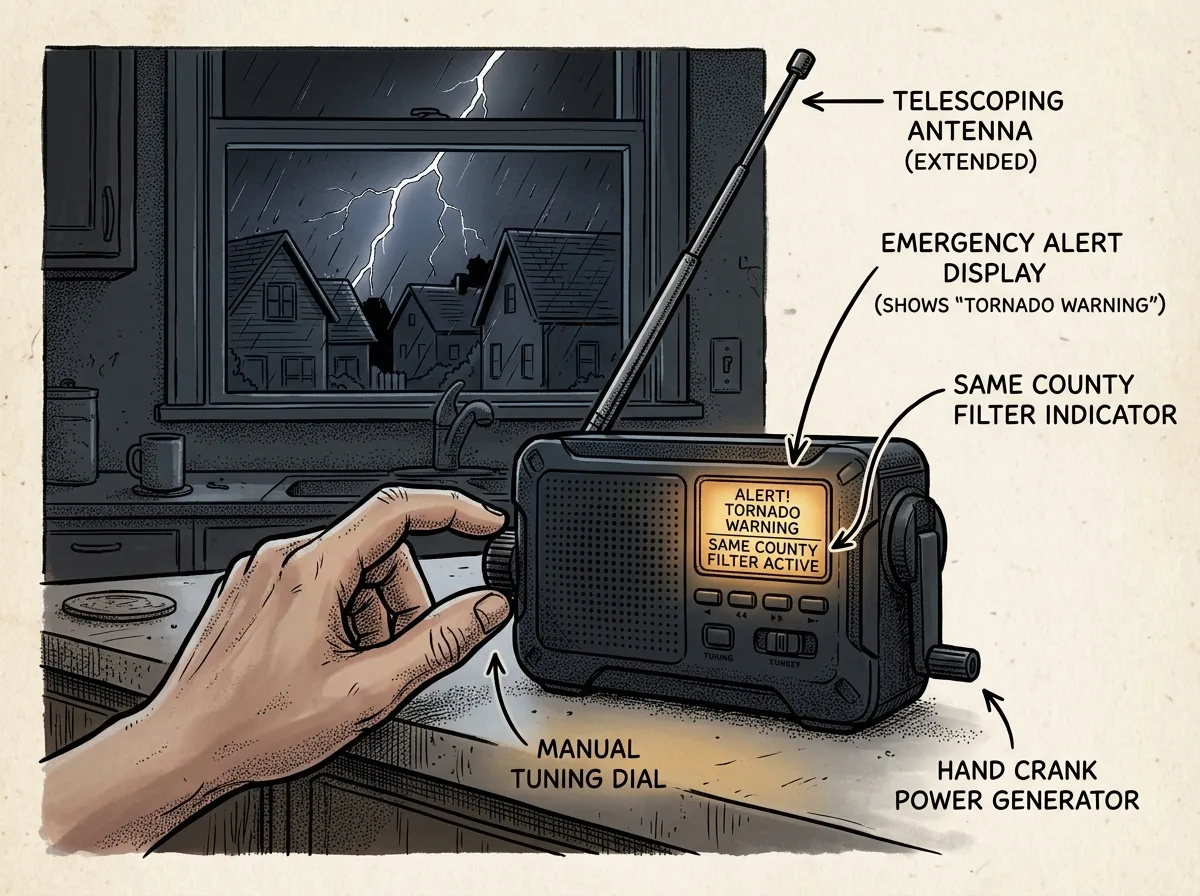 NOAA weather alert reception during power outage
This is where most people underspend their attention and it’s exactly backwards. The reason you own this radio in the first place is to get reliable, official weather and emergency information when nothing else works.
Look for a weather-band receiver with SAME support. Without SAME, you’re stuck listening to every single alert broadcast across your entire region — which, if you live somewhere with a lot of county lines packed close together, gets old fast and can genuinely cause you to tune out warnings that matter.
AM/FM reception matters too, mostly for general news and local updates once the immediate weather threat has passed. A telescoping antenna generally beats a fixed internal one for pulling in a clean signal, especially if you’re indoors or in a valley.
Lighting and Signaling
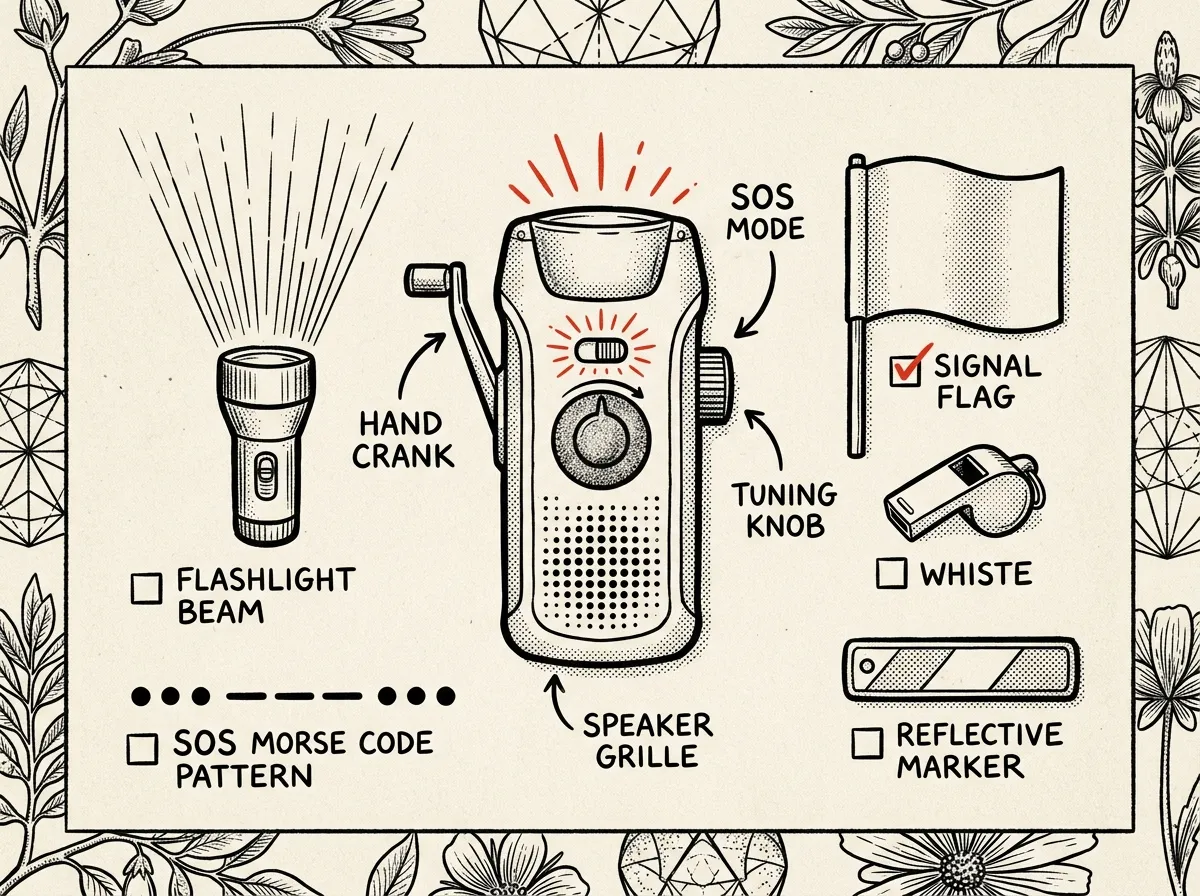 Emergency radio lighting and signaling gear setup
A built-in flashlight sounds like a minor feature until you’re standing in a dark garage looking for batteries. Most models include an LED flashlight; better ones add a separate reading lamp or lantern mode, plus an SOS strobe for signaling if you need to be found.
Durability and Everyday Usability
Water or splash resistance matters more than people think — plenty of these radios end up in a car trunk, a tent, or a flooded basement stairwell. Covered ports keep dust and moisture out of USB and antenna connections. And the controls need to be simple enough to operate by feel, in the dark, by someone who’s stressed and hasn’t read the manual. That last part is the detail manufacturers most often overlook.
Before you buy, look up a photo of the control layout. If you can’t identify the power button and volume dial from a thumbnail image, that’s a red flag for how it’ll feel at 3am with no lights on.
Size and Portability
Compact units are great for a go-bag or car kit but usually trade away battery capacity and crank output to get there. Larger radios like the Kaito KA500 give you more reserve power and redundancy, at the cost of taking up more shelf space at home.
Top 5 Hand Crank Radios (Field Notes)
Specs change between production runs, so confirm SAME support and current charging specs on the manufacturer’s page before you buy.
1. Midland ER310 — Best Overall
Best for: Home preparedness where NOAA alerts are the priority.
This is a commonly recommended first choice. It covers NOAA/NWR alerts, AM/FM, hand crank, solar, and USB charging, plus a flashlight with an SOS mode and USB output for phone charging. Around $50-60 depending on where you buy it. Midland has been building weather radios for a long time, and it shows in the reliability of the alert function specifically — that’s the one feature you absolutely cannot afford to have flake out.
2. Eton American Red Cross FRX3+ — Best for Portability
Best for: Compact emergency kits and travel bags.
The Eton FRX3+ trades some bulk and battery capacity for size. It’s got NOAA/NWR reception, AM/FM, a hand turbine crank, solar charging, limited USB output, an LED flashlight, and a glow-in-the-dark locator strip that actually helps you find it in a dark bag. The American Red Cross co-branding isn’t just a sticker — it signals this is purpose-built emergency gear, not a repurposed camping radio.
3. RunningSnail Emergency Radio — Best Budget Starter
Best for: Affordable starter kits and first-time buyers.
If you’re building your first emergency kit and don’t want to spend $50+ on a radio, this is a reasonable entry point. It covers NOAA/AM/FM, crank and solar charging, USB recharge, an LED flashlight, a reading lamp, and basic power-bank function. It won’t have the reception range or build quality of the Midland, but it covers the essentials without breaking a starter budget.
4. FosPower Emergency Radio — Best Compact Value
Best for: Go-bags and car kits where space is tight.
The FosPower hits a nice middle ground — weather band, AM/FM, crank, solar, USB, and on some models an AAA backup option, plus a reading light. It’s compact enough to toss in a car door pocket and forget about until you need it.
5. Kaito KA500 — Best for Longer Outages
Best for: Households that want redundant power paths and don’t mind a bigger unit.
The Kaito KA500 is a solid choice for outages lasting more than a couple of days. It runs on hand crank, solar, replaceable batteries, or USB, covers AM/FM and weather band, and has a telescoping antenna that pulls in a noticeably cleaner signal than the fixed antennas on smaller units. The tradeoff is size — this isn’t going in a jacket pocket.
Of these, the Midland ER310 stands out as a solid single choice. Feature-loaded radios can be harder to operate quickly under stress; the ER310’s alert function is straightforward and reliable. The Kaito KA500 is a close second if you want more battery redundancy, but it’s a bigger commitment for a go-bag.
Quick Comparison
| Model | Best For | Power Options | NOAA/NWS Alerts | Notable Extras |
|---|---|---|---|---|
| Midland ER310 | Home preparedness | Crank, solar, USB | Yes, SAME-capable | Flashlight, SOS, phone charging |
| Eton FRX3+ | Portability | Crank turbine, solar, USB | Yes (check SKU) | Glow locator strip |
| RunningSnail | Budget starter | Crank, solar, USB | Varies by model | Reading lamp, power bank |
| FosPower | Compact value | Crank, solar, USB, AAA option | Usually included | Reading light |
| Kaito KA500 | Longer outages | Crank, solar, batteries, USB | Weather band | Telescoping antenna |
How to Choose the Right Radio for Your Needs
Before you buy anything, ask yourself where this radio is actually going to live. A radio that sits on a kitchen shelf for home use has different priorities than one riding in a backpack for three days.
- Decide where it lives — home shelf, car kit, or go-bag — since that dictates size and weight tolerance
- Confirm SAME capability so you get county-specific alerts instead of regional noise
- Check the USB output specs (mAh/Wh, volts, amps) against realistic phone charging expectations
- Read recent user reviews specifically for crank durability — this is the part that fails first
- Test it immediately after purchase: crank feel, NOAA reception, solar charge, and USB output
If you’re mainly worried about home preparedness during winter storms or grid failures, prioritize reception quality and battery capacity over compactness. If this radio is going in a bug-out bag, weight and size matter more, and you can live with a smaller battery since you’ll likely be supplementing with a phone or separate power bank anyway.
Maintenance and Practical Tips
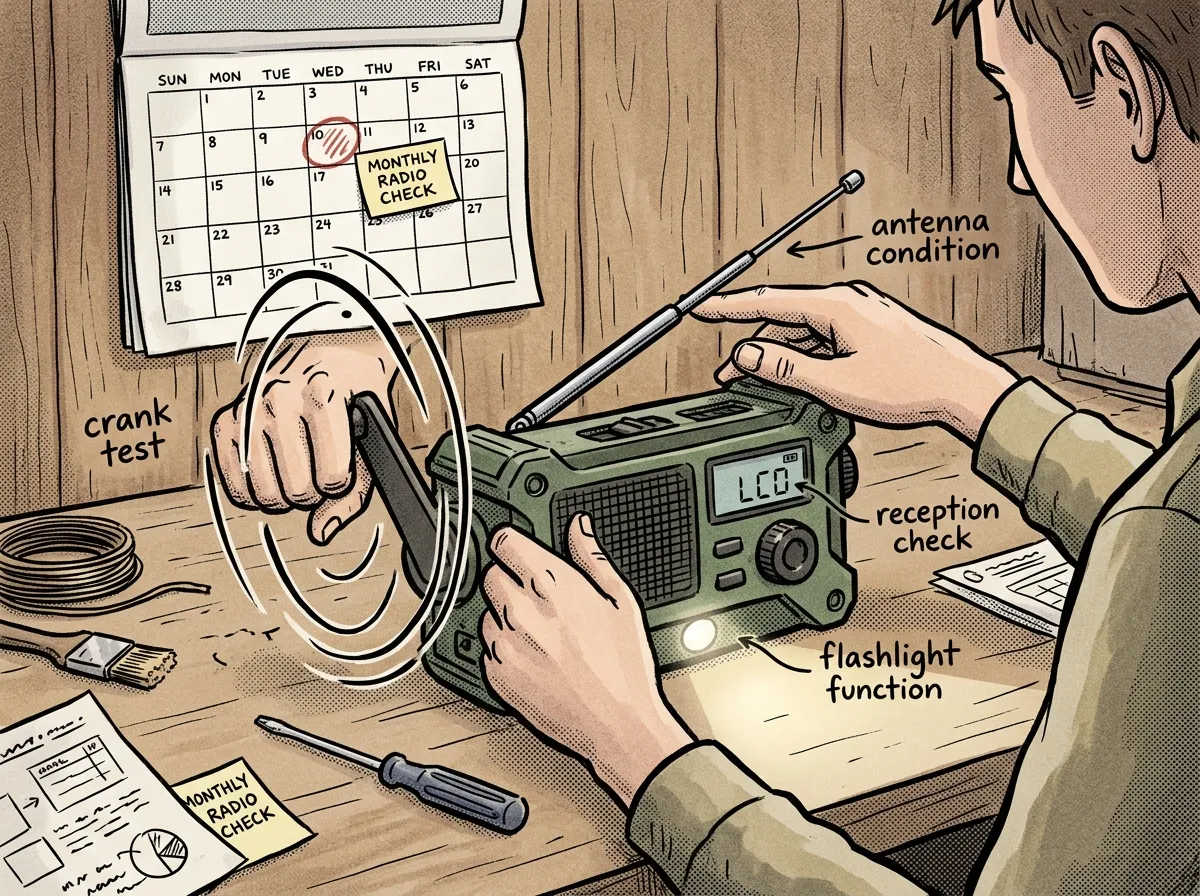 Monthly hand crank radio testing routine
A common pattern: someone buys a solid emergency radio, stores it in a closet, and doesn’t touch it for two years. Then the power goes out and the crank mechanism is stiff, the internal battery has degraded, and nobody in the house remembers how to switch it to the weather band.
- Crank it for 30-60 seconds and confirm it charges/powers on
- Tune to the NOAA weather band and confirm clear reception
- Test the flashlight and any SOS/strobe function
- Plug in a phone briefly to confirm USB output actually works
- Check port covers and antenna for dust, corrosion, or damage
Keep spare charging cables in the same bag as the radio — not in a drawer three rooms away. If your model takes AAA or AA batteries as backup, store a fresh pack alongside it and rotate them yearly. And write a simple, printed quick-start card and tape it inside the storage bag. In a real emergency, you want anyone in your household — including a stressed teenager or a grandparent visiting for the holidays — to be able to power this thing on and find the weather band without hunting for a manual.
Final Recommendation
A hand crank radio won’t replace your phone, your flashlight, or a proper battery bank. What it does is fill the specific gap those other tools can’t: reliable weather information and a backup light source that works with zero outside power. Look for SAME-capable NOAA alerts, at least two charging methods beyond the crank, and controls simple enough to run in the dark.
For most households, the Midland ER310 covers the bases without complications. If you need something smaller for a go-bag, the Eton FRX3+ or FosPower are better fits. And if you’re planning for extended outages — multi-day ice storms, hurricane season, wildfire evacuations that stretch longer than expected — the Kaito KA500’s redundant power paths are worth the extra bulk.
Next Steps
- Pick the model that matches where it’ll actually be stored and how you’ll use it.
- Confirm current specs and SAME support directly on the manufacturer’s page before ordering.
- Round out your kit with water, food, lighting, and a practiced grab-and-go routine.
- Check FEMA and American Red Cross guidance for a complete household emergency kit checklist.
The Complete
Prepper's Reference.
149 articles synthesized into one comprehensive PDF — twelve chapters covering water, food, shelter, first aid, comms, and scenario-specific preparedness. Free with your email.
Unsubscribe anytime · We never share your email
You're in. Check your inbox.
Keep Reading
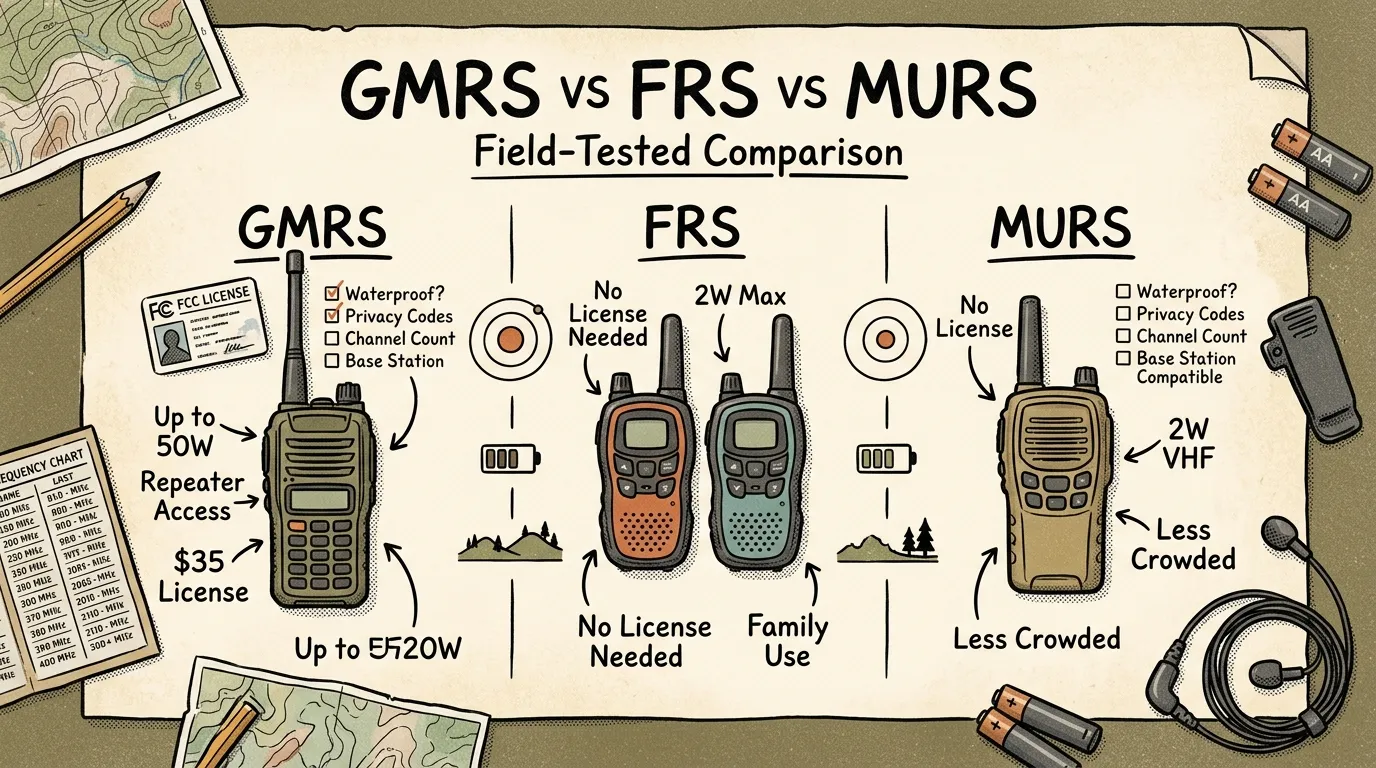
GMRS vs FRS vs MURS for Preppers: Complete Guide
GMRS vs FRS vs MURS for preppers — realistic range expectations, licensing breakdown, and scenario-based picks to choose the right emergency radio. Read more.
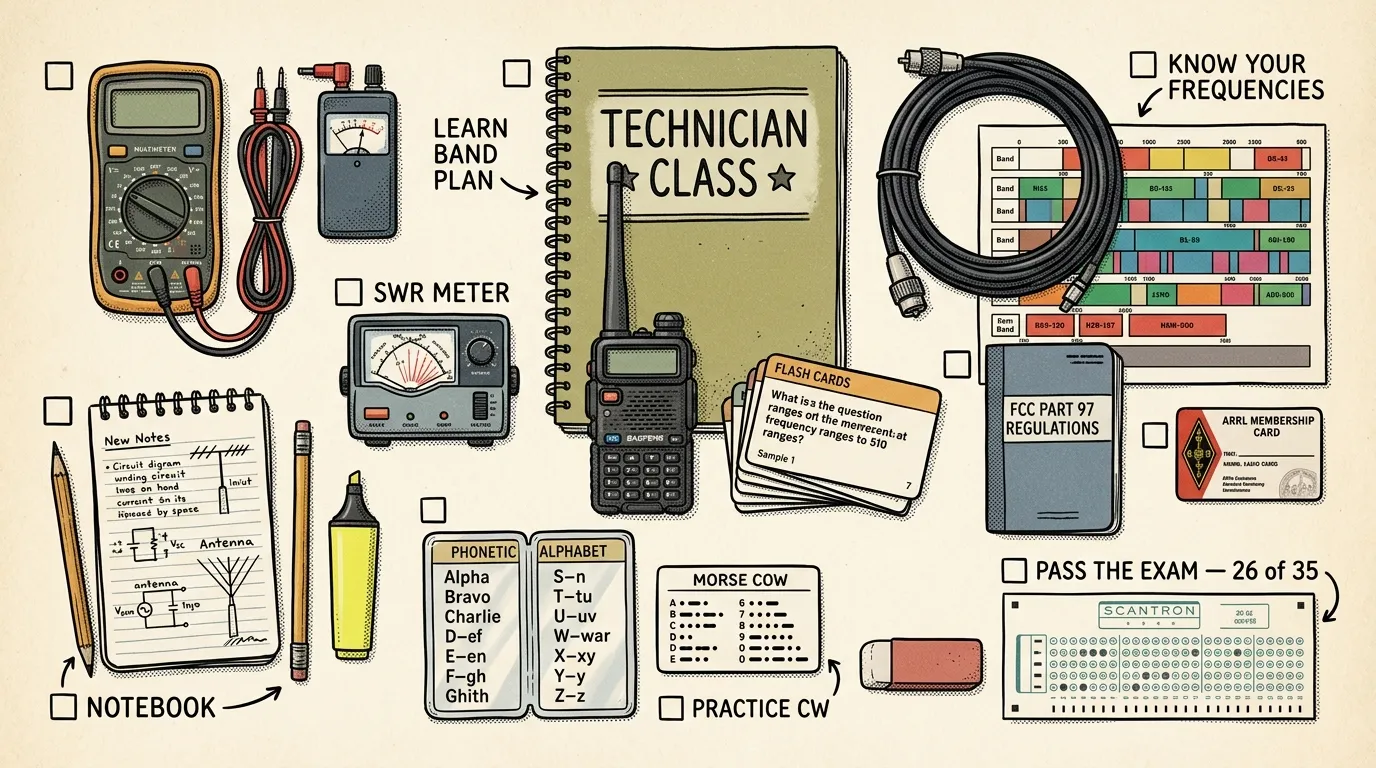
Ham Radio Technician License Study Guide for Preppers
A ham radio technician license study guide for preppers. Exam strategy, best resources, 4-week plan, and key concepts. Start studying today.
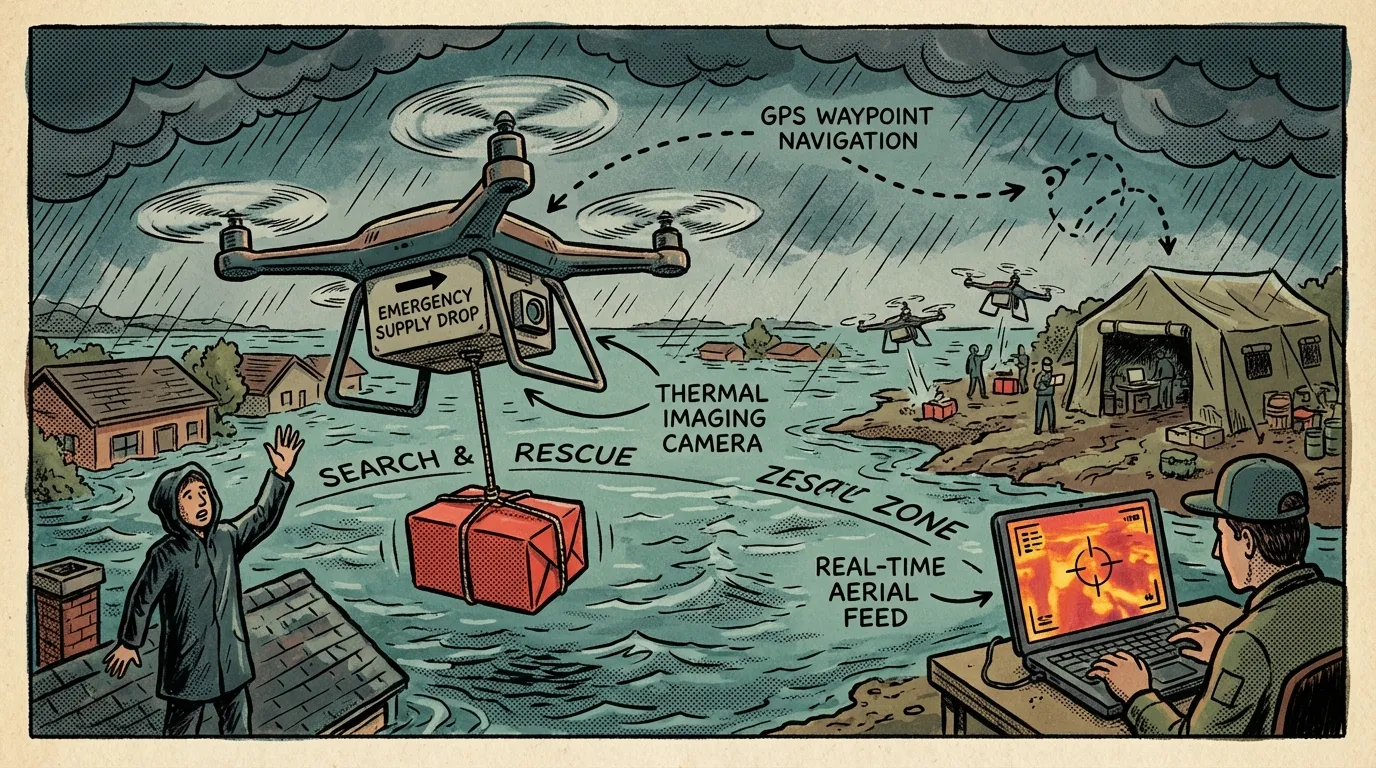
The Role of Drones in Emergency Preparedness
Learn how drones improve emergency preparedness with faster scouting, search and rescue support, damage assessment, and smarter prepper planning.