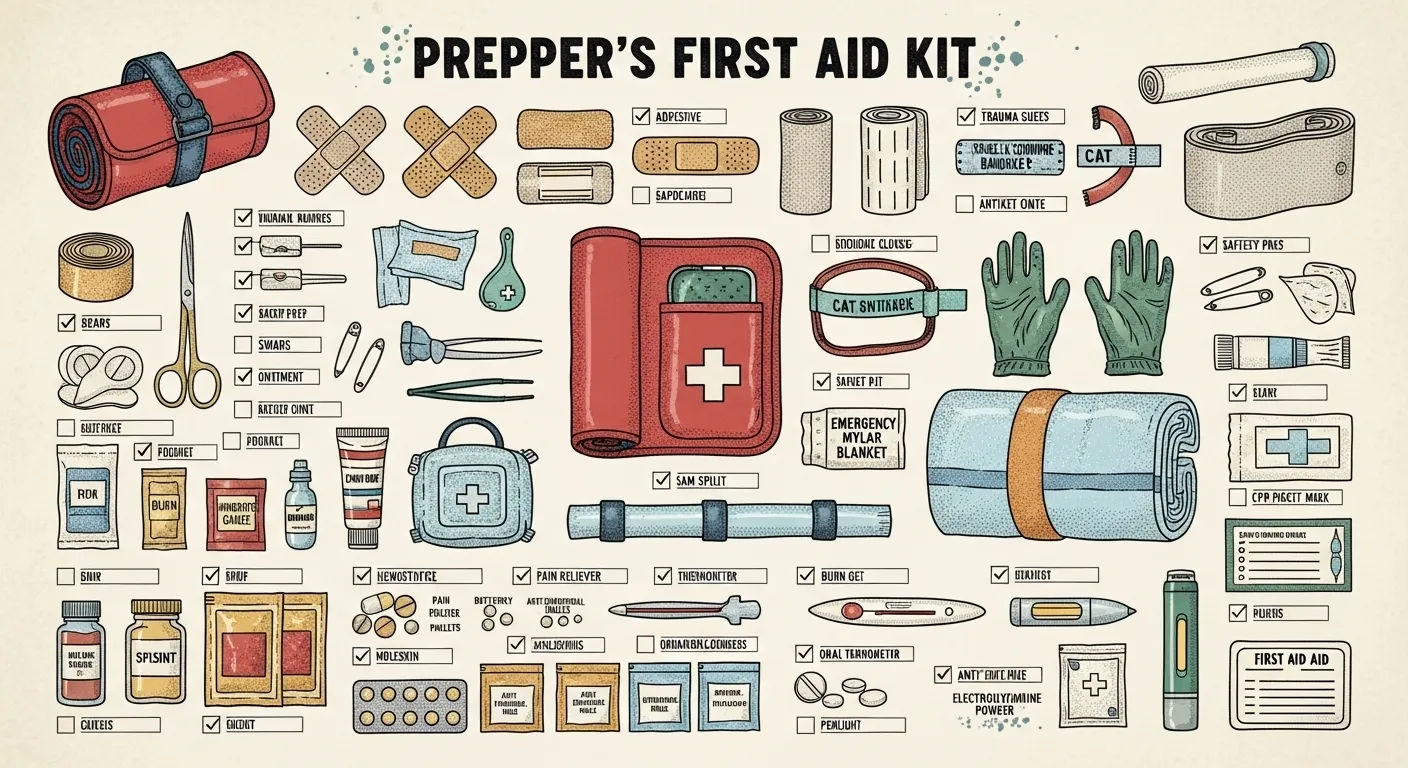
A prepper's first aid kit should include basic wound care supplies like bandages, gauze, antiseptic wipes, gloves, tweezers, tape, pain relievers, and burn care, plus advanced trauma items such as a tourniquet and splint if possible. The best kit also includes personal medications, is stored for quick access, and is maintained regularly so supplies are ready when an emergency happens.
Key Takeaways
- Inspect your first aid kit every 6 to 12 months and replace expired or damaged items immediately.
- Complete Stop the Bleed, CPR, and Red Cross first aid courses before using tourniquets or hemostatic dressings.
- Build three separate kits: one for home, one for your vehicle, and one grab-and-go evacuation bag.
- Use a 60 mL syringe with sterile 0.9% saline to irrigate wounds and reduce contamination risk.
- Label all prescription medications with name, dose, and expiration date, and rotate stock regularly.
Prepper First Aid Kit Essentials: Complete Checklist and What to Pack
TL;DR: Your prepper first aid kit essentials include items for bleeding control, wound care and infection prevention, symptom relief (pain, fever, allergic reactions), responder protection, and any necessary prescription or chronic-care medications. Core home items: assorted adhesive bandages, sterile gauze, medical tape, antiseptic wipes or saline, antibiotic ointment, nitrile gloves, tweezers, trauma shears, an ACE wrap, OTC pain relievers, oral antihistamine, burn dressing or gel, thermometer, CPR barrier, and a compact first-aid guide. For delayed care add a commercial tourniquet, hemostatic dressing, SAM splint, and irrigation supplies. Use advanced tools only after training.
Quick summary
A practical set of prepper first aid kit essentials stops bleeding, prevents infection, relieves common symptoms, and preserves chronic medications so you can stabilize injuries until professional help arrives.
What a prepper first aid kit is
A prepper first aid kit is a compact, prioritized collection of medical supplies matched to household size, local hazards, and likely delays to professional care. Focus first on life-threatening needs: severe bleeding, airway and respiration problems. Then address wound care, infection prevention, symptom relief, and continuity of chronic medications.
Key evidence notes
- Commercial tourniquets and hemostatic dressings reduce deaths from severe extremity bleeding. Get hands-on training from Stop the Bleed or your local EMS.
- Use sterile saline to irrigate wounds and reduce contamination. Improper technique or excessive pressure harms tissue.
- Verify prescription names, doses, and local legal rules for medications such as epinephrine auto-injectors with your provider and pharmacist.
Core categories and examples
- Wound care: adhesive bandages, sterile gauze pads, rolled gauze, non-adherent pads, medical tape.
- Infection control: antiseptic wipes, povidone-iodine, antibiotic ointment, nitrile gloves, sterile saline for irrigation.
- Symptom relief: acetaminophen, ibuprofen, oral antihistamines (diphenhydramine or cetirizine), oral rehydration salts, burn gel or dressings, digital thermometer.
- Trauma and immobilization: compression dressings, ACE wrap, SAM splint, commercial tourniquet, hemostatic dressing. Train to use the last two.
- Personal and chronic care: rotated prescription doses, rescue inhaler, epinephrine auto-injector if prescribed, diabetic supplies.
- Tools and references: trauma shears, tweezers, 60 mL syringe for irrigation, CPR barrier device, waterproof first-aid guide.
At-a-glance checklist for prepper first aid kit essentials
Minimum (every home/basic prepper kit)
- Adhesive bandages (assorted)
- Sterile gauze pads and rolled gauze
- Medical tape
- Elastic ACE bandage
- Antiseptic wipes or wound cleanser
- Antibiotic ointment
- Disposable nitrile gloves
- Tweezers and trauma shears
- Acetaminophen and ibuprofen
- Oral antihistamine (diphenhydramine or cetirizine)
- Burn gel or non-adherent burn dressing
- Instant cold packs
- Digital thermometer
- CPR face shield or pocket mask
- Compact waterproof first-aid guide
Recommended (expanded kit for longer delays or larger households)
- Extra sterile gauze and larger trauma dressings
- Sterile saline (0.9%) and 60 mL irrigation syringe
- Wound-closure strips (Steri-Strips)
- Triangular bandage for slings
- Adhesive remover or alcohol wipes
- Oral rehydration salts (ORS)
- Emergency mylar blanket
- Pediatric dosing chart and pediatric medications
- Extra prescription doses, labeled and rotated
- Printed allergy and chronic condition list
Advanced (delayed professional care; training required)
- Commercial tourniquet (CAT or SOF-T)
- Hemostatic dressing (QuikClot, Celox)
- SAM splint or rigid foldable splint
- Compression or Israeli bandage
- Advanced airway adjuncts or suture kits, only with formal training
One-item copy-friendly list
Adhesive bandages (various sizes) Sterile gauze pads Rolled gauze Medical tape Elastic bandage (ACE wrap) Antiseptic wipes or wound cleanser Antibiotic ointment Nitrile gloves Tweezers Trauma shears Acetaminophen Ibuprofen Oral antihistamine Burn gel or non-adherent burn dressing Instant cold packs Digital thermometer CPR face shield or barrier device Compact waterproof first-aid guide Sterile saline for irrigation Wound-closure strips Triangular bandage Commercial tourniquet (trained use only) Hemostatic dressing (trained use only) SAM splint Irrigation syringe (60 mL) Oral rehydration salts (ORS) Emergency blanket Prescription medications, labeled and rotated Epinephrine autoinjector if indicated Rescue inhaler if indicated Pediatric dosing chart Pet first-aid items if applicable
Why these items matter
- Bleeding control. Gauze, compression dressings, and properly applied tourniquets improve survival with severe extremity hemorrhage.
- Infection prevention. Sterile irrigation and sterile dressings reduce contamination; deep or dirty wounds require clinician care.
- Symptom relief. Analgesics, antihistamines, burn dressings, and rehydration reduce physiological deterioration while you arrange care.
- Responder protection. Gloves and barrier devices lower exposure to bloodborne pathogens.
- Decision support. A waterproof first-aid guide cuts confusion under stress.
Do and Don’t
Do
- Take accredited first-aid, CPR, and Stop the Bleed courses.
- Tailor your kit to household ages, chronic conditions, pets, and regional risks.
- Label medications with dose, name, and expiration. Keep a printed med and allergy list.
- Rotate perishable items and check expirations every 6 to 12 months.
Don’t
- Attempt suturing, advanced airway management, or other invasive procedures without training.
- Use tourniquets or hemostatic agents without prior hands-on practice.
- Store kits in heat or high humidity.
- Rely on a single kit. Keep backups at home, in vehicles, and in a grab-and-go bag.
Maintenance, storage, and organization
- Container: choose a water-resistant, durable case with labeled compartments.
- Locations: keep a central home kit, a vehicle kit, and a smaller evacuation or bug-out kit.
- Inspection: check every 6 months and after use. Replace expired or damaged items immediately.
- Inventory: maintain a printed inventory and follow first-in, first-out rotation for prescriptions.
Training and practice
- Take courses from the Red Cross, American Heart Association, or Stop the Bleed program.
- Practice dressing changes, splinting, and CPR with a manikin.
- Run household drills so everyone knows kit locations and basic roles. Practice builds speed and confidence.
FAQ
Q: What are the most essential items? A: Bandages, gauze, tape, antiseptic, antibiotic ointment, gloves, tweezers, trauma shears, pain relievers, burn care, ACE wrap, and a waterproof guide.
Q: Which advanced supplies should I consider? A: Commercial tourniquet, hemostatic dressings, compression bandage, SAM splint, and a 60 mL irrigation syringe with saline. Get training before use.
Q: Is a pre-made kit sufficient? A: A pre-made kit is a good starting point. Personalize it with extra gauze, prescriptions, pediatric items, and region-specific supplies. Rotate contents regularly.
Q: How often should I check my kit? A: Inspect kits every 6 to 12 months and after use. Replace expired or compromised items immediately.
Local checks and next steps
- Check local EMS response times to decide which advanced items to include.
- Verify prescriptions and include written dosing instructions.
- Research region-specific risks such as venomous snakes, ticks, and heat-related illness and add appropriate items.
Next steps: assemble a basic, well-organized kit based on these prepper first aid kit essentials. Add advanced items only after proper training, and practice regularly. Supplies without skills are just objects.
[INTERNAL_LINK: Water, Water Everywhere: How to Store H2O Without Losing Your Sanity] [INTERNAL_LINK: Canned Goods and Other Edibles: Your First Steps to Stockpiling Food] [INTERNAL_LINK: How to Build a Bug Out Bag: Essentials for a Quick Getaway]
The Complete
Prepper's Reference.
149 articles synthesized into one comprehensive PDF — twelve chapters covering water, food, shelter, first aid, comms, and scenario-specific preparedness. Free with your email.
Unsubscribe anytime · We never share your email
You're in. Check your inbox.
Keep Reading
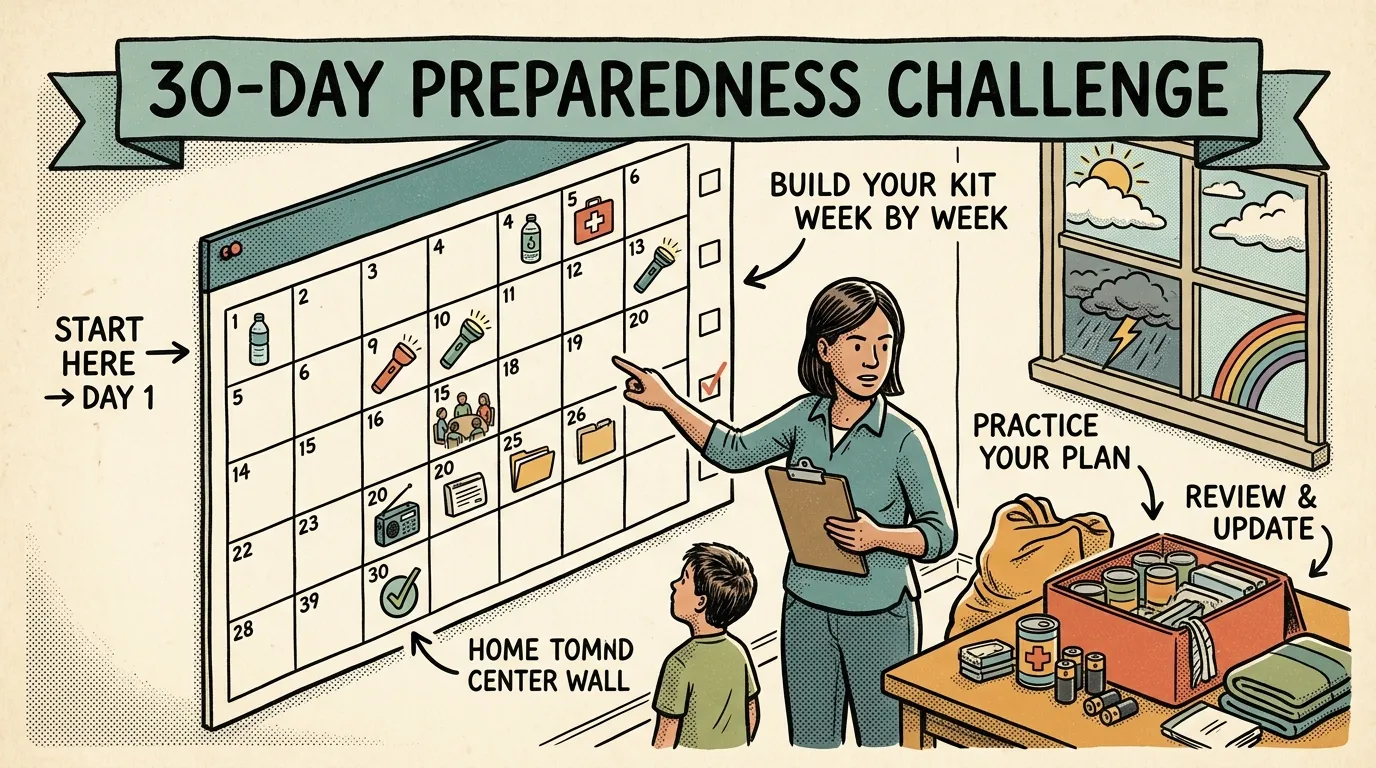
National Emergency Preparedness Month: 30-Day Plan
Use this 30-day National Emergency Preparedness Month challenge to go from unprepared to fully ready. One simple 15-minute task per day. Start now.
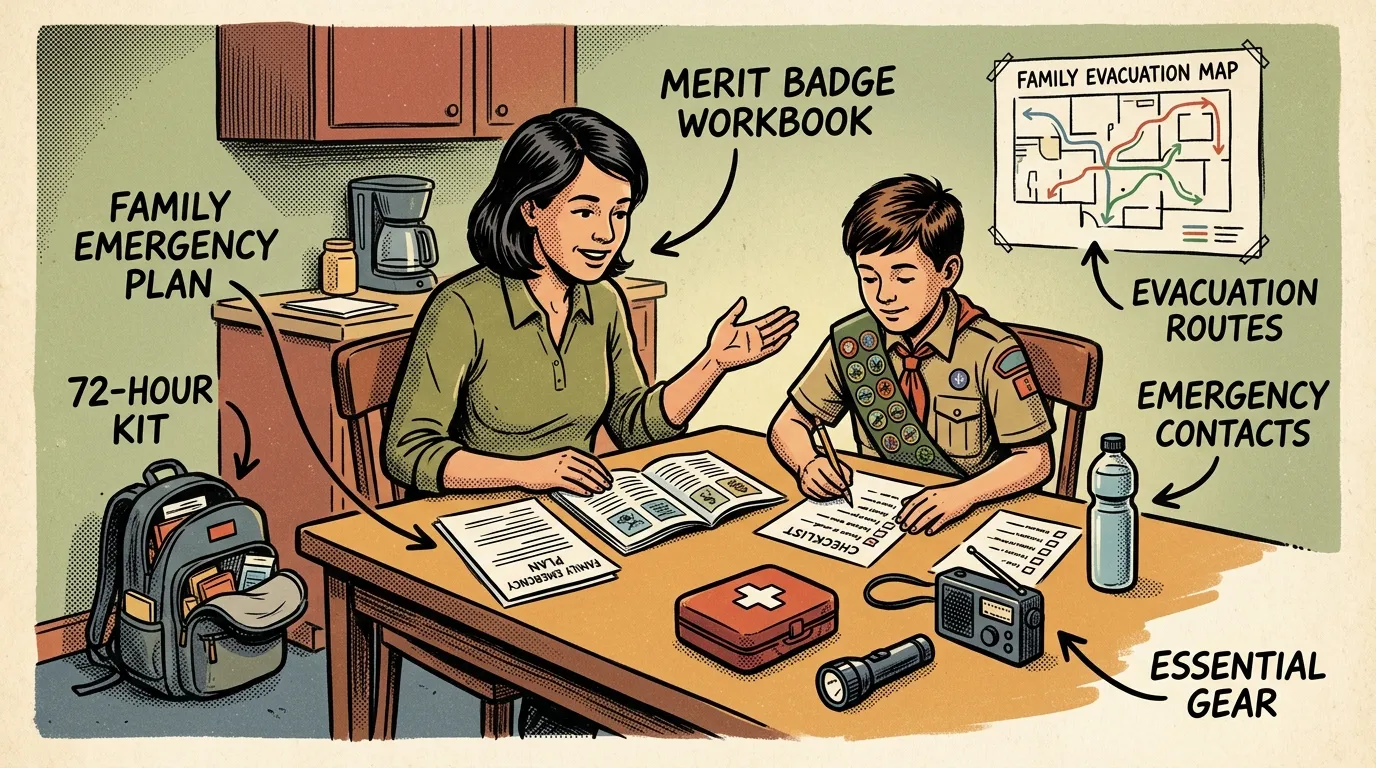
Emergency Preparedness Merit Badge: A Parent's Guide
Use the Emergency Preparedness merit badge framework to teach your kids real survival skills at home. Step-by-step activities for each requirement.
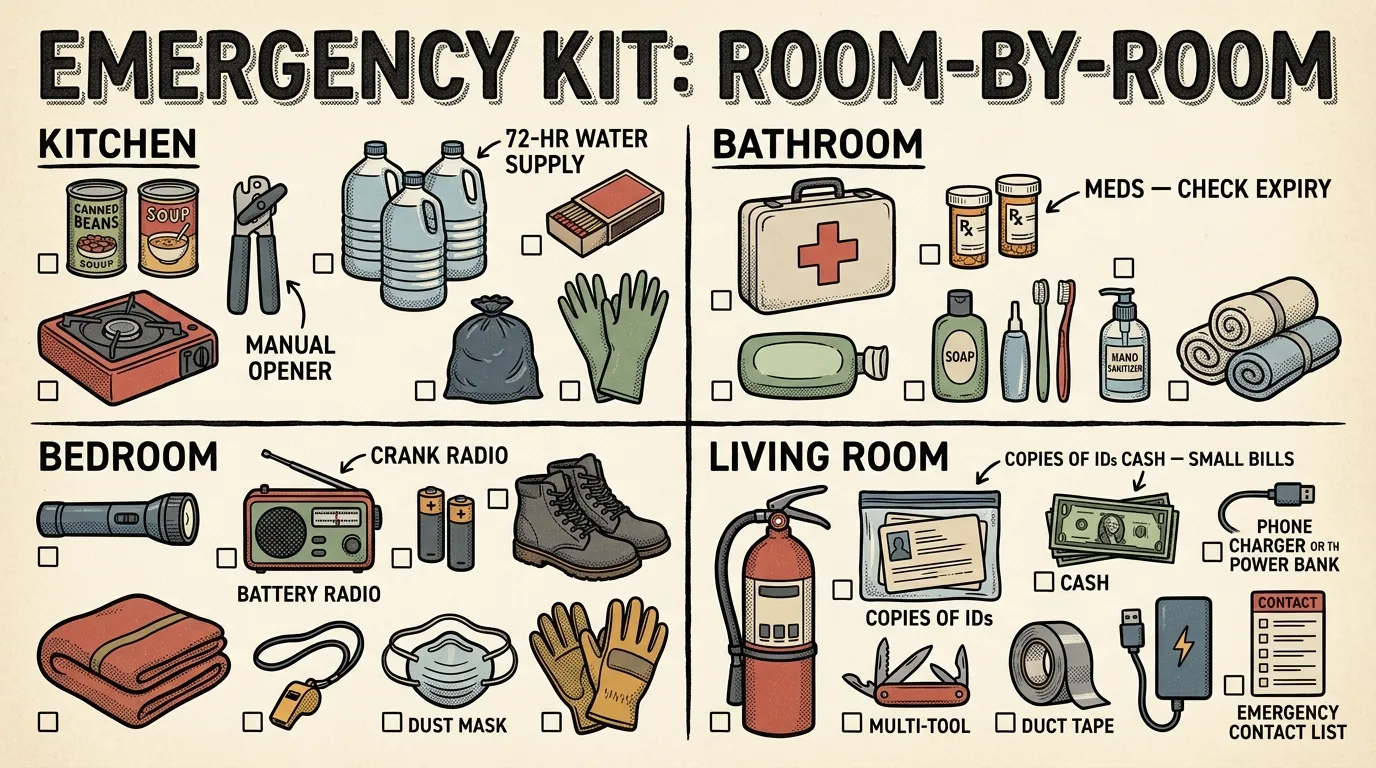
Emergency Preparedness Kit: Room-by-Room Home Guide
Build your emergency preparedness kit room by room for 14-day shelter-in-place readiness. Budget-friendly system. Start tonight.