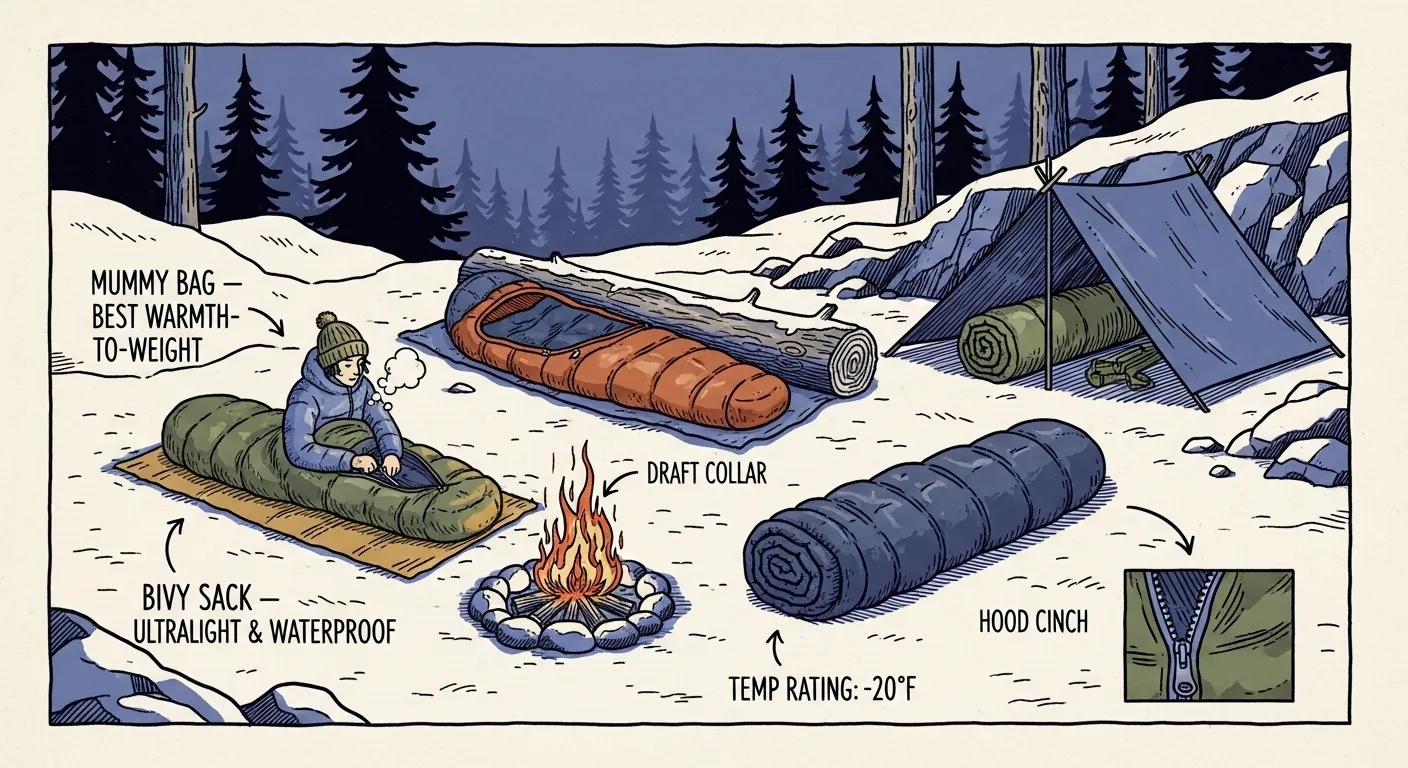
The best sleeping bags for survival situations combine a hooded mummy design, realistic cold-weather temperature rating, reliable insulation, water resistance, and durable construction. For most beginner preppers, synthetic sleeping bags rated from 0°F to 20°F offer the best balance of warmth, moisture performance, packability, and value, while down bags are better for ultralight and compact carry.
Key Takeaways
- Buy a bag rated at least 10-15 degrees colder than your worst expected night — manufacturer ratings run optimistic almost across the board.
- In damp or mixed climates, synthetic insulation like PrimaLoft or Climashield beats down every time because it keeps working when it's wet.
- Pair any 0°F to 10°F bag with a sleeping pad rated R-4.0 or higher — the bag alone won't stop ground-conducted heat loss.
- Confirm ISO 23537 or independent lab testing before you trust a temperature rating; brand-claimed numbers alone aren't reliable.
- Store your bag loosely in a breathable sack, never compressed long-term — compression is the fastest way to kill loft and shorten a bag's working life.
The Best Sleeping Bags for Survival Situations
Sleeping bags rated “20°F” often don’t actually keep someone comfortable at 20°F. That gap between marketing and reality is where hypothermia risk lives, and it’s one of the biggest mistakes people make when stocking a gear closet.
This isn’t a gear-porn roundup. It’s a look at what actually keeps people warm when the power’s out or the trail turns into an unplanned overnight.
Quick Summary
- The best survival sleeping bags are hooded mummy designs with real draft control, temperature ratings you can verify, and insulation that matches your climate — not just the lowest price on the shelf.
- In damp or mixed-moisture environments, synthetic insulation (PrimaLoft, Climashield) beats down because it keeps you warm even when it’s wet.
- Buy colder than you think you need. A 10 to 15 degree safety margin below your worst expected night accounts for wind, fatigue, and damp clothing.
- Your bag is only half the system — pair it with a sleeping pad rated for the ground temperature you’ll actually face.
- Verify ISO 23537 or independent lab testing before trusting any temperature number on the tag.
Why the Right Sleeping Bag Actually Matters
A survival sleeping bag isn’t about comfort. It’s about slowing heat loss enough that your body can do its job overnight. Get that wrong and you’re not just cold — you’re burning calories you don’t have to spare, and your judgment starts to slip along with your core temp. Poor, cold sleep leads to decisions that a rested person wouldn’t make. That’s the real cost of the wrong bag.
The right one does the opposite. It lets you actually sleep, which means you wake up able to think, move, and problem-solve. Match the bag to the mission — home backup, vehicle kit, or something you’re carrying on foot — and you’re most of the way to getting this right.
A sleeping bag doesn’t just keep you warm — it protects your ability to make good decisions the next morning.
Terms Worth Knowing Before You Shop
You don’t need to be a gear nerd to buy well, but a few terms will save you from getting sold on marketing fluff.
- Mummy bag — a tapered shape with a close-fitting hood that eliminates dead air space around your body. This is the shape you want for anything below freezing.
- Draft collar / draft tube — insulated baffles at the neck and along the zipper that block convective heat loss. Cheap bags skip these first.
- DWR (durable water repellent) — a coating that sheds light moisture. It is not waterproof, and it wears off over time.
- Fill power — measures down loft. Higher numbers mean more warmth per ounce, not necessarily more warmth overall.
- Hydrophobic-treated down — down treated to resist moisture and recover loft faster once it does get wet.
- R-value — the thermal resistance rating for sleeping pads. Higher means better insulation from the ground.
- ISO 23537 — the current international standard for sleeping bag temperature testing. If a bag doesn’t reference it (or an equivalent independent test), be skeptical of the rating.
Features That Actually Matter
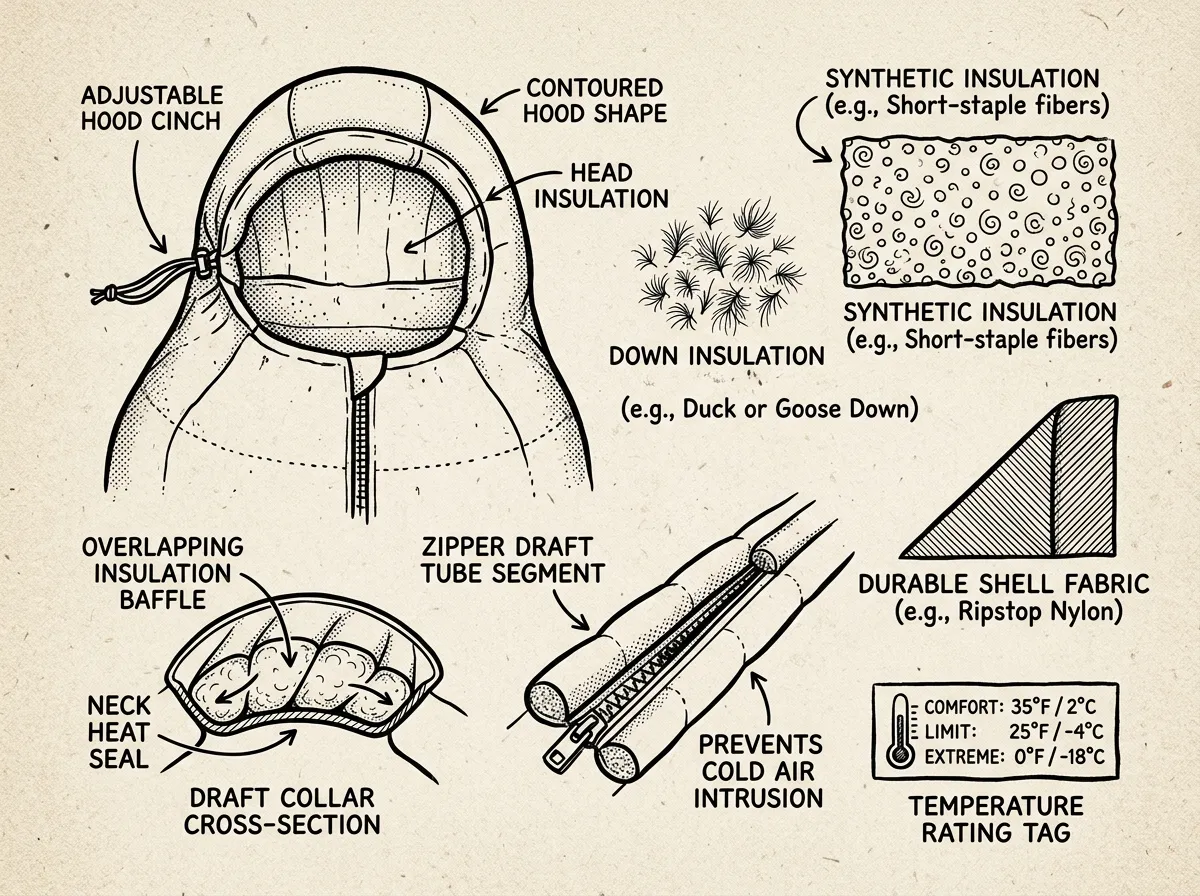 Key sleeping bag features spread out for comparison
Temperature Rating
This is where most buying decisions go wrong. Manufacturer ratings can be aggressive marketing more than physics. Look for ISO 23537 testing or independent lab data, and figure out whether you’re looking at the comfort rating, the limit rating, or the extreme rating — they’re wildly different numbers on the same bag.
Whatever rating you land on, subtract 10-15 degrees for real-world margin. Wet clothes, wind, fatigue, and a lower-than-average metabolism all eat into that number fast.
Insulation Type
Synthetic fill — think PrimaLoft or Climashield — keeps insulating even when it’s soaked. It’s heavier and bulkier for the same warmth as down, but it’s forgiving, which matters a lot when you’re not babying your gear.
Hydrophobic-treated down gives you the best warmth-to-weight ratio you can buy. It compresses smaller and weighs less. But even treated, it still needs moisture management you have to actually do — drying it out, keeping it away from condensation, not stuffing it away wet.
Shape and Draft Control
A hooded mummy shape with a functional draft collar and a draft tube running the length of the zipper is non-negotiable below 30°F. Rectangular bags feel roomier in the store. They lose that argument fast once the temperature drops, because all that extra air space is air your body has to heat.
Shell and Construction
DWR-treated ripstop or a Pertex-style fabric, anti-snag zippers, and clean baffle construction with reinforced seams. Cheap zippers are the number one failure point on budget bags — they snag, they separate, and at 2 a.m. in the cold, that’s the last thing you want to be fighting with.
Temperature Guidance and Pad Pairing
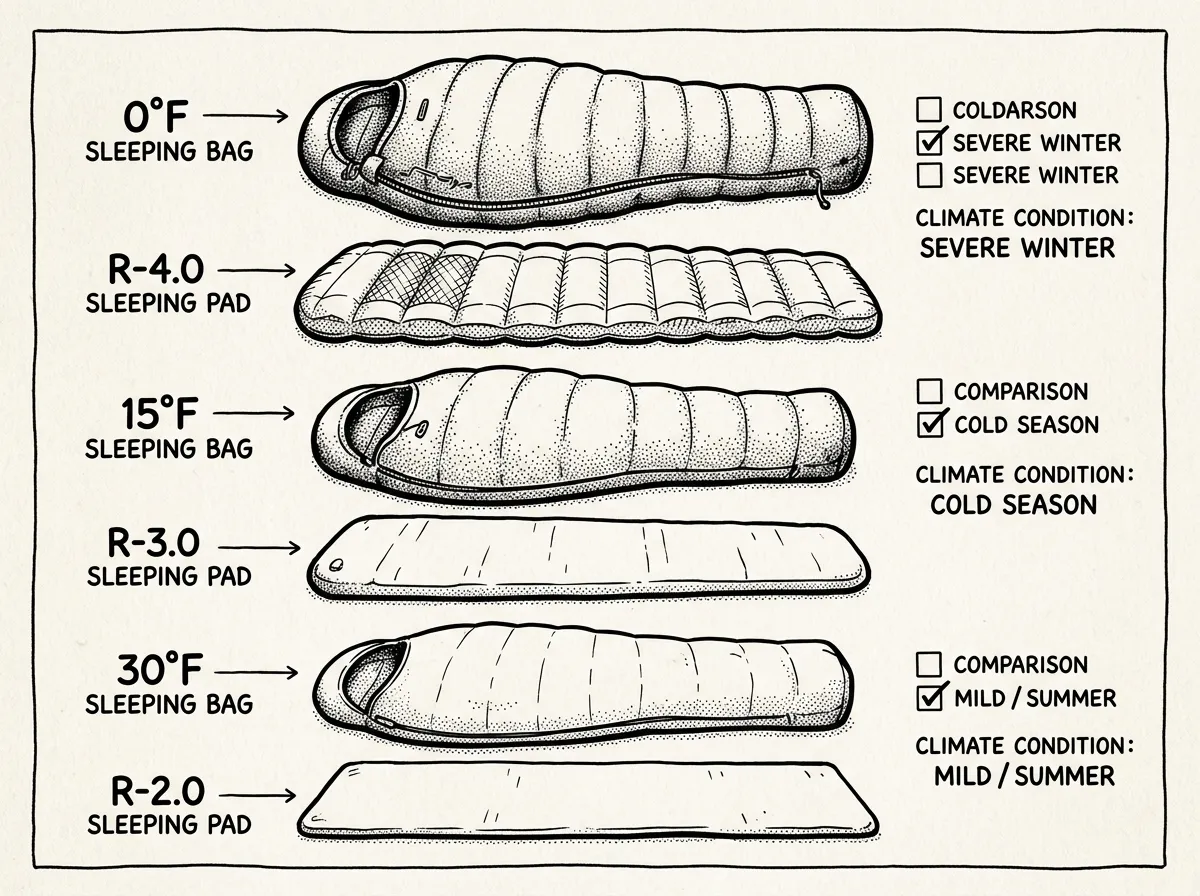 Sleeping bag and pad temperature ratings laid out for matching
Your sleeping bag can’t do this job alone. Ground conduction pulls heat out of your body faster than air ever will, which is why the pad underneath you matters just as much as the bag.
For mild climates or summer emergency use around 30°F, an R-2.0 to R-3.0 pad is generally enough.
Closed-cell foam pads — like a basic Closed-Cell Foam Sleeping Pad, usually $15 to $30 — are a common choice for vehicle kits. They’re nearly indestructible, they don’t puncture, and they don’t care if they get thrown around in a trunk for two years. Inflatable or air-plus-foam hybrids get you higher R-values and more comfort for backpacking, but they can fail if you puncture them, which is a real risk when you’re not choosing your campsite carefully.
Down vs. Synthetic: The Real Tradeoff
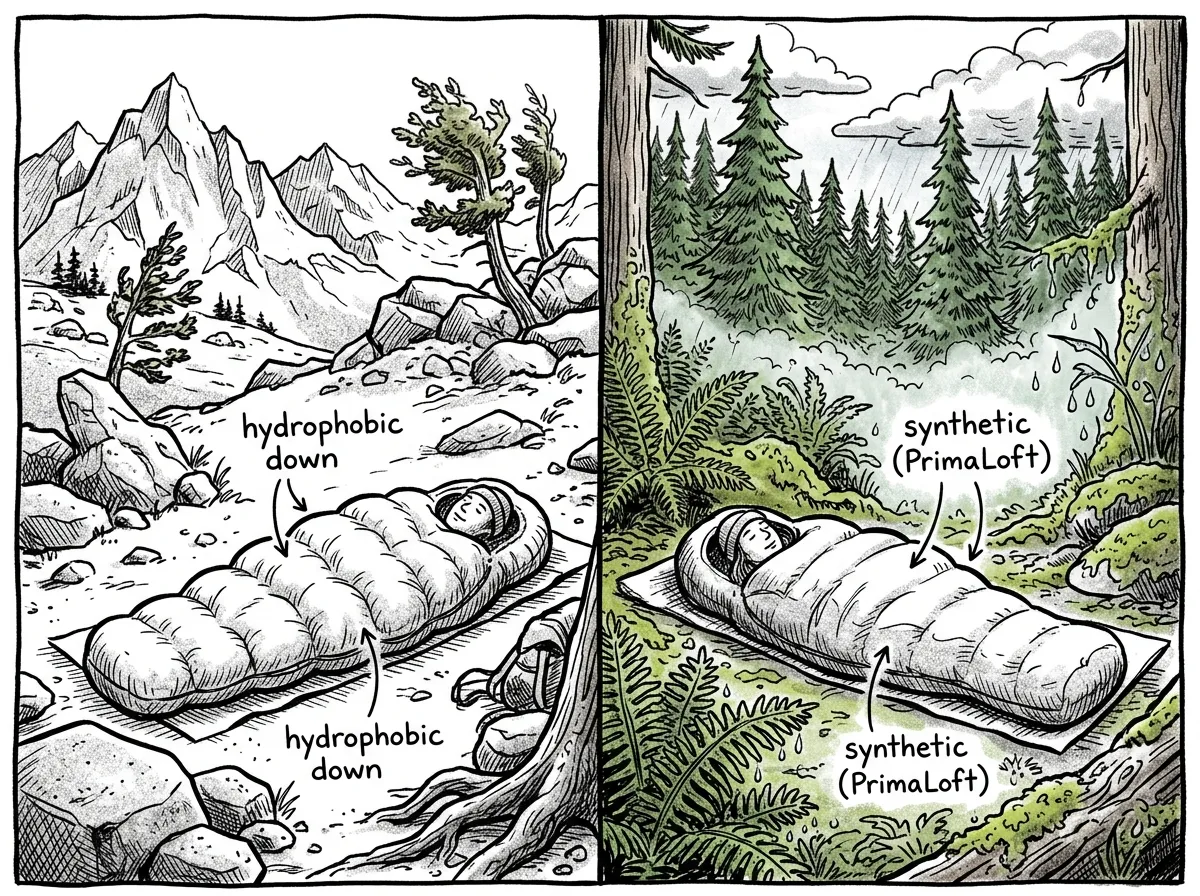 Comparing down and synthetic performance in wet versus dry conditions
Down (600 to 900+ fill power) Pros: best warmth-to-weight ratio you’ll find, compresses down small. Cons: loses loft when wet unless treated, needs careful drying and storage. Best for: weight-sensitive bug-out kits, dry climates, backpacking.
Synthetic (PrimaLoft, Climashield, generic polyester fill) Pros: keeps insulating when damp, low maintenance, generally cheaper. Cons: heavier and bulkier for the same warmth rating. Best for: damp or mixed climates, vehicle and home kits, general preparedness.
Climate should drive the down-versus-synthetic decision. In humid Gulf Coast conditions or the Pacific Northwest, where rain is close to a given, synthetic insulation is the safer default, since down that gets soaked can lose loft and stop insulating effectively. In high desert regions with dry, cold conditions and low humidity, treated down performs well and earns its place.
Matching the Bag to Your Mission
Not every kit needs the same bag. Here’s how to split it:
- Home backup or car kit — roomy synthetic bag, comfort and durability over weight.
- Vehicle winter kit — midweight synthetic or treated down, plus a waterproof outer layer if you’re anywhere wet.
- Bug-out or on-foot kit — lightweight treated down or a high-end synthetic for the smallest packed size you can afford.
- General preparedness (one bag to cover most scenarios) — a midweight synthetic hooded mummy. It’s the most forgiving choice if you’re only buying one.
Top Picks Worth Considering
Specs and pricing shift often, so confirm current ISO ratings, weight, and fill details before you buy — don’t just trust the product photo.
- Teton Sports Celsius XXL (synthetic, around $60-$80) — roomy and comfortable, a solid pick for vehicle and home kits where packed size doesn’t matter much.
- Kelty Cosmic Down (treated down, around $150-$200) — good warmth-to-weight ratio, a recommended option for anyone building a bug-out bag on a budget.
- Marmot Trestles Elite Eco (synthetic, around $130-$160) — durable, holds up well in damp climates.
- Coleman North Rim (synthetic, around $50-$70) — budget-friendly, a fine emergency-only option, not ideal for a multi-night trip.
- Hyke & Byke Quandary (treated down, around $100-$140) — compact and a decent entry point into treated down without the premium-brand price tag.
Zipper failures are a well-documented weak point in budget synthetic bags — a separated zipper mid-night in cold temperatures can turn a functional bag into a serious problem fast. Cheap zippers aren’t a minor flaw. They can be the difference between a functional bag and a very long night.
How to Evaluate a Bag Before You Buy
- Check for ISO 23537 or independent lab temperature testing, not just the brand’s own claim
- Confirm insulation type — down fill power and any hydrophobic treatment, or synthetic fill type
- Verify packed size and weight against independent reviews and real photos, not marketing renders
- Inspect shell fabric, zipper quality, and baffle construction with your own hands if possible
- Read user reports specifically about wet-weather performance and long-term durability
- Test it overnight with your actual pad and clothing before you trust it in a real emergency
That last step matters more than people think. A bag that looks great on paper can still surprise you the first time you actually sleep in it. Test it before your life depends on it, not after.
Care, Storage, and Longevity
How you store a bag between uses has a bigger impact on its lifespan than almost anything else you do.
- Store loosely in a large breathable sack, or hang it — never leave it compressed long-term
- Keep it fully dry and out of direct sunlight before storage
- Follow the manufacturer’s washing and drying instructions exactly
- Repair small tears immediately before they spread
- Re-treat DWR coatings once you notice water stops beading
A common mistake is jamming a bag into its stuff sack for storage because that’s what it’s used for on the trail. That’s fine for transport, terrible for the off-season. Compressed loft doesn’t recover the same way twice, and eventually you end up with a bag rated for 20°F that performs more like 35°F.
Claims Worth Double-Checking
Manufacturer temperature ratings run optimistic more often than not — always weigh them against ISO 23537 or independent test data if you can find it. DWR coatings degrade with use and UV exposure, so check what re-treatment looks like before you buy. Hydrophobic-down treatments vary a lot between brands, so compare actual test data rather than taking a tag’s word for it. Performance numbers you find online can vary by source — for anything mission-critical, verify before you commit.
Quick Buyer’s Checklist
- ISO 23537 or comparable independent temperature rating present
- Insulation type matches your climate’s moisture level
- Hooded mummy shape with a working draft collar and draft tube
- DWR-treated shell fabric with quality, snag-resistant zippers
- Packed weight and volume work for your specific kit
- A compatible sleeping pad with the right R-value on hand
- Acceptable warranty, return policy, and independent user reviews
Frequently Asked Questions
What is the best sleeping bag for survival situations? The best survival sleeping bags are hooded mummy designs with draft collars, draft tubes, and insulation matched to your environment. For damp conditions, choose synthetic insulation like PrimaLoft or Climashield. For lightweight bug-out kits in dry environments, hydrophobic-treated down gives you the best warmth-to-weight ratio.
Should I choose down or synthetic insulation for a survival sleeping bag? Choose synthetic for damp or mixed environments — it keeps insulating even when wet and needs almost no upkeep. Choose hydrophobic-treated down when weight and packed size matter most and you’re confident you can manage moisture. Synthetic wins for most all-around preparedness, vehicle, and home kits.
What R-value sleeping pad do I need with a survival sleeping bag? For severe winter or high-altitude survival between 0°F and 10°F, use a pad rated R-4.0 or higher. For standard cold-season survival around 15°F to 20°F, aim for R-3.0 to R-4.0. For mild climates or summer emergencies near 30°F, R-2.0 to R-3.0 will get the job done.
How do I verify the temperature rating on a survival sleeping bag? Look for bags tested to ISO 23537 or by an independent lab, and check whether the listed number is the comfort, limit, or extreme rating — they’re not interchangeable. Always buy a bag rated colder than your expected lowest temperature to build in margin for wet clothing, wind, and fatigue.
Gear specs and pricing change often. For anything mission-critical, confirm the current numbers, look for independent test data, and read real user reports before you buy — not just the listing photos.
The Complete
Prepper's Reference.
149 articles synthesized into one comprehensive PDF — twelve chapters covering water, food, shelter, first aid, comms, and scenario-specific preparedness. Free with your email.
Unsubscribe anytime · We never share your email
You're in. Check your inbox.
Keep Reading
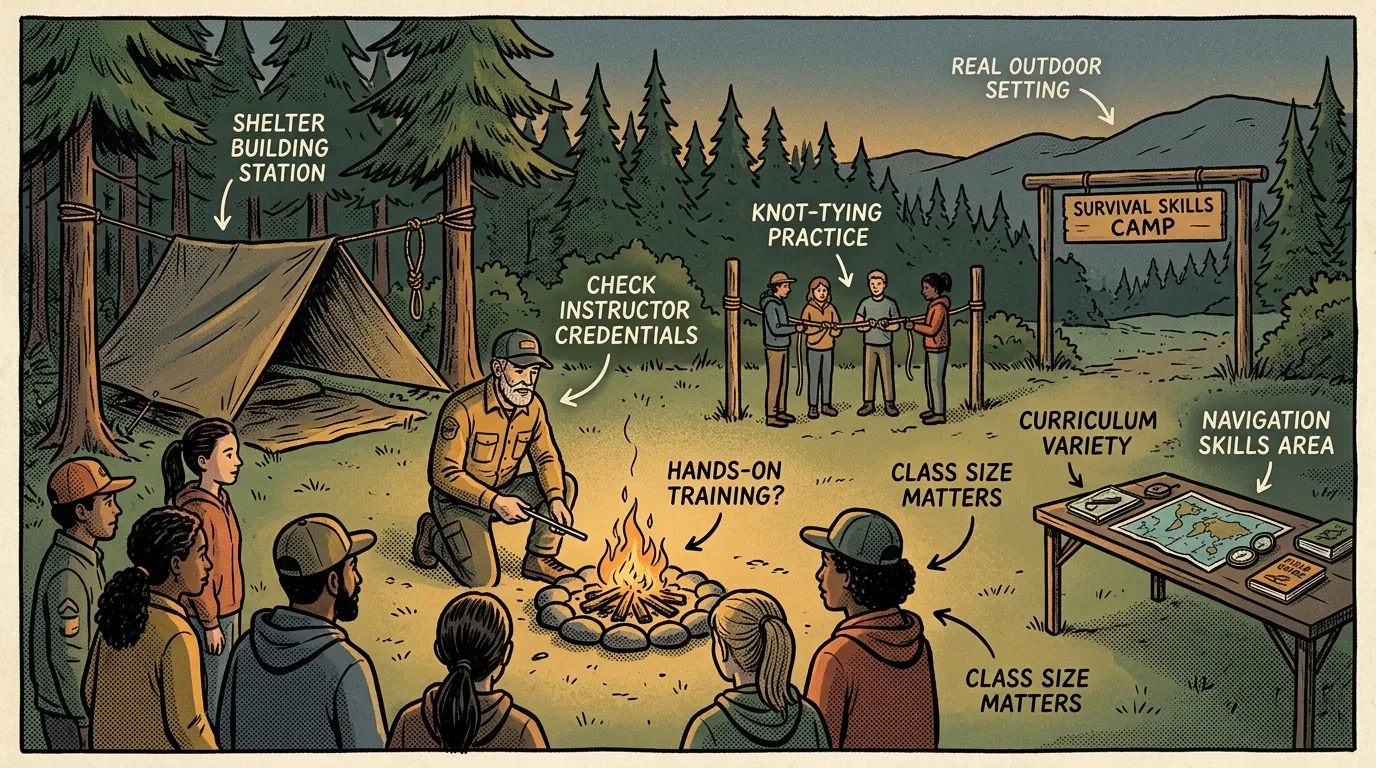
Survival Skills Camp: How to Choose the Right One
Choosing a survival skills camp? Here's what to look for, red flags to avoid, and what real training teaches you.
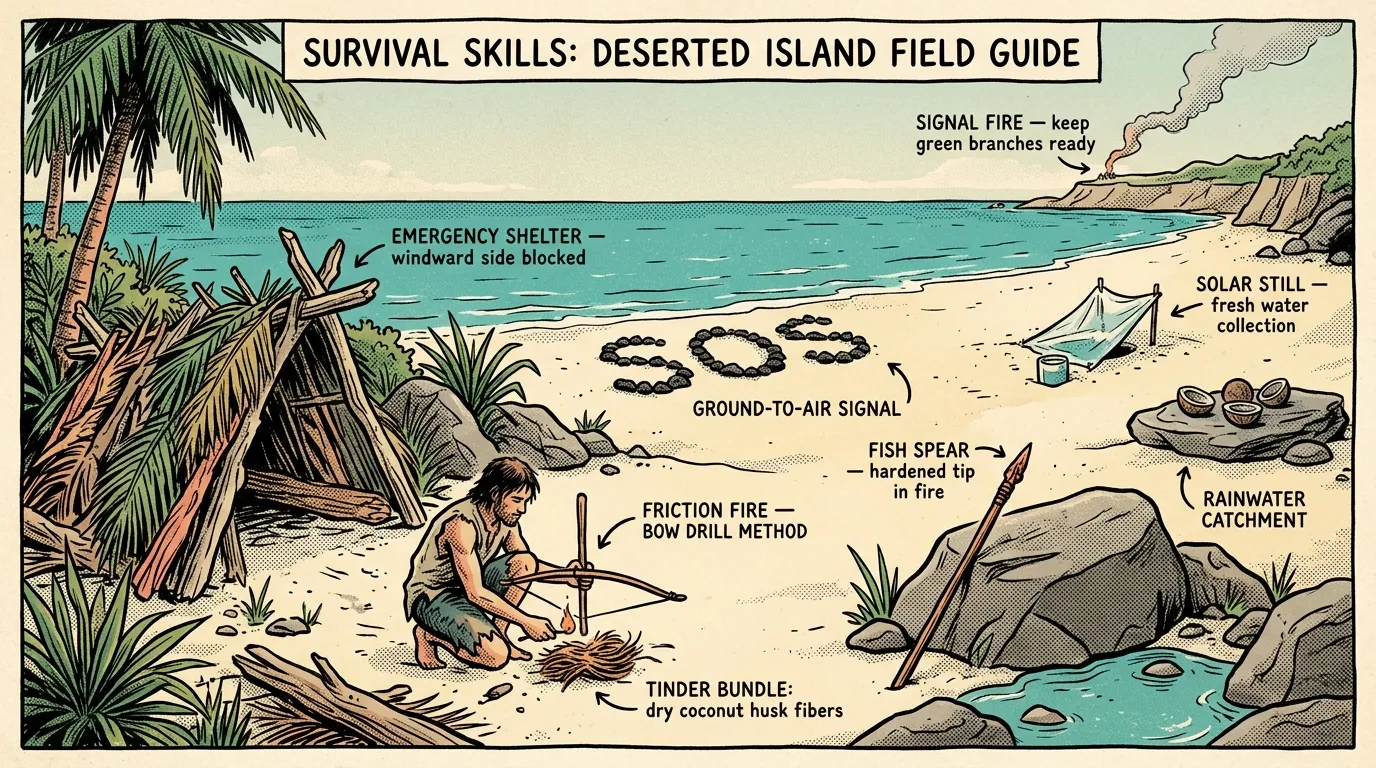
Survival Skills on a Deserted Island: Field Guide
Master survival skills on a deserted island — water, shelter, fire, food, and rescue signaling. Start learning now.
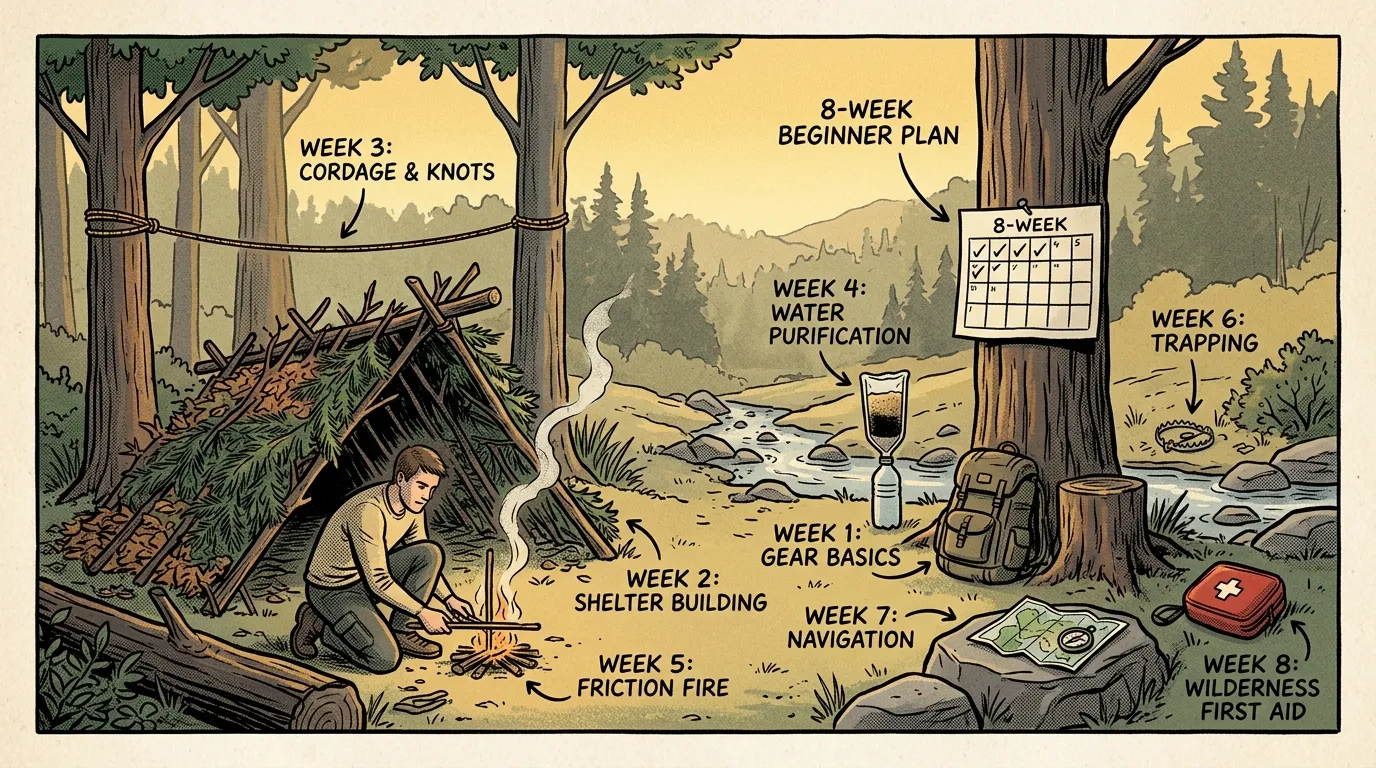
Survival Skills Training: 8-Week Plan for Beginners
Follow this 8-week survival skills training plan to master shelter, fire, water, navigation & first aid. Start this weekend.