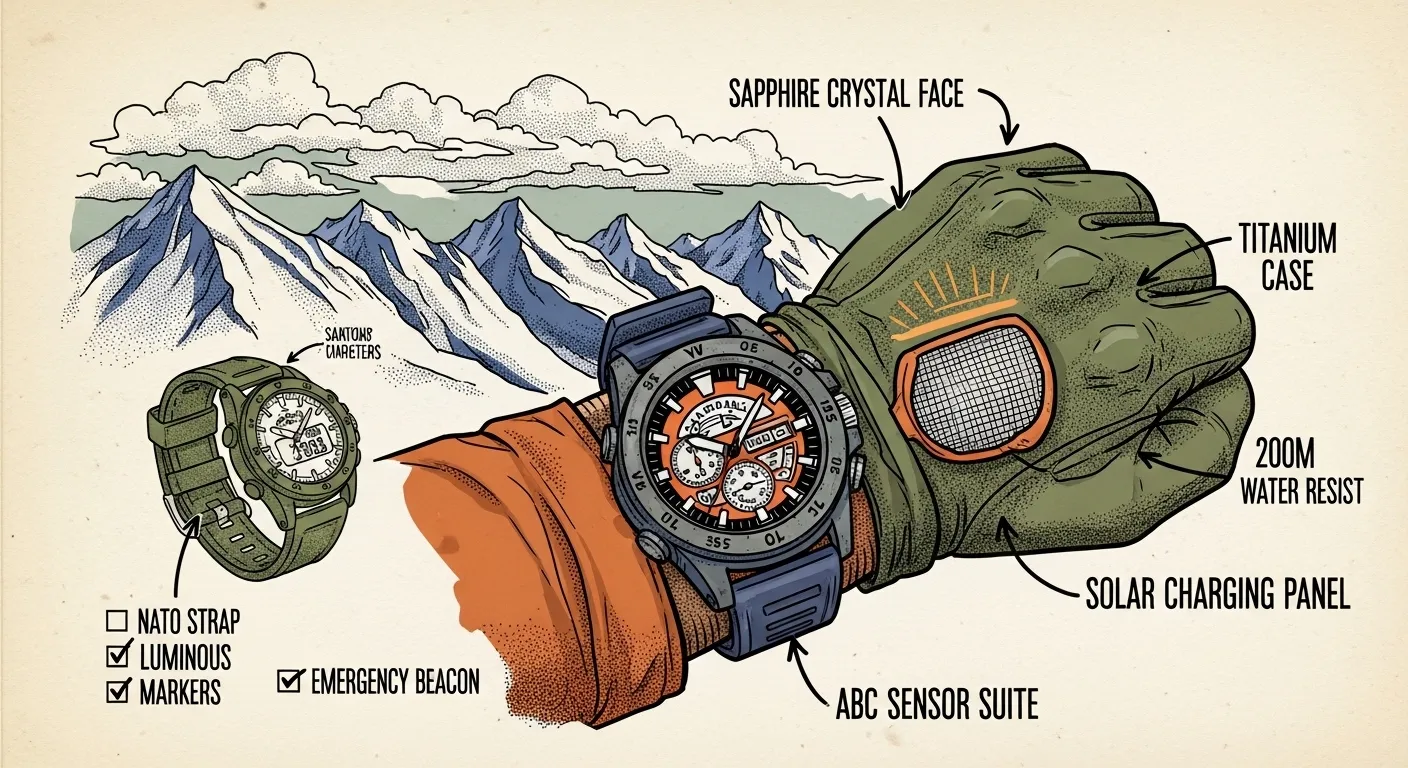
The best survival watches for extreme conditions combine rugged durability, long battery life, strong water resistance, and tools like GPS, altimeter, barometer, and compass. For new preppers, Garmin, Casio, Suunto, and COROS are top brands, with the Garmin Instinct 2 Solar and Casio G-Shock lines standing out as especially strong choices.
Key Takeaways
- Buy for your longest realistic trip, not your average one — battery life and solar charging matter far more on multi-day off-grid stretches than on day hikes.
- Multi-band GNSS (L1/L5) is worth paying extra for if you spend time in canyons, dense forest, or steep terrain where signal bounce causes position errors.
- 10 ATM water resistance covers nearly all field and weather scenarios — you don't need a dive-rated watch unless you're actually diving.
- Test navigation, offline maps, and SOS features at home before you need them. Too many people discover a dead-simple menu bug three miles into a whiteout.
- Satellite SOS is only as good as its subscription and coverage — check both before you count on it to save you.
The Best Survival Watches for Extreme Conditions
A survival watch is worth having on every backcountry trip and disaster response scenario. It’s the one piece of gear that’s never in a pack you left behind — it’s just there, on you, when everything else goes sideways. That’s exactly why picking the right one matters more than people think.
A good survival watch isn’t a fashion accessory. It’s a navigation tool, a weather instrument, and sometimes an emergency beacon, all strapped to your forearm. A bad one is a $300 paperweight that dies on day two of a trip when you need it most.
Quick Summary
- The best all-around pick right now is the Garmin Instinct 2 Solar — rugged, solar-assisted, accurate multi-constellation GNSS, and battery life that actually holds up in the field.
- Budget-conscious? The Casio G-Shock Rangeman delivers proven shock resistance and solid ABC tools for a fraction of the price of premium GPS watches.
- If your trips run long — think multi-day off-grid travel — the COROS Vertix 2 has the best real-world battery endurance in this category, according to independent reviews and published specs.
- Multi-band GNSS (supporting L1/L5 frequencies) matters a lot more in canyons and dense forest than it does on open trail — match the feature to your terrain.
- Satellite SOS is a serious upgrade for remote trips, but only if you understand its coverage limits and subscription cost before you’re relying on it.
What Actually Makes a Watch “Survival-Grade”
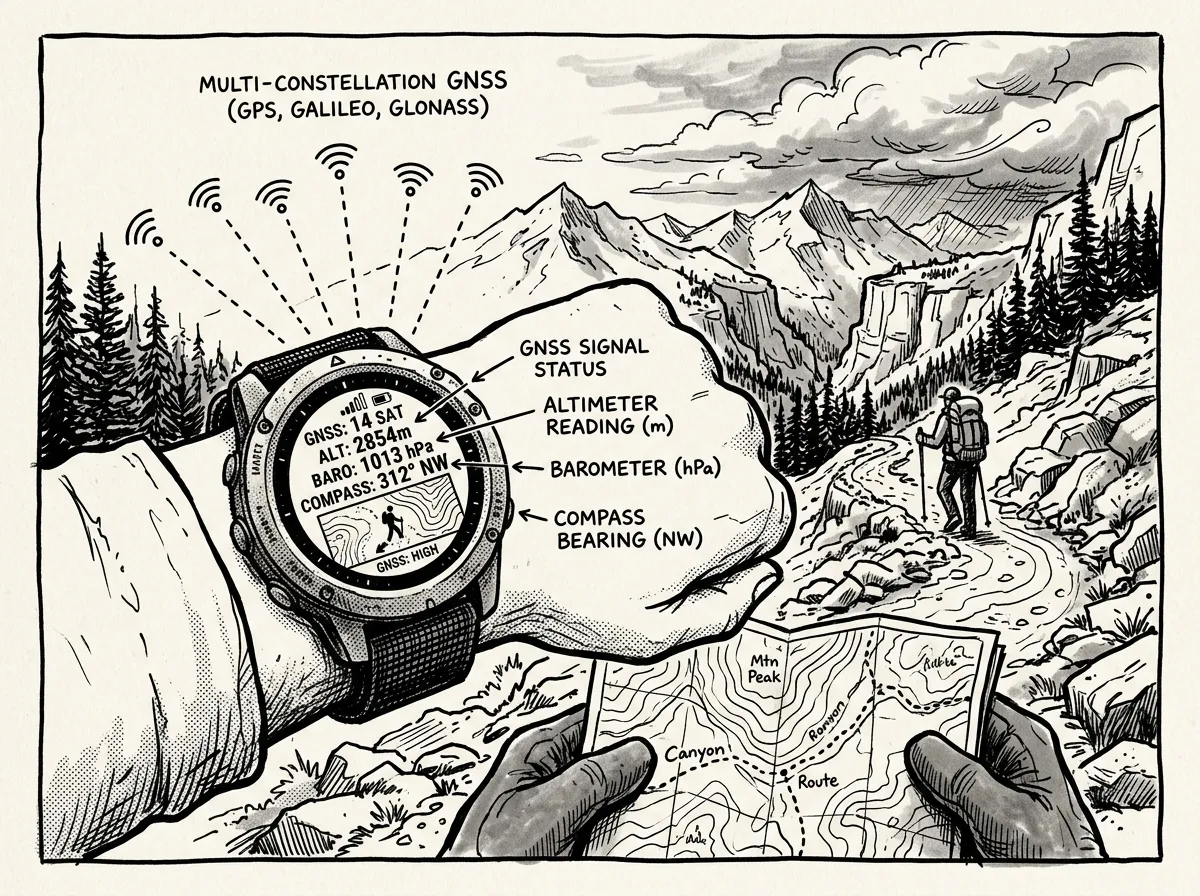 Survival watch in action during backcountry navigation
There’s a lot of marketing noise in this category. Every outdoor watch claims to be “rugged” and “built for adventure.” Here’s what matters, based on manufacturer specifications and how gear commonly fails in the field.
Durability You Can Trust
Look for stainless steel, titanium, or reinforced polymer cases. Sapphire crystal is ideal for scratch resistance; hardened mineral glass is an acceptable second choice. Manufacturers love to slap “MIL-STD-810” on the box, but that standard covers a wide range of individual tests — drop, vibration, humidity, temperature extremes, and more. A watch that passed one or two of those tests isn’t the same as one that passed all of them.
A watch’s crystal can crack from a drop or scramble even with a MIL-STD-810 sticker on the box — that label covers many different tests, and a watch may pass only shock testing without being rated for the specific drop height it later experiences. Ask specifically which tests a watch passed, not just whether it “meets” the standard.
Water Resistance That Matches Your Actual Use
For general outdoor use — river crossings, rain, snow, sweat — 10 ATM (100 meters) is plenty. You don’t need a dive-rated watch unless you’re actually diving. People often overspend on water resistance rated for depths they’ll never see while underspending on battery life, which is the feature that actually determines whether the watch is useful on day three of a trip.
Battery Life and Charging
This is where the real differences show up. Advertised battery life numbers assume smartwatch mode with GPS mostly off. Turn on continuous GPS tracking and multi-band GNSS, and battery drain accelerates fast — sometimes cutting runtime by 70% or more. Solar charging helps close that gap, but only if you’re getting real sun exposure, which isn’t a given if you’re moving through dense forest or bad weather.
GNSS Accuracy — Where the Real Money Goes
Multi-constellation support (GPS, GLONASS, Galileo, BeiDou) improves overall coverage. Multi-band GNSS — using both L1 and L5 frequencies — takes that a step further by dramatically reducing positioning errors caused by signal bounce off canyon walls or heavy tree canopy.
If you’re in the desert Southwest doing canyon travel, multi-band isn’t a luxury — it’s the difference between a waypoint that’s accurate to a few meters and one that’s off by fifty. If you’re mostly hiking open ridgelines in the Rockies or doing day trips on maintained trail, standard multi-constellation GNSS is probably enough, and you can save the money.
Top Picks — Best Survival Watches Right Now
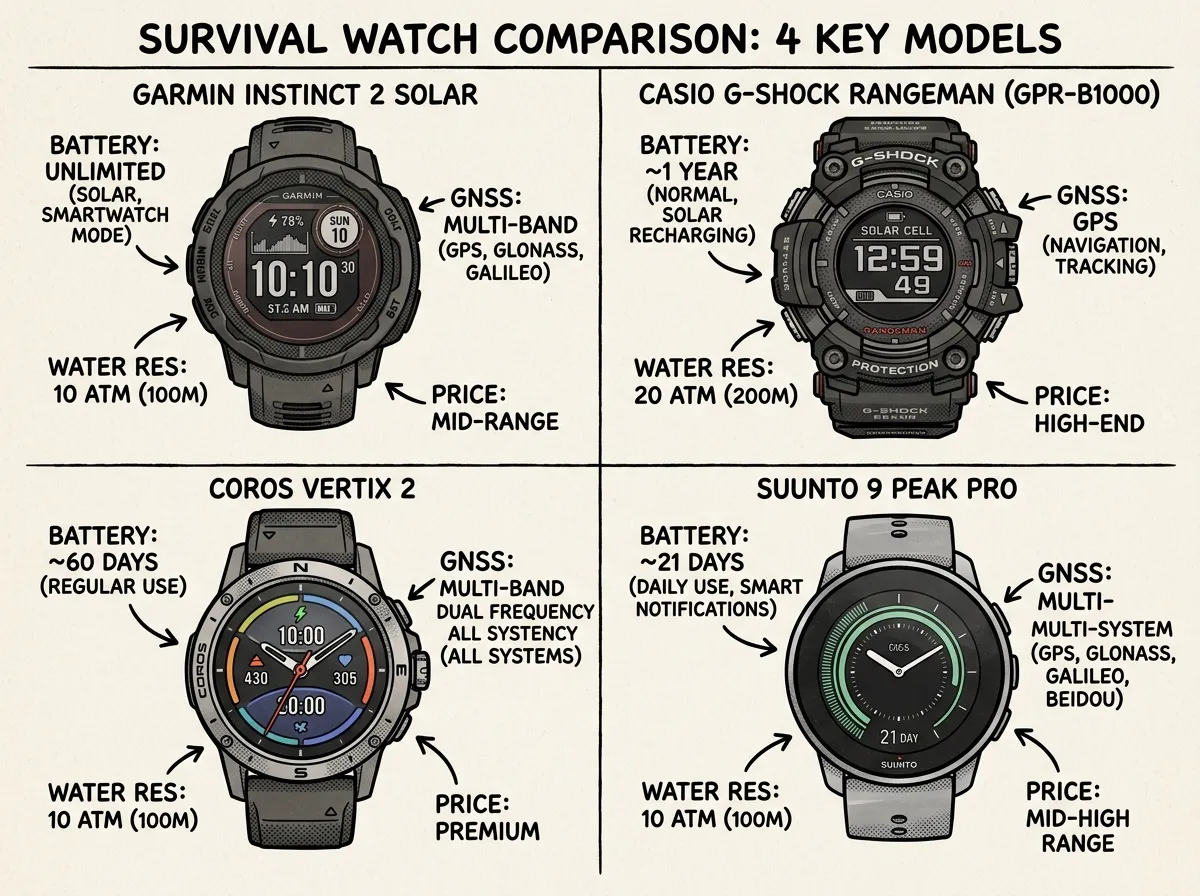 Leading survival watch models side-by-side comparison
Here’s where to look based on trip type, budget, and how much complexity you actually want to manage on your wrist.
Garmin Instinct 2 Solar — Best overall. It’s rugged enough to take a beating, the solar charging genuinely extends runtime if you’re outside during daylight, and the GNSS accuracy has held up well in terrain that’s given other watches trouble, according to independent reviews. Price runs around $300–$350 depending on the exact configuration.
Casio G-Shock Rangeman — Budget rugged pick. Casio has decades of proven shock resistance behind the G-Shock name, and the Rangeman line adds solid ABC tools with many solar-equipped models. You’re trading away advanced mapping and GNSS sophistication, but for around $300, you’re getting a watch that’s genuinely hard to break.
COROS Vertix 2 — Best battery life. Independent reviews and COROS’s published specs point to this watch surviving a full week of GPS tracking without a charger — the longest real-world endurance in this category. Expect to pay a premium — it’s priced closer to $600–$700 — but if extended off-grid endurance is your top priority, nothing else in this list matches it.
Garmin Fenix series — Premium navigation. Detailed offline mapping and multi-band GNSS on select models make this a strong choice if you want the most capable navigation tool available, and you’re willing to pay for it — pricing often runs $700 and up depending on the model.
Casio Pro Trek — Simple, focused ABC tool. If you don’t need GPS tracking or smartwatch features and just want a reliable altimeter, barometer, and compass with solar charging, this is a straightforward, less expensive option, typically in the $200–$300 range.
Apple Watch Ultra and Samsung Galaxy Watch — Mainstream UX plus SOS. Both offer excellent interfaces and useful emergency features. The tradeoff is battery life — you’re looking at roughly one to two days of typical use, sometimes less with GPS active — and less raw ruggedness than dedicated outdoor watches. Fine for weekend trips near cell coverage; risky for extended remote travel.
The Apple Watch Ultra is a capable everyday watch with genuine emergency features, but its battery life isn’t built for multi-day off-grid use. Cold weather accelerates battery drain in lithium-ion devices generally, and continuous GPS tracking in low temperatures can drain a charge far faster than typical use — a factor worth weighing for any watch on this list, but it hits shorter-battery devices hardest.
How to Choose the Right One for Your Situation
Don’t buy based on the “best” watch in general — buy based on your actual trip profile.
- Define your longest realistic trip length and terrain type
- Decide how much navigation complexity you actually want to manage
- Check GNSS type, battery life, and water resistance for the exact SKU you’re considering
- Confirm satellite SOS availability and subscription cost if you’re going remote
- Test the watch’s controls and offline maps before you depend on it in the field
Day hikes near cell coverage: You mostly need a readable display, decent GNSS, and moderate battery life. Almost anything on this list will handle it, so budget and comfort should drive the decision.
Overnight or weekend trips off-grid: Offline maps, waypoint marking, and a battery that can survive 48+ hours of intermittent GPS use become important. This is where the Instinct 2 Solar earns its price.
Extended off-grid travel (three-plus days): Solar charging or the longest available battery life, paired with satellite SOS, moves from “nice to have” to essential. The COROS Vertix 2 or a Garmin Fenix with an inReach pairing both make sense here.
You planned a two-day trip but a washed-out trail forces a longer route back. Your phone’s dead by hour thirty, but your watch — set to a battery-saving GPS mode — still has enough charge to get you an accurate bearing to the trailhead. That’s the entire argument for buying based on your worst-case trip, not your average one.
Essential Features Checklist
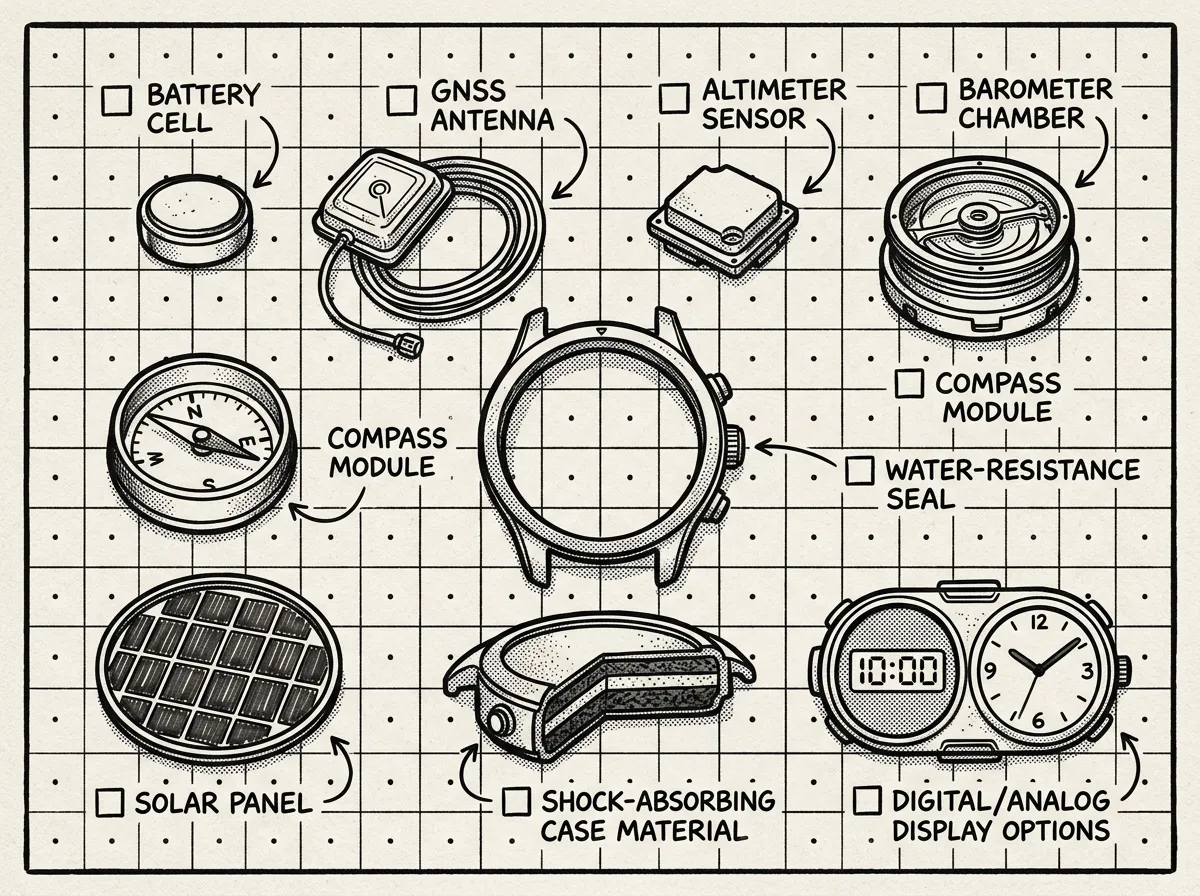 Critical survival watch features breakdown
- Case material and crystal type (sapphire preferred)
- Specific MIL-STD-810 tests passed, not just the label
- Water resistance rating matched to your actual use (10 ATM minimum for general outdoor)
- GNSS constellations supported and whether multi-band (L1/L5) is available
- Real-world GPS-on battery life from independent field tests, not just marketing specs
- Offline map support, waypoint marking, and back-to-start navigation
- Satellite SOS availability and subscription requirements
- Display readability and glove-friendly controls
Common Mistakes to Avoid
A common mistake: people buy the watch with the most features and never actually learn how to use half of them. A watch with offline maps does you no good if you’ve never practiced pulling one up with gloves on in the dark. It’s easy to spend a minute or more hunting for the right menu the first time you try a watch’s SOS function under pressure — in a real emergency, that’s time you don’t have.
Set aside twenty minutes before any trip to practice your watch’s core emergency functions — SOS trigger, offline map pull-up, and waypoint marking — with gloves on and in low light. Muscle memory beats manual-reading every time.
Another mistake: assuming solar charging means unlimited battery. Solar assist extends runtime, but it doesn’t replace a full charge, especially in overcast conditions or dense forest canopy. If you’re in the Pacific Northwest, you’ll get far less solar benefit under dense tree cover and gray skies than someone hiking open desert terrain in Utah or Arizona.
The best survival watch isn’t the one with the most features. It’s the one you’ve actually practiced using before you need it.
Comparison at a Glance
| Category | Good choice | Why it stands out |
|---|---|---|
| Best all-around | Garmin Instinct 2 Solar | Rugged, solar, accurate GNSS, long real-world battery |
| Budget rugged | Casio G-Shock Rangeman | Extremely durable and affordable |
| ABC tools only | Casio Pro Trek | Focused altimeter, barometer, compass with solar options |
| Battery life | COROS Vertix 2 | Longest real-world runtime for extended trips |
| Premium navigation | Garmin Fenix series | Advanced mapping, multi-band GNSS on select models |
| Everyday + SOS | Apple Watch Ultra | Strong UX and satellite SOS, shorter battery life |
Verify These Technical Points Before You Buy
Specs change fast in this category, and marketing language gets ahead of reality more often than not. Before you commit money:
- GNSS type — confirm which constellations and whether multi-band is available for the exact SKU, not just the product line.
- Battery life — find independent field tests with GPS running at a rate similar to your actual use, not the manufacturer’s best-case number.
- MIL-STD-810 — ask which specific sub-tests were performed. The label alone tells you very little.
- Water resistance — confirm the ATM rating and the manufacturer’s actual guidance on submersion and diving.
- Satellite SOS — check whether it’s built-in or requires a paired communicator, and understand the subscription cost structure.
Top Brands Worth Researching
- Garmin — Instinct 2 Solar, Fenix series. Some models support multi-band GNSS and pair with inReach for satellite messaging.
- Casio — G-Shock Rangeman, Pro Trek. Decades of proven shock resistance and solid ABC tools.
- COROS — Vertix 2. Best-in-class battery endurance among watches in this category, per published specs and independent reviews.
- Suunto — Suunto 9 Peak Pro. A solid, less flashy mid-range outdoor GPS option.
- Apple and Samsung — Apple Watch Ultra, Samsung Galaxy Watch. Best mainstream user experience, weaker battery endurance and ruggedness.
Always confirm model-specific specs — GNSS type, multi-band support, exact MIL-STD-810 tests, water resistance, and satellite SOS availability — before you buy, since these details change across model years and regions.
Action Steps
- Define your primary use case — day hike, extended off-grid trip, alpine travel, or water-based activity.
- Shortlist two or three models that fit and verify their exact specs for GNSS, battery, and SOS.
- Read recent, hands-on reviews that specifically address GNSS accuracy and real-world battery performance.
- Try the watch in person if you can — controls, readability, and strap comfort matter more than spec sheets suggest.
- Practice navigation and emergency functions before you’re relying on the watch somewhere remote.
Model features and firmware update constantly. Confirm current specifications and recent independent tests for the exact model and production year before you buy — what was true a year ago on a given watch line isn’t always true today.
Additional Resources
- How to Build a Bug Out Bag: Essentials for a Quick Getaway
- Water, Water Everywhere: How to Store H2O Without Losing Your Sanity
- The Art of Starting a Fire Without Burning Down the Camp
The Complete
Prepper's Reference.
149 articles synthesized into one comprehensive PDF — twelve chapters covering water, food, shelter, first aid, comms, and scenario-specific preparedness. Free with your email.
Unsubscribe anytime · We never share your email
You're in. Check your inbox.
Keep Reading
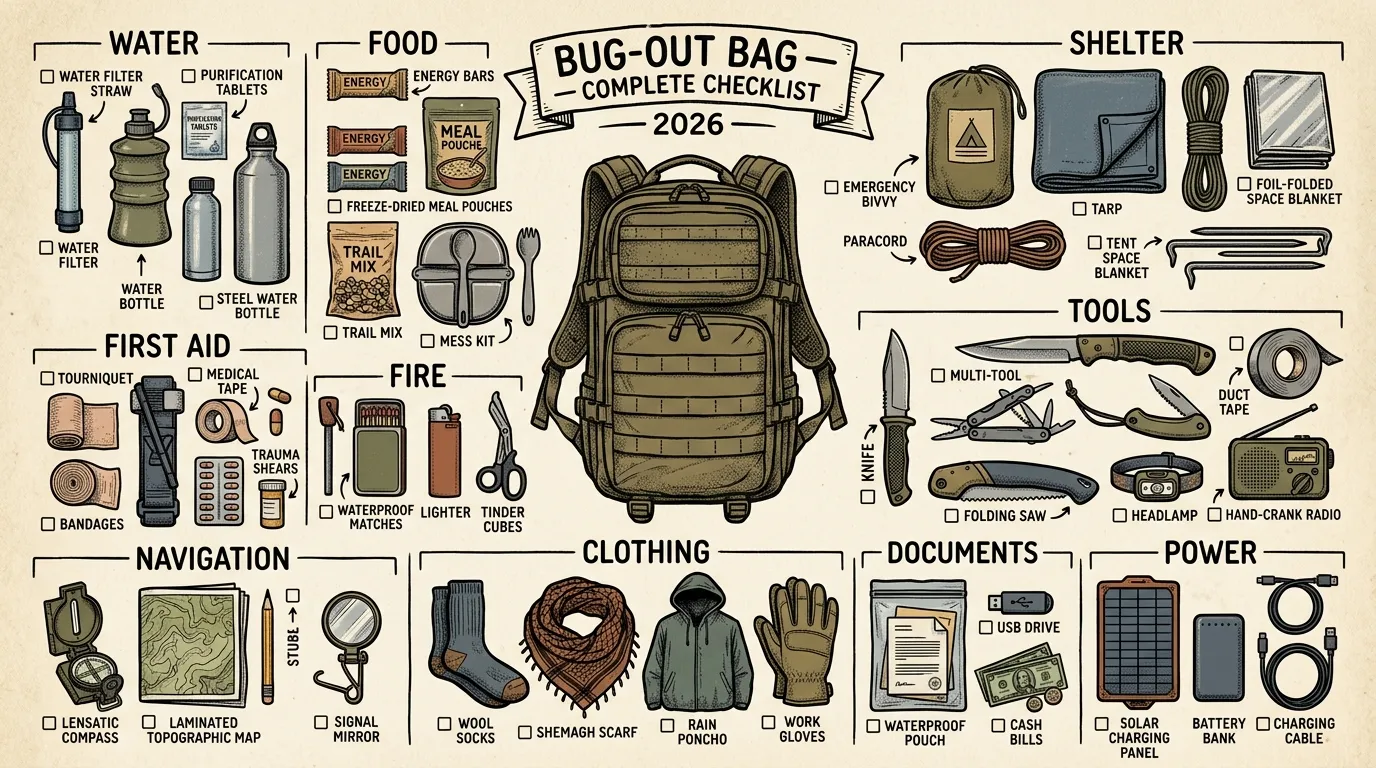
Bug-Out Bag List: Complete Checklist by Category (2026)
Complete bug-out bag list with 8 survival categories, weight budgets, and a 3-tier priority system. Printable checklist included — start packing today.
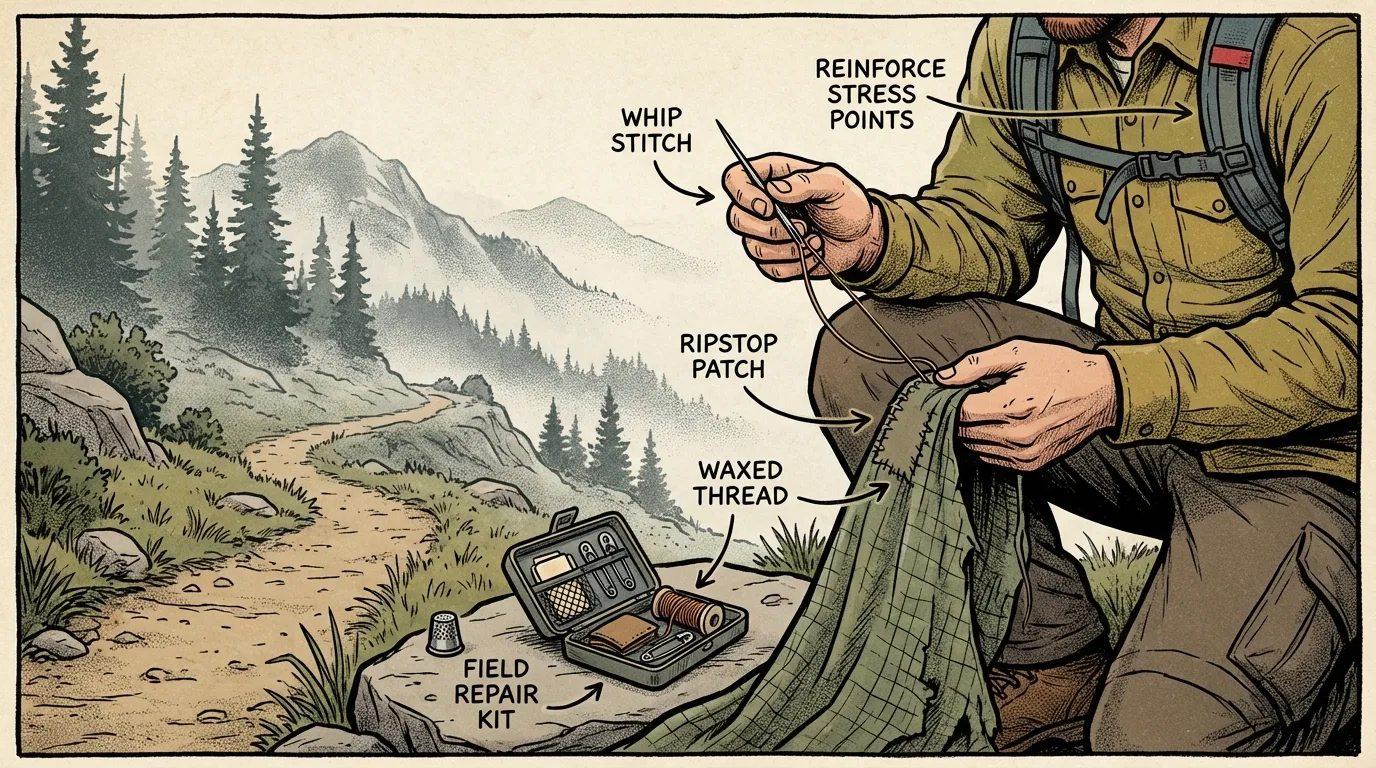
Survival Sewing: How to Repair Your Gear on the Go
Learn essential survival sewing skills to repair backpacks, tents, and clothing fast with beginner-friendly tools, stitches, and field-ready fixes.
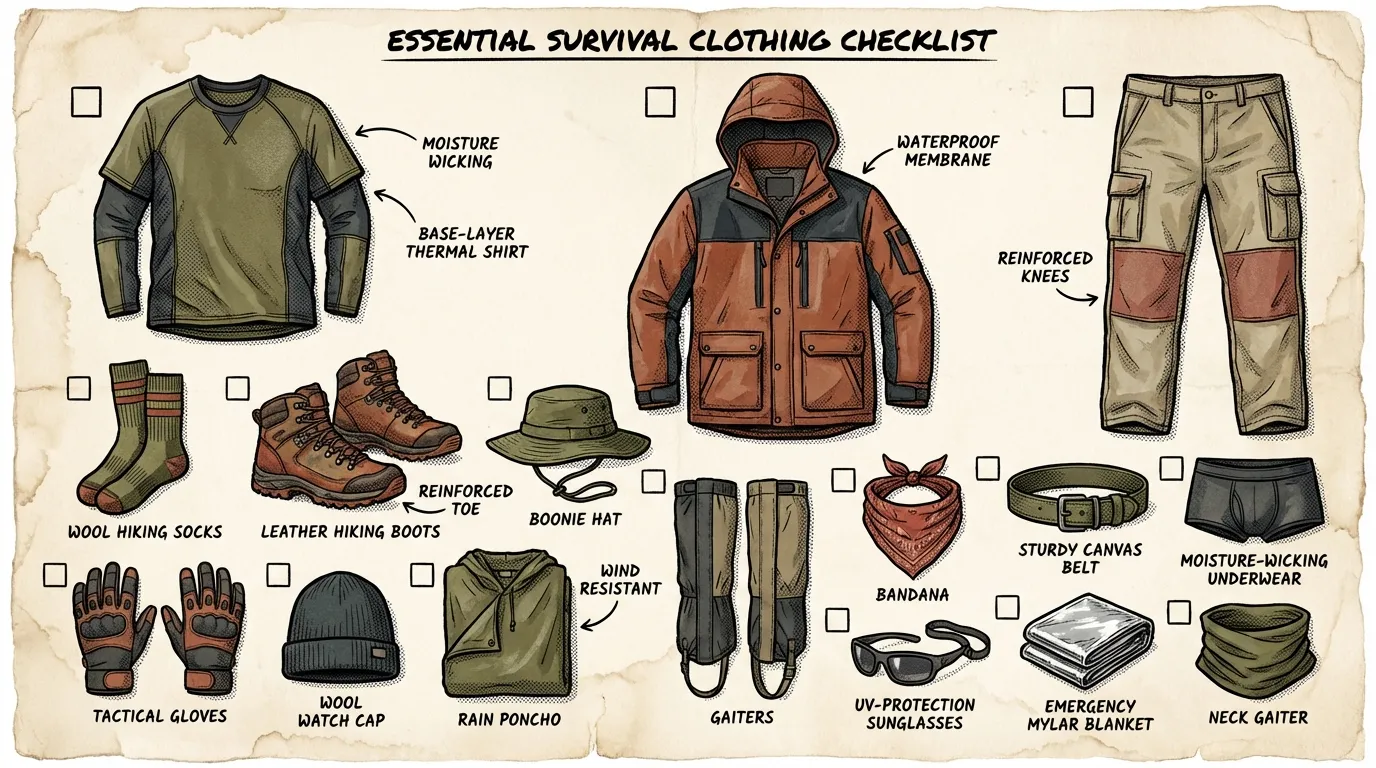
Survival Clothing: Dress for Success When Disaster Strikes
Learn how to choose survival clothing for cold, hot, and wet conditions, with practical layering tips, fabric advice, and beginner-friendly gear picks.