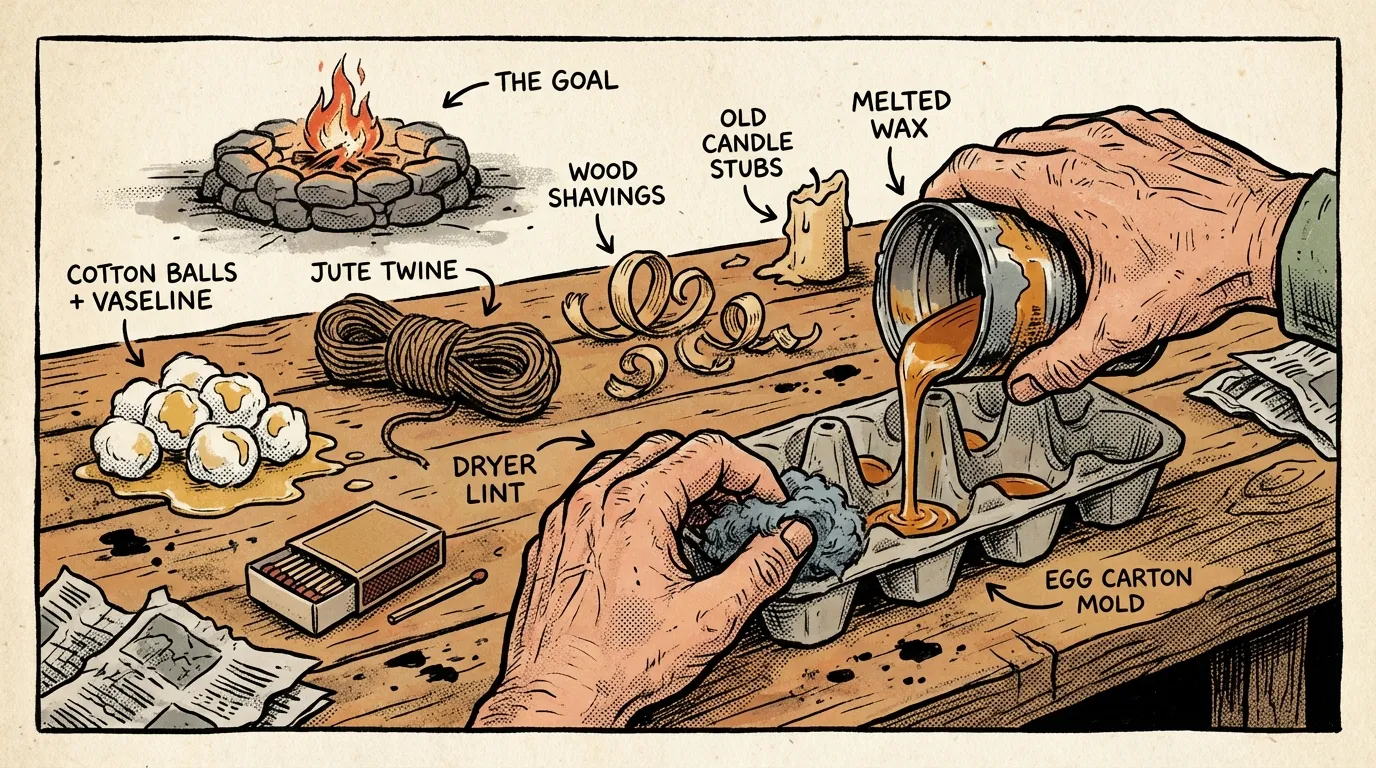
You can make DIY firestarters from common household items like dryer lint, cardboard egg cartons, candle wax, cotton balls, petroleum jelly, and paper rolls. The best beginner methods are waxed egg carton cups, petroleum-jelly cotton balls, and wax-dipped cardboard tubes, all of which help you start fires more easily and affordably in emergency situations.
Key Takeaways
- Rub petroleum jelly into cotton balls, leave fibers exposed, and store sealed for easiest beginner firestarter.
- Fill cardboard egg carton cups with dryer lint, spoon melted wax over them, and let cool on foil.
- Stuff a cardboard tube with lint or sawdust, dip in melted wax, and store dry for longer burns.
- Test every batch outdoors before emergencies, checking ignition ease and whether it lights pencil-thin kindling.
- Store finished firestarters in labeled, airtight zip-top bags or metal tins to extend shelf life months to years.
DIY firestarters: Make Firestarters from Household Items (Beginner Guide)
Quick facts
- DIY firestarters are small ignition aids you can make from household items like dryer lint, cardboard, cotton, and wax.
- Adding wax or petroleum jelly increases burn time and helps resist moisture.
- Make small test batches, follow safe melting practices, and store finished pieces dry in sealed containers.
What are DIY firestarters?
DIY firestarters are single-use or limited-use items that help light tinder and small kindling. They burn long enough to give you time to build a main fire. They help when other ignition tools struggle and do not replace matches, lighters, or ferro rods.
Why they matter:
- Reliable ignition when tinder is damp or scarce.
- Lightweight and compact for backpacks and emergency kits.
- Turn household waste into useful gear.
Common materials and why to use them
- Dryer lint. Ignites quickly. Use natural fibers and lint free of oils or solvents.
- Cardboard egg cartons (cardboard, not foam). Use as portion cups for small starters.
- Candle wax, paraffin, or old crayons. These materials lengthen burn time and improve moisture resistance.
- Cotton balls plus petroleum jelly. Portable and long-burning when teased and lit.
- Toilet paper or paper towel tubes. Use as structural cores for longer-burning logs.
- Shredded paper or sawdust. Adds bulk and extends burn when combined with wax.
- Corrugated cardboard. Roll it, soak it lightly in wax, and it lights easily.
Avoid lint contaminated with solvents, oils, or heavy synthetics. That creates a fire hazard and unpleasant smoke.
Tools and supplies
- Double boiler or heat-safe can inside a pot for melting wax.
- Tongs or heat-resistant gloves.
- Ferrocerium rod, lighter, or waterproof matches.
- Zip-top bags, metal tins, or waterproof containers for storage.
- A safe outdoor testing area and a bucket of water or a fire extinguisher.
Simple DIY firestarter recipes
- Egg carton cups with dryer lint and wax
Materials:
- Cardboard egg carton
- Dryer lint (natural fibers)
- Melted candle wax or paraffin
- Double boiler or heat-safe can; tongs or gloves
Steps:
- Tear the carton into individual cups.
- Fill each cup loosely with lint.
- Spoon melted wax over the lint until lightly coated. Do not over-submerge if you want easier ignition.
- Let cool on foil or parchment, then store dry.
Why this works. Lint lights quickly. Wax slows the burn so the starter keeps flaming long enough to catch small kindling.
Safety. Melt wax with indirect heat and supervise the workspace.
- Petroleum jelly cotton balls
Materials:
- Cotton balls
- Petroleum jelly (Vaseline)
- Small waterproof container or zip-top bag
Steps:
- Rub a small amount of petroleum jelly into each cotton ball, leaving some fibers exposed.
- Store sealed.
- When needed, tease the fibers and ignite the edge with a match, lighter, or ferro rod.
Why this works. The petroleum jelly prolongs combustion and tolerates brief moisture.
Safety. Do not over-saturate. Store away from heat and food.
- Wax-dipped cardboard rolls
Materials:
- Cardboard tube (toilet paper or paper towel tube)
- Filler: dryer lint, shredded paper, or sawdust
- Melted wax
Steps:
- Stuff the tube with filler and fold or pinch the ends closed.
- Dip or spoon melted wax so the tube is evenly coated.
- Let cool and store dry.
Why this works. The tube holds shape and the wax-protected filler burns long enough to light larger pieces of wood.
Safety fundamentals and best practices
- Clear surrounding combustibles. Use a fire ring or stove. Never leave a fire unattended.
- Melt wax using a double boiler. Keep a lid nearby to smother small flare-ups.
- Avoid foam egg cartons and chemically contaminated lint.
- Test each batch outdoors before relying on it in an emergency.
- Store finished firestarters in zip-top freezer bags, metal tins, or waterproof containers.
- Consult National Fire Protection Association (NFPA) materials for official guidance on home fire safety.
How to test, use, and store firestarters
Testing checklist:
- Light one starter in a safe area. Note how easy it is to ignite, how long it burns, and whether it lights tinder and pencil-thin kindling.
- Adjust the recipe: more wax for longer burn, less wax or more exposed fibers for easier ignition.
Using a firestarter:
- Build a fire lay with tinder, kindling, then larger fuel.
- Place the starter under or inside the tinder bundle.
- Light the starter and feed pencil-thin kindling as the flame grows.
- Shield the flame from wind until the kindling catches.
Storage:
- Keep labeled, dry, airtight containers in your home kit, vehicle, or bug-out bag.
- Waxed variants handle moisture better. Sealed storage improves shelf life.
Tips for bad weather:
- Wet conditions. Use wax-heavy starters and protected tinder such as inner bark or dry pockets of clothing.
- Windy conditions. Build behind a windbreak and shield the initial flame.
Benefits of making DIY firestarters
- Saves money by using items you already have.
- Provides a reliable ignition method during power outages, camping, or emergencies.
- Recycles lint, cardboard, and leftover wax into useful tools.
- Teaches basic firecraft and safe ignition techniques.
Proper construction, testing, and storage determine how useful a firestarter will be.
FAQ
Q: What is the easiest DIY firestarter for beginners? A: Petroleum jelly cotton balls. They require minimal tools and burn consistently.
Q: Can I use any dryer lint? A: Use lint from natural fibers and avoid lint contaminated with oils, solvents, or heavy synthetics.
Q: How long do homemade firestarters last? A: When kept dry and sealed, many last months to years. Longevity depends on materials and storage.
Q: Are they waterproof? A: Wax-coated starters are water-resistant. Do not call them fully waterproof unless specifically sealed.
Q: Are homemade firestarters safe indoors? A: Use them only in appropriate indoor appliances such as a fireplace or wood stove, with proper ventilation and standard safety measures.
DIY firestarters turn everyday scraps into dependable ignition tools. Make a few small batches, test them, store them dry, and keep proper ignition tools on hand for redundancy.
The Complete
Prepper's Reference.
149 articles synthesized into one comprehensive PDF — twelve chapters covering water, food, shelter, first aid, comms, and scenario-specific preparedness. Free with your email.
Unsubscribe anytime · We never share your email
You're in. Check your inbox.
Keep Reading
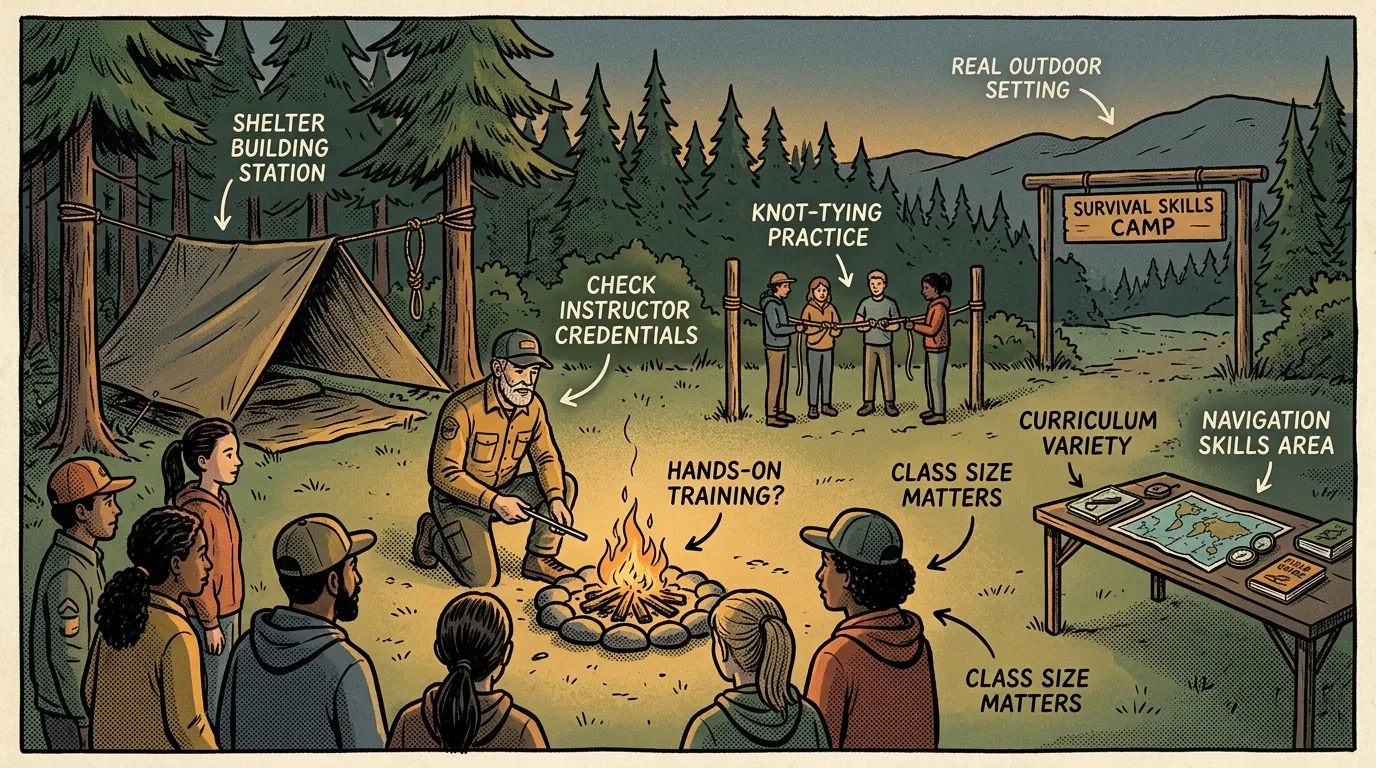
Survival Skills Camp: How to Choose the Right One
Choosing a survival skills camp? Here's what to look for, red flags to avoid, and what real training teaches you.
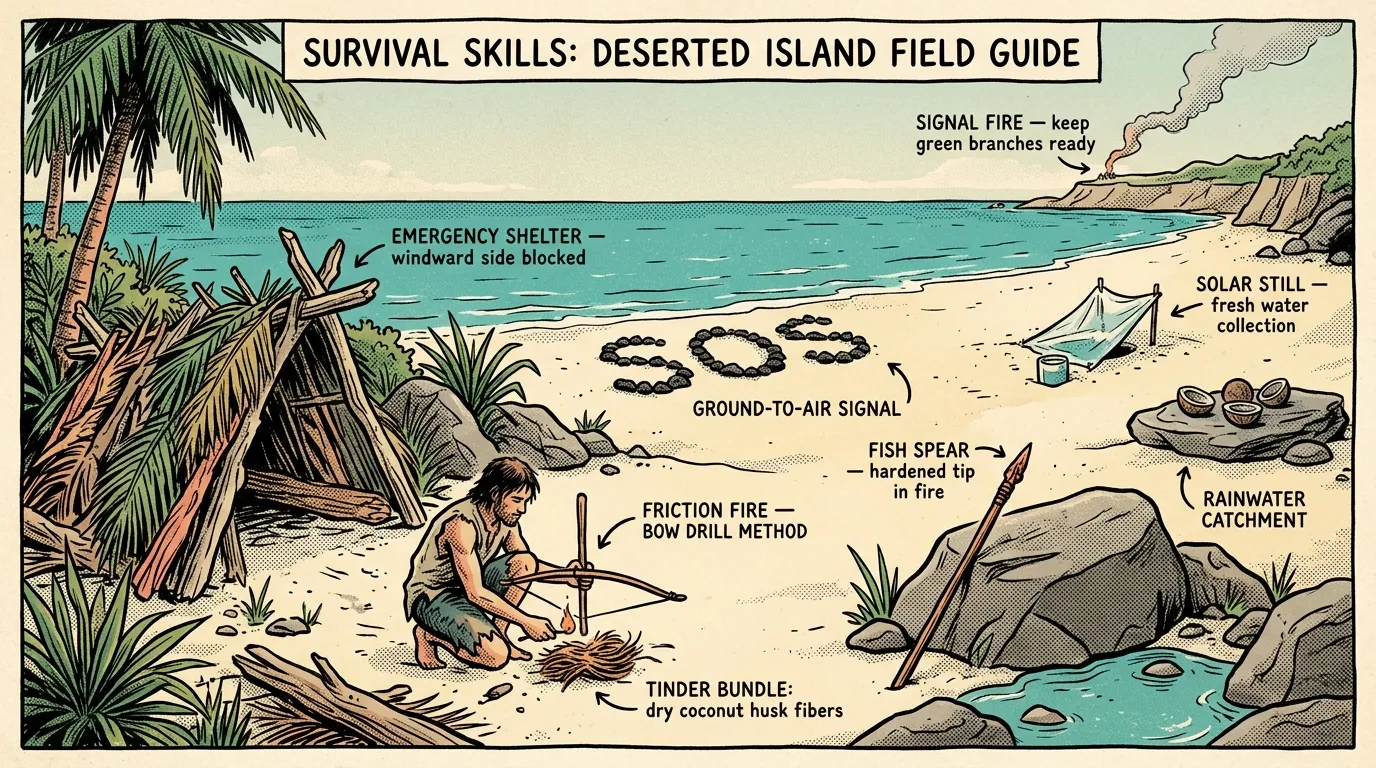
Survival Skills on a Deserted Island: Field Guide
Master survival skills on a deserted island — water, shelter, fire, food, and rescue signaling. Start learning now.
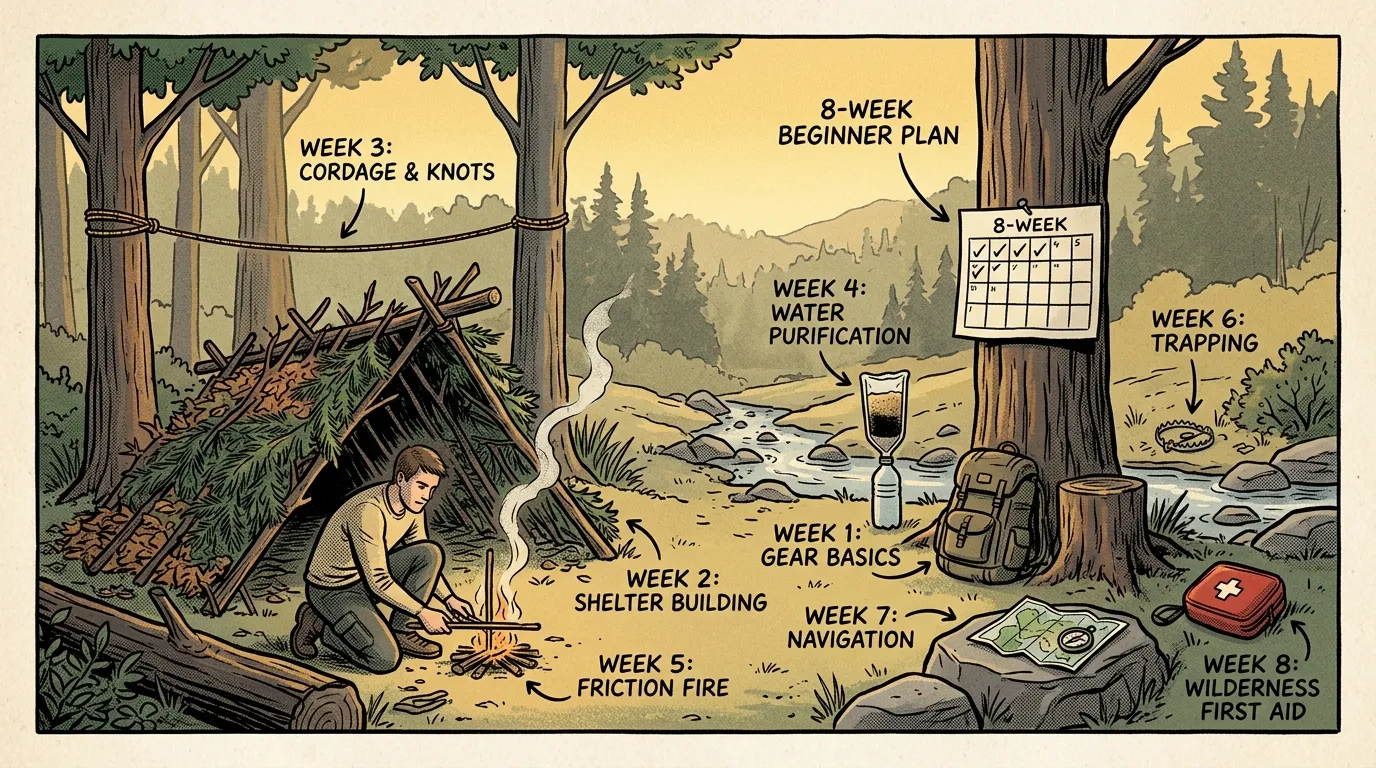
Survival Skills Training: 8-Week Plan for Beginners
Follow this 8-week survival skills training plan to master shelter, fire, water, navigation & first aid. Start this weekend.