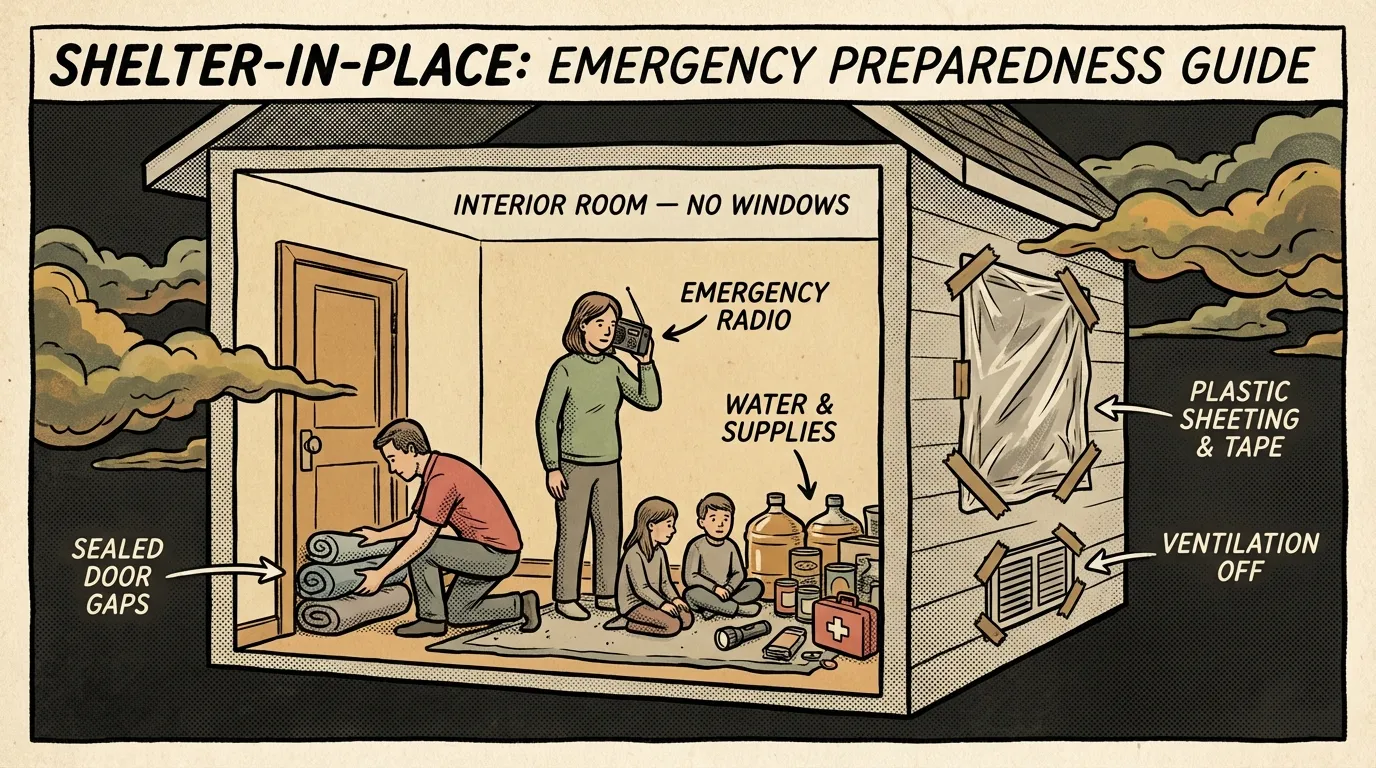
A shelter in place plan is a practical emergency plan for staying indoors safely when leaving would be more dangerous, such as during chemical spills, severe weather, wildfire smoke, or security threats. To create one, identify local risks, choose safe shelter areas, build a communication plan, stock at least 72 hours of supplies, and practice regularly.
Key Takeaways
- Stock 1 gallon of water per person per day, covering at least 72 hours minimum.
- Pick one shelter room at home and one at work or school right now.
- Designate an out-of-area contact and share their number with every household member.
- Define specific activation triggers such as a Wireless Emergency Alert or chemical smell.
- Schedule and run shelter-in-place drills every 6 to 12 months to test readiness.
Shelter in Place Plans: How to Build an Effective Emergency Plan
Quick answer
A shelter in place plan lists clear steps for staying safely indoors when leaving would be more dangerous. At minimum:
- Identify local hazards
- Choose shelter locations at home and work or school
- Prepare a 72-hour kit
- Set clear triggers to activate the plan
- Assign simple roles and practice regularly
Quick checklist (one minute):
- Pick a primary shelter room at home and one at work or school
- Build a basic 72-hour kit: water, food, meds, radio, masks
- Designate an out-of-area contact
- Decide clear triggers: official alert, chemical smell, visible smoke
- Practice every 6 to 12 months
Definition
A shelter in place plan explains where to go, what to bring, how to manage indoor air and utilities, who does what, and how long to remain sheltered when outside conditions are hazardous.
What you need to know about shelter in place plans
- Purpose: protect people from immediate outside hazards until conditions improve or officials give the all-clear.
- Typical hazards: chemical releases, hazardous-material spills, severe storms, wildfire smoke, active threats, civil unrest, infectious outbreaks, and rare radiation events.
- Follow local emergency management, NOAA/NWS for weather, EPA/AirNow for air quality, CDC for public health, and NIOSH for respirator guidance.
Check with local authorities before sealing a room or turning off HVAC.
When to shelter in place (common triggers)
- Official emergency alerts (EAS, Wireless Emergency Alerts)
- Local authority orders from law enforcement or emergency management
- Visible smoke, chemical odors, or sudden illness symptoms
- Active-threat warnings or lockdown orders
- Severe-weather alerts that advise staying inside
Avoid vague triggers like “if it seems bad.” Define specific signals in your plan.
Shelter in place versus evacuation
Shelter in place means you stay where you are because leaving would be more dangerous. Evacuation means you leave because staying would be more dangerous.
A complete preparedness strategy includes both options and specific triggers for each.
Why shelter in place plans matter
A written, practiced plan reduces confusion and speeds action during an emergency. FEMA and the American Red Cross recommend household planning to improve response and reduce mistakes.
Step-by-step shelter in place plans (actionable)
-
Identify local risks
- Check county and state emergency management pages, NOAA/NWS, EPA AirNow, and nearby industrial or rail hazards.
- Tailor the plan to the hazards most likely where you live, work, and travel.
-
Choose shelter locations by hazard
- Tornadoes or severe storms: basement or interior room on the lowest floor.
- Airborne hazards and wildfire smoke: interior room with few or no windows; run a HEPA filter if you have one.
- Security threats: a lockable room that can be quiet and secured.
- Pick locations that are quick to reach and can fit all occupants.
-
Define clear triggers to activate the plan
- Use specific signals: a Wireless Emergency Alert, a local siren, visible smoke, official instructions, or a strong chemical odor.
-
Assign roles and responsibilities
- Keep tasks simple and age-appropriate: who grabs the kit, who tends pets, who checks for updates.
- In workplaces, align roles with company safety procedures.
-
Build a communication plan
- Designate an out-of-area contact and share their details with everyone.
- List household phone numbers, school and employer contacts, medical providers, and pharmacy information.
- Keep printed copies in a waterproof pouch. Use NOAA Weather Radio or official alerts as primary sources.
-
Manage utilities and indoor air safely
- Turn off HVAC or fans that draw outdoor air only when officials recommend it.
- Seal gaps with tape and plastic sheeting only if authorities advise sealing the room.
- Know how to operate circuit breakers, water shutoffs, and thermostats safely.
- Use NIOSH-approved N95 respirators for particulates when recommended and run HEPA filters if available.
-
Prepare for at least 72 hours
- Stock a baseline 72-hour supply per person. Aim for a week if you can.
- Check expiration dates and rotate supplies regularly.
-
Account for special needs
- Plan for infants, people with disabilities, older adults, those with chronic conditions, and pets.
- Keep copies of prescriptions, device manuals, and relevant medical information.
-
Practice and review regularly
- Run drills to test timing and equipment: radio, flashlights, and battery backups.
- Update the plan after moves, household changes, medication updates, or shifts in local risk.
Essential items for shelter in place plans
- Water: 1 gallon per person per day. Three days minimum.
- Food: nonperishable, ready-to-eat items and a manual can opener
- Medications: prescriptions, over-the-counter meds, and written copies of prescriptions
- First aid kit: bandages, antiseptic, gloves, scissors, tape
- Lighting: flashlights or headlamps and spare batteries; a power bank
- Communication: battery-powered or hand-crank NOAA radio, printed contacts, local maps, important documents in a waterproof pouch
- Sanitation: toilet paper, trash bags, moist towelettes, soap, hand sanitizer
- Air protection: NIOSH-approved N95 respirators; HEPA purifiers if available
- Tools: wrench for shutoffs, multi-tool, duct tape, plastic sheeting (use only if advised)
- Comfort: blankets, change of clothes, pet supplies, activities for children
Keep a smaller, portable kit for work and your vehicle.
Common mistakes to avoid
- Making the plan overly complicated
- Ignoring local or facility-specific hazards
- Forgetting pets or dependents
- Letting food, water, or medications expire
- Relying only on smartphones; include a radio and written backups
- Using one procedure for all emergencies; adjust actions by scenario
Quick checklist for a 30-minute session
- Identify one shelter room at home and one at work or school
- Assemble or top up a basic 72-hour kit
- Designate and share an out-of-area contact
- Set one clear trigger, for example a Wireless Emergency Alert or the smell of chemicals
- Schedule a drill within the next month
Frequently asked questions (concise answers)
Q: What is a shelter in place plan? A: A written plan for staying indoors safely when leaving would be more dangerous.
Q: How long should a kit last? A: Aim for at least 72 hours. A week is better if storage allows.
Q: What room is best? A: Choose based on the hazard: basement or interior room for storms, interior room for airborne hazards, lockable room for security threats.
Q: Should I use duct tape and plastic sheeting? A: Seal gaps only when officials advise it. Follow EPA and local emergency management instructions.
Next steps and where to verify guidance
- Spend 30 minutes now: pick a shelter room, assemble a basic kit, and designate an out-of-area contact.
- Practice the plan with everyone in your household.
- Verify specific actions with authoritative sources: FEMA for household preparedness; the American Red Cross for kits and drills; CDC for public-health events; EPA and AirNow for wildfire smoke and air quality; NOAA/NWS for weather alerts; NIOSH for respirator approvals.
Check those agency pages for the latest recommendations.
Remember
Keep shelter in place plans simple, practiced, and tailored to local risks. A clear, rehearsed response lets you act quickly and stay safe.
The Complete
Prepper's Reference.
149 articles synthesized into one comprehensive PDF — twelve chapters covering water, food, shelter, first aid, comms, and scenario-specific preparedness. Free with your email.
Unsubscribe anytime · We never share your email
You're in. Check your inbox.
Keep Reading
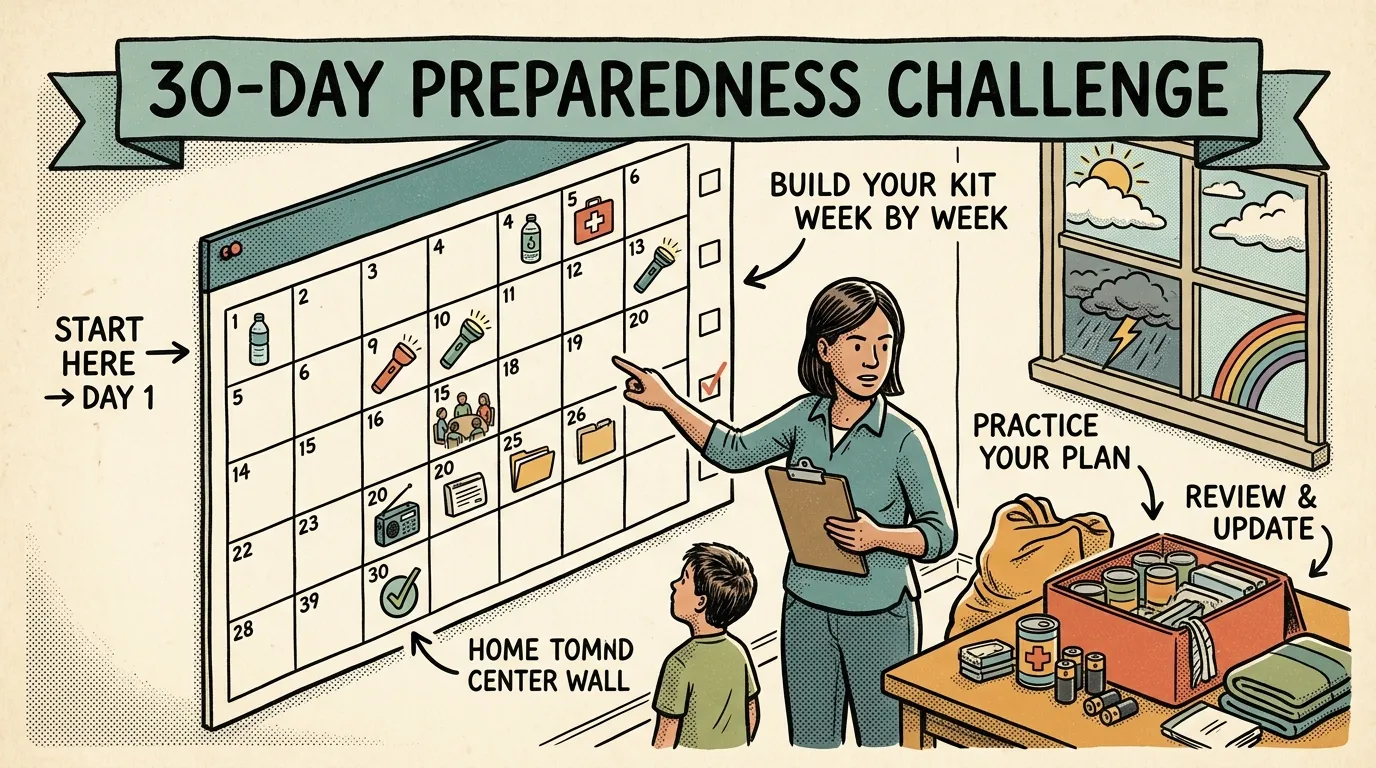
National Emergency Preparedness Month: 30-Day Plan
Use this 30-day National Emergency Preparedness Month challenge to go from unprepared to fully ready. One simple 15-minute task per day. Start now.
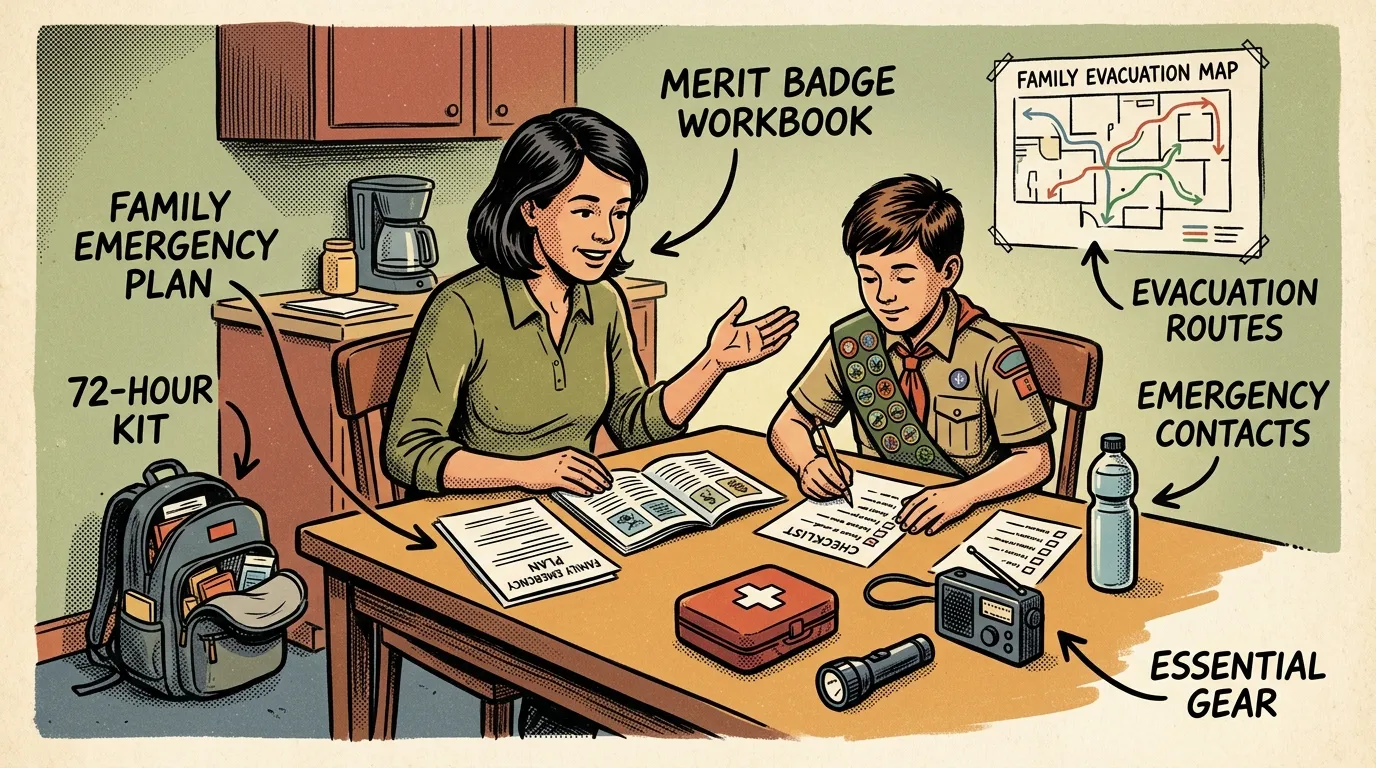
Emergency Preparedness Merit Badge: A Parent's Guide
Use the Emergency Preparedness merit badge framework to teach your kids real survival skills at home. Step-by-step activities for each requirement.
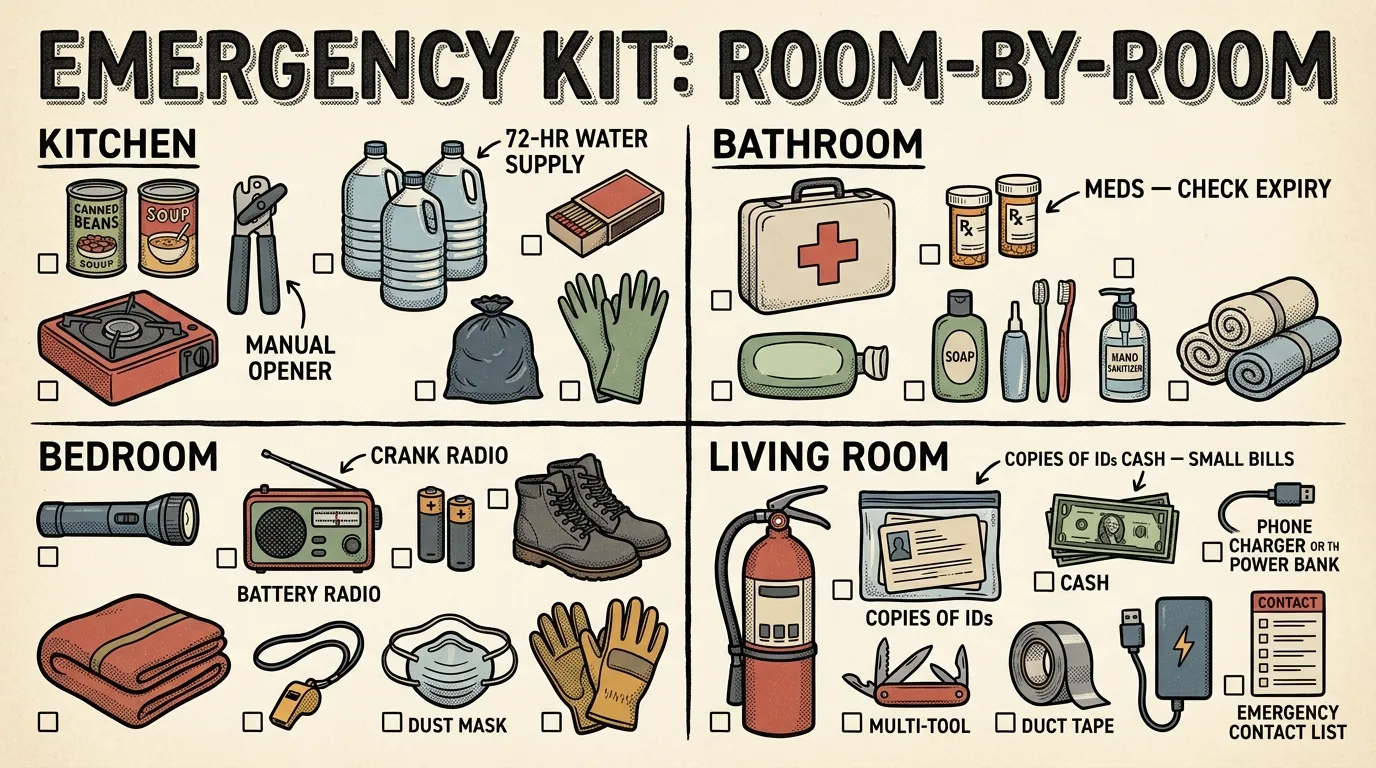
Emergency Preparedness Kit: Room-by-Room Home Guide
Build your emergency preparedness kit room by room for 14-day shelter-in-place readiness. Budget-friendly system. Start tonight.