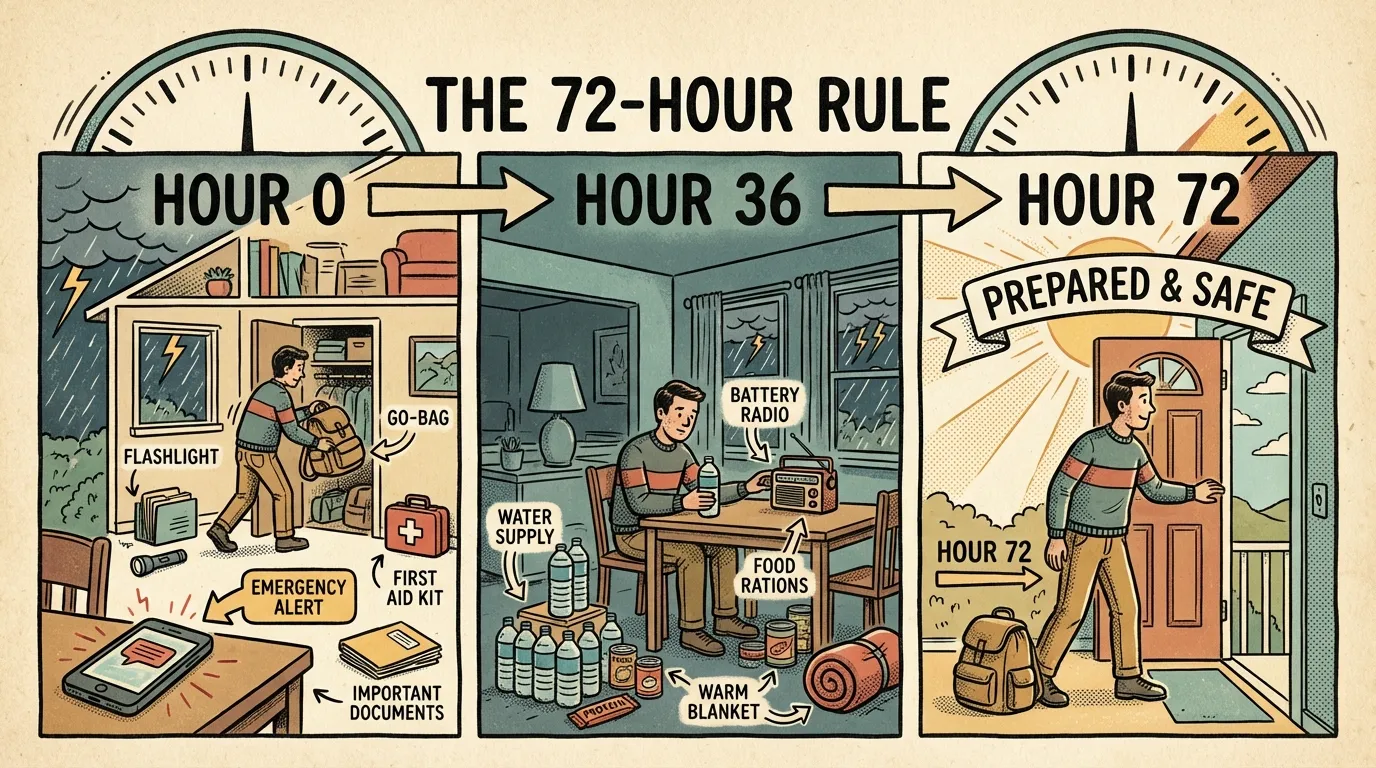
The 72-hour rule means preparing to be self-sufficient for at least three days after an emergency, when help, power, water, and supplies may be unavailable. A basic 72-hour kit should include water, nonperishable food, medications, first aid, lighting, communication tools, hygiene items, and important documents.
Key Takeaways
- Store 3 gallons of water per person to cover 72 hours of self-sufficiency.
- Pack three days of ready-to-eat shelf-stable foods including a manual can opener.
- Keep several days of prescription medications on hand and confirm refill rules with your pharmacy.
- Review and rotate food, water, and batteries every 6 to 12 months on a set schedule.
- Include a battery-powered NOAA weather radio and printed emergency contacts for communication backup.
72-Hour Rule Prepping: How to Build a Simple 72-Hour Emergency Kit
At a glance
- 72-hour rule prepping means planning to care for yourself and your household for 72 hours after an emergency without outside help.
- Water: 1 gallon per person per day, so plan 3 gallons per person for 72 hours.
- Food: three days of shelf-stable, ready-to-eat items and a manual can opener.
- Include prescription meds, a basic first-aid kit, reliable light, a way to communicate, and warm clothing or blankets.
- Keep a portable kit and tailor it for infants, elders, pets, and special medical needs. Check supplies every 6 to 12 months.
What 72-hour rule prepping means
72-hour rule prepping sets a practical baseline: be self-sufficient for at least 72 hours after a disaster because emergency services and utilities can be interrupted. FEMA and the American Red Cross recommend this baseline. Prepare a kit you can grab if you shelter in place or need to evacuate briefly.
Why the first 72 hours matter
- Emergency services can be overwhelmed or delayed. Expect slower response times.
- Power, water, and roads may be out. That affects refrigeration and communications.
- Planning this window tells you what to pack and how to act immediately.
72-hour emergency kit: concise checklist
Water
- Store 1 gallon per person per day. That means 3 gallons per person for 72 hours.
- Keep bottled water and a backup purification method such as tablets, household bleach (follow CDC guidance), or a portable filter.
Food
- Pack three days of ready-to-eat items: canned meats or beans, protein bars, nut butter, dried fruit, instant oatmeal.
- Include a manual can opener and utensils.
- Choose foods your household actually eats and can tolerate if refrigeration fails.
Medications and health
- Keep several days of prescription medications on hand and confirm refill rules with your pharmacy.
- Add basic OTC items: pain relievers, antihistamines, antacids, and a first-aid kit.
- Include eyeglasses, contact solution, and any required medical devices or consumables.
Lighting, power, and communication
- Flashlight or headlamp with spare batteries.
- Power bank or portable charger that can recharge phones or essential devices.
- Battery-powered or hand-crank NOAA weather radio and a printed list of emergency contacts.
Hygiene, sanitation, and comfort
- Wet wipes, hand sanitizer, toilet paper, and heavy-duty trash bags.
- Feminine hygiene products and diapers if needed.
- Blankets or sleeping bags and season-appropriate clothing.
Important documents and cash
- Copies of IDs, insurance policies, and medical information in a waterproof bag.
- Small bills and coins in case card systems are down.
Tools and safety
- Multi-tool or basic tool kit, work gloves, whistle, local maps, waterproof matches or lighter, and duct tape.
Extras for pets and special needs
- Pet food, water, leash or carrier, vet records, and any medications.
- Infant supplies: formula, diapers, wipes, bottles.
- Mobility or accessibility items for seniors and people with disabilities.
Tailor the kit for your household
- Infants: formula, diapers, wipes, extra clothing, and any breastfeeding supplies.
- Seniors: current medications, hearing-aid batteries, mobility aids, and soft or easy-to-chew foods.
- Pets: three days of food and water, ID tag, and a carrier.
- Chronic conditions: extra prescriptions and backup power for devices such as oxygen concentrators or CPAP machines.
Adapting the kit by scenario
- Hurricanes: prioritize water, backup power, secure documents in waterproof containers, and an evacuation bag.
- Earthquakes: keep sturdy shoes and a flashlight by the bed; secure heavy furniture and store supplies within reach.
- Wildfires: pack a grab-and-go kit, N95 masks for smoke, and pet supplies.
- Winter storms: add extra blankets and non-electric ways to stay warm, like hand warmers and layered clothing.
- Flooding: waterproof important documents and store clean drinking water above likely flood levels.
- Long outages: extra cash, communication backups, and basic home security items.
Common mistakes to avoid
- Buying specialty gear before securing basics: water, food, meds, light, and first aid.
- Packing foods that require cooking or refrigeration.
- Forgetting a manual can opener or assuming you can refill water during an emergency.
- Not including everyone in your supply count, including children, seniors, and pets.
- Overloading a go-bag so it becomes too heavy to carry.
- Failing to rotate supplies or practice the plan with family drills.
How to maintain your kit (simple schedule)
- Monthly: quick visual check. Make sure flashlights work, chargers are present, and contact lists are current.
- Every 6 months: rotate food, water, and batteries. Swap seasonal clothing.
- When medications change: update prescriptions and medical supplies immediately.
Frequently asked questions
- What is the 72-hour rule? Be self-sufficient for 72 hours after a disaster.
- How much water do I need? Plan 1 gallon per person per day, which equals 3 gallons per person for 72 hours.
- Is a 72-hour kit the same as a bug-out bag? Not always. A 72-hour kit works for sheltering in place or short evacuations. A bug-out bag is optimized for rapid mobility and often lighter.
- How often should I update my kit? Review every 6 to 12 months, and check medications or perishables more often if needs change.
Local considerations and flagged claims
- Response times vary by location. The idea that responders are most strained during the first 72 hours is a practical planning assumption, not a precise rule for every place.
- The 1 gallon per person per day guideline comes from FEMA. Increase water for hot climates, breastfeeding, or high activity.
- Prescription refill rules differ by state and insurer. Verify refill options with your pharmacy ahead of time.
Next steps and reliable resources
- Start small: assemble one kit, store extra water, and create a printed emergency contact list.
Trusted resources
A practiced 72-hour kit provides immediate resilience. Build one, tailor it to your household, and keep it current.
The Complete
Prepper's Reference.
149 articles synthesized into one comprehensive PDF — twelve chapters covering water, food, shelter, first aid, comms, and scenario-specific preparedness. Free with your email.
Unsubscribe anytime · We never share your email
You're in. Check your inbox.
Keep Reading
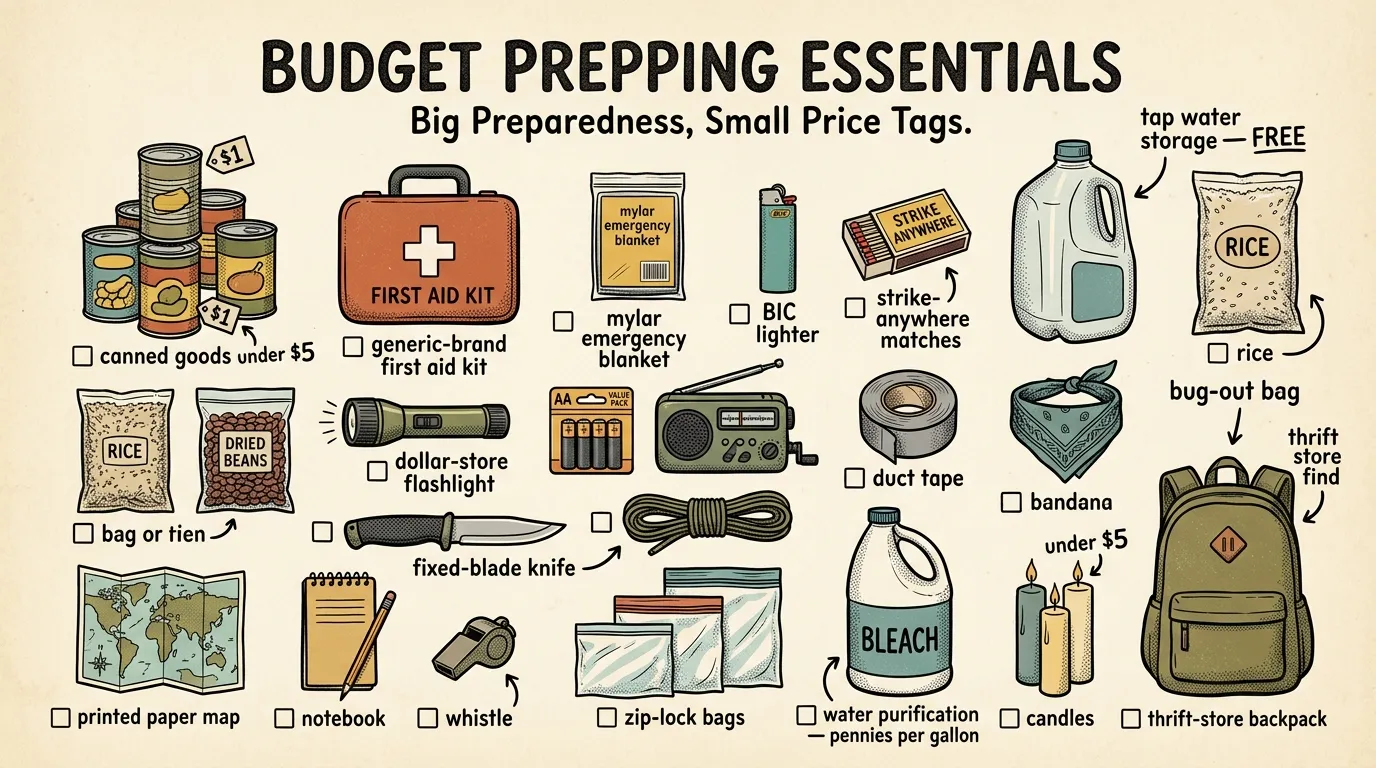
Prepping on a Budget: Affordable Gear & Strategies
Start prepping on a budget with a $75-$150 starter kit. Get affordable gear picks, DIY hacks, and a layered buying plan.
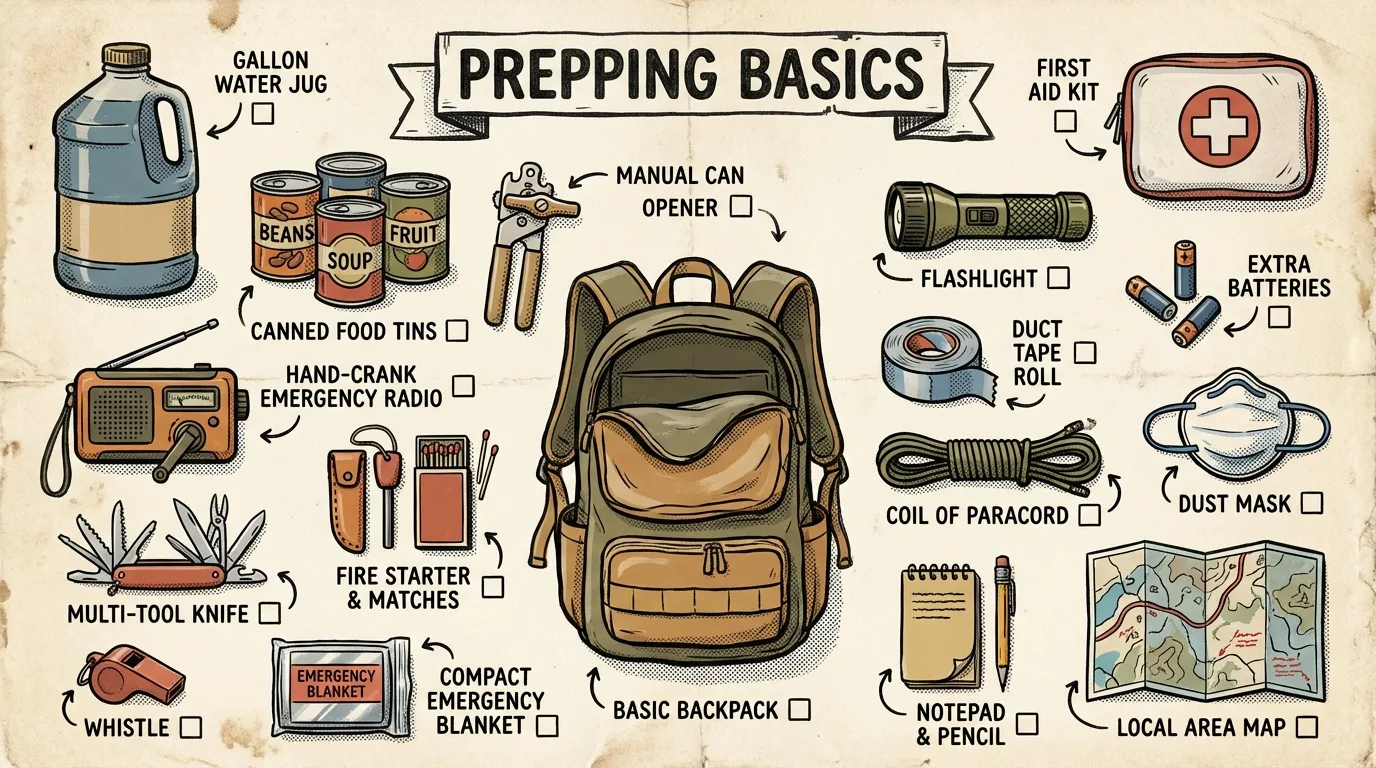
Beginner Prepping Basics: Start Survivalism the Right Way
Learn beginner prepping basics. Practical steps, budget-friendly gear, and common mistakes to avoid. Start prepping today.
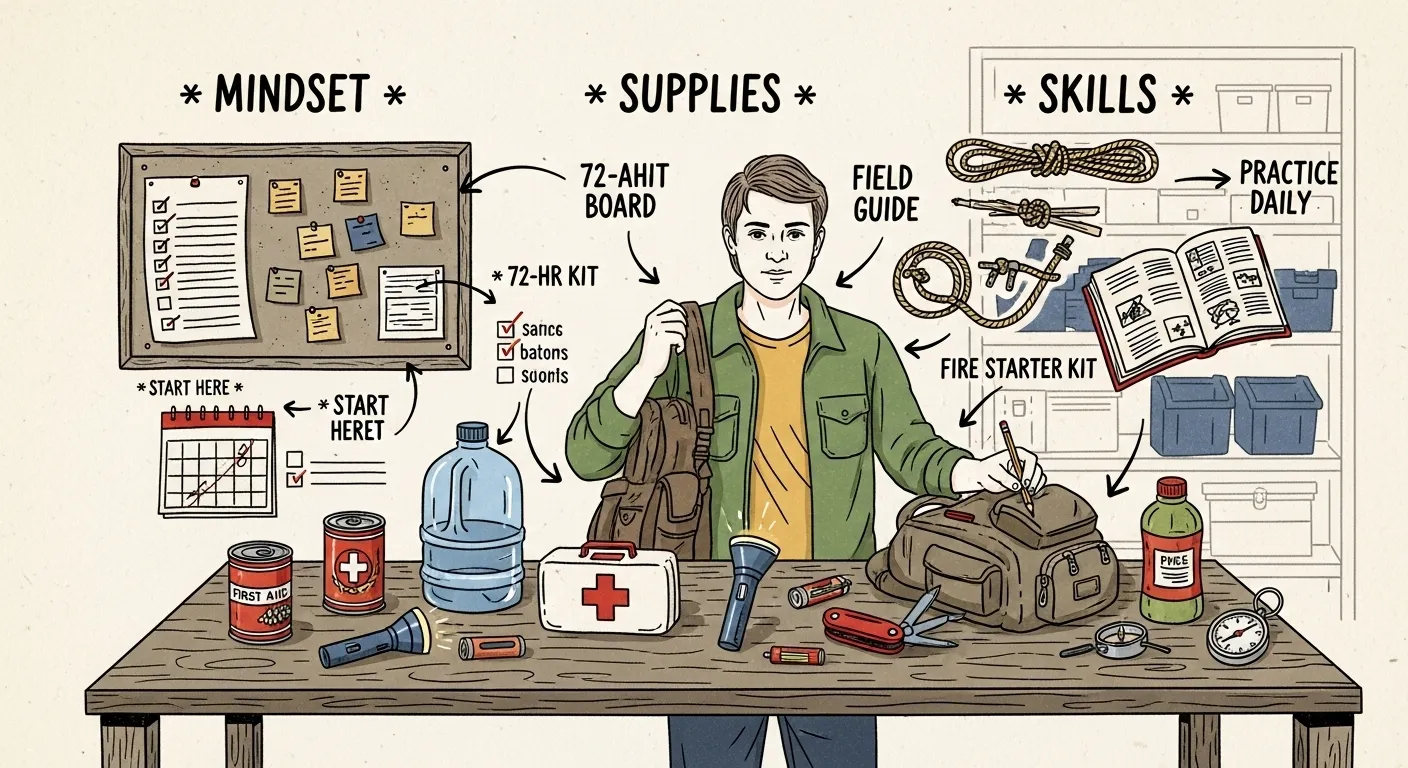
Beginner Prepper Guide: Mindset, Supplies & Skills
New to prepping? This beginner prepper guide covers the preparedness mindset, essential supplies, skills, and mistakes to avoid. Start building readiness today.