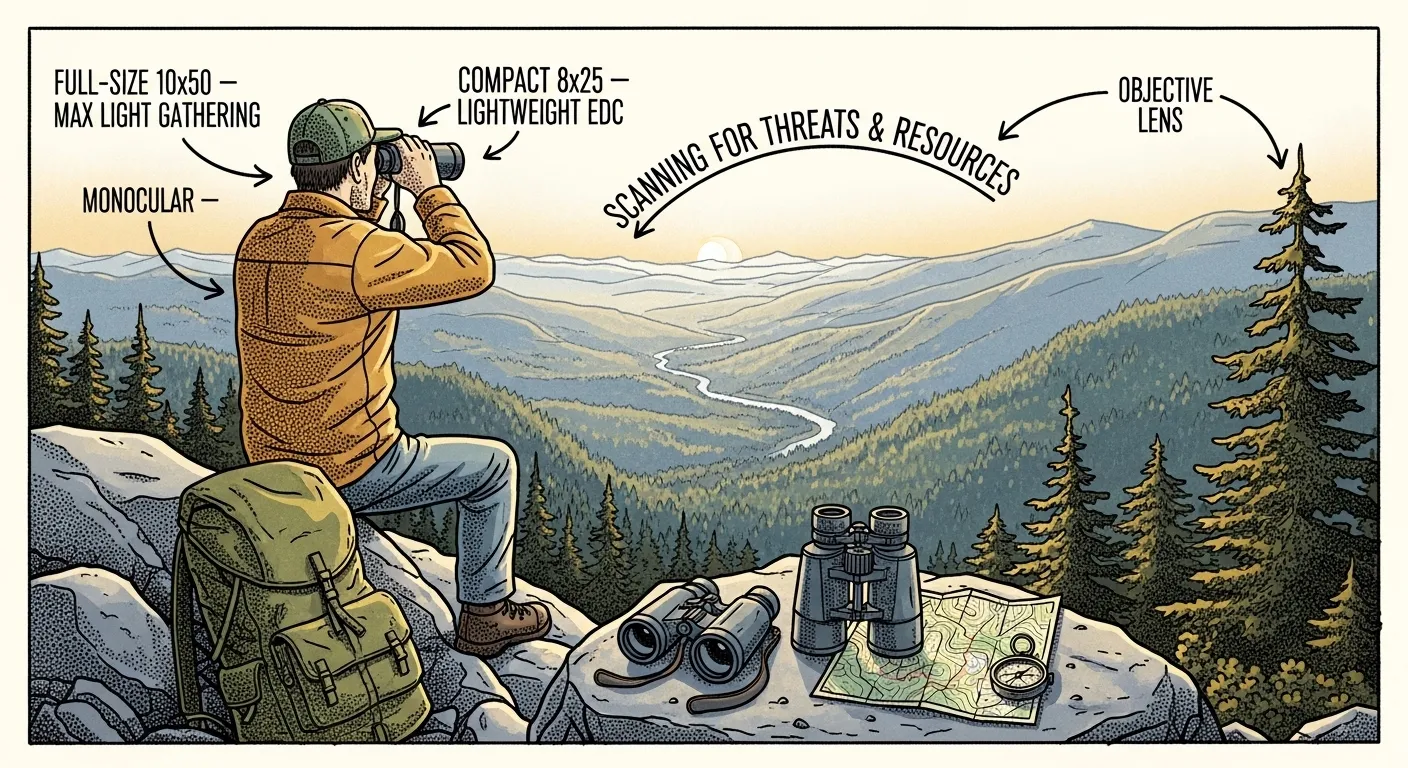
The best binoculars for beginner preppers usually have 8x to 10x magnification, 42mm objective lenses, and waterproof, fog-proof construction. Top beginner-friendly options include the Nikon Prostaff P3 8x42, Vortex Crossfire HD 10x42, and Bushnell H2O 8x42, with most solid choices falling in the $100 to $250 range.
Key Takeaways
- Buy 8x42 roof-prism binoculars for everyday survival carry; save 10x42 for situations where you can brace or tripod the optic.
- Never buy binoculars without confirmed O-ring sealing and nitrogen (or argon) purging — fogged internal glass is a dealbreaker in the field.
- BAK-4 prisms, fully multi-coated lenses, and phase-correction coating are non-negotiable on any roof-prism model you're considering.
- Plan on $100 to $400 for a survival-ready pair; the Nikon Prostaff P3 8x42 and Bushnell H2O 8x42 are solid starting points at different price points.
- A padded harness, tripod adapter, and microfiber cloth aren't optional extras — they're what keeps good glass working and comfortable to carry for years.
Best Binoculars for Survival: Top Picks, Specs, and How to Choose
Binoculars are standard gear for wildland fire assignments, search-and-rescue operations, and backcountry travel. A pair that isn’t properly sealed can fog over internally the first time it gets wet — which is why weatherproof sealing is treated as a non-negotiable spec rather than a nice-to-have. This guide skips the marketing fluff and gets straight to what actually matters when you’re glassing a ridge for smoke or scanning a treeline for movement.
Quick Summary
- 8x42 roof-prism binoculars are the best all-around pick for survival use — steady handheld image, wide field of view, manageable weight.
- Reach for 10x42 only if you’ll stabilize them on a tripod, pack, or fence rail. Handheld 10x shakes more than people expect.
- Non-negotiable features: waterproof/fog-proof sealing, nitrogen or argon purging, BAK-4 prisms, fully multi-coated lenses.
- Solid survival-ready pairs run $100 to $400. You don’t need Swarovski glass to spot a vehicle a half-mile out.
- Gear you actually use beats gear that sits in a drawer — buy a harness and a cleaning kit along with the optic itself.
Why Binoculars Matter for Survival
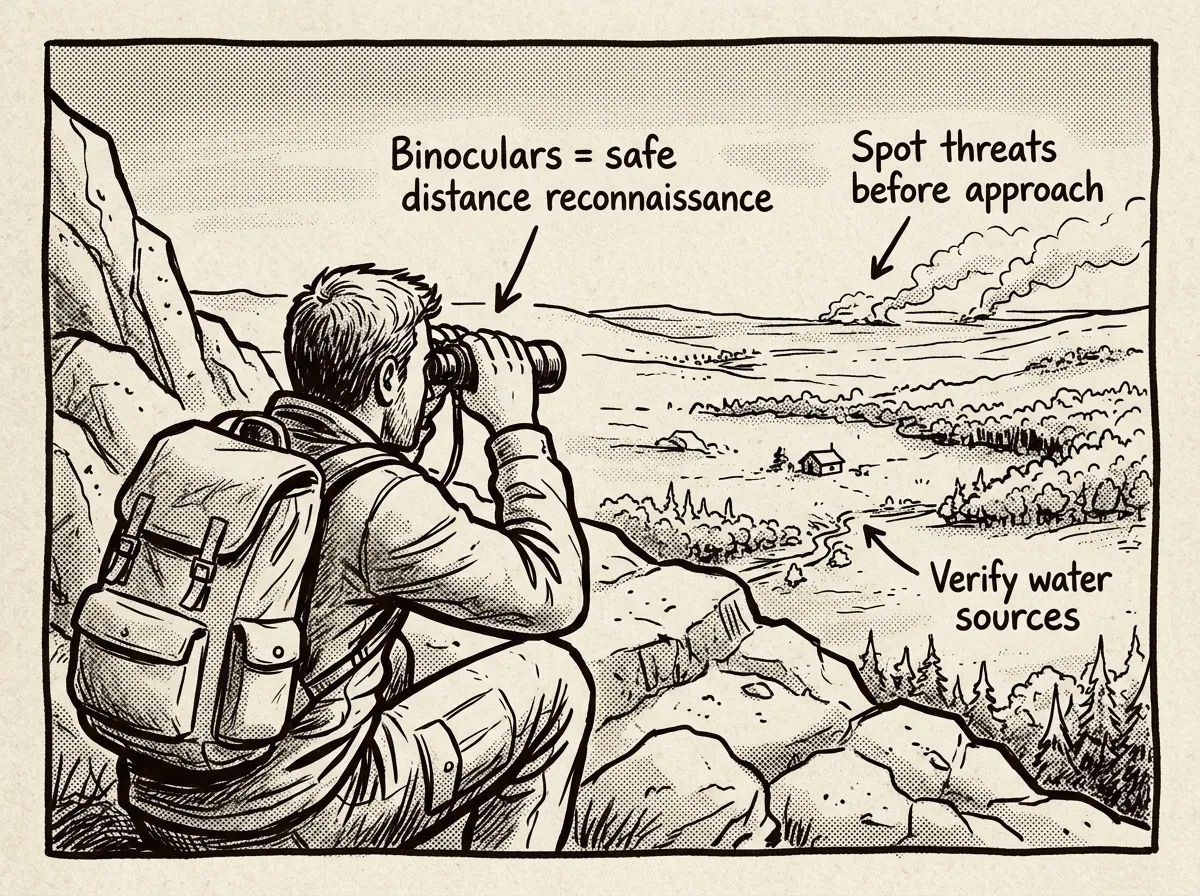 Scout terrain safely from distance
Here’s the thing nobody tells you until you’ve needed it: the person who sees first almost always has the advantage. Binoculars let you confirm a threat, scout a route, or check a water source from a safe distance instead of walking up blind. They deploy faster than a rifle scope and they’re a lot more versatile than a phone camera zoomed in as far as it’ll go.
Binoculars can be used to check whether smoke on the horizon is a controlled burn or something that needs reporting, or to scope a river crossing before committing to it. In a grid-down or bug-out scenario, that same logic applies at a much higher stakes level.
Typical jobs binoculars handle in a survival context:
- Spot people, vehicles, smoke, or movement before you get close enough to be seen yourself.
- Scout bug-out routes, obstacles, and water crossings before you commit.
- Find water sources, campsites, and natural cover from a distance.
- Run perimeter checks around a camp or shelter location.
They extend your senses. That’s the whole value proposition, and it’s worth more than most people budget for it.
Key Features to Prioritize
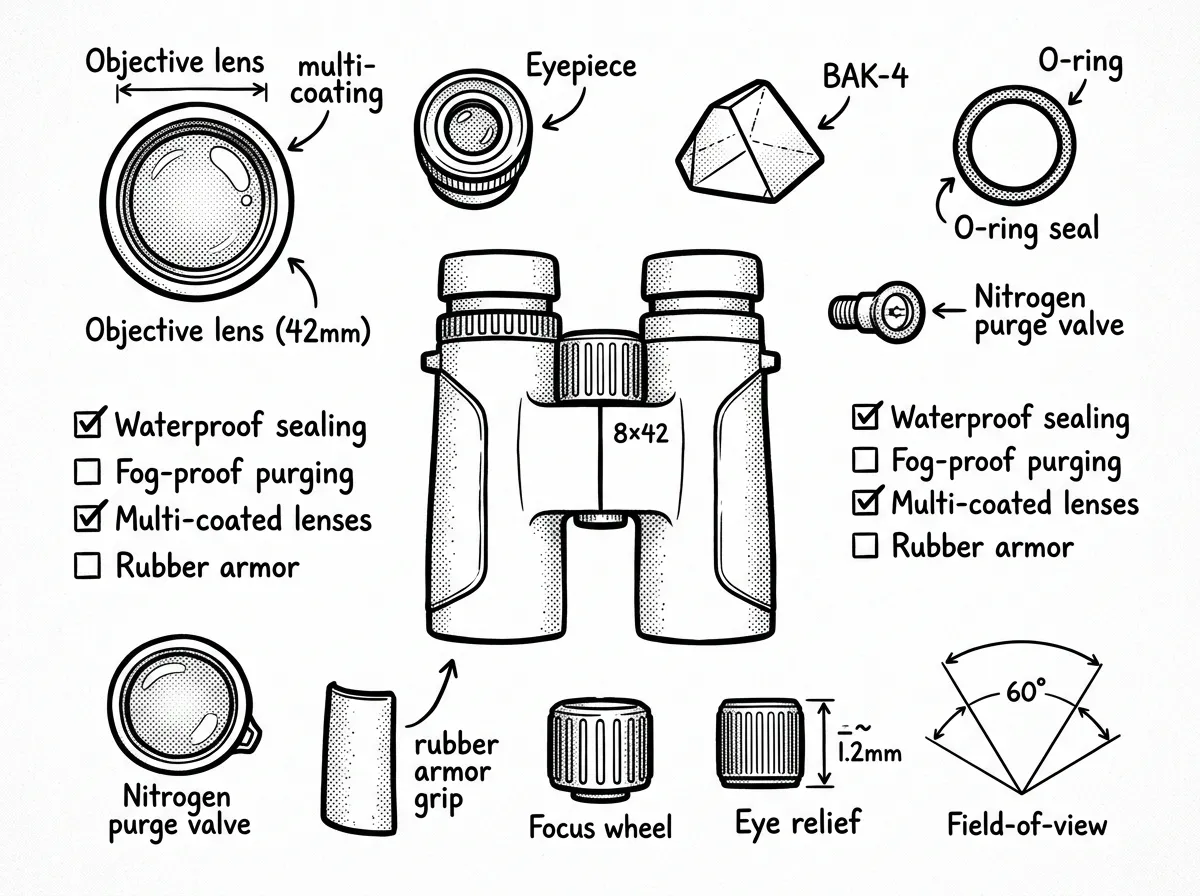 Critical binocular specifications for preppers
What actually separates a good survival optic from a paperweight? It comes down to a handful of specs, and most of them aren’t the ones printed biggest on the box.
- 8x42 or 10x42 magnification and objective size
- Roof-prism construction with phase-correction coating
- BAK-4 prisms over BK-7 glass
- Fully multi-coated lenses
- O-ring sealing with nitrogen or argon purge
- Rubber armor and a solid hinge
- Sufficient eye relief for glasses wearers
- Focus wheel operable with gloves on
Magnification and objective size. 8x42 is the sweet spot for general use. 10x42 gets you more detail at range, but the trade-off is a shakier handheld image and a narrower field of view — meaning slower scanning.
Prism type. Roof prisms give you a compact, rugged build that survives being knocked around in a pack. Porro prisms can be a decent value play in some models, but they’re bulkier and less forgiving of hard use.
Glass and coatings. BAK-4 prisms produce rounder, brighter images edge to edge compared to cheaper BK-7 glass. Fully multi-coated lenses — meaning every air-to-glass surface gets anti-reflection treatment, not just the outer lens — matter more for low-light performance than almost any other spec.
ED glass. Extra-low dispersion glass cuts down on color fringing at higher magnification. Nice to have, not essential at the price points most people are shopping.
Weather sealing. Fogged internal glass is a common failure mode with poorly sealed optics. O-ring sealing plus nitrogen (or occasionally argon) purging keeps moisture out and prevents internal fog. Don’t skip this line item.
Durability. Rubber armor, a solid hinge, and a chassis that holds collimation after a bump or a drop from waist height. You will drop these eventually. Plan for it.
Exit pupil and field of view. A bigger exit pupil helps in low light — dawn, dusk, deep shade. A wider field of view speeds up scanning, which matters more than you’d think when you’re trying to track something moving.
Ergonomics. Eye relief matters if you wear glasses. A focus wheel you can run with gloves on matters in the winter. A comfortable strap or harness matters every single time you carry these for more than twenty minutes.
Quick Optics Glossary
Some of these terms get thrown around loosely by manufacturers, so here’s what they actually mean:
- BAK-4 vs. BK-7: BAK-4 prisms produce rounder, brighter edge-to-edge images. BK-7 is cheaper and shows more light falloff at the edges.
- Fully multi-coated: Multiple anti-reflection coatings on every air-to-glass surface, maximizing light transmission.
- Phase-correction coating: Preserves contrast and sharpness specifically in roof-prism designs — without it, roof prisms look noticeably duller than Porro prisms.
- ED glass: Minimizes color fringing at high magnification.
- Exit pupil: Objective diameter divided by magnification. A 42mm objective at 8x gives roughly a 5.25mm exit pupil — bigger numbers help in low light.
- Close focus: The minimum distance the binoculars can focus on nearby detail.
- Eye relief: The distance from the eyepiece where you still see the full field of view. Critical if you wear glasses or goggles.
Top Picks: Best Binoculars for Survival
The following models are commonly recommended for survival use based on published specs and reviews.
Nikon Prostaff P3 8x42 — Balanced, entry-level. Steady handheld view, bright objectives, genuinely waterproof and fog-proof. The optics and mechanics aren’t premium, but for the price they’re hard to beat. This is a common recommendation for beginners.
Vortex Crossfire HD 10x42 — Reach with a rugged warranty. High-definition glass, fully multi-coated, and Vortex’s VIP warranty is one of the best in the industry — they’ll fix or replace it, no questions asked, even years down the line. Heavier than the 8x42 options and harder to hold rock-steady without support.
Bushnell H2O 8x42 — Budget option for wet conditions. Affordable, water-resistant, good grip even with wet hands. The glass is serviceable, not top-tier, but it works.
Celestron Nature DX 8x42 — Multipurpose outdoor optic. Fully multi-coated, waterproof, and light in the pack. Not built to tactical-grade toughness, but fine for general observation duty.
Leupold BX-1 McKenzie 10x42 — Rugged, good in low light. Crisp images, a durable chassis, waterproof and fog-proof. Priced above the entry-level tier, but you’re paying for glass quality that shows at dawn and dusk.
Athlon Midas UHD 8x42 — Near-premium optics. Excellent sharpness and color rendering, solid construction. Pricier than the starter models, but a reasonable pick for anyone who has outgrown entry-level glass and doesn’t want to spend Swarovski money.
Premium alternatives exist — Zeiss Terra ED, Swarovski CL Companion, Leica Ultravid — and the glass is genuinely better. But you’re paying a steep premium for marginal gains most people won’t notice in the field.
Stepping up to premium glass for a bug-out kit generally isn’t necessary. The Vortex Crossfire HD — around $150 to $200 — gets close to the low-light performance of glass costing three times as much, and Vortex’s warranty covers replacement if it’s crushed under gear or dropped off a rock. That premium budget is often better spent on a good water filter or a second radio.
Comparison Highlights
- Best general survival choice: 8x42 for steady handheld use and a wide field of view.
- Best for reach: 10x42 when you can stabilize the optic.
- Best budget wet-weather option: Bushnell H2O 8x42.
- Best rugged mid-price with warranty: Vortex Crossfire HD 10x42.
- Best near-premium value: Athlon Midas UHD 8x42.
How to Integrate Binoculars Into a Survival Plan
A common mistake is buying good glass and then never actually training with it. A pair of binoculars sitting in a drawer does nothing for you when the moment actually arrives.
- Define the role — home, vehicle, or bug-out bag each demand different weight and toughness priorities
- Pick your magnification based on how and where you’ll carry and use it
- Confirm weatherproofing and coatings before you buy, not after
- Test ergonomics in-store or at home — eye relief, glove operation, strap comfort
- Pack supporting gear: padded harness, lens covers, tripod adapter, microfiber cloth, silica gel
- Practice scanning, range estimation, and reporting what you see out loud
Pair your binoculars with a map, compass, handheld GPS or rangefinder, a notebook, and a radio. That combination turns a single optic into a real observation and reporting system — which is the actual point of owning one.
Practice the “grid scan” method: divide your field of view into imaginary quadrants and sweep slowly left to right, then drop down and sweep back. It’s how search-and-rescue teams cover ground methodically instead of just glancing around and missing detail.
Maintenance, Care, and Practical Tips
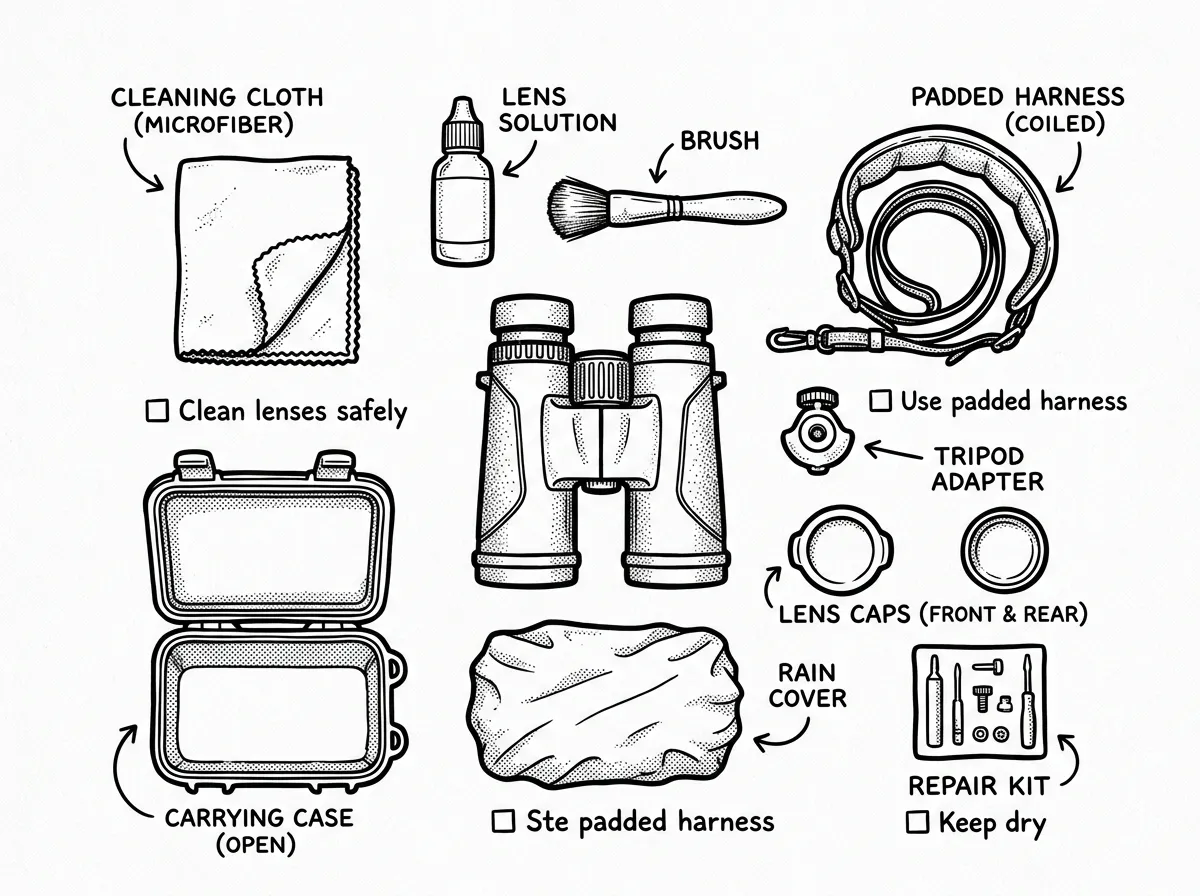 Essential binocular care and carry kit
Optics fail from neglect far more often than from hard use. A pair that gets cleaned and stored properly will outlast one that gets tossed in a bag wet and dirty.
- Clean lenses with a blower and soft brush first, then a microfiber cloth. Never use a shirt hem or household glass cleaner — you’ll scratch the coating.
- Store binoculars dry with a silica gel packet if they’ll sit unused for weeks or months. Moisture plus a dark case is exactly how fungus grows on internal glass.
- Inspect collimation after any hard drop. If the image looks doubled or misaligned, get it serviced — don’t just keep using it and hoping.
- Use a harness, not just a neck strap, if you’re carrying these for hours. Your neck will thank you by the third mile.
Cleaning a fogged lens with a t-shirt can leave a fine scratch across the objective. Carry an actual microfiber cloth — they run about $5 to $10 for a pack of several — and keep one in every case. It’s inexpensive insurance for a $150+ optic.
Buying Checklist Before You Purchase
Don’t take a spec sheet at face value. Manufacturers occasionally round up on claims, and reviews catch what marketing copy doesn’t.
- Confirm prism type and whether it’s BAK-4 or BK-7 glass
- Check barrel purge gas claims — nitrogen is standard, argon is rarer and pricier
- Confirm exit pupil, field of view, close-focus distance, and eye relief on the spec sheet
- Read the warranty terms directly on the manufacturer’s site
- Check multiple user reviews specifically for durability and collimation stability over time
Final Recommendations
If you’re just starting out, don’t overthink this. Get an 8x42 roof-prism pair with confirmed waterproofing and multi-coated lenses, and put your money into a harness and cleaning kit rather than chasing premium glass you won’t fully use.
- Best general pick: 8x42 for stability and a wide field of view.
- Best for reach: 10x42 when you can stabilize or tripod-mount it.
- Must-haves: waterproof and fog-proof sealing, fully multi-coated optics, phase-corrected roof prisms, durable housing.
- Starter models worth checking today: Nikon Prostaff P3 8x42, Vortex Crossfire HD 10x42, Bushnell H2O 8x42. Confirm current specs and pricing before you buy — models get refreshed and prices shift.
The best binoculars for survival aren’t the sharpest ones on a shelf — they’re the ones you’ll actually carry, maintain, and know how to use when it matters.
Match the model, weight, and feature set to your actual mission and pack constraints, not to whatever’s trending in a gear forum. That’s the difference between equipment that works when you need it and equipment that just looks good in a photo.
FAQ
What magnification is best for survival? 8x for most handheld scanning — it’s steadier and covers ground faster. Step up to 10x only when you can brace the optic on something solid.
Do I need waterproof and fog-proof binoculars? Yes, without question. Sealed, purged barrels are what stop internal fogging from ruining a pair the first time you get caught in real weather.
Are compact binoculars suitable for survival kits? Compacts save weight but usually sacrifice low-light brightness and eye relief. Full-size 8x42 or 10x42 remains the better compromise for most survival tasks.
How much should I spend? Useful survival-ready pairs typically run $100 to $400. Premium optics cost significantly more for incremental gains. Check current pricing before buying — it shifts.
Roof prism or Porro prism — which is better? Roof prisms are more compact and rugged, which matters for carry and durability. Porro prisms can offer good optical value at a lower price point. For survival use, roof prism is generally the better choice.
The Complete
Prepper's Reference.
149 articles synthesized into one comprehensive PDF — twelve chapters covering water, food, shelter, first aid, comms, and scenario-specific preparedness. Free with your email.
Unsubscribe anytime · We never share your email
You're in. Check your inbox.
Keep Reading
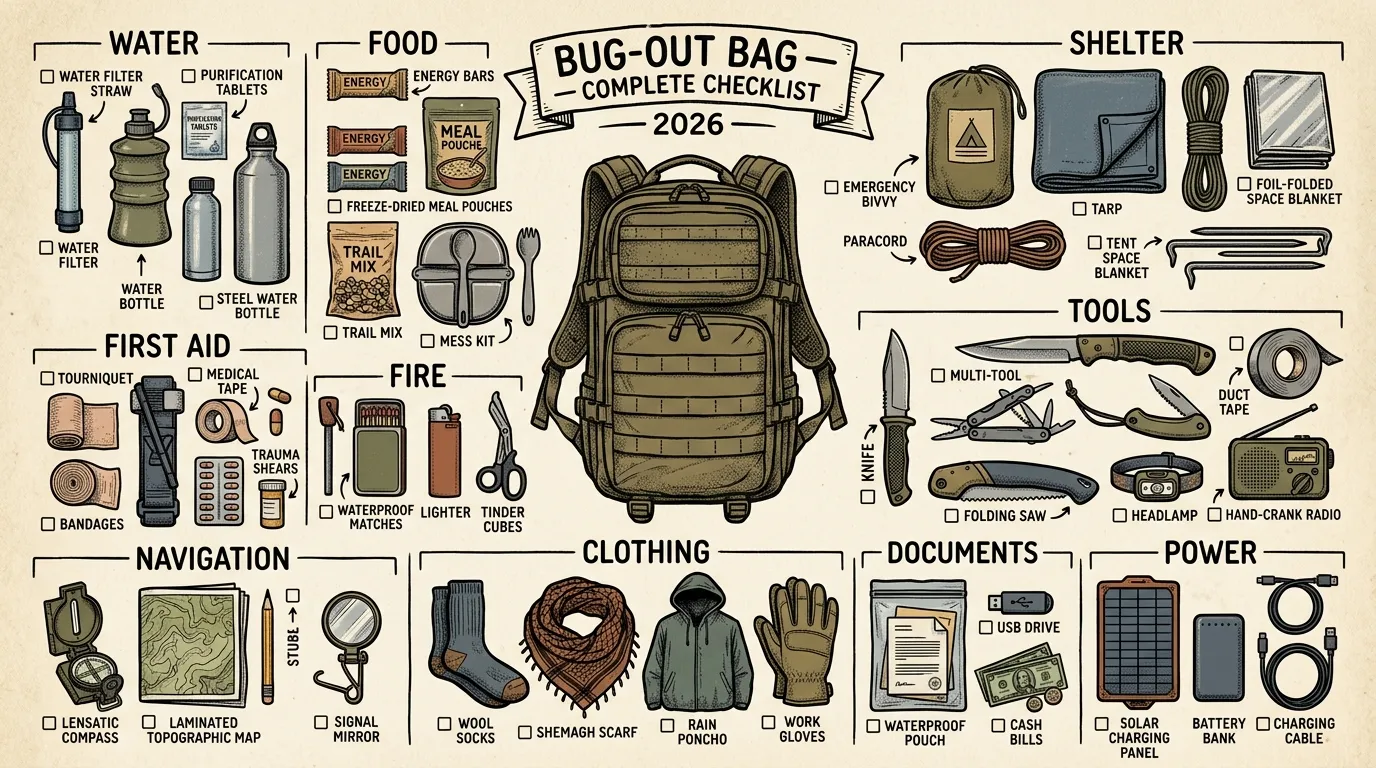
Bug-Out Bag List: Complete Checklist by Category (2026)
Complete bug-out bag list with 8 survival categories, weight budgets, and a 3-tier priority system. Printable checklist included — start packing today.
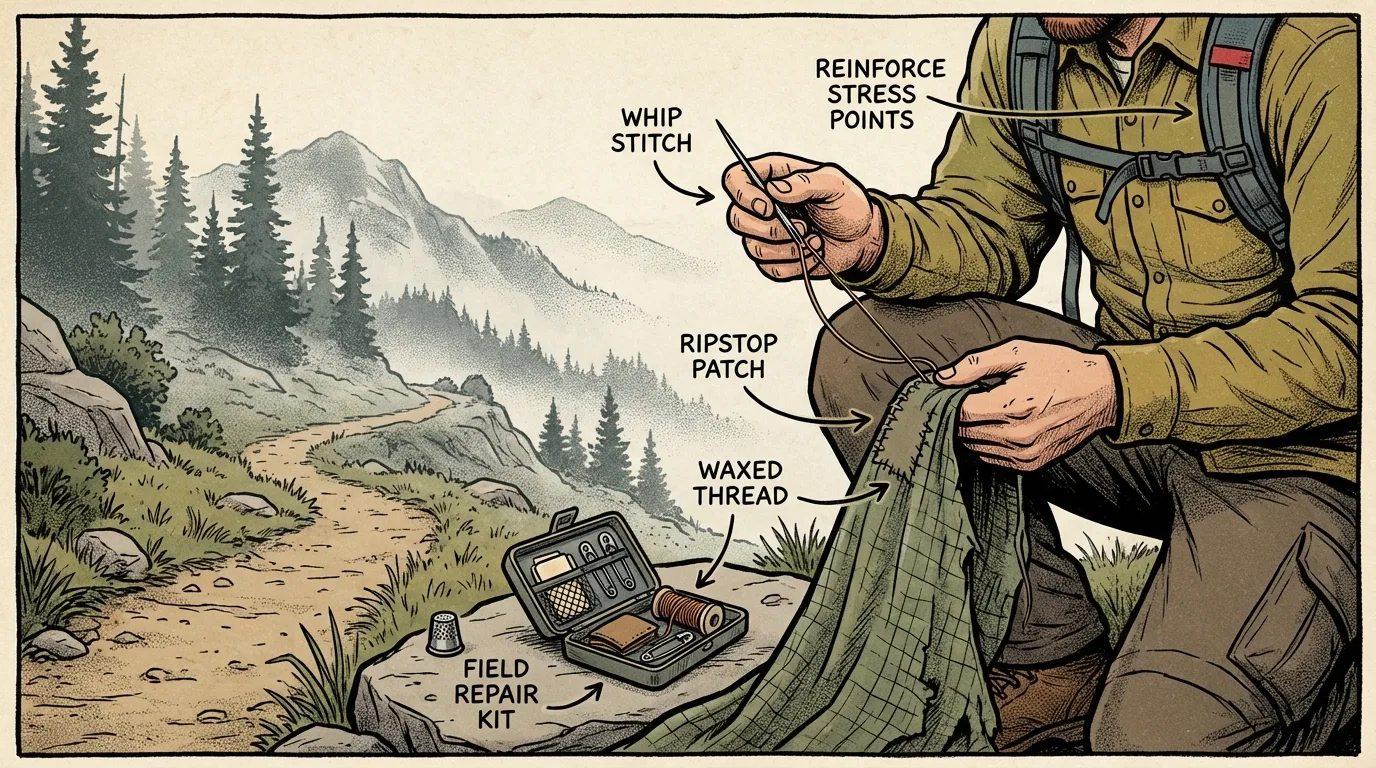
Survival Sewing: How to Repair Your Gear on the Go
Learn essential survival sewing skills to repair backpacks, tents, and clothing fast with beginner-friendly tools, stitches, and field-ready fixes.
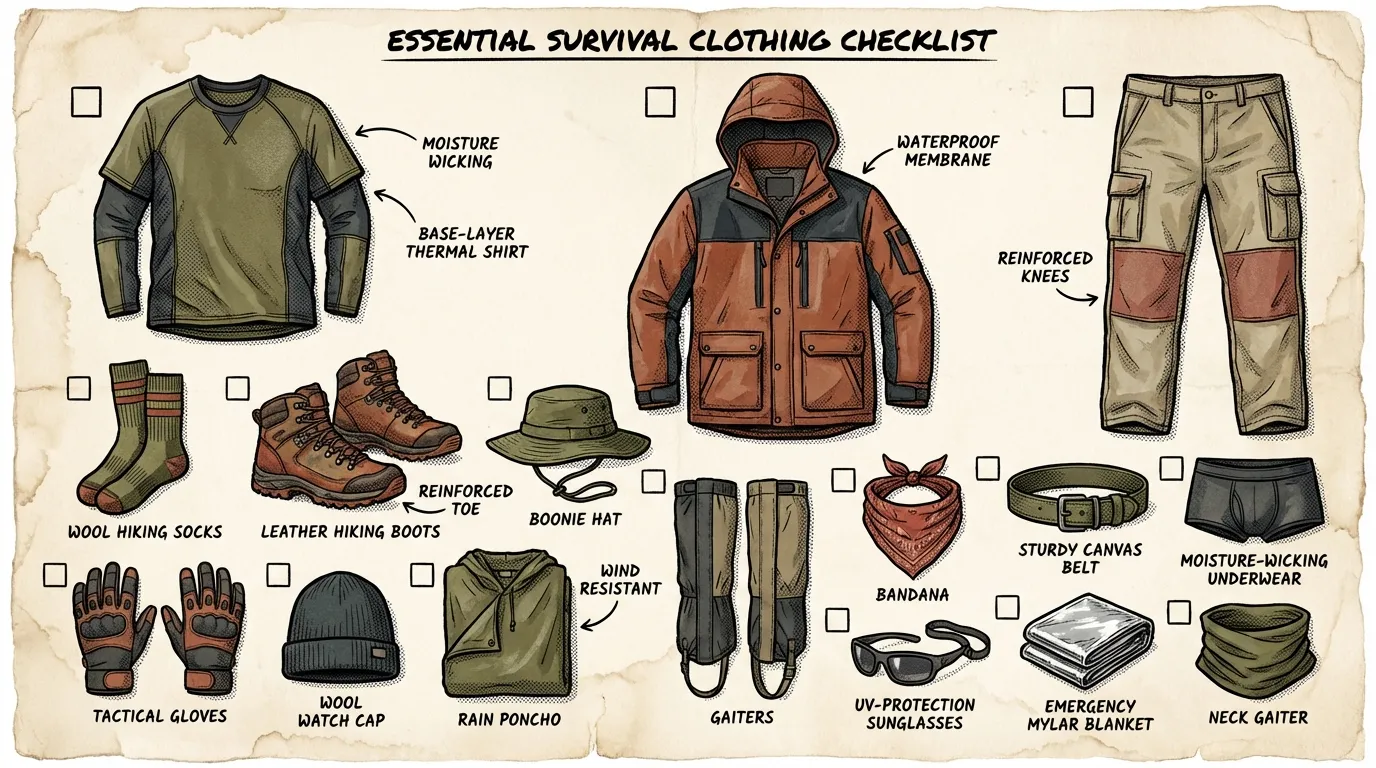
Survival Clothing: Dress for Success When Disaster Strikes
Learn how to choose survival clothing for cold, hot, and wet conditions, with practical layering tips, fabric advice, and beginner-friendly gear picks.