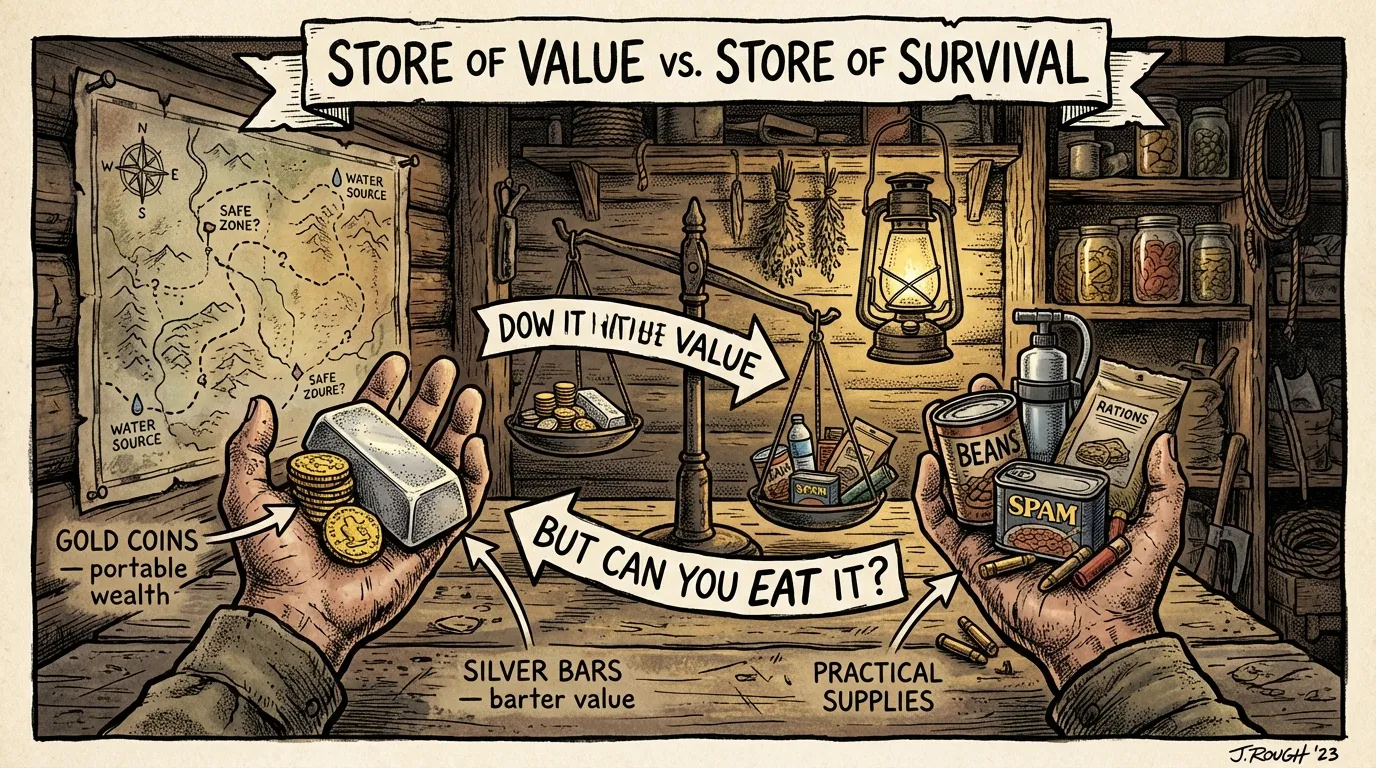
Preppers may consider gold and silver because precious metals can hedge against inflation, preserve value over time, and diversify assets outside the banking system. However, they also have drawbacks, including storage risk, theft potential, premiums, and limited usefulness in short-term emergencies compared with cash and practical supplies.
Key Takeaways
- Secure food, water, medicine, shelter, and a small cash reserve before buying any precious metals.
- Buy 1/10 oz gold coins for compact long-term value storage and portability across large transfers.
- Start silver accumulation with 1 oz government bullion coins for small trades and easy authentication.
- Split metal holdings across multiple locations to eliminate single-point loss of your entire stack.
- Verify every piece by checking weight, running a magnet test, and using XRF analysis for high-value items.
Prepping with Gold and Silver: Pros, Cons, and Practical Tips
TL;DR
- Prepping with gold and silver adds a financial layer to any preparedness plan. Gold stores a lot of value in a small package. Silver suits everyday trades and small-scale barter. Always secure food, water, medicine, and a cash reserve first.
Quick answer
Prepping with gold and silver diversifies wealth outside banks and digital systems. Prioritize essentials first: food, water, medicine, shelter, and a small cash reserve. Use gold for compact, long-term value. Use silver for small trades and incremental buying.
Quick definitions
- Spot price: current market price per ounce. Dealer buy and sell prices include premiums.
- Premium: extra cost above spot for minting, distribution, and dealer margin.
- Allocated storage: specific bars or coins identified as yours in a vault.
- Unallocated storage: a claim on a custodian’s pool, which carries counterparty risk.
- Bullion vs numismatic: bullion is worth its metal content; numismatic coins gain value from rarity and collector demand.
Should you be prepping with gold and silver?
Yes, as one component of a layered preparedness approach. Precious metals help protect against currency problems and provide portable, globally recognized value. They do not replace consumables, local cash, or practical barter items.
Why gold and silver matter
- They are tangible assets that do not depend on banks or online payment systems.
- Historically, they preserved value during some episodes of currency instability. Results vary by timeframe and event.
- Government bullion coins are widely recognized and easier to trade across borders.
Key names and tools to know:
- Mints: US Mint (American Eagle), Royal Canadian Mint (Maple Leaf), Austrian Mint (Philharmonic), Perth Mint
- Markets: LBMA, COMEX
- Authentication tools: XRF analyzers, specific gravity tests, magnet checks
Gold vs Silver: practical differences
Gold
- Strengths: high value per volume, easy to move for large transfers.
- Weaknesses: impractical for small trades; fractional pieces can carry high premiums.
- Best use: compact long-term value storage.
Silver
- Strengths: lower cost per ounce, easy to accumulate gradually, works for small trades.
- Weaknesses: bulkier and heavier; price swings can be pronounced.
- Best use: everyday barter amounts and entry-level buying.
Remember that premiums, storage, and transaction costs raise your effective cost above spot.
Pros of prepping with gold and silver
- Can protect against severe currency debasement or loss of confidence in local money. For example, in cases of runaway inflation, physical metal preserves purchasing power better than cash.
- Physical ownership outside banks and digital systems provides redundancy.
- Government bullion coins are easier to authenticate and trade internationally.
- Gold stores large sums in a small space. Silver works well for small trades.
Cons and how to address them
Not consumable. Food, water, and medicine serve immediate needs. Secure those first, then allocate discretionary funds to metals.
Local liquidity can be poor in emergencies. Keep some small bills and practical barter items on hand.
Storage and security add cost. Use a mix of discreet home storage and insured third-party vaulting to balance access and protection.
Premiums and spreads reduce returns relative to spot. Compare dealers and favor larger sizes when practical.
Counterfeits exist. Buy reputable products and learn basic authentication checks.
Comparing metals to cash, digital payments, and barter goods
- Cash: best for short-term local transactions and evacuations. Small bills travel easily.
- Digital payments: most convenient when infrastructure works.
- Barter goods: items like water filters, batteries, fuel, and medicines provide immediate survival value.
Balanced prep priority (simple order):
- Food, water, medicine, shelter, first aid, communications
- Small cash reserve and basic barter items
- Precious metals (gold and/or silver) for long-term diversification
Practical tips and checklists for prepping with gold and silver
Action checklist
- Secure essentials first. Start there. Then add metals.
- Keep a small cash reserve in small bills.
- Start with recognizable government bullion coins and widely circulated bars.
- Buy from reputable dealers, compare premiums, and check buyback policies.
- Learn basic authentication checks and use professional testing for high-value items.
- Split holdings across locations to reduce single-point loss.
- Keep purchase records and serial numbers separate from the metal itself.
- Rebalance holdings over time. Avoid going all-in on one asset.
Authentication checklist
- Check weight and dimensions against official specifications.
- Magnet test, since most precious metals are non-magnetic.
- Visually inspect known security features such as radial lines or micro-engraving.
- Perform a specific gravity or density test for suspicious pieces.
- Use professional XRF or an assayer for high-value items.
Storage options
- Home safe: immediate access. Bolt it down and choose a fire-rated model.
- Distributed hiding places: privacy, but higher risk of loss.
- Bank safety deposit box: secure, but access may be limited during disruptions.
- Insured allocated vaults: high security and insurance coverage, with ongoing costs.
FAQ
- Is gold or silver better for preppers?
- It depends on your goals. Gold stores compact wealth. Silver suits small trades. Holding both covers more scenarios.
- Coins or bars?
- Recognizable government coins are easiest to resell and authenticate. Larger bars usually have lower premiums per ounce.
- How much should I own?
- No one-size-fits-all answer. Prioritize essentials and cash first. Treat metals as a portion of discretionary savings.
- Are they useful in a total collapse?
- Possibly during prolonged financial breakdowns. In immediate survival situations, consumables and practical supplies matter more.
- Where to store?
- Choose based on your needs for access, security, and privacy.
Actionable next steps if you are starting today
- Finalize your core survival stock: food, water, first aid, and a small cash stash.
- Set a metal budget, using only money you can afford to hold long term.
- Pick a few recognizable pieces to buy first, such as 1/10 oz gold coins and 1 oz silver coins.
- Choose a reputable dealer and document each purchase.
- Create a simple storage and authentication routine.
Final recommendations
Prepping with gold and silver strengthens financial resilience when you plan deliberately. Focus on essentials first. Buy reputable products, learn basic authentication, and store holdings securely. Use gold for compact long-term value. Use silver for flexibility and smaller trades. Treat metals as part of a broader preparedness strategy, not a substitute for immediate survival supplies.
For country-specific dealer lists, historical performance data, or regulations related to prepping with gold and silver, request a specific country or timeframe and those details will be provided.
The Complete
Prepper's Reference.
149 articles synthesized into one comprehensive PDF — twelve chapters covering water, food, shelter, first aid, comms, and scenario-specific preparedness. Free with your email.
Unsubscribe anytime · We never share your email
You're in. Check your inbox.
Keep Reading
Meal Prepping Ideas That Build Long-Term Food Security
Meal prepping ideas that go past Sunday batch-cooking — build rotating stockpiles, cut costs, and prep for real emergencies. See how.
National Emergency Preparedness Month: 30-Day Plan
Use this 30-day National Emergency Preparedness Month challenge to go from unprepared to fully ready. One simple 15-minute task per day. Start now.
Emergency Preparedness Merit Badge: A Parent's Guide
Use the Emergency Preparedness merit badge framework to teach your kids real survival skills at home. Step-by-step activities for each requirement.