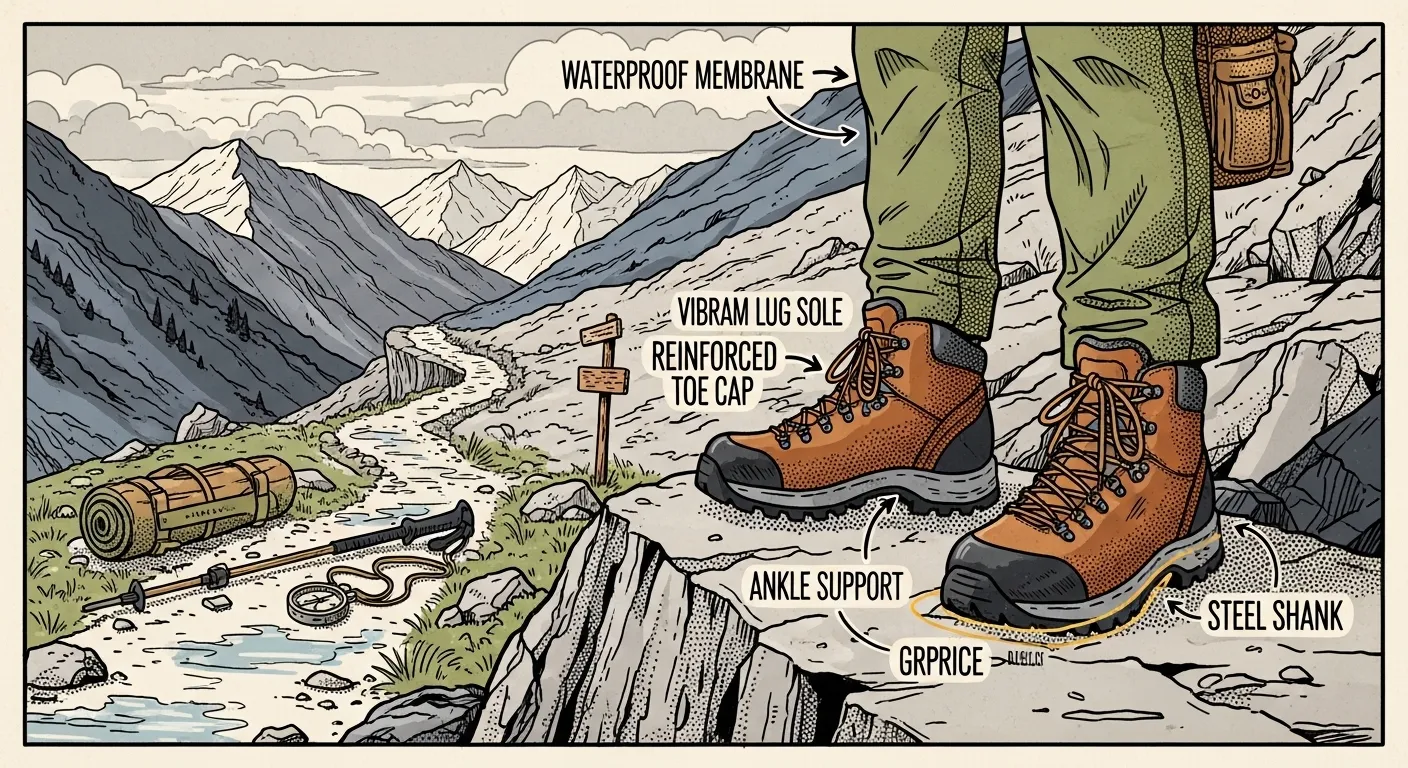
The best hiking boots for survival situations are durable, comfortable, supportive boots with strong traction and weather protection, ideally from trusted brands like Salomon, Merrell, Lowa, KEEN, and Danner. New preppers should prioritize fit, ankle support, waterproofing for wet climates, and regular maintenance to ensure long-term reliability.
Key Takeaways
- Try boots on late in the day with your exact hiking socks — feet swell throughout the day, and morning fit lies to you.
- Go mid- or high-cut whenever you're carrying real pack weight; the ankle support matters more than the ounces you save going low-cut.
- Match the upper to your climate: Gore-Tex or leather for wet/cold, breathable synthetics for hot/dry — don't default to waterproof everywhere.
- Deep, multi-directional lugs and a sticky rubber compound outperform tread depth alone on wet rock and mud.
- Break in every new pair with short hikes before you trust them on a bug-out route — bad boots ruin good plans.
Best Hiking Boots for Survival: Top Picks & Buying Guide
Footwear failure is one of the most common gear failures in the field — more so than a failed water filter or fire kit. Boots. When your feet go down, your entire bug-out plan goes down with them.
This guide covers exactly what to look for, six recommended boots, and how to keep them working for years instead of months.
Quick Summary
- Fit beats brand, every single time — a secure heel and roomy toe box matter more than any logo.
- Go mid- or high-cut when you’re carrying real pack weight; ankle rolls are among the most common trail injuries.
- Match your upper material to your climate: Gore-Tex or leather for wet and cold, breathable synthetics for hot and dry.
- Deep, multi-directional lugs with a sticky rubber compound outperform tread depth alone on mud and wet rock.
- Break in new boots gradually — start with short hikes before you ever trust them on a real bug-out route.
- The Salomon Quest 4 GTX (around $200-230) is a top recommendation for most people carrying a loaded pack.
Why Your Boots Matter More Than You Think
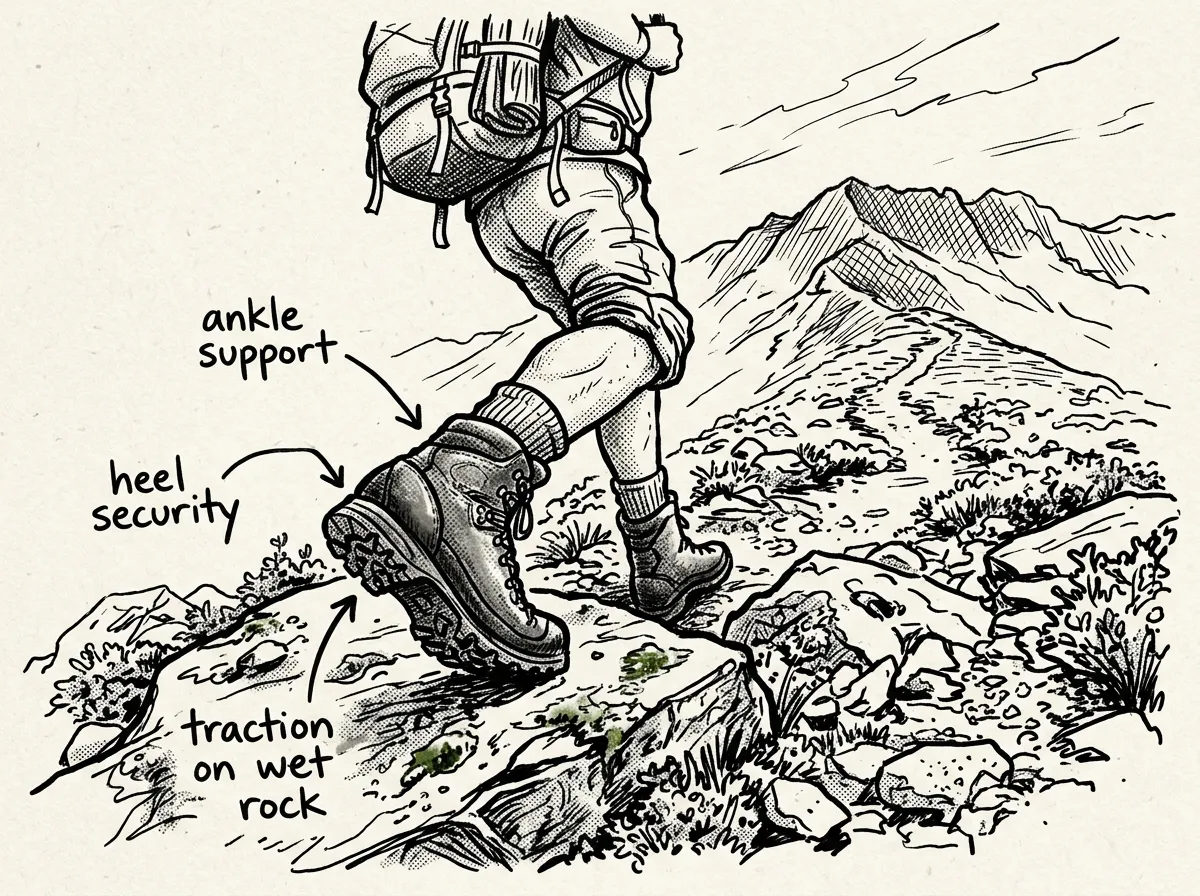 Prepper on challenging terrain with loaded pack
Your feet are your primary means of mobility in a survival situation. That sounds obvious until you’re three miles into a bug-out route with a hot spot forming on your heel and no way to stop and treat it properly. Blisters and foot pain don’t just hurt — they slow you down, change your gait, and can cascade into knee and hip problems if you keep walking on them.
A common mistake: people buy brand-new boots, throw them in the bug-out bag, and never wear them again until the day they actually need them. That’s a recipe for blisters at the worst possible moment. Good survival boots give you stable footing on uneven ground, protect your soles from sharp rocks and roots, keep your feet at the right temperature for your climate, and reduce ankle roll risk when you’re carrying weight you’re not used to.
During search-and-rescue training exercises, it’s common for team members to show up in boots they’ve never worn before. In these cases, blisters severe enough to affect pace can develop within just a few hours — a reminder that unbroken-in footwear, not terrain, is often what slows a team down.
Fit, comfort, and traction should drive every buying decision you make. Brand name and price tag come after that, not before it.
Critical Features to Check Before You Buy
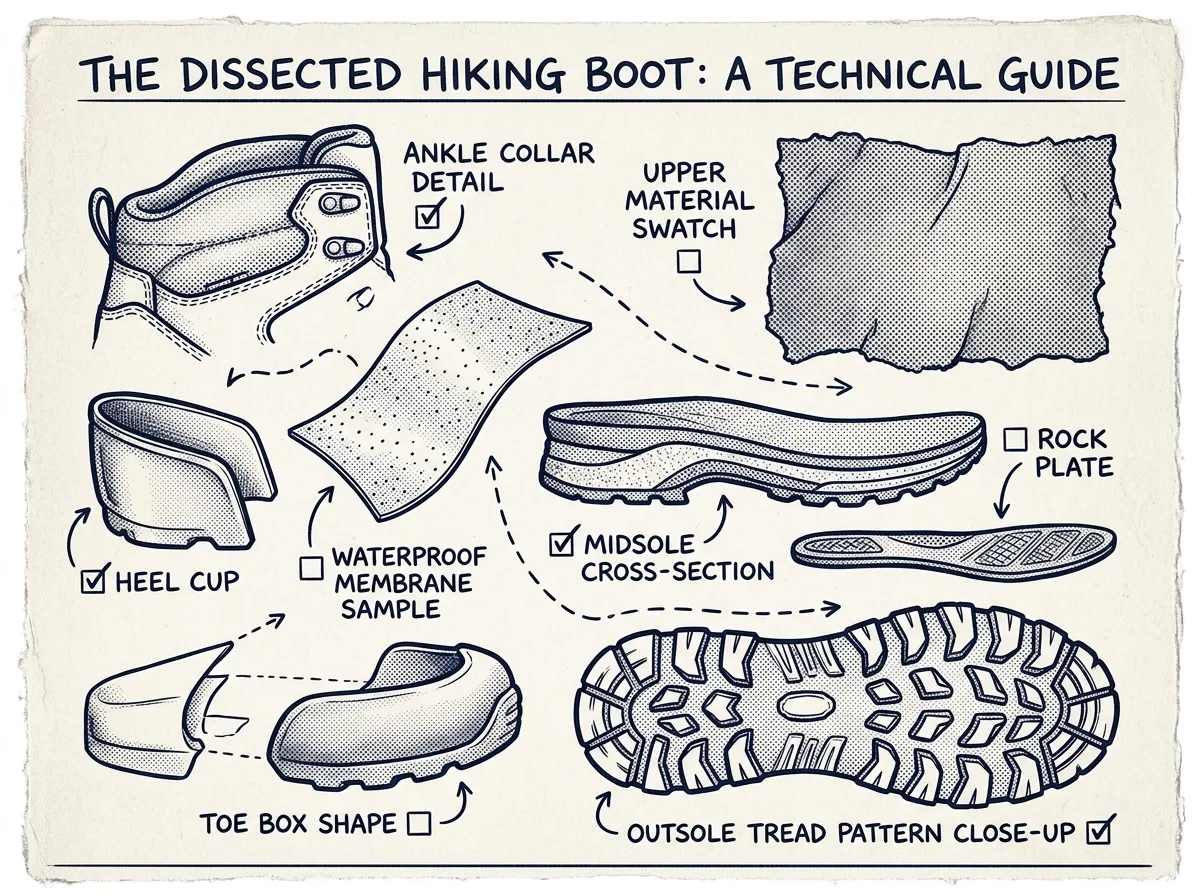 Essential hiking boot features checklist
Fit and Comfort
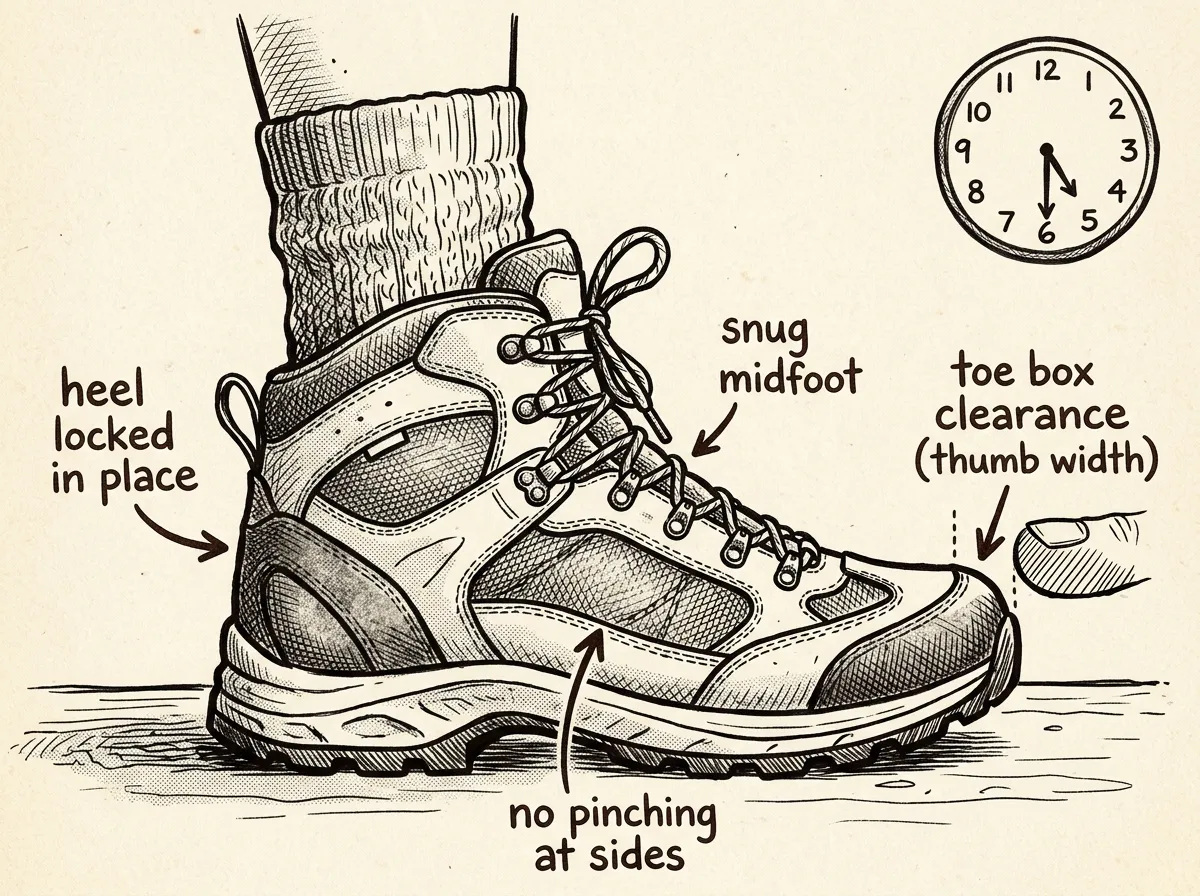 Proper boot fitting technique with hiking socks
This is the single most important factor, full stop. A boot that’s technically excellent but doesn’t fit your foot shape is worse than a mediocre boot that fits perfectly. Try boots on with the exact socks and orthotics you’ll actually wear in the field — not the thin cotton socks you happened to have on at the store.
Shop for boots late in the afternoon or evening. Your feet swell throughout the day, and a boot that feels perfect at 9 a.m. can feel a half-size too small by mile six of a real hike.
Ankle Support and Cut Height
Mid and high-cut boots with a solid lacing system dramatically reduce your risk of rolling an ankle, especially once you add pack weight. Low-cut trail shoes have their place — speed hiking on easy, well-maintained trails — but if you’re planning to move with a 30-40 pound pack over unpredictable terrain, that extra ankle support is worth the small weight penalty.
Waterproofing vs. Breathability
This is a point that’s often overthought. Waterproof isn’t automatically “better” — it depends entirely on where you’ll actually be walking.
If you’re in the Pacific Northwest or anywhere with sustained wet, cold conditions, a Gore-Tex membrane or full-grain leather upper earns its keep. High desert is a different problem entirely — waterproof membranes trap heat and moisture, and in dry 90-degree conditions you’ll cook your feet and sweat more than you would in a breathable synthetic upper. Match the boot to your terrain, not to a marketing checklist.
Outsole Traction
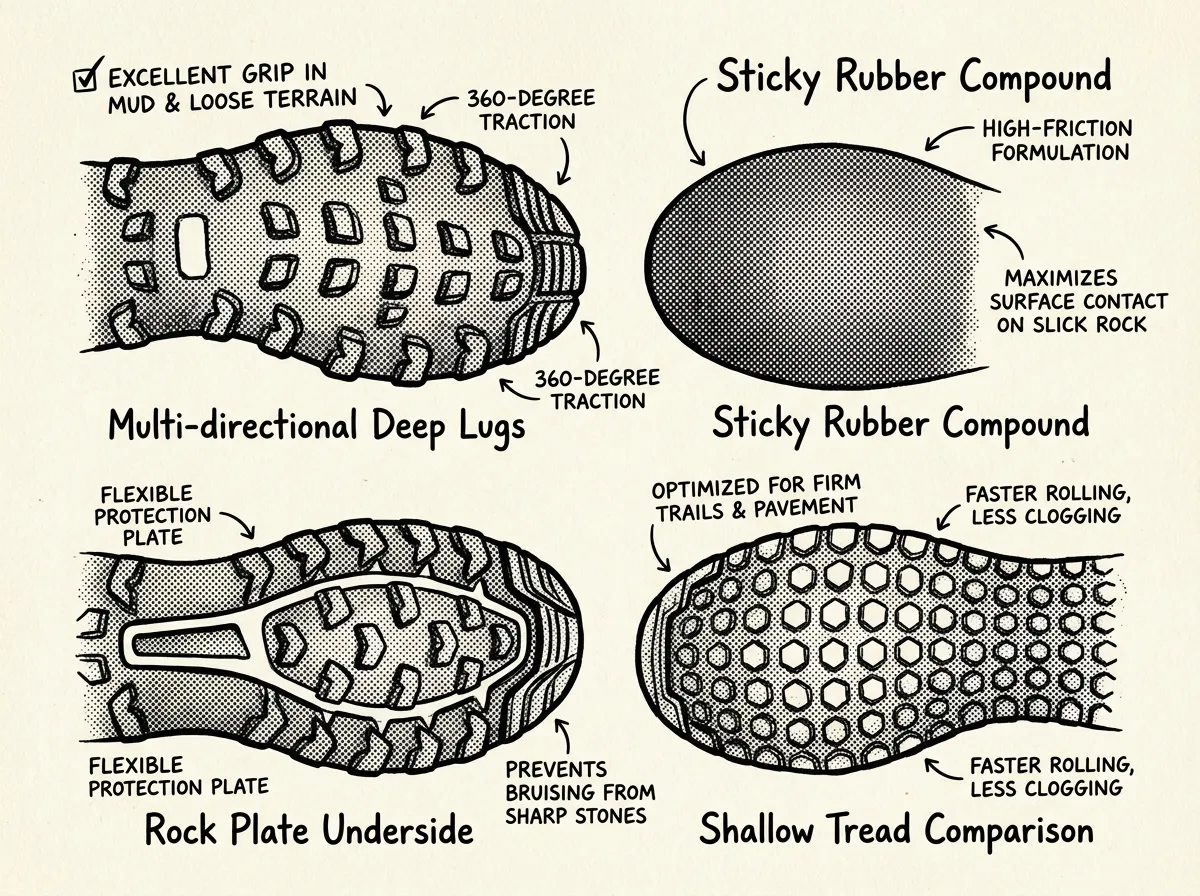 Comparison of hiking boot tread patterns
Look for deep, multi-directional lugs paired with a sticky rubber compound — Vibram is the name you’ll see most often, and for good reason. This combination is what actually keeps you upright on wet rock, loose gravel, and mud. Tread depth alone doesn’t tell the whole story; the rubber compound’s grip matters just as much as lug pattern.
Midsole Protection
EVA and polyurethane are the two common midsole materials — EVA is lighter and cushier, PU holds its shape longer under heavy repeated loads. If you expect sharp, rocky terrain, look for a rock plate or a stiffer internal shank. That thin protective layer is the difference between feeling every pointed rock through your sole and walking over it without noticing.
Upper Material
Full-grain leather is durable and naturally water-resistant, but it’s heavier and takes longer to break in. Synthetic uppers dry faster, weigh less, and break in quicker — but they generally won’t last as many miles as quality leather. Neither is objectively “right.” It’s a tradeoff between weight, break-in time, and long-term durability.
Top Picks: Best Hiking Boots for Survival
Boot specs change year to year as manufacturers tweak materials and construction, so always confirm the current build before you buy. These are the models covered in this guide.
Salomon Quest 4 GTX — Best Overall
Price range: around $200-230
This is a top recommendation for people carrying real pack weight over mixed terrain. The ankle lock-down is genuinely excellent, the Gore-Tex option handles Pacific Northwest wet without issue, and the platform stays stable even when your pack is loaded past what you’re used to.
The Quest series is frequently noted in reviews for its heel hold. Many “supportive” boots still let the heel lift slightly on steep descents, which is exactly when ankle rolls happen — the Quest 4 GTX is designed to minimize that lift. It isn’t the cheapest option on this list, but its heel lock-down is often cited as the standout feature.
Best for: long days with heavier packs and varied terrain.
Merrell Moab 3 Mid Waterproof — Best Budget Pick
Price range: around $110-140
The Moab line has been a go-to beginner recommendation for years, and the 3 keeps that reputation intact. It’s comfortable straight out of the box with minimal break-in, has decent grip for the price, and won’t wreck your budget if you’re outfitting a whole family.
Best for: beginner training hikes, everyday walks, and anyone building a bug-out kit on a tighter budget.
Lowa Renegade GTX Mid — Best Premium Choice
Price range: around $220-260
Lowa boots have a reputation for outlasting almost everything else on this list, and the Renegade earns it. The construction quality shows in the stitching and the way the boot holds its shape after hundreds of miles. If you want one pair that’ll still be functional five years from now with proper care, this is it.
Best for: anyone who wants a long-term, dependable boot and doesn’t mind paying more upfront.
KEEN Targhee III Waterproof Mid — Best for Wide Feet
Price range: around $150-180
If you’ve struggled with narrow toe boxes pinching your feet on other boots, the Targhee III solves that problem. Roomy without being sloppy, with solid traction and dependable waterproofing.
Best for: wide-footed hikers who’ve been frustrated by standard-width boots elsewhere.
Danner Mountain 600 — Best City-to-Trail Crossover
Price range: around $190-220
This is the boot for someone who wants something that looks reasonable at the office but performs when you actually need to hike out. Classic leather construction, a capable trail outsole, and enough style that it doesn’t scream “survivalist” in daily use.
Best for: everyday carry that transitions smoothly into an actual trail situation.
Scarpa Zodiac Plus GTX — Best Technical/Rugged Terrain
Price range: around $280-320
This is a strong option for rocky, technical ground where precise foot placement actually matters — think scrambling over talus or navigating steep, loose terrain. The suede-and-Gore-Tex build is stiffer than everything else on this list, which is exactly the point.
Best for: rugged, rocky environments where edging and stability outweigh everyday comfort.
- Best overall: Salomon Quest 4 GTX
- Best budget: Merrell Moab 3 Mid Waterproof
- Best premium: Lowa Renegade GTX Mid
- Best for wide feet: KEEN Targhee III Waterproof Mid
- Best technical terrain: Scarpa Zodiac Plus GTX
- Best everyday-to-trail: Danner Mountain 600
How to Choose the Right Boot for You
You bought lightweight trail runners for speed hiking, but your bug-out route crosses two miles of loose scree with a 35-pound pack on your back. Halfway across, your ankle rolls on unstable rock because there’s nothing protecting the joint. Now you’re immobile in the worst possible spot to be immobile.
That scenario is exactly why matching the boot to the actual terrain you’ll face matters more than picking whatever’s popular online.
- Define your environment — wet and cold, hot and dry, rocky, or mixed conditions
- Choose your cut height — mid or high for ankle protection under a loaded pack
- Prioritize fit above all else — try multiple sizes with your actual hiking socks
- Inspect the outsole for deep, multi-directional lugs and a sticky rubber compound
- Check the midsole for a rock plate or stiffer shank if you expect sharp terrain
- Buy and break in gradually — short hikes first, then add distance and pack weight
A common mistake: people skip straight to step three because they already have a brand preference. Don’t. Define your environment first, because that single decision eliminates half the boots on the market before you even try one on.
Maintenance: Keeping Boots Field-Ready
Boots aren’t a buy-it-once-and-forget-it item. Skipping regular maintenance on leather boots can result in cracked, stiff leather within a single wet season — a problem a $10 tube of conditioner can prevent.
After every use, brush off mud and grit before it dries and works into the seams. Rinse lightly with lukewarm water if things got genuinely dirty — never hot water, which can damage adhesives and membranes. Dry boots slowly at room temperature, away from direct heat sources like a fireplace or heater vent. Pull the insoles out and loosen the laces to speed up drying from the inside.
Reapply waterproofing treatment periodically — wax-based products for leather, spray-on or wash-in treatments for synthetic uppers — following whatever the manufacturer recommends for that specific material. Condition leather sparingly; over-conditioning softens the structure more than you want for a boot that’s supposed to hold its shape under load.
Inspect regularly for tread wear, sole delamination, split seams, and loose or broken hardware. Store boots in a cool, dry place out of direct sunlight, which degrades both leather and synthetic materials over time.
If you rely on one pair of boots for daily use and survival prep both, consider a second rotation pair. Letting boots fully dry between wears extends their life significantly, and you’re never caught with a pair that’s still damp when you need to move.
Frequently Asked Questions
What features matter most in a survival hiking boot? Fit comes first, always. After that: traction, ankle support, waterproofing appropriate to your climate, and underfoot protection from a rock plate or stiff midsole. Skip any of these and you’re gambling on terrain you can’t predict in advance.
Are waterproof boots always the better choice? No, and this trips up a lot of new preppers. Waterproof membranes genuinely help in wet or cold conditions, but they trap heat and reduce breathability in hot climates. Pick based on where you’re actually likely to be walking, not on the assumption that “waterproof” automatically means “better.”
How long do hiking boots actually last? It varies a lot based on materials, terrain, frequency of use, and how well you maintain them. Many people get several hundred to a couple thousand miles out of a quality pair. Inspect them regularly — once the tread flattens out or the midsole compresses noticeably, it’s time to replace them regardless of how the upper still looks.
Should I own one pair of boots or several? Start with one dependable, all-around pair that covers your primary climate and terrain. Once that’s dialed in, consider adding specialized footwear — lighter trail runners for fast movement, insulated boots for genuine cold-weather conditions. Don’t try to solve every scenario with your first purchase.
Final Word on Boot Selection
Put fit first, every time, no exceptions. Match your waterproofing, midsole protection, and outsole traction to the actual environment you expect to face — not the environment you wish you had. Try on multiple pairs with the socks and pack weight you’ll really use, break new boots in gradually, and maintain them like the critical piece of survival gear they actually are.
A well-chosen, well-maintained pair of hiking boots isn’t just another line item on a gear list. It’s one of the few pieces of equipment that determines whether you can move at all when it counts.
The Complete
Prepper's Reference.
149 articles synthesized into one comprehensive PDF — twelve chapters covering water, food, shelter, first aid, comms, and scenario-specific preparedness. Free with your email.
Unsubscribe anytime · We never share your email
You're in. Check your inbox.
Keep Reading
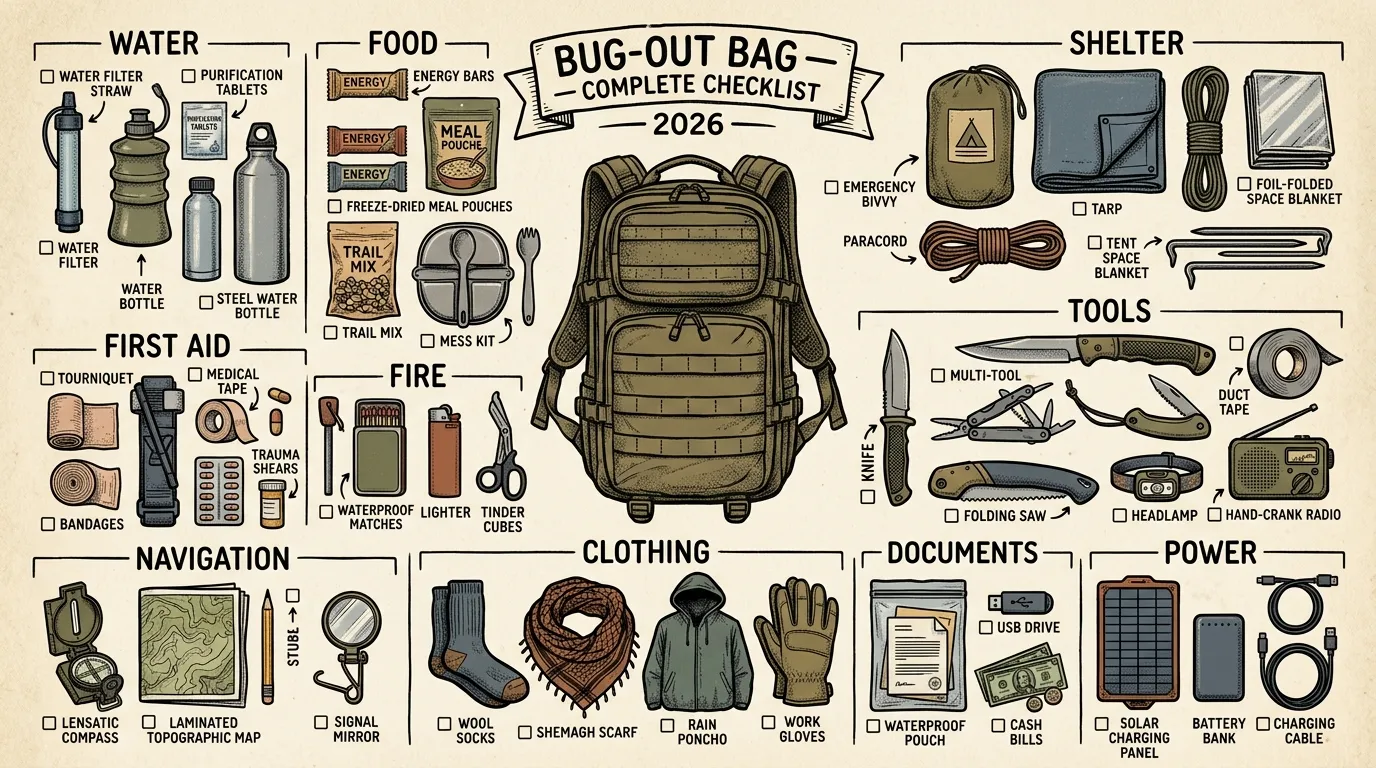
Bug-Out Bag List: Complete Checklist by Category (2026)
Complete bug-out bag list with 8 survival categories, weight budgets, and a 3-tier priority system. Printable checklist included — start packing today.
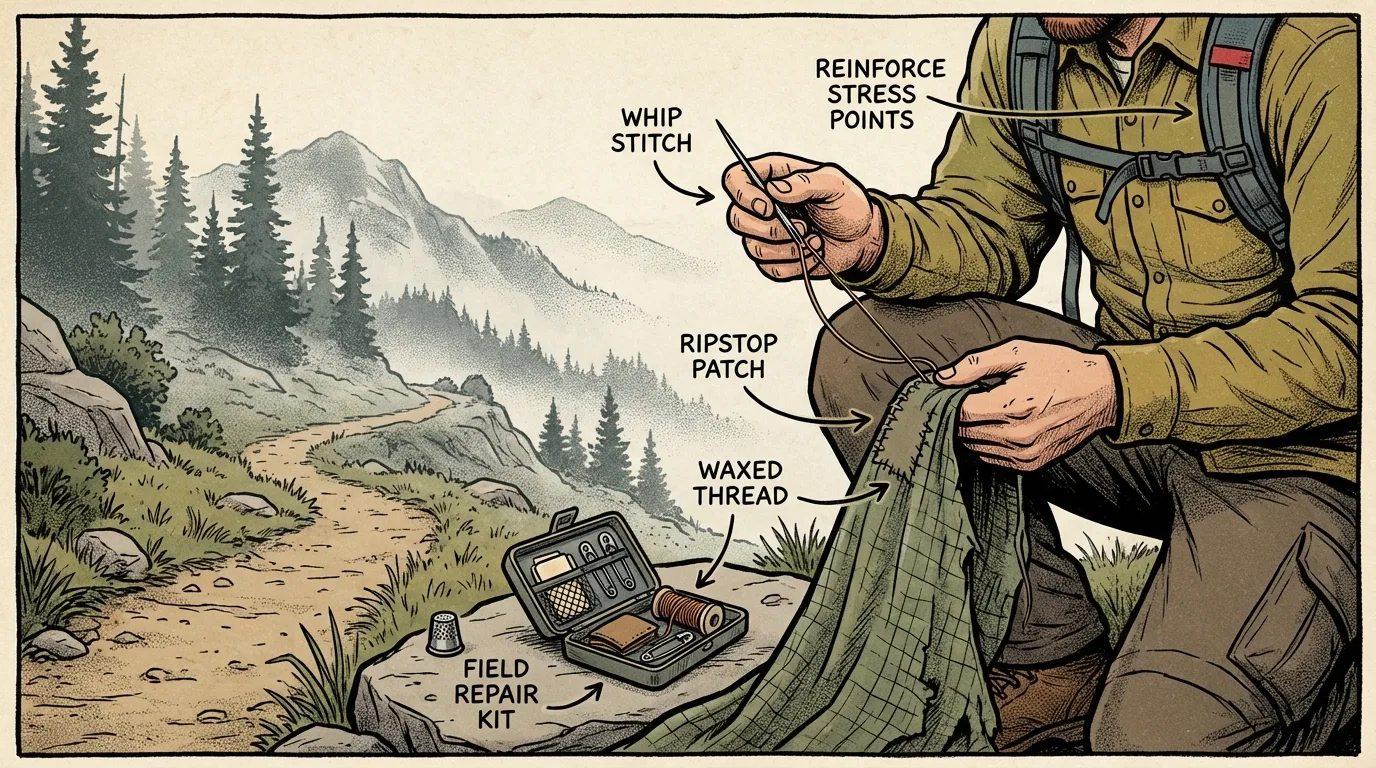
Survival Sewing: How to Repair Your Gear on the Go
Learn essential survival sewing skills to repair backpacks, tents, and clothing fast with beginner-friendly tools, stitches, and field-ready fixes.
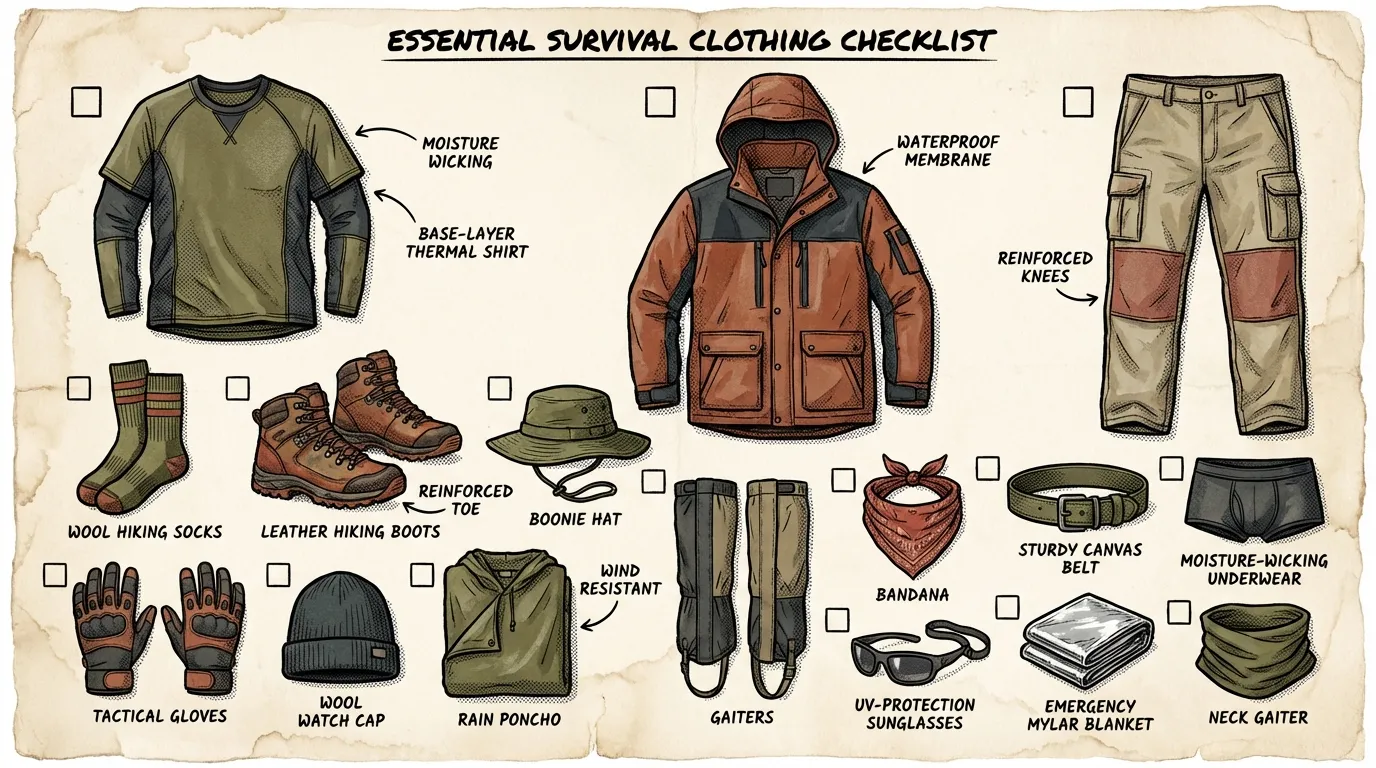
Survival Clothing: Dress for Success When Disaster Strikes
Learn how to choose survival clothing for cold, hot, and wet conditions, with practical layering tips, fabric advice, and beginner-friendly gear picks.