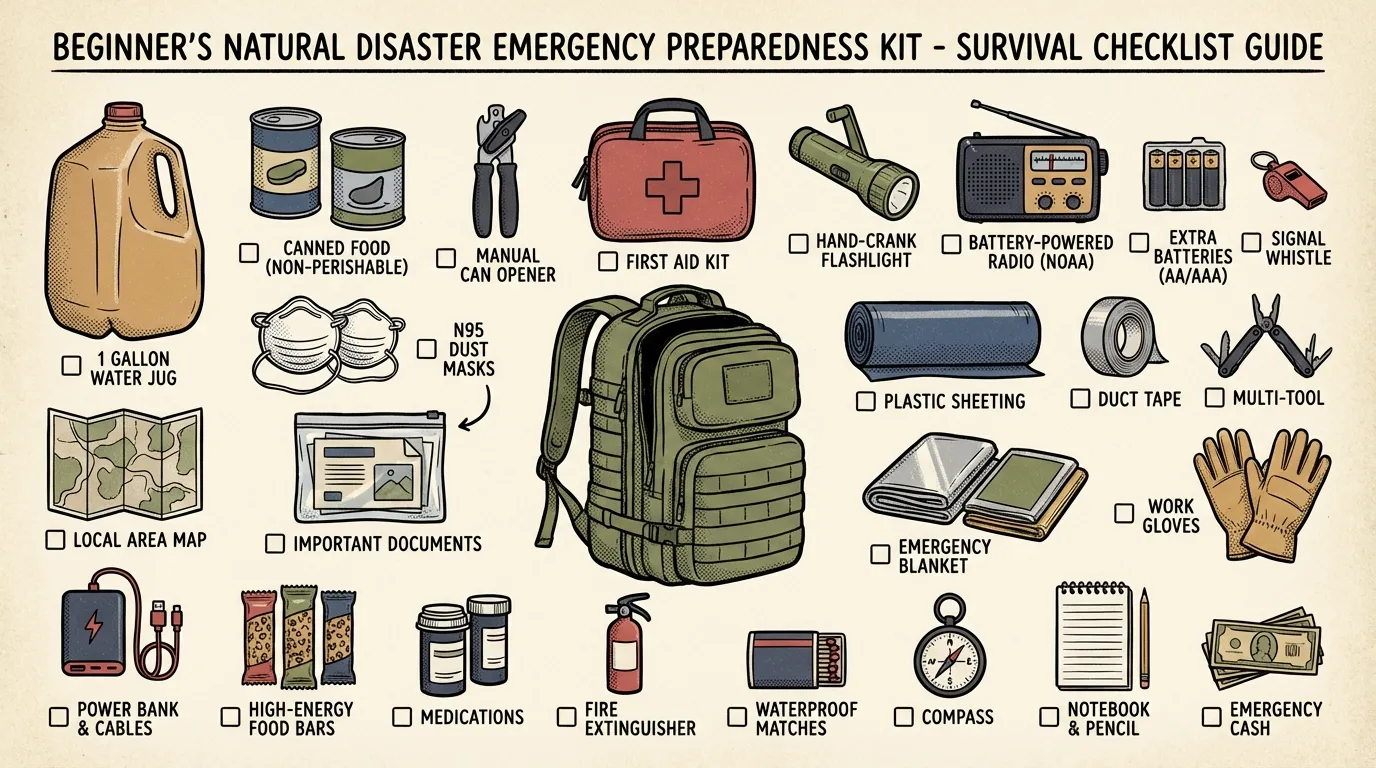
A basic natural disaster preparedness checklist includes knowing your local risks, building a three-day emergency kit, creating a family communication plan, improving home safety, and staying informed through alerts. Beginners can avoid overwhelm by preparing in small steps, starting with the most likely disasters in their area and adding supplies and plans over time.
Key Takeaways
- Store 1 gallon of water per person per day, covering at least 3 days minimum.
- Build a home emergency kit with water, food, medications, and a 30-day prescription supply.
- Create a family emergency plan with 2 meeting places and practice it every 6 months.
- Secure heavy furniture and appliances to studs and learn to shut off water, gas, and electricity.
- Enable Wireless Emergency Alerts on your phone and sign up for local text and email notifications.
Natural Disaster Preparedness Checklist: A Beginner’s Guide
Quick start
Focus on five high-impact actions to get started quickly:
- Know your local risks: flood, earthquake, wildfire, hurricane, winter storm, extreme heat.
- Build a basic emergency kit: three days of water and food, prescriptions, a first aid kit.
- Create and practice a simple family emergency plan.
- Reduce home hazards and learn how to shut off utilities.
- Sign up for trusted alerts: Wireless Emergency Alerts, NOAA, and local notifications.
Start this week. Identify your top local threats and pack a go-bag.
Short checklist
Do these first if you want the condensed version:
- Know local risks.
- Build a three-day emergency kit.
- Create and rehearse a family emergency plan.
- Reduce home hazards and learn utility shutoffs.
- Sign up for trusted alerts.
Definitions
- Emergency kit: supplies to keep people healthy and informed for about three days.
- Go-bag: a portable grab-and-go kit with essentials for one person.
- Shelter-in-place: stay indoors and seal a room during certain hazards.
- Wireless Emergency Alerts (WEA): government emergency messages sent to phones.
Why prepare?
Preparing keeps people safer and speeds recovery. For example:
- You avoid last-minute trips for water and batteries. Short trips can be dangerous during a storm.
- Pets stay with you when their supplies are ready.
- You return to work and normal routines sooner because damage and paperwork are smaller.
Trust these sources for guidance: FEMA (Ready.gov), NWS/NOAA, American Red Cross, USGS, and your county or state emergency management office.
Step 1: Understand your local risks
Match readiness to the hazards you face.
Actionable items:
- Check FEMA flood maps and local wildfire maps.
- Review USGS earthquake hazard maps and local seismic history.
- Track historical severe weather and NWS/NOAA advisories.
- Ask local emergency management about evacuation routes and regional hazards.
Match your kit, plan, and home fixes to the risks you identify.
Step 2: Assemble your emergency kit
Support household members for at least three days.
Core items:
- Water: 1 gallon per person per day for three days. Add extra for pets. Include a purification method such as tablets or a filter.
- Food: three days of nonperishable, easy-to-prepare items and a manual can opener.
- First aid and medications: a basic kit, prescriptions (try to keep a 30-day supply), and spare glasses.
- Light and power: flashlights, spare batteries, a battery or hand-crank radio, and power banks.
- Hygiene: wet wipes, hand sanitizer, toilet paper, feminine products, and trash bags.
- Clothing and bedding: weather-appropriate layers, sturdy shoes, and a blanket.
- Documents and cash: copies of IDs, insurance papers, medical records in a waterproof sleeve; keep small bills.
- Specialty items: baby formula, pet supplies, mobility aids, and hearing-aid batteries.
Where to store kits:
- Home kit: larger, stored in an accessible place.
- Car kit: compact, kept in the trunk or cargo area.
- Go-bag: one per person, kept near an exit or with each person.
Tip: keep physical copies of critical documents in a waterproof sleeve and encrypted digital copies stored offline.
Step 3: Create a family emergency plan
A kit helps. A plan makes it work.
Plan checklist:
- Emergency contacts, including an out-of-town contact.
- Two meeting places: one near home and one outside the neighborhood.
- Evacuation routes and shelter locations.
- Shelter-in-place instructions and the safest rooms for each threat.
- Household roles: who grabs go-bags, pets, children, and seniors.
- Communication alternatives if cell service is down, such as text check-ins or amateur radio.
Practice drills with everyone in the household. Update the plan every six months or when circumstances change.
Step 4: Home safety and mitigation
Simple fixes reduce damage and repair costs.
Practical actions:
- Secure heavy furniture, TVs, and water heaters. Bolt or strap them to studs when possible.
- Label and learn how to shut off water, gas, and electricity, following local utility rules.
- Trim hazardous branches, clean gutters, and store flammable materials away from the house.
- Use storm shutters or plywood for windows, reinforce garage doors, and have sandbags on hand for flood-prone entries.
- Prepare for outages: keep power banks charged and have a plan for refrigerated medications.
- Install and test smoke and carbon monoxide detectors regularly.
Step 5: Stay informed
Timely information saves lives.
Ways to stay updated:
- Enable Wireless Emergency Alerts on phones and sign up for local text and email alerts.
- Monitor NOAA Weather Radio and NWS advisories.
- Follow FEMA and the Red Cross for preparedness guidance. Follow local news for on-the-ground updates.
- Keep a battery-powered or hand-crank radio and a printed list of emergency contacts.
- Consider solar chargers and offline map apps to navigate if lines are down.
Compact, copyable checklist
- Know local risks
- Sign up for alerts (WEA and local text/email)
- Build a home emergency kit (water, food, meds, first aid, light)
- Prepare a go-bag for each person
- Create and practice a family emergency plan
- Secure heavy items and know utility shutoffs
- Install and test smoke and carbon monoxide detectors
- Keep backup power such as power banks or a small solar charger
- Store copies of key documents and keep some cash
- Review kit and plan every six months
5-week starter plan
Break preparedness into manageable weekly tasks:
- Week 1: Identify the top two or three hazards where you live and sign up for alerts.
- Week 2: Buy a three-day water supply and shelf-stable meals.
- Week 3: Assemble a basic emergency kit with first aid, light, hygiene items, and copies of documents.
- Week 4: Create and practice a family emergency plan and pick meeting points.
- Week 5: Secure heavy items in your home, test detectors, and learn how to shut off utilities.
Consistency matters. Refresh supplies and drills every six months.
FAQ
Q: What should a basic checklist include? A: Know risks, build an emergency kit, make a family plan, reduce home hazards, and use multiple alert channels.
Q: How much water and food? A: Baseline is at least three days. FEMA recommends 1 gallon per person per day.
Q: What is the first step? A: Identify the disasters most likely in your area.
Q: Are prebuilt kits useful? A: Yes. They help you get started. Customize them with medications, documents, and pet supplies.
Q: How often should I update my kit and plan? A: At least every six months or when your circumstances change.
Notes and citations
- Confirm current water guidance at Ready.gov (FEMA).
- Any national disaster statistics should cite NOAA NCEI, FEMA, or similar agencies before publishing.
- Local rules for shutting off gas and electric vary. Check utility guidance before acting.
Final steps
Focus on five clear actions: assess risk, pack a basic kit, make and practice a family plan, reduce home hazards, and stay informed. Small, repeated steps create real preparedness.
Further reading
- [Becoming a Prepper: The Beginner’s Guide to Survival Readiness]
- [Water, Water Everywhere: How to Store H2O Without Losing Your Sanity]
- [Canned Goods and Other Edibles: Your First Steps to Stockpiling Food]
- [How to Build a Bug Out Bag: Essentials for a Quick Getaway]
- [Batten Down the Hatches: Home Fortification Tips for Beginners]
- [Gadgets and Gizmos Aplenty: Tech Tools for the Modern Prepper]
The Complete
Prepper's Reference.
149 articles synthesized into one comprehensive PDF — twelve chapters covering water, food, shelter, first aid, comms, and scenario-specific preparedness. Free with your email.
Unsubscribe anytime · We never share your email
You're in. Check your inbox.
Keep Reading
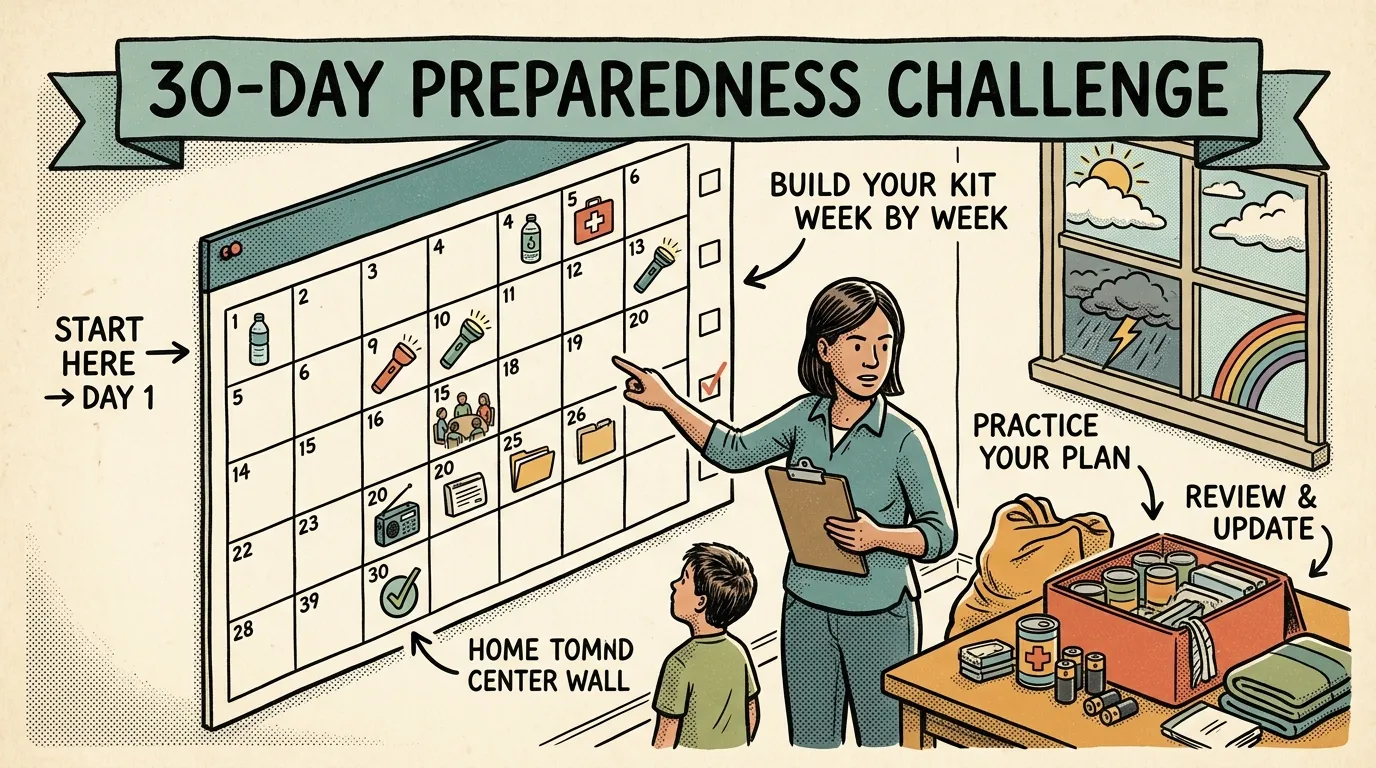
National Emergency Preparedness Month: 30-Day Plan
Use this 30-day National Emergency Preparedness Month challenge to go from unprepared to fully ready. One simple 15-minute task per day. Start now.
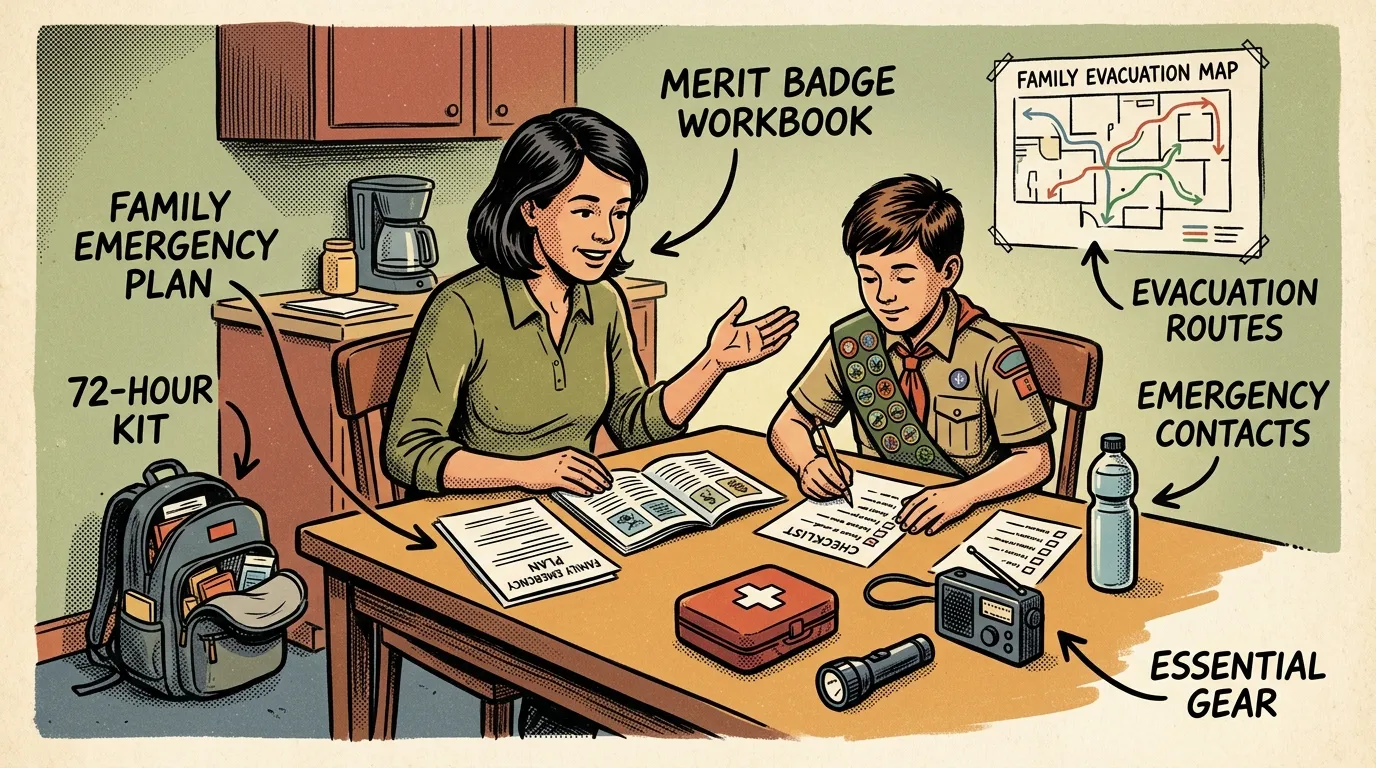
Emergency Preparedness Merit Badge: A Parent's Guide
Use the Emergency Preparedness merit badge framework to teach your kids real survival skills at home. Step-by-step activities for each requirement.
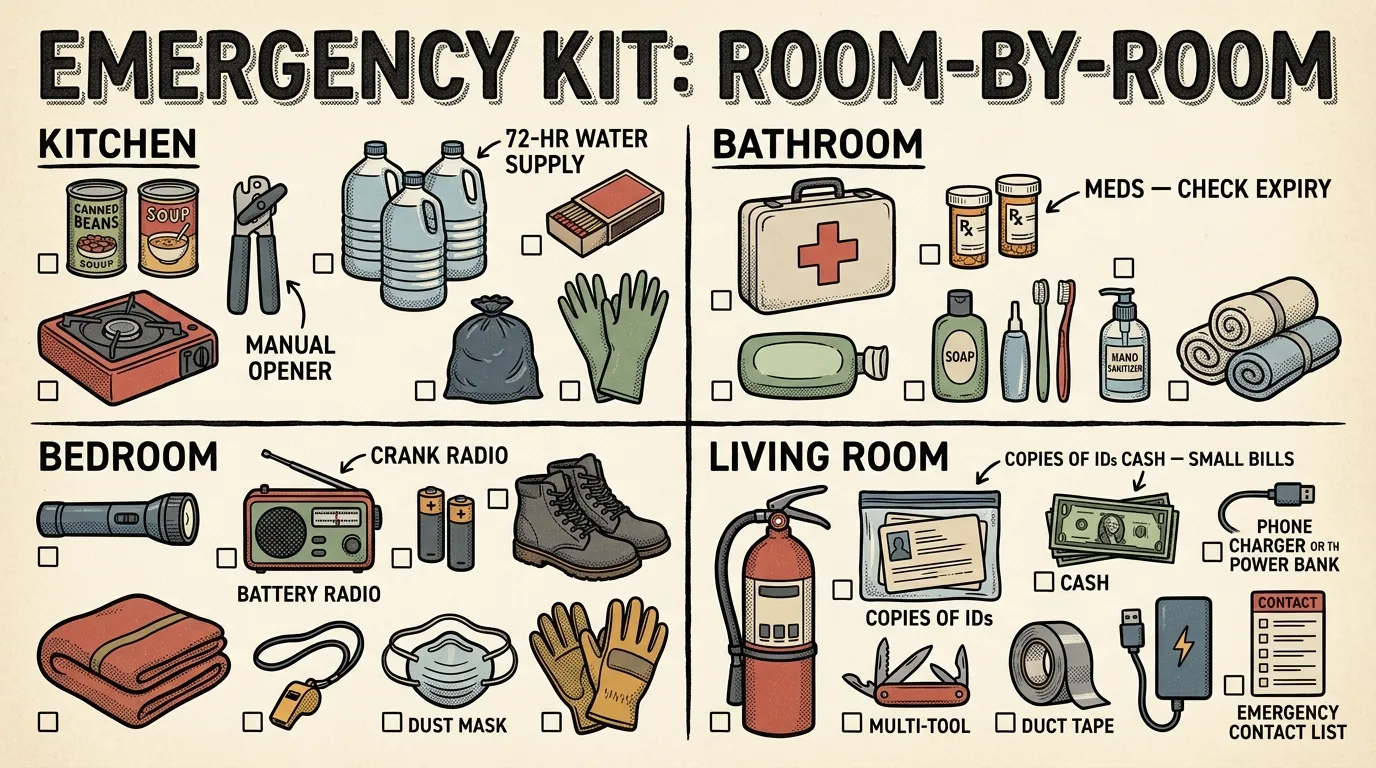
Emergency Preparedness Kit: Room-by-Room Home Guide
Build your emergency preparedness kit room by room for 14-day shelter-in-place readiness. Budget-friendly system. Start tonight.