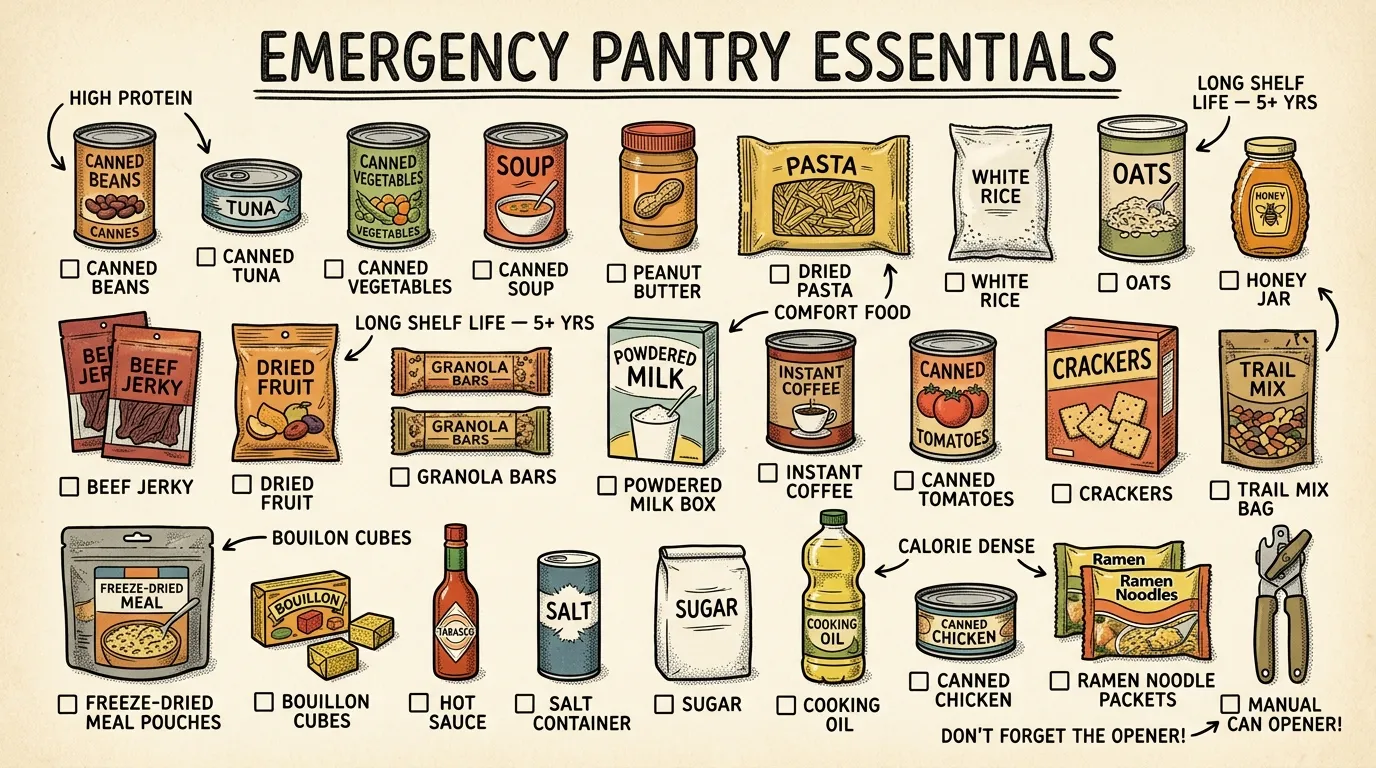
The best non-perishable foods for an emergency pantry include canned goods, rice, pasta, beans, lentils, dehydrated produce, freeze-dried meals, nut butters, and shelf-stable snacks. Beginners should prioritize foods they already eat, balance nutrition and variety, and avoid common mistakes like poor rotation, overbuying one item, and forgetting water or cooking needs.
Key Takeaways
- Build a two-week supply of non-perishable foods your household already eats — then expand from there using a first-in, first-out rotation system.
- Pre-build complete breakfast, lunch, and dinner meal kits so you're grabbing a bag and eating, not improvising under stress.
- Store everything below 75°F in airtight containers with oxygen absorbers, and audit your pantry every three months without exception.
- Plan water and cooking fuel alongside food from day one — most beginners stockpile food but forget they need water to prepare it.
- Balance your pantry across canned proteins, dry grains, legumes, freeze-dried meals, fats, and comfort snacks for sustainable nutrition over two or more weeks.
Non-Perishable Food Items: The Complete Emergency Pantry Guide
You don’t need a bunker or a five-figure budget to build an emergency food supply. You need the right non perishable food items — foods that stay safe and edible for months or years without refrigeration — and you need to store them properly.
Whether you’re stocking a kitchen pantry, a car kit, or a bug-out bag, this guide covers what to buy, how much to store, and how to turn raw ingredients into actual meals when it counts.
Quick Summary
- Start with two weeks of non-perishable foods your household already eats, then expand toward a one-month supply.
- Balance your pantry across canned proteins, dry grains, legumes, freeze-dried meals, fats, and comfort foods for complete nutrition.
- Pre-build meal kits — group breakfast, lunch, and dinner ingredients into labeled bags so you’re not improvising under stress.
- Store everything below 75°F in airtight containers with oxygen absorbers, and rotate stock every three months using first-in, first-out.
- Plan water and cooking fuel alongside food from day one — most beginners forget they need water to prepare rice, oats, and pasta.
- Inspect every can before use: discard anything bulging, leaking, badly dented, or heavily rusted, regardless of the printed date.
What Counts as Non-Perishable Food?
Non-perishable foods are items that remain safe to eat for extended periods without refrigeration when stored in proper conditions. That includes canned goods, dried grains, sealed freeze-dried meals, and other shelf-stable products that resist spoilage at room temperature.
Here’s a distinction most guides miss. Truly non-perishable foods — honey, salt, sugar, white rice sealed with oxygen absorbers — can last indefinitely. Shelf-stable foods like canned vegetables, peanut butter, and dried pasta have extended but limited shelf lives, typically one to five years or more. For practical emergency planning, both categories are what most people mean when they search for non perishable food items, and both belong in your pantry.
Ten common examples to illustrate the range:
- White rice
- Canned beans
- Honey
- Dried pasta
- Peanut butter
- Canned tuna
- Instant oats
- Powdered milk
- Beef jerky
- Freeze-dried meals
According to USDA food safety guidelines, most non-perishable foods remain safe well past printed best-by dates as long as packaging stays intact and storage conditions are met.
Why Non-Perishable Food Items Matter for Preparedness
They supply reliable meals during power outages, storms, earthquakes, or supply chain disruptions. They eliminate last-minute panic buying when shelves empty fast. You can feed a household with minimal or no cooking equipment. And familiar comfort foods keep morale up when routines shatter overnight.
If you’re brand new to all of this, the beginner’s guide to becoming a prepper walks through the full mindset shift. But food is where almost everyone should start.
The difference between a prepared household and a panicked one isn’t money or gear — it’s planning.
20 Non-Perishable Foods Worth Stocking
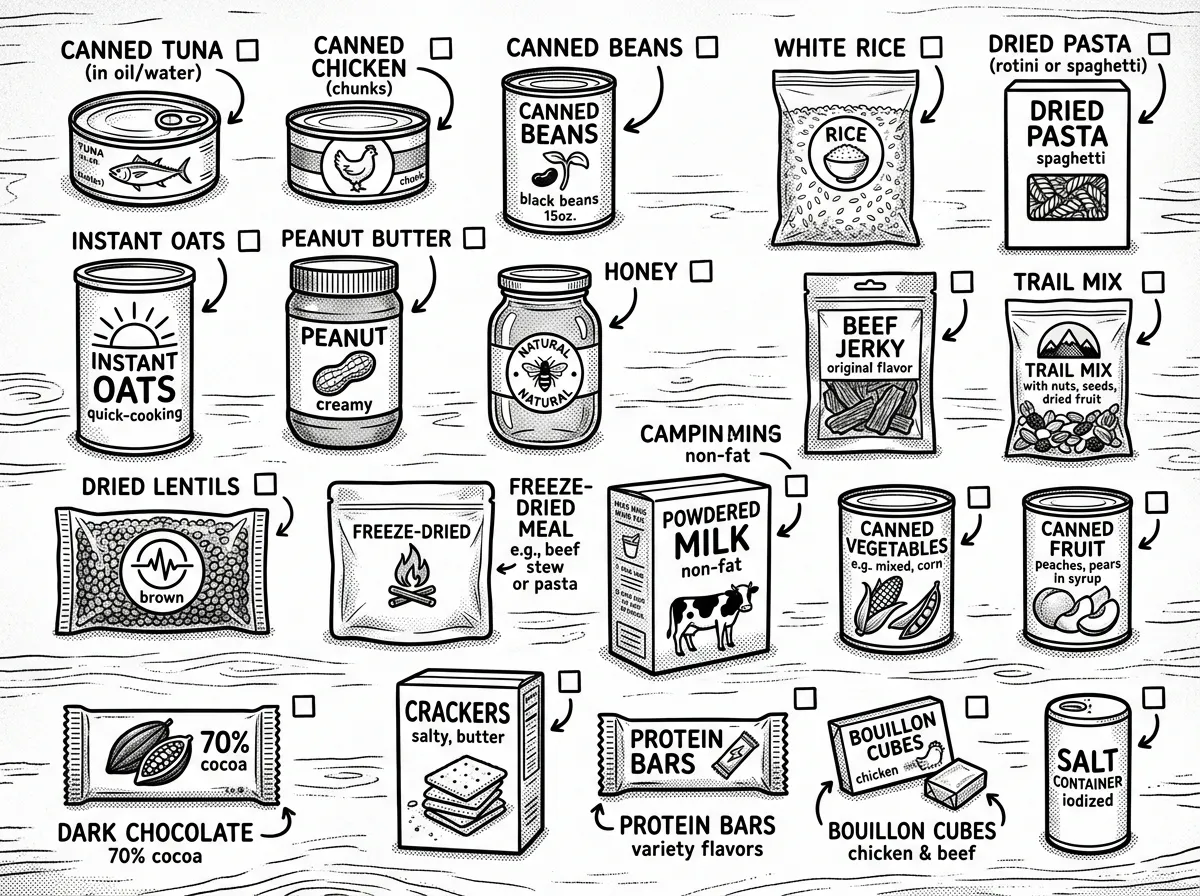 Twenty essential non-perishable foods for your emergency pantry
Here are 20 items that earn their pantry space through calorie density, nutritional value, practical shelf life, or morale value. Most are available at any grocery store.
- White rice (30+ years when sealed)
- Canned tuna (3–5 years)
- Peanut butter (1–2 years unopened)
- Dried pasta (2–3 years)
- Honey (indefinite shelf life)
- Instant ramen (8–12 months, longer sealed)
- Powdered milk (2–10 years sealed)
- Beef jerky (1–2 years)
- Canned black beans (3–5 years)
- Trail mix (6–12 months)
- Instant oats (1–2 years, 30+ sealed)
- Canned fruit in juice (2–4 years)
- Dark chocolate (2–3 years)
- Dried lentils (2–3 years, longer sealed)
- UHT boxed milk (6–12 months)
- Protein bars (1–2 years)
- Freeze-dried vegetables (25+ years sealed)
- Instant coffee (2–20 years sealed)
- Whole-grain crackers (6–12 months)
- Electrolyte powder packets (2–3 years)
When you’re ready to go deeper, this guide on how to stockpile food for beginners breaks down purchasing strategy and inventory tracking.
Best Non-Perishable Foods by Category
Canned Goods
Canned goods are the backbone of most non perishable emergency food supplies. Buy canned beans, vegetables, fruit packed in juice, soups, stews, chili, canned fish, chicken, and tomato-based sauces. Many are fully cooked and ready to eat straight from the can — that’s critical during power outages.
Low-acid canned goods (vegetables, meat) generally last longer than high-acid items (tomatoes, citrus fruit). Always inspect cans for bulging, rust, or leaks before use. For a deeper dive, this canned vs freeze-dried food comparison breaks down the trade-offs.
Dry Grains
White rice, dry pasta, rolled or instant oats, quinoa, couscous, and instant potatoes. These are calorie-dense and versatile. White rice stores far longer than brown rice because brown rice contains oils that go rancid. A 25-pound bag of white rice sealed in a Mylar bag with an oxygen absorber is widely considered one of the best calorie-per-dollar investments in emergency food storage.
Beans and Lentils
Dried beans, chickpeas, lentils, and split peas are high in protein and fiber, dirt cheap, and last years when stored dry. Keeping canned beans alongside dried ones is worthwhile — canned beans need zero cooking fuel or soaking time. Lentils cook in 15–20 minutes, making them the most fuel-efficient legume you can stock.
Freeze-Dried and Dehydrated Foods
Freeze-dried entrees, dehydrated fruits and vegetables, powdered soups, and instant mashed potatoes. Shelf lives of 25+ years are common in quality sealed pouches. They’re lightweight and compact, which matters when storage space is tight. Mix freeze-dried meals with budget staples like rice and canned protein to balance cost and convenience.
Mountain House pouches, priced around $8–$12 per entrée, are widely reviewed as delivering strong flavor and texture after rehydration. They’re not cheap, so they don’t need to form the bulk of a pantry. Using them as morale boosters mixed in with bulk rice and canned protein keeps costs reasonable while adding variety to an extended outage.
Nut Butters, Jerky, and Shelf-Stable Proteins
Peanut or almond butter, beef or turkey jerky, meat sticks, meal-replacement bars, and shelf-stable tofu. These are calorie- and protein-dense, and they’re completely ready to eat when cooking isn’t an option. Single-serve nut butter packets are worth keeping in every car kit and go-bag.
Shelf-Stable Dairy and Alternatives
Powdered milk, UHT boxed milk, powdered cheese, and shelf-stable plant milks. These add calories and protein to cooking, cereal, oats, and coffee. Powdered milk in particular is underrated — it’s lightweight, stores for years, and rounds out meals that’d otherwise feel incomplete.
Snacks and Comfort Foods
Crackers, granola bars, energy bars, trail mix, dried fruit, dark chocolate, instant coffee, tea, and electrolyte mixes. Quick energy and morale support. People consistently underestimate how much comfort food matters when stress is high — especially for kids.
Meal Planning With Non-Perishable Foods
So what do you actually do with all this stuff when the power goes out?
One of the biggest gaps in emergency food planning is that people stockpile ingredients without thinking about meals. When stress is high and the lights are off, you don’t want to stare at a pile of random cans trying to improvise. Plan complete non perishable food meals in advance.
These combinations are practical, budget-friendly options that work well for real households.
Breakfast (approximately 400–600 kcal)
- Instant oats with powdered milk and dried fruit. Add hot water if you have a portable stove, or soak oats in cold water overnight. (~450 kcal)
- Granola bars with nut butter packets and instant coffee. Zero cooking required. (~500 kcal)
- Powdered pancake mix cooked on a portable stove, topped with honey. Requires cooking fuel and water. (~550 kcal)
Lunch (approximately 500–700 kcal)
- Canned tuna on crackers with trail mix. No cooking, no water needed. (~600 kcal)
- Instant ramen with canned mixed vegetables stirred in. Requires boiling water. (~550 kcal)
- Peanut butter and honey on shelf-stable tortillas with dried fruit. No cook, high calorie. (~650 kcal)
Dinner (approximately 600–800 kcal)
- Rice with canned chicken and canned vegetables. Season with shelf-stable hot sauce or soy sauce packets. (~700 kcal)
- Pasta with jarred marinara sauce and canned beans for protein. (~750 kcal)
- Freeze-dried entrée reconstituted with boiling water, plus crackers and canned fruit for dessert. (~650 kcal)
Pre-build these meal sets now. Group the ingredients together in labeled bags or bins. When the power goes out, you grab a bag and eat — no decisions required.
Nutrition Planning for Extended Emergencies
Aim for balance across macronutrients every day:
- Protein: Canned fish and chicken, beans, lentils, nut butters, jerky, powdered milk.
- Carbohydrates: Rice, pasta, oats, crackers, instant potatoes.
- Fiber: Beans, oats, dried fruit, canned vegetables.
- Fats: Nut butters, canned fish packed in oil, cooking oil, nuts, dark chocolate.
- Micronutrients: Canned and dehydrated vegetables, fortified cereals, electrolyte mixes.
The vitamin C gap is real. Vitamin C is often the first nutritional gap that shows up in a shelf-stable diet, and low intake can contribute to fatigue and irritability. Canned tomatoes, canned citrus juice, and powdered vitamin C drink mixes help close that gap. Stock these deliberately.
Sample One-Day Emergency Meal Plan
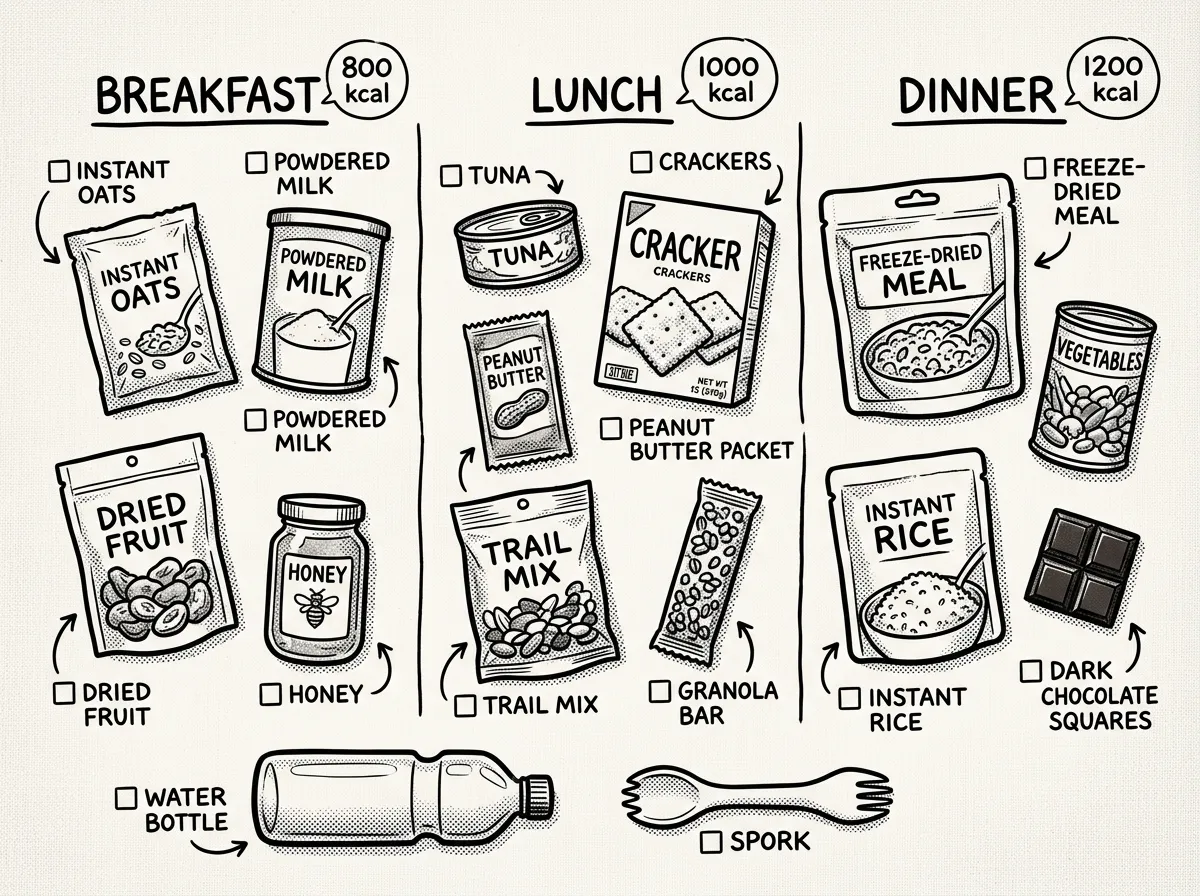 Complete one-day emergency meal plan laid out by meal
| Meal | Foods | Approx. Calories |
|---|---|---|
| Breakfast | Instant oats + powdered milk + dried cranberries | 450 |
| Snack | Trail mix (1/2 cup) | 300 |
| Lunch | Canned tuna on crackers + canned peaches | 600 |
| Snack | Protein bar | 250 |
| Dinner | Rice + canned chili + canned corn | 750 |
| Evening | Dark chocolate (1 oz) + instant coffee | 170 |
| Total | ~2,520 |
That hits a solid adult daily target. Caloric needs increase in cold weather, during physical labor, and under high stress — plan accordingly. Potassium and fiber tend to run low in shelf-stable diets, so prioritize canned beans, dried fruit, and instant potatoes to fill those gaps.
How Much Non-Perishable Food to Store
Start with a two-week supply of foods your household already eats. Once that baseline’s established, expand toward a one-month supply.
Here’s the math that makes it real. A family of four needs roughly 8,000–10,000 calories per day combined. For two weeks, that’s approximately 112,000–140,000 calories total.
Here’s what two weeks looks like in actual food for a family of four:
- 25 lbs white rice (~40,000 kcal)
- 24 cans of protein — tuna, chicken, beans (~18,000 kcal)
- 4 jars peanut butter (16 oz each, ~12,800 kcal)
- 10 lbs dried pasta (~16,000 kcal)
- 8 lbs instant oats (~12,000 kcal)
- 24 cans vegetables and fruit (~6,000 kcal)
- Assorted snacks — trail mix, bars, chocolate (~15,000 kcal)
- Powdered milk, honey, cooking oil, seasonings (~10,000+ kcal)
This is a solid starter list for a family of four. Adjust for your household’s preferences, dietary restrictions, and any infants, seniors, or pets. And don’t forget: every one of those rice and pasta servings requires water. Plan water storage alongside food storage from day one.
Smart Storage Practices
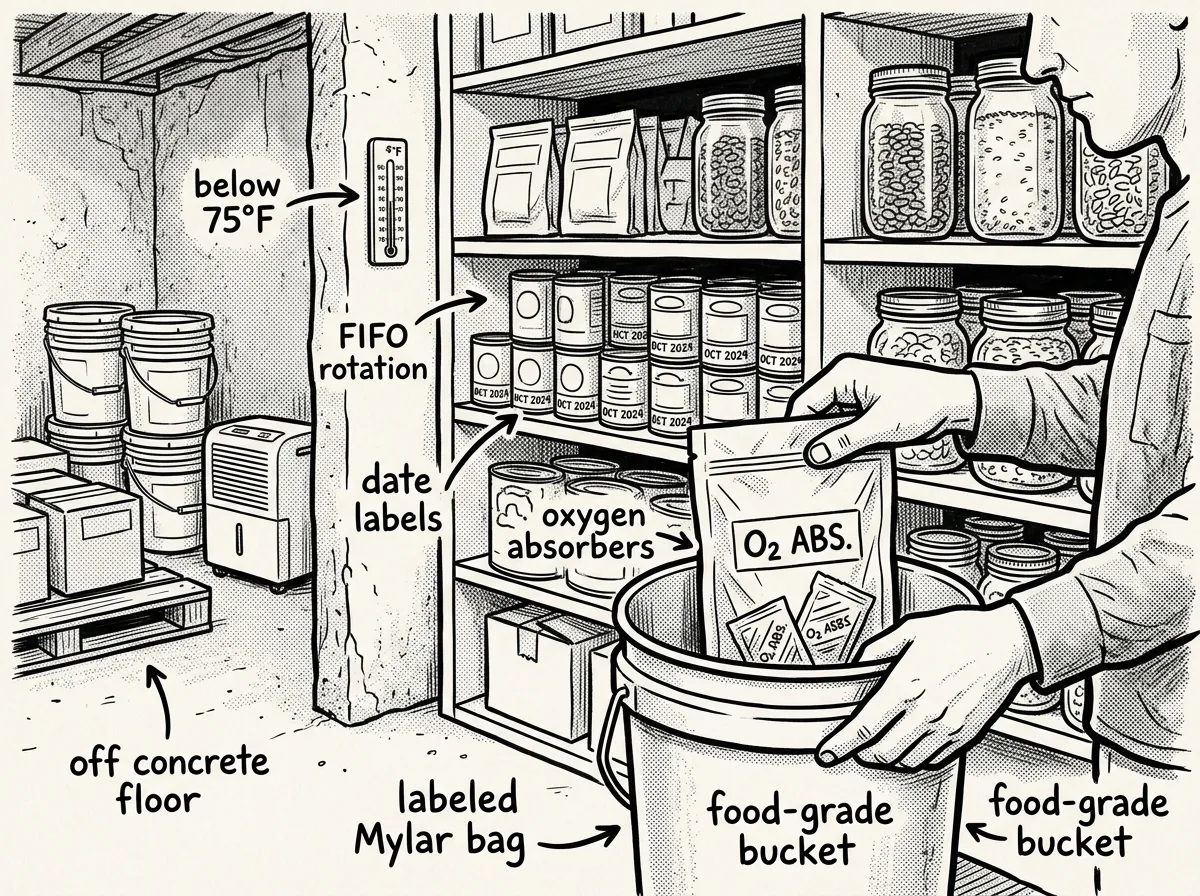 A well-organized emergency pantry using proper storage methods
How you store your food matters just as much as what you buy.
- Store all food below 75°F (24°C), away from moisture and direct sunlight.
- Use food-grade buckets, Mylar bags with oxygen absorbers, airtight bins, or mason jars.
- Keep items off concrete floors (use pallets or shelving) and away from exterior walls that may sweat.
- Label everything with purchase dates and use first-in, first-out rotation.
- Keep a manual can opener and a portable stove with fuel readily accessible.
Apartment and Small-Space Storage
Don’t have a dedicated pantry room? Get creative. Under-bed storage bins, closet shelving units, and the tops of kitchen cabinets all work. A full two-week supply can fit into a single closet using stackable bins and shelf risers.
Humidity, Heat, and Pest Control
In humid climates, moisture is a pantry killer. Silica gel packets in grain containers help control it. Unfinished garages can hit 90°F or higher in summer months, and that kind of temperature swing cuts canned food quality significantly. In humid Gulf Coast climates especially, moisture is a major threat; double-bag dry goods and check for condensation monthly.
Drop bay leaves into rice and grain containers to deter pantry moths. Store everything in hard-sided containers, not bags that rodents can chew through.
Storing bulk rice against an exterior wall during summer months can expose it to temperature spikes that degrade quality, even inside sealed Mylar bags. A cheap digital thermometer placed in each storage area, checked weekly during summer, can catch these swings before they ruin food.
A garage that regularly exceeds 85°F will degrade canned goods significantly faster than a climate-controlled closet. If your only storage space runs hot, prioritize freeze-dried and dehydrated items over canned goods.
Shelf Life and Inspection Rules
- Discard any can that’s bulging, leaking, badly dented along seams, or heavily rusted — regardless of the printed date.
- Best-by and use-by dates indicate quality, not safety. Many items remain safe past those dates, though flavor and nutrition decline.
- High-acid items (tomatoes, citrus, pineapple) degrade faster than low-acid goods (meat, vegetables, beans).
- Dry goods in airtight, opaque containers with oxygen absorbers last the longest.
Schedule pantry audits every three months. Setting a calendar reminder takes 15 minutes and prevents waste.
Is Ramen Non-Perishable? Clearing Up Specific Foods
Here are answers to some of the most common questions about specific foods.
Is instant ramen non-perishable? Yes. Sealed packages typically last 8–12 months past the printed date, and longer if stored in cool, dry conditions. The oils in the noodles can eventually go rancid, so rotate your ramen stock regularly and keep it away from heat. It’s cheap, fast, and a solid emergency carbohydrate source — just don’t rely on it exclusively because of the high sodium and low nutritional density.
Are canned goods non-perishable? Yes. Canned goods are shelf-stable and safe for years when stored properly. Low-acid canned foods (green beans, corn, canned chicken) typically outlast high-acid ones (tomatoes, canned fruit) by a year or more.
Is peanut butter non-perishable? Yes, unopened commercial peanut butter lasts 1–2 years. Natural peanut butter with no stabilizers has a shorter window and may separate faster.
Is honey non-perishable? Yes — honey is one of the few truly indefinite foods. Crystallized honey is still perfectly safe; gently warm it to re-liquify. Keep the lid sealed tight to prevent moisture absorption.
Is bread non-perishable? No. Standard bread molds within days to a week. If you want a bread-like option, stock shelf-stable tortillas, hardtack, or crackers instead.
Are eggs non-perishable? No, not without preservation methods like freeze-drying or water-glassing. Powdered eggs, however, are shelf-stable for 5–10 years when sealed.
The distinction matters: truly non-perishable means indefinite shelf life under proper storage. Shelf-stable means extended but limited. For emergency planning, both belong in your pantry — just know the difference so you rotate appropriately.
Non-Perishable Food for Travel and Go-Bags
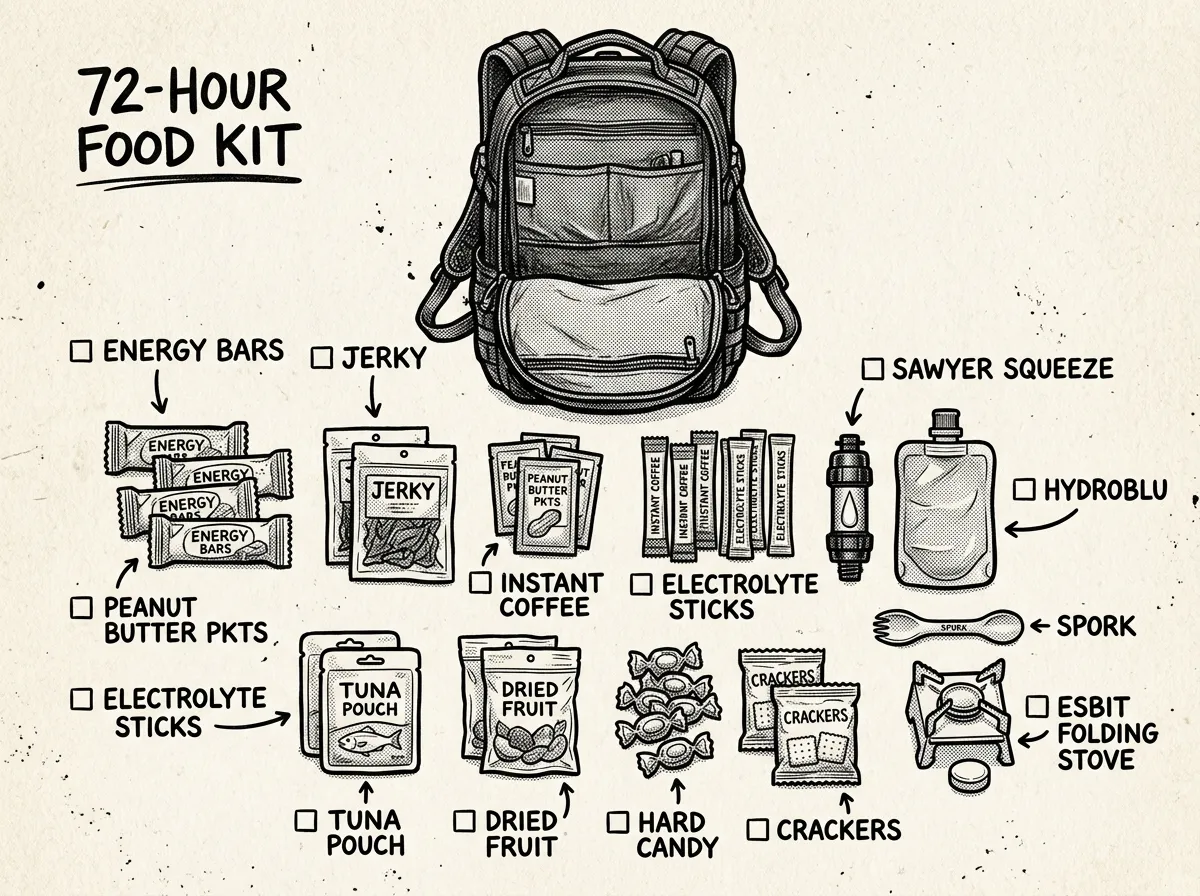 Compact non-perishable foods packed for a 72-hour go-bag
Your pantry strategy doesn’t translate directly to a go-bag or car kit. When you’re mobile, priorities shift from bulk calories to calorie-to-weight ratio and packaging durability.
Here’s what to pack in every travel kit and bug-out bag:
- Protein bars (200–300 kcal each, no prep)
- Beef or turkey jerky (high protein, lightweight)
- Single-serve nut butter packets (calorie-dense, no utensils)
- Dried fruit and nut mix (quick energy)
- Tuna or chicken pouches (lighter than cans)
- Instant oatmeal packets (just add hot water)
- Electrolyte powder packets (critical for hydration)
- Energy chews or gels (fast-acting calories during movement)
Avoid heavy cans and glass jars in go-bags. Every ounce matters when you’re on foot. Aim for at least 2,000 calories per person per day in a go-bag food kit, packed into a space no bigger than a gallon zip-lock bag.
For car kits, you can get away with slightly heavier items — canned goods, crackers, and peanut butter jars work fine since weight isn’t as critical. Just swap out car kit food every six months, because vehicle temperature swings destroy shelf life fast.
Common Beginner Mistakes and How to Fix Them
These mistakes show up again and again in emergency planning discussions. Every single one is avoidable.
- Buying foods you don’t eat. Stock familiar staples. Trial-run an emergency dinner on a random weeknight — you’ll quickly find out what your family will and won’t tolerate.
- Ignoring nutrition. Balance comfort foods with protein, fiber, and produce. A pantry full of crackers and ramen won’t sustain you for two weeks.
- Forgetting water and fuel. This is one of the most common mistakes. You need water to prepare most non-perishable foods and for drinking. Include ready-to-eat options that need zero water or cooking.
- Relying on one food type. Diversify across canned, dry, and freeze-dried. If one category fails (rodents get into grain, cans freeze and burst), you still eat.
- Failing to rotate stock. Set calendar reminders every three months. Use your emergency food in regular meals and replace what you eat. Rotation is the difference between a functioning pantry and an expensive pile of expired food.
- Overlooking special needs. Account for allergies, infant formula, medications, senior dietary requirements, and pet food. These aren’t optional.
Practical Next Steps
- Make a two-week shopping list from the categories above, focusing on foods your household already eats.
- Buy water storage alongside your food — plan one gallon per person per day for drinking and food preparation.
- Pick up a manual can opener and a portable cooking option if you plan to heat food.
- Pre-build meal kits — group breakfast, lunch, and dinner ingredients into labeled bags so meals are grab-and-go.
- Store dry goods airtight with oxygen absorbers and silica gel packets for long-term storage.
- Label everything with purchase dates and schedule pantry audits every three months — rotate emergency food into regular meals and replace what you use.
Making This Real
The best non perishable food items aren’t exotic or expensive. They’re the ones your family will actually eat, stored correctly, and rotated before they degrade. Planning beats panic every time.
Start with a two-week supply of familiar staples. Balance nutrition across proteins, grains, legumes, fats, and comfort foods. Pre-build your meals. Store everything cool, dry, and airtight. Rotate, rotate, rotate.
You don’t need to do this all at once. Add a few items to every grocery trip. Test an emergency dinner this weekend — seriously, turn off the stove and eat only from your pantry for one meal. Build the habit now, and when the next storm, outage, or disruption hits, you’ll eat well while everyone else scrambles.
Keep reading:
- Beginner’s guide to becoming a prepper
- Your first steps to stockpiling food
- Cooking without power during emergencies
- Canned vs freeze-dried food comparison
The Complete
Prepper's Reference.
149 articles synthesized into one comprehensive PDF — twelve chapters covering water, food, shelter, first aid, comms, and scenario-specific preparedness. Free with your email.
Unsubscribe anytime · We never share your email
You're in. Check your inbox.
Keep Reading
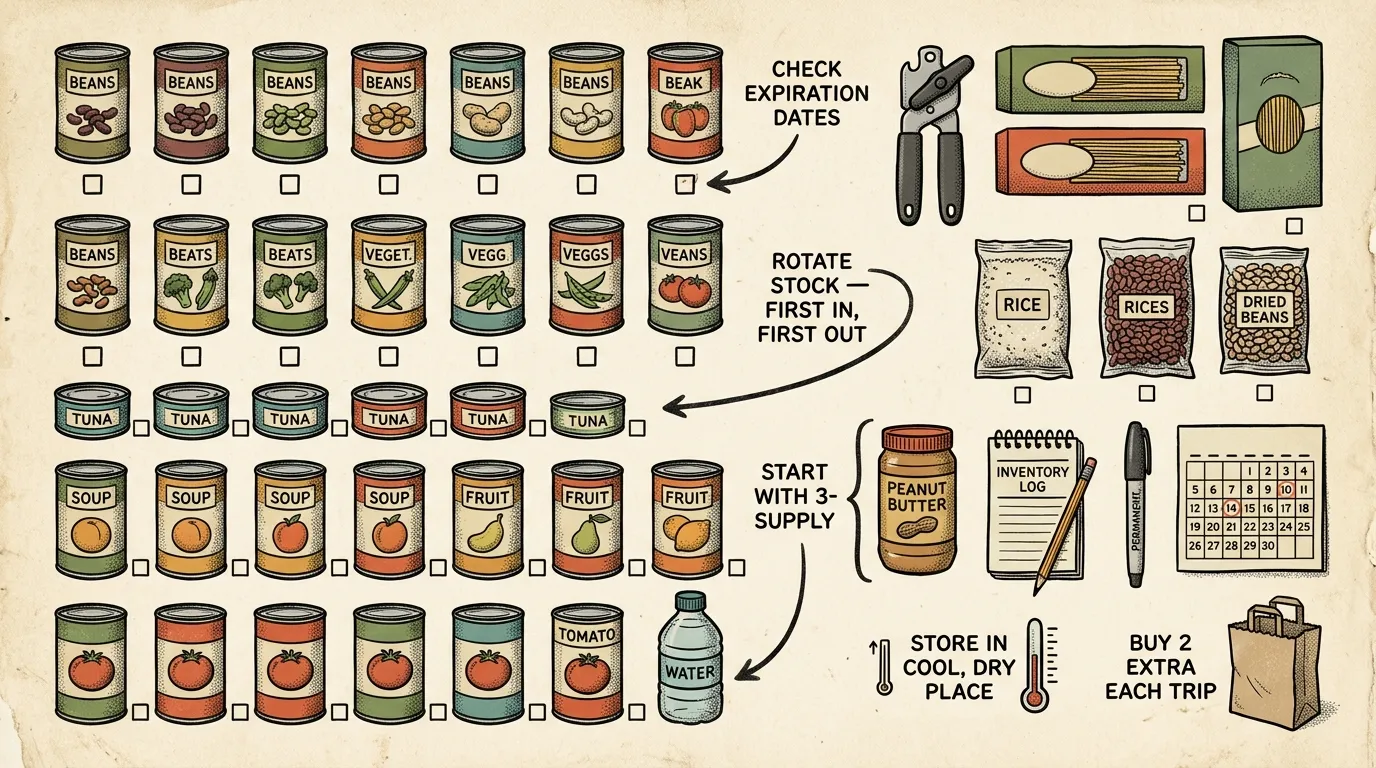
How to Start Stockpiling Food: Canned Goods & Beginner Guide
Learn how to start stockpiling food with canned goods, budget-friendly staples, and smart rotation. Step-by-step beginner guide.
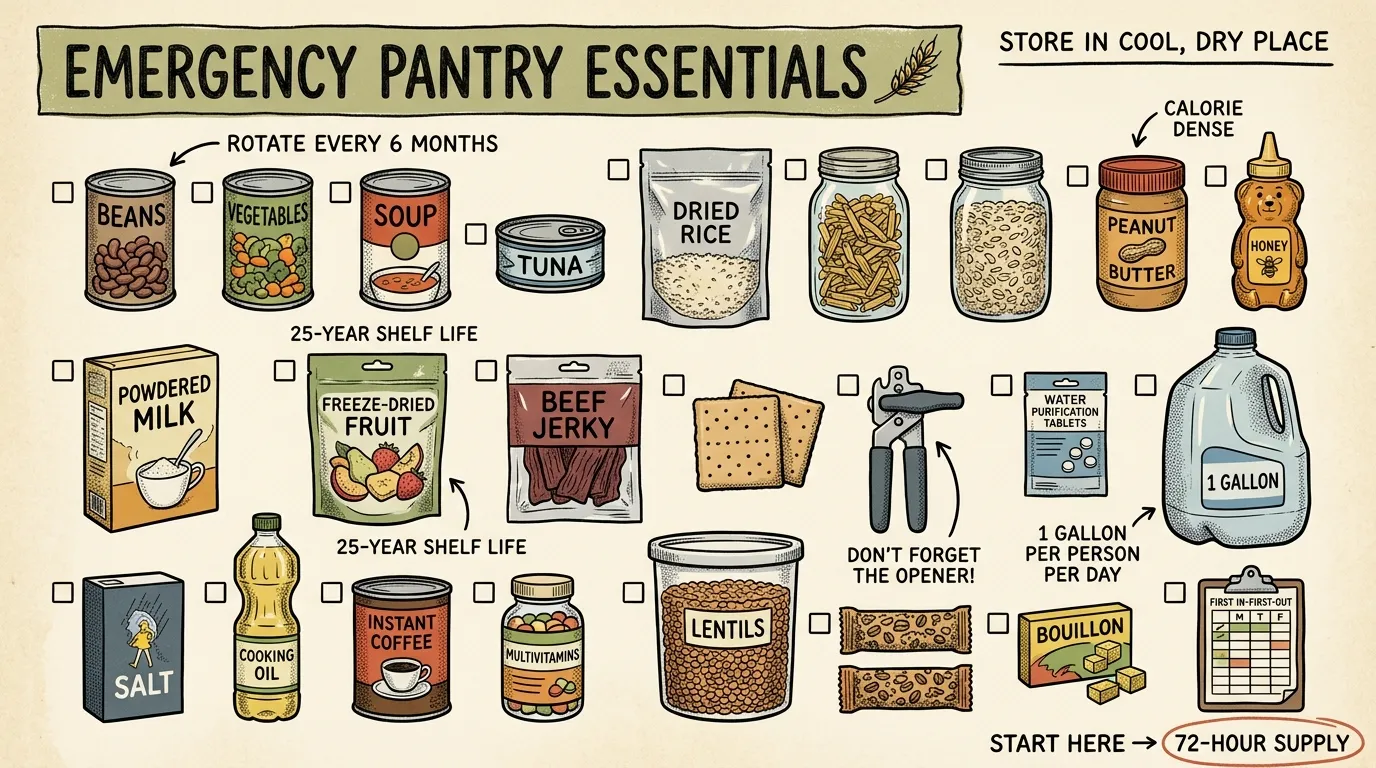
Beginner Food Prepping Essentials: Emergency Pantry Guide
Master beginner food prepping essentials — from shelf-stable staples and storage methods to simple emergency meals. Start your prep today.
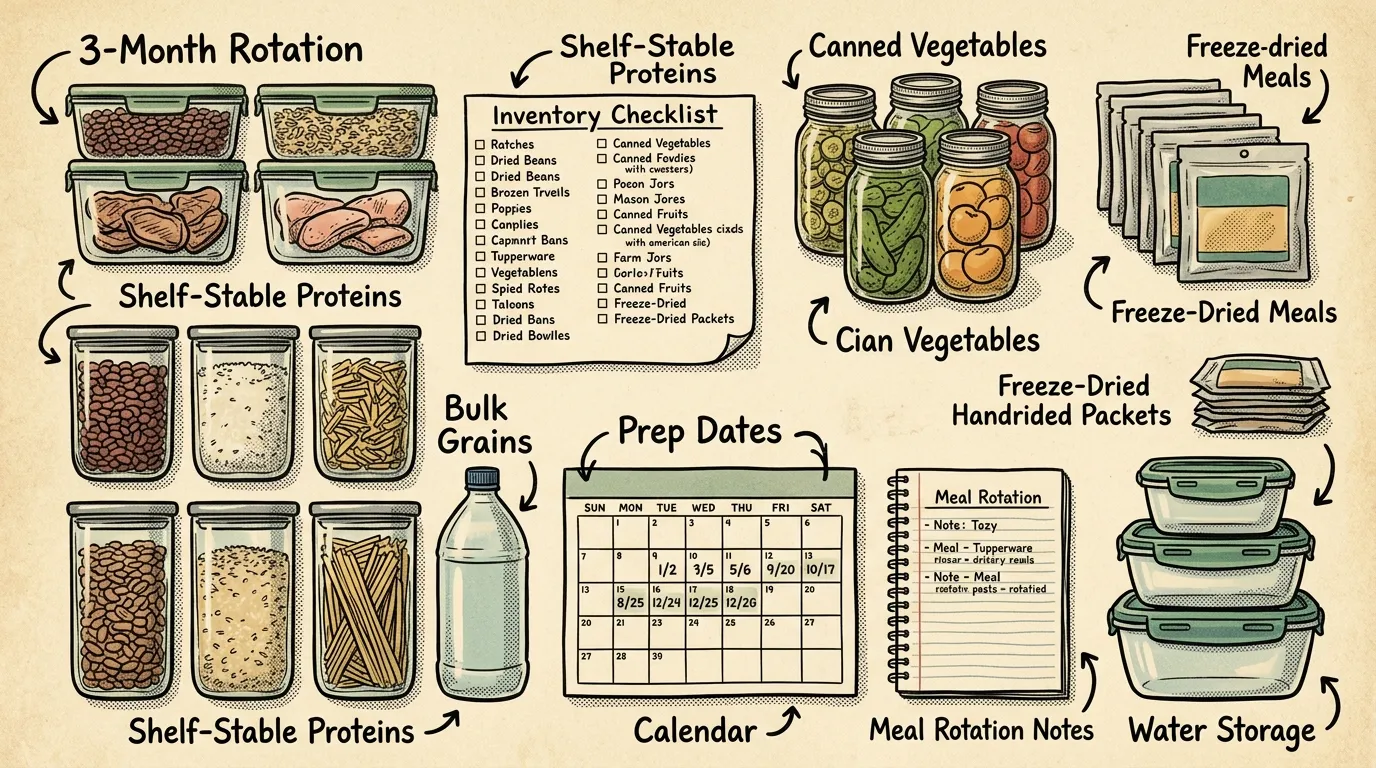
Meal Prepping Ideas That Build Long-Term Food Security
Meal prepping ideas that go past Sunday batch-cooking — build rotating stockpiles, cut costs, and prep for real emergencies. See how.