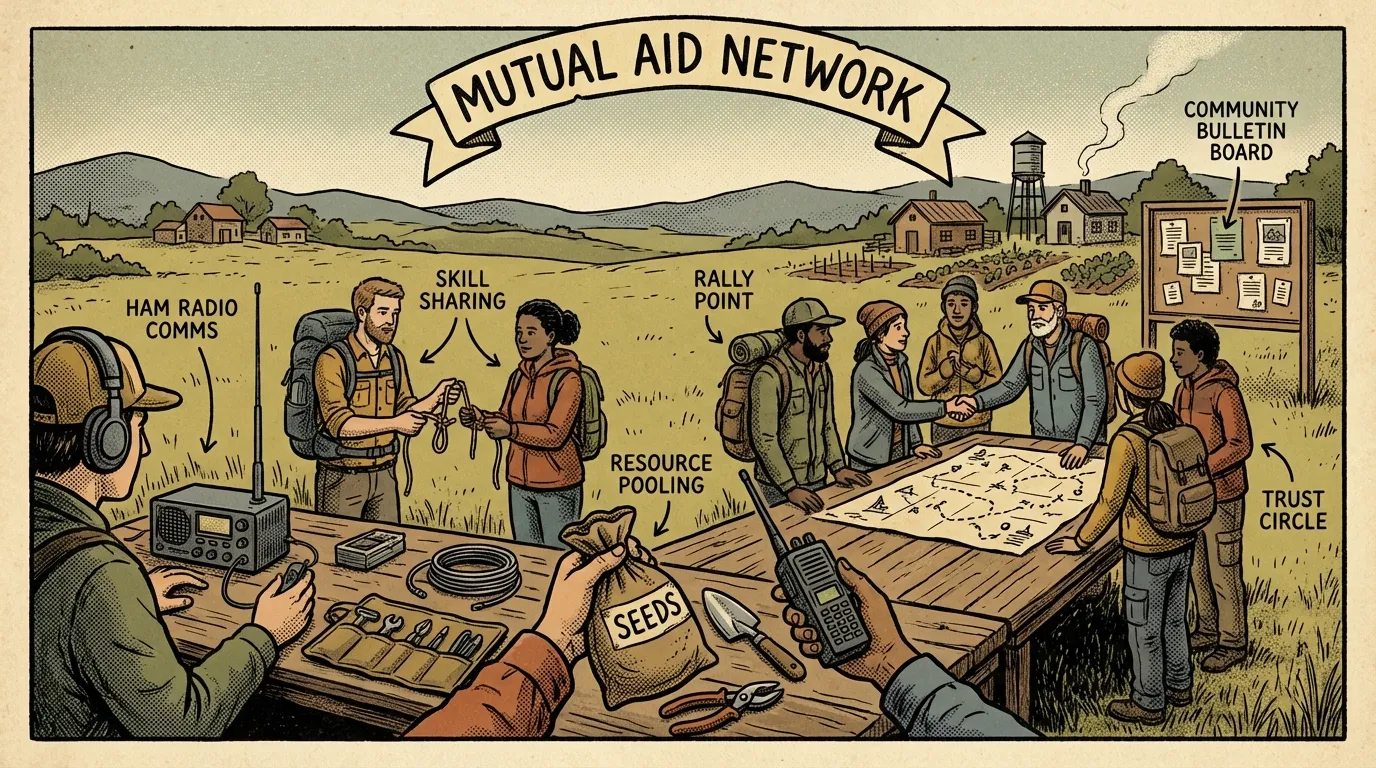
Prepper networking is the process of building trusted relationships with other preparedness-minded people so you can share skills, resources, information, and support during emergencies. New preppers can find their survival community through local classes, volunteer groups, amateur radio clubs, gardening and outdoor communities, and online preparedness platforms while building trust slowly and protecting privacy.
Key Takeaways
- Start a prepper network with 3 to 8 dependable households covering complementary skills.
- Attend one local CERT, ham radio, or Red Cross meeting this week to begin networking.
- Identify 2 to 3 trustworthy neighbors and build a shared household 72-hour emergency kit.
- Move online contacts to low-risk public in-person meetings before sharing personal details.
- Assign concrete roles covering medical, communications, food, water, and mechanical repair skills.
Prepper Networking: Build a Local Survival Community for Emergency Preparedness
Quick answer
- Prepper networking means building local relationships with preparedness-minded people to share skills, resources, and mutual aid before, during, and after emergencies.
- Start local. Join CERT, ham radio groups, volunteer organizations, gardening circles, or neighborhood teams. Move online contacts to low-risk in-person meetings and protect privacy as trust grows.
What is prepper networking?
Prepper networking means forming a dependable local group of people who share practical preparedness skills, communication plans, and mutual-aid arrangements. The aim is community resilience: coordinated action, shared gear and supplies, and faster recovery after disruptions.
Why prepper networking matters
- No one can be expert at everything. Networks combine medical skills, communications know-how, gardening and food-preservation experience, and mechanical abilities.
- Networks provide backup communications, local situational awareness, coordinated resource sharing, and emotional support.
- FEMA and national voluntary organizations document that communities with organized mutual-aid structures recover faster after disasters.
Key benefits
- Faster local information and situational updates
- Regular check-ins for vulnerable residents
- Shared tools, seeds, and equipment
- Backup communications such as ham radio and local nets
- Coordinated evacuation, shelter, or charging plans
- Ongoing skills training and mentorship
Core roles and skills in a prepper network
- Medical / first aid: wound care, CPR, triage, and instruction
- Communications (ham radio, mesh): off-grid messaging, setting up local nets, and radio discipline
- Food production and preservation: backyard gardening, canning, seed saving, and cooperative storage
- Water treatment and storage: basic filtration, purification tablets, and safe storage methods
- Mechanical and electrical repair: generator maintenance, vehicle troubleshooting, and basic home electrics
- Logistics and leadership: planning, assigning tasks, and tracking shared resources
Finding your tribe for prepper networking
Focus on practical, community-focused groups rather than labels. Places to meet people:
- Community Emergency Response Team (CERT) programs
- Amateur radio clubs and local repeaters
- Red Cross volunteer groups and first-aid classes
- Gardening clubs, seed swaps, and farmers markets
- Outdoor safety groups, neighborhood associations, and faith-based teams
- Volunteer cleanups, food banks, and mutual-aid projects
Look for skill-based communities that avoid the “prepper” label: gardeners, ham operators, EMTs, mechanics, off-grid practitioners, and mutual-aid organizers.
Ideal group size and first steps
- Practical starter network: three to eight dependable households or a small team of complementary individuals.
- First moves:
- Attend one local meeting or class.
- Ask about local hazards and common household preparations.
- Offer to help or trade a small skill.
- Arrange a low-stakes meet-up or skills practice.
Building trust and relationships
Emergencies demand predictable behavior. People need to show up and communicate clearly.
How to build trust slowly and wisely:
- Meet in public or community settings at first.
- Focus on hands-on projects and recurring events to observe consistency.
- Start with low-stakes collaborations and small commitments.
- Keep private details private until trust is earned.
- Agree on privacy rules and simple decision procedures for emergencies.
Train together
Regular shared training builds skills and trust. Examples: first-aid refreshers, radio drills, map-reading, evacuation practices, and food-preservation sessions. Train often. Practice realistic scenarios.
Using online platforms for prepper networking
Use online spaces to discover and coordinate, not as a final step.
Useful channels:
- Local Facebook groups and community forums
- Reddit communities focused on prepping, homesteading, and ham radio
- Discord servers for local skills or coordination
- Meetup and event platforms for classes
- Amateur radio forums and ARRL local nets
Online best practices:
- Vet advice and verify credentials when needed.
- Move promising contacts toward in-person, low-risk meetings.
- Use group chats for logistics, not rumor amplification.
- Avoid posting detailed inventories, floor plans, or daily routines publicly.
Backup communications
Online tools can fail during outages. Build alternatives.
- Amateur radio and local mesh networks
- NOAA weather radios
- Local nets and off-grid messaging plans
Suggested basic communications gear
- Handheld VHF/UHF radios and spare batteries
- A base station or mobile radio for longer range
- NOAA weather radio and rechargeable power banks
- Solar chargers, portable antennas, and a basic field kit
Overcoming common challenges
- Skepticism: call it emergency preparedness or community resilience and frame plans around local scenarios like storms or power outages.
- Privacy concerns: share information in layers and set clear group rules.
- Uneven commitment: assign simple, concrete roles and beginner tasks.
- Skill gaps: list existing skills, prioritize training, and bring in outside instructors when needed.
- Leadership disputes: keep roles functional and agree on routine check-ins.
Mutual-aid examples
- Coordinated generator sharing or neighborhood charging stations
- Regular wellness check-ins for elderly or vulnerable neighbors
- Tool, seed, and equipment lending
- Cooperative home-hardening and weatherproofing work parties
Affiliate note
If gear recommendations are labeled affiliate, evaluate them independently. Prefer locally available options and community-shared resources.
FAQ (short answers)
-
What is prepper networking? Building relationships with preparedness-minded people for mutual support, skill sharing, and coordinated action.
-
Why is it important for beginners? Networking speeds learning, reduces mistakes, and connects beginners with experienced people.
-
How do I find others nearby? Start with CERT, amateur radio clubs, Red Cross, gardening groups, volunteer organizations, and neighborhood associations.
-
Is it safe to network online? Yes, with caution. Protect personal information and use online contact as a pathway to vetted in-person interactions.
-
What should a prepper group focus on first? Communication plans, basic first aid, water and food basics, local hazard assessment, and regular training.
First practical steps (action checklist)
- Join one local or online preparedness-adjacent group.
- Learn a shareable skill such as CPR, basic radio operation, or safe food preservation.
- Build a household emergency plan and a 72-hour kit.
- Identify two or three trustworthy people to connect with.
- Practice communication and cooperation in low-stakes settings.
Notes and verification recommendations
Verify local program details and legal requirements with authoritative sources: FEMA, ARRL, FCC, and your local emergency management office. For critical decisions, consult local emergency managers or established organizations for citation-backed guidance.
Related resources
[INTERNAL_LINK: Becoming a Prepper: The Beginner’s Guide to Survival Readiness] [INTERNAL_LINK: How to Build a Bug Out Bag: Essentials for a Quick Getaway] [INTERNAL_LINK: Water, Water Everywhere: How to Store H2O Without Losing Your Sanity] [INTERNAL_LINK: Gadgets and Gizmos Aplenty: Tech Tools for the Modern Prepper] [INTERNAL_LINK: The Art of Starting a Fire (Without Burning Down the Camp)]
The Complete
Prepper's Reference.
149 articles synthesized into one comprehensive PDF — twelve chapters covering water, food, shelter, first aid, comms, and scenario-specific preparedness. Free with your email.
Unsubscribe anytime · We never share your email
You're in. Check your inbox.
Keep Reading
How to Conduct a Survival Skills Workshop in Your Community
Learn how to plan, promote, and run a beginner-friendly survival skills workshop that builds community, teaches practical prepper basics, and keeps people engaged.
Meal Prepping Ideas That Build Long-Term Food Security
Meal prepping ideas that go past Sunday batch-cooking — build rotating stockpiles, cut costs, and prep for real emergencies. See how.
National Emergency Preparedness Month: 30-Day Plan
Use this 30-day National Emergency Preparedness Month challenge to go from unprepared to fully ready. One simple 15-minute task per day. Start now.