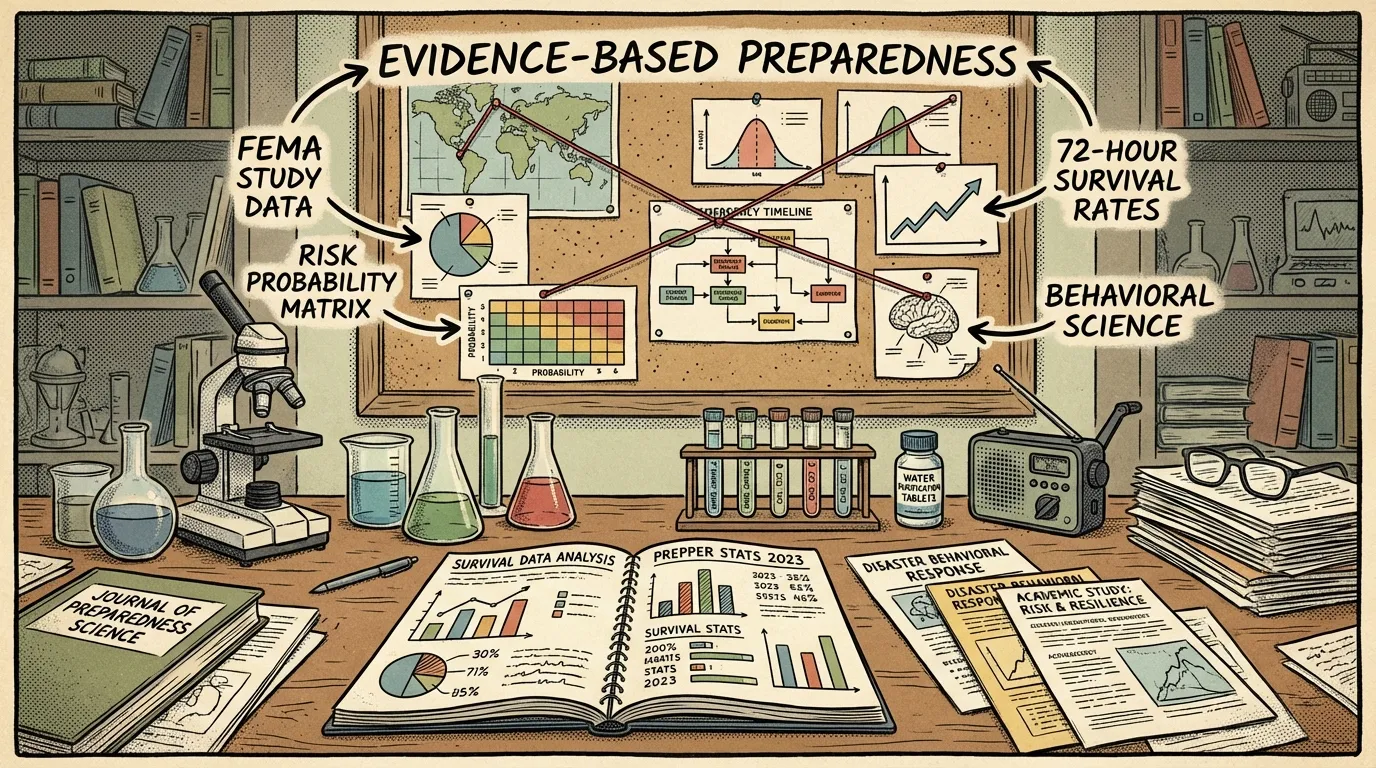
Scientific research supports practical prepping: households with emergency plans, kits, and basic training respond more effectively during disasters. New preppers should focus on realistic risks, manageable supplies, proper storage, and mental resilience rather than extreme stockpiling.
Key Takeaways
- Assemble a compact 72-hour kit with 1 gallon of water per person per day.
- Expand your supply to 1 to 2 weeks if local hazard assessments justify longer disruptions.
- Check and rotate medications every 3 months and food supplies every 6 months.
- Run household evacuation drills at least once or twice a year and after major changes.
- Build neighborhood mutual-aid networks to fill capability gaps and accelerate recovery.
The Science of Prepping: Evidence-Based Emergency Preparedness
TL;DR
The science of prepping applies evidence-based risk management to prepare households for likely disruptions. Start with a realistic local hazard assessment, assemble a compact 72-hour kit and then a 1 to 2 week supply as needed, practice simple plans, and maintain supplies. FEMA, CDC, and the American Red Cross recommend these steps because they reduce harm and speed recovery.
Quick definition
The science of prepping uses measurable practices such as hazard assessment, right-sized supplies, simple plans, regular drills, and routine maintenance to make households and communities more resilient to common disruptions like power outages, storms, floods, and short supply interruptions.
Key takeaways
- Prepping is practical risk management, not bunker fantasy.
- Start with a local hazard assessment and a 72-hour kit. Expand to 1 to 2 weeks if local risk justifies it.
- Practice simple plans, then maintain and rotate gear and supplies.
- Mental readiness and neighborhood networks are as important as equipment.
What supports the science of prepping?
- Official guidance: Ready.gov (FEMA), CDC, and the American Red Cross publish checklists and templates you can use.
- Research and after-action reports find that households with plans, kits, and training recover faster and make better decisions during emergencies.
- Operational records from NOAA and local emergency managers show common hazards and typical response gaps. Use those records to pick local priorities.
Prepping 101: Core components (evidence-based)
-
Risk assessment
- Identify the hazards most likely where you live: floods, storms, wildfires, extreme cold, or extended outages.
- Ask practical questions: How long could services be interrupted? Who in the household has special needs? Which roads and utilities are most vulnerable?
- Use local emergency management information and NOAA maps to build realistic plans.
-
Core 72-hour kit: why a sensible kit matters
- An accessible, practiced kit reduces decision fatigue and reliance on strained systems.
- Compact 72-hour checklist (one accessible bag per person or household):
- Water: 1 gallon per person per day for 3 days. Include a purification method such as tablets or a small filter.
- Food: 3 days of non-perishable, ready-to-eat items that meet dietary needs.
- First aid: a basic kit plus extra prescription meds when possible.
- Lighting and power: flashlight or headlamp, extra batteries, a charged power bank, spare cables.
- Communication: battery or hand-crank radio, spare phone charger, paper list of contacts.
- Hygiene and documents: travel-size hygiene items, plastic bags, copies of IDs and insurance in a waterproof pouch.
- Tools: multi-tool, duct tape, whistle, and a local map.
- Pick items your household already uses and can prepare without full utilities. Start simple.
-
Resource management: maintain what you have
- Supplies degrade. Set a simple schedule to check and rotate items.
| Item | Check interval | Action |
|---|---|---|
| Water (stored) | 6 to 12 months | Inspect containers; replace or rotate bottled water |
| Food (non-perishable) | 6 months | Check dates; use and replace expired items |
| Batteries and power banks | 3 to 6 months | Test and recharge or replace as needed |
| Medications | 3 months | Verify expiration and refill early when possible |
| First-aid supplies | 6 months | Replace used or expired items; refresh skills |
-
Planning and rehearsal
- Create simple household procedures: meeting spots, communication methods including non-cell options, evacuation routes, and role assignments.
- Run short drills once or twice a year and after major schedule or household changes. Practice keeps actions automatic under stress.
-
Skills and community
- High-value skills include first aid and CPR, water purification, safe alternate cooking, basic navigation, and simple home repairs.
- Build neighborhood networks. Mutual aid accelerates recovery and fills capability gaps.
Psychology and resilience (human factors)
Practical preparation reduces panic. Checklists lower cognitive load. Mild-stress drills build confidence. Keep social connections and shared plans with neighbors and family so you do not face disruptions alone.
Debunking common myths
- Myth: Prepping requires extreme stockpiling. Reality: Right-sized supplies for realistic disruption windows work better and are easier to maintain.
- Myth: Gear matters more than planning. Reality: Equipment without practiced plans provides limited benefit.
- Myth: Prepping is only for apocalypse scenarios. Reality: Most prepping addresses everyday local disruptions like outages and storms.
- Myth: Prepping is purely fear-driven. Reality: Preparedness increases control, reduces anxiety, and improves safety.
- Myth: You can improvise everything under stress. Reality: Stress degrades performance; prior training and accessible tools improve outcomes.
Practical applications: action-oriented checklist
- Assemble a compact 72-hour kit for each household member.
- Expand to a modest 1 to 2 week supply if local risks suggest longer disruptions.
- Prioritize water: store safely, label dates, and include a purification option.
- Store food you will actually eat and can prepare without full utilities.
- Optimize storage: keep supplies cool, dry, dark, elevated, labeled, and airtight where useful.
- Test equipment regularly: charge power banks, test radios, and check lighting.
- Tailor home prep to local hazards such as defensible space for wildfire or freeze-proof plumbing.
- Build skills: take first aid and CPR, learn water treatment, and practice safe-cooking backups.
- Review supplies and plans every 6 months or after household changes.
FAQ
Q: Is prepping effective according to research? A: Yes. Agency guidance and disaster-research literature support practical measures like plans, kits, and training.
Q: What is the first step for a new prepper? A: Do a realistic local risk assessment and assemble a basic household plan plus a 72-hour kit.
Q: How much should beginners stockpile? A: Start with 72 hours per person and expand to 1 to 2 weeks based on local risk and household needs.
Q: Is mental preparedness important? A: Yes. Practiced plans and drills reduce panic and improve decision-making.
Practical next steps
The science of prepping emphasizes measured, repeatable actions: assess hazards, build a right-sized kit, practice simple plans, develop key skills, and maintain supplies. Start with one practical step today: assemble a 72-hour kit, set a family meeting plan, or learn one preparedness skill. Build from there.
Include links to specific FEMA, CDC, and Red Cross pages and add 3 to 5 peer-reviewed studies or after-action reports that document the effectiveness of kits, planning, and drills.
Becoming a Prepper: The Beginner’s Guide to Survival Readiness | How to Build a Bug Out Bag: Essentials for a Quick Getaway | Water, Water Everywhere: How to Store H2O Without Losing Your Sanity
The Complete
Prepper's Reference.
149 articles synthesized into one comprehensive PDF — twelve chapters covering water, food, shelter, first aid, comms, and scenario-specific preparedness. Free with your email.
Unsubscribe anytime · We never share your email
You're in. Check your inbox.
Keep Reading
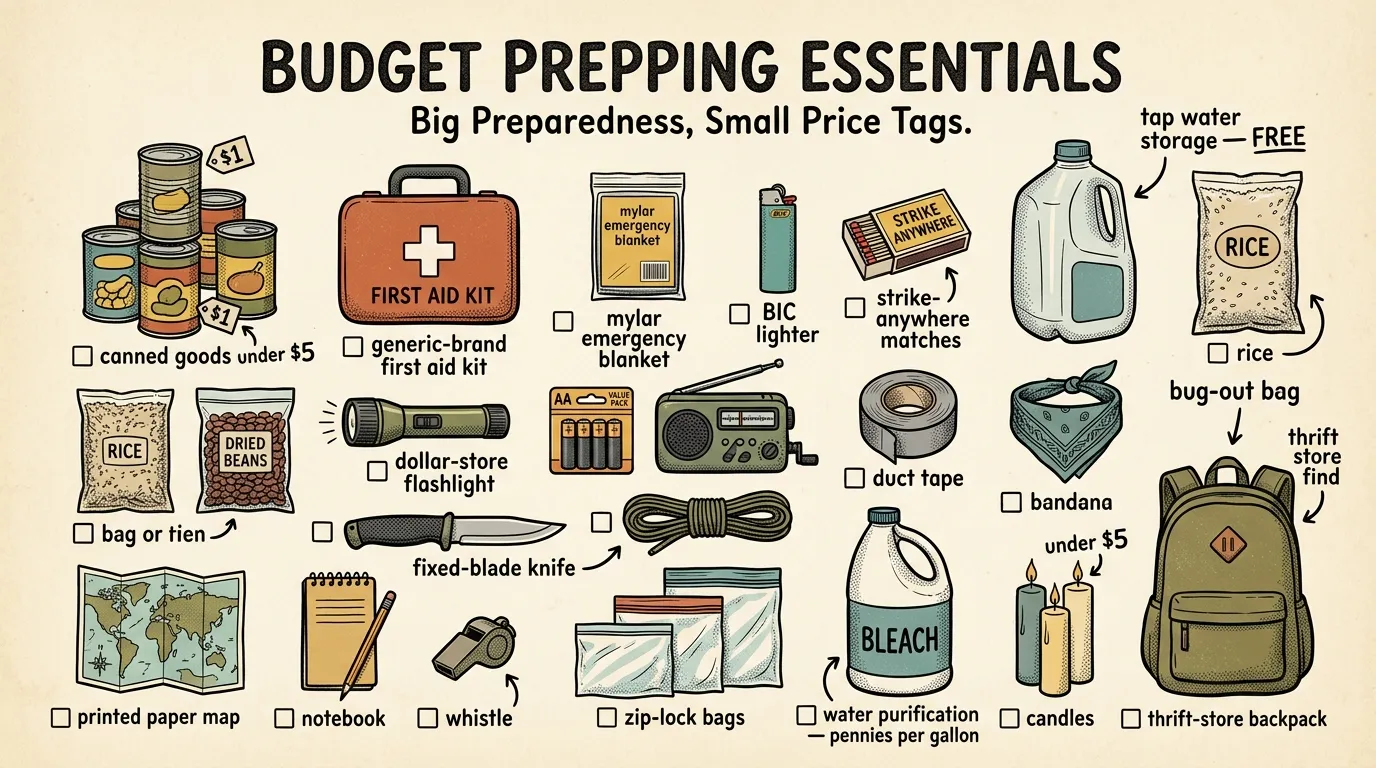
Prepping on a Budget: Affordable Gear & Strategies
Start prepping on a budget with a $75-$150 starter kit. Get affordable gear picks, DIY hacks, and a layered buying plan.
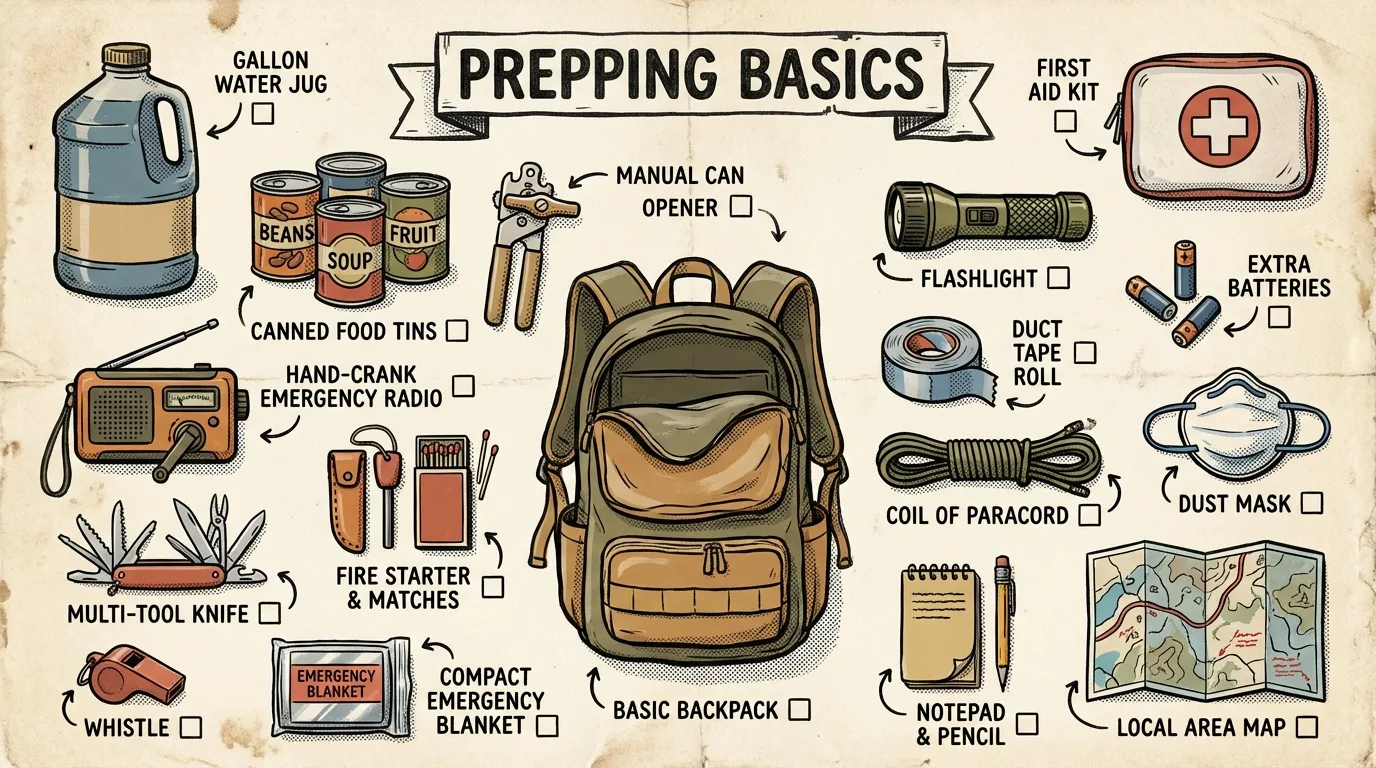
Beginner Prepping Basics: Start Survivalism the Right Way
Learn beginner prepping basics. Practical steps, budget-friendly gear, and common mistakes to avoid. Start prepping today.
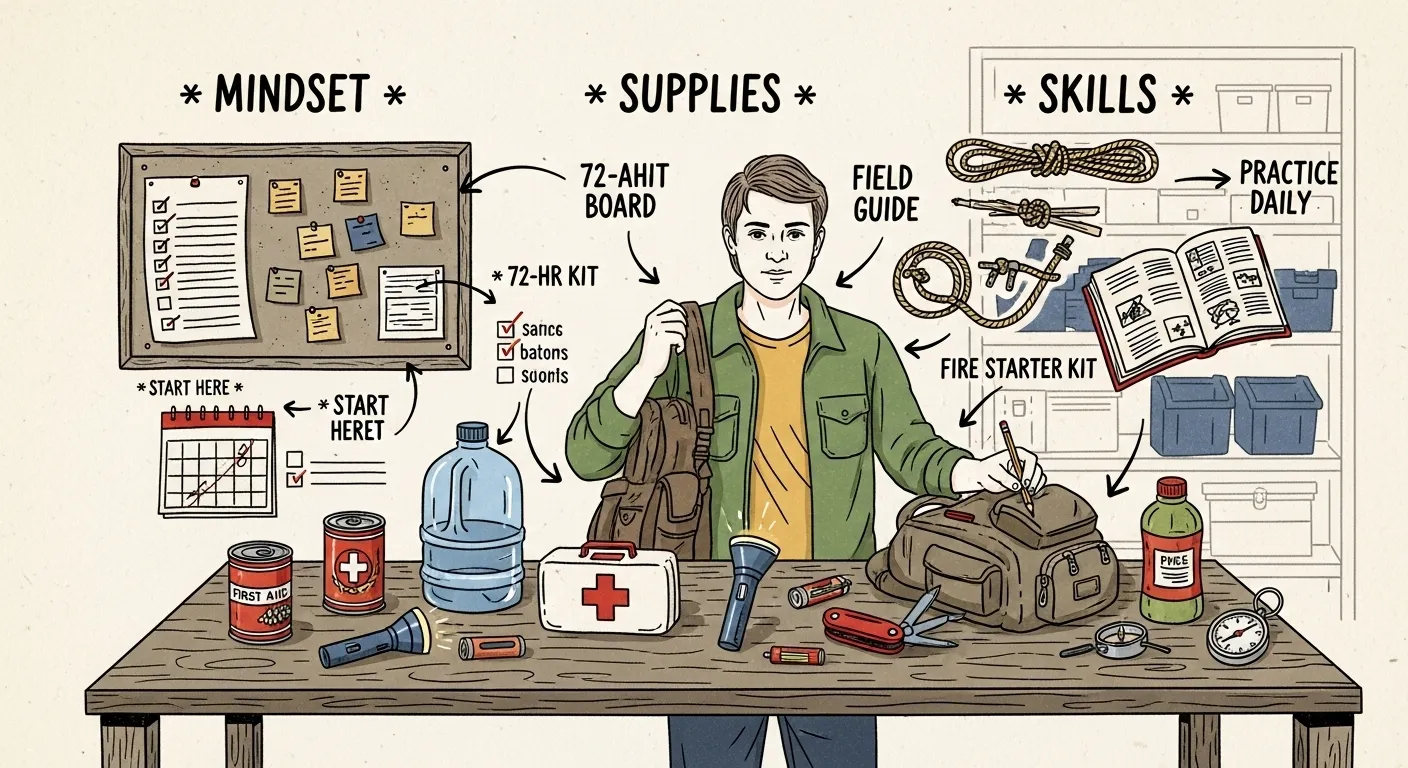
Beginner Prepper Guide: Mindset, Supplies & Skills
New to prepping? This beginner prepper guide covers the preparedness mindset, essential supplies, skills, and mistakes to avoid. Start building readiness today.