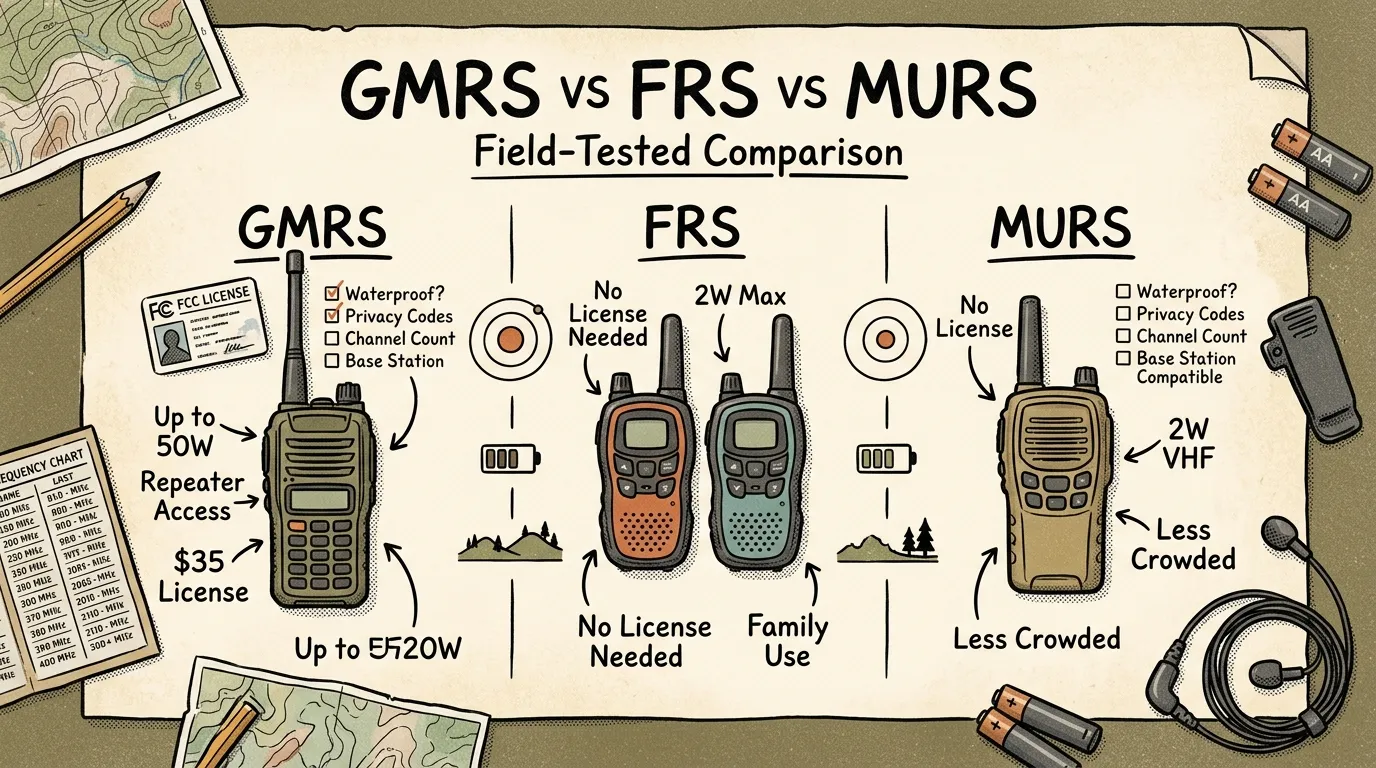
This article compares GMRS, FRS, and MURS radio services for emergency preparedness, covering licensing requirements, real-world range performance, frequency details, and specific prepper communication scenarios to help readers choose the best option for their needs.
Key Takeaways
- GMRS is the strongest all-around radio service for preppers — $35 license, up to 50W, repeater access, and interoperability with FRS
- FRS is your cheapest group communication tool — hand out $25 radio pairs to every household in your neighborhood plan
- MURS is the most overlooked option — uncrowded VHF channels and compatibility with property alert sensors make it ideal for rural preppers
- Test your radios at realistic distances in your actual terrain now, not during an emergency — marketing range claims are wildly inflated
- Stock AA lithium batteries (20-year shelf life) alongside every radio — rechargeable packs die in storage without regular maintenance
- Layer all three services for maximum flexibility: GMRS primary, FRS for group distribution, MURS for property monitoring — total cost under $350
Family radios get tested in exactly the conditions that punish bad choices — wildfire evacuations, searches across mountainous terrain, and any drill or emergency where the cell network is down. When it comes to GMRS vs FRS vs MURS for preppers, a frequency chart alone doesn’t tell the full story — what matters is how each service behaves once it’s keyed up in the field, what fails, and what holds up when it counts.
Here’s the truth: all three services work. But they don’t work the same way, in the same places, or for the same scenarios. And the wrong pick won’t just cost you money — it’ll cost you range, reliability, or legal compliance at the worst possible moment.
Quick Summary
- FRS is the simplest entry point: no license, cheap radios, but limited to 2W and non-removable antennas — realistic range of 0.5–2 miles in most terrain
- GMRS offers the most power (up to 50W), repeater access, and external antennas, but requires a $35 FCC license covering your whole family
- MURS is license-free with 2W max power on 5 VHF frequencies — it’s the least crowded service and often overlooked by preppers
- GMRS and FRS share channels 1–22, so mixed-equipment groups can still communicate
- For serious grid-down preparedness, GMRS is the strongest all-around choice — but the right answer depends on your specific scenario, terrain, and group size
- Battery management matters more than most people think — rechargeable packs die in storage, and you won’t know until you need them
The Three Services at a Glance
Before we dig into the nuances, let’s get the basics on the table. All three services are governed by FCC Part 95 — specifically Subpart B (FRS), Subpart E (GMRS), and Subpart J (MURS) under 47 CFR. Here’s what that means in plain English.
FRS (Family Radio Service) operates on UHF frequencies (462/467 MHz range) with 22 channels. Max power is 2W on channels 1–7 and 15–22, and 0.5W on channels 8–14. Antennas can’t be removed or upgraded. No license needed.
GMRS (General Mobile Radio Service) shares those same 22 UHF channels but adds 8 repeater channels (channels 15R–22R). You can run up to 50W on channels 15–22, 5W on channels 1–7, and 0.5W on channels 8–14. External antennas are allowed. A $35 FCC license is required — no exam.
MURS (Multi-Use Radio Service) sits on VHF frequencies (151–154 MHz range) with just 5 channels. Max power is 2W. External antennas are allowed. No license needed.
GMRS vs FRS vs MURS Comparison Table
This table consolidates every key decision point into one place. Bookmark it.
| Feature | FRS | GMRS | MURS |
|---|---|---|---|
| License Required | No | Yes ($35, no exam) | No |
| License Cost | Free | $35 / 10 years | Free |
| Max Power (Watts) | 2W (0.5W ch 8–14) | 50W (ch 15–22) | 2W |
| Frequency Band | UHF (462/467 MHz) | UHF (462/467 MHz) | VHF (151–154 MHz) |
| Number of Channels | 22 | 30 (22 + 8 repeater) | 5 |
| External Antenna | No | Yes | Yes |
| Repeater Access | No | Yes | No |
| Realistic Handheld Range | 0.5–2 miles | 2–5 miles (15–30+ w/ repeater) | 1–3 miles |
| Typical Entry Cost | $25/pair | $80–120/pair | $30–60 each |
That table covers the specs. Now let’s talk about what those numbers actually mean when you’re standing in a ravine trying to reach your partner two ridges over.
GMRS vs FRS vs MURS for Preppers: Range Reality Check
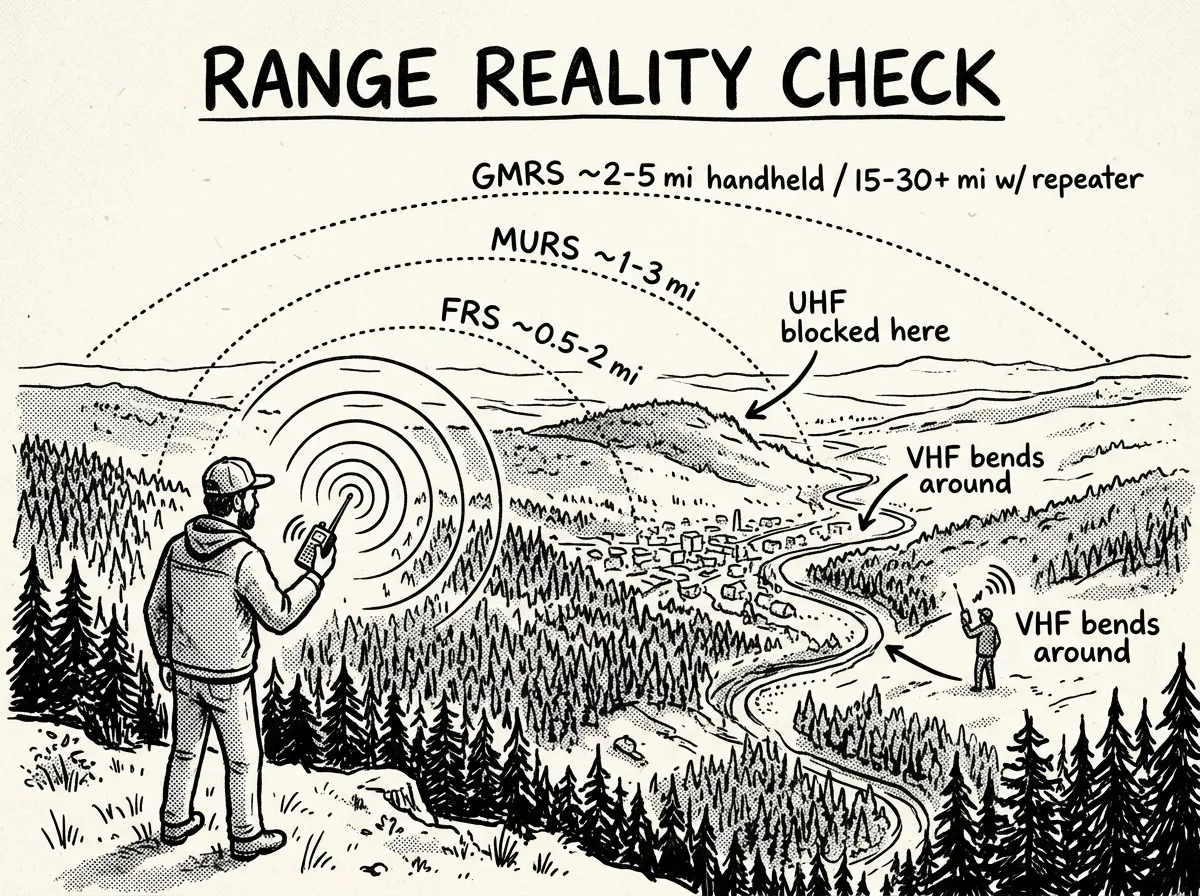 Real-world range comparison across varied terrain
Ignore the “35-mile range!” claims on radio packaging. People who buy those radios and test them in their neighborhood often get maybe a mile before the signal turns to static. Those marketing numbers assume line-of-sight across flat water with zero obstructions. That’s not where you live.
Here’s what realistic range looks like in Pacific Northwest terrain — hills, dense conifer forest, some elevation changes:
FRS handheld to handheld: 0.5–2 miles. In dense urban environments with buildings, you might get a mile. In thick forest, sometimes less than half a mile. On a ridgeline with clear line-of-sight? Maybe 3–4 miles on a good day.
GMRS handheld to handheld (5W): 1–5 miles depending on terrain. That extra power helps, but terrain is still king.
GMRS mobile/base station (25–50W) with external antenna: 5–15 miles direct, 15–30+ miles through a repeater. This is where GMRS repeater access earns its reputation.
MURS handheld: 1–3 miles typical. VHF frequencies handle foliage slightly better than UHF in some conditions, but the 2W cap keeps you humble.
So why does range vary so much? Three factors dominate: power output (watts), antenna quality and height, and terrain/obstructions. FRS locks you out of improving two of those three. GMRS and MURS both let you upgrade antennas, which is a massive advantage for any serious emergency communication radio setup.
FRS vs MURS Range: UHF vs VHF Propagation Differences
This question comes up constantly, and the answer matters more than most people realize. FRS and MURS operate on fundamentally different parts of the radio spectrum, and those frequencies behave differently in the real world.
FRS operates on UHF (462 MHz). UHF signals are shorter wavelength, which means they penetrate buildings, concrete, and urban structures better. If you’re communicating inside a neighborhood with houses, commercial buildings, or parking structures, UHF has an edge.
MURS operates on VHF (151–154 MHz). VHF signals are longer wavelength, which means they propagate farther in open and semi-wooded terrain. In rolling agricultural land, suburban neighborhoods with scattered trees, or open valleys, VHF travels noticeably farther than UHF at the same power level.
In dense conifer forest, the difference between FRS and MURS range is honestly modest. Both struggle. But once you get into rolling hills, farmland, or mixed suburban-rural terrain, VHF’s propagation advantage becomes real. MURS commonly reaches farther than FRS at comparable power levels in those environments, thanks to VHF’s propagation characteristics.
The practical takeaway: Urban preppers should lean toward FRS and GMRS for better building penetration. Rural preppers should seriously consider MURS as a complement — especially for property monitoring across open acreage where VHF shines.
Neither service will solve the fundamental physics problem of a mountain between you and your contact. For that, you need GMRS repeater range or ham radio.
Licensing: What You Actually Need to Know
Let’s clear up the licensing confusion, since it comes up constantly in prepper forums.
FRS: No license. Buy it, charge it, use it. Period.
MURS: No license. Same deal. The FCC deregulated MURS in 2000, and it’s been license-free ever since.
GMRS: You need an FCC license. But here’s what trips people up — it’s not like ham radio. There’s no exam. No Morse code. No study material. You fill out an online form through the FCC’s Universal Licensing System, pay $35, and you’re licensed for 10 years. Your immediate family members (spouse, children, parents, siblings) are covered under the same license. That’s all governed under 47 CFR Part 95 Subpart E.
Apply for your GMRS license now, not during an emergency. The FCC can take a few business days to process applications, and their systems may be unreliable during a widespread disaster. You also want time to practice with your gear before you actually need it.
One common misconception: people avoid GMRS because they think the license requirements are complicated. They’re not. It’s easier than renewing your driver’s license. Don’t let a $35 form stand between you and the most capable radio service available without a ham ticket.
Can you use GMRS without a license in an emergency? The FCC has historically been lenient about unlicensed transmissions during life-threatening emergencies — Part 97.405 explicitly allows anyone to transmit on amateur frequencies during immediate threat to life, and general emergency provisions apply broadly. But “I might use it in an emergency” isn’t a reason to skip the license. Get it now, practice now, so you’re not fumbling with unfamiliar gear when it counts.
A note for Canadian readers: GMRS regulations differ significantly north of the border. Canadian GMRS is limited to 2W and has different channel assignments. If you’re in Canada, research Industry Canada’s requirements separately — the U.S. rules covered here don’t apply to you.
GMRS Frequencies and Channels: The Power Breakdown
Understanding the channel structure matters because not all GMRS channels are created equal.
Channels 1–7: Shared with FRS. GMRS users can transmit at up to 5W; FRS is capped at 2W. These are your interoperability channels if you’ve got mixed equipment in your group — this is where GMRS vs FRS interoperability really works.
Channels 8–14: Shared with FRS. Both services are limited to 0.5W. Honestly? Skip these for anything beyond very short-range communication.
Channels 15–22: Shared with FRS at 2W, but GMRS users can push up to 50W. These are your heavy hitters for handheld-to-base or mobile-to-mobile communication.
Channels 15R–22R (Repeater channels): GMRS-only. These let you access community repeaters that dramatically extend your range. A repeater sitting on a hilltop or tower receives your signal and rebroadcasts it — turning your 5W handheld into something that can reach 20+ miles.
Finding and Programming GMRS Repeaters
Repeater access is GMRS’s single biggest advantage over FRS and MURS, but most people never actually set one up. Here’s how.
- Visit mygmrs.com and search for repeaters within 30 miles of your location
- Note the repeater’s frequency, offset, and CTCSS tone — you’ll need all three
- Program the repeater into your radio following your specific model’s instructions — most Midland GMRS radios have a repeater channel mode built in
- Key up the repeater and listen for a courtesy tone or squelch tail — that confirms you’re hitting it
- Test with a partner at increasing distances to establish your actual coverage area through that repeater
- Contact the repeater owner (listed on mygmrs.com) to confirm usage policies — most are open-access, but some require permission
Some neighborhood CERT teams coordinate their radio plans with county emergency management offices, which may assign specific GMRS channels during activation events. Having repeater access pre-programmed allows a team to check in with the county EOC from anywhere in the coverage area, not just from the immediate neighborhood.
A major ice storm knocks out power and cell service across your county. Your neighborhood emergency team of 8 households needs to coordinate supply sharing and welfare checks. Half the group has cheap FRS blister-pack radios; three families have GMRS handhelds. Everyone communicates on channel 5 (shared FRS/GMRS), while the GMRS-equipped families also monitor a local repeater on channel 19R for county-wide situational awareness. The FRS radios handle house-to-house checks within the neighborhood, and GMRS handles coordination with the broader community.
MURS Frequencies: The Overlooked Option
MURS only gives you five channels, and understanding the bandwidth differences matters for getting the best audio quality:
- 151.820 MHz — 11.25 kHz narrowband
- 151.880 MHz — 11.25 kHz narrowband
- 151.940 MHz — 11.25 kHz narrowband
- 154.570 MHz — 20 kHz wideband
- 154.600 MHz — 20 kHz wideband
That bandwidth distinction is important. Channels 4 and 5 (154.570 and 154.600 MHz) are wideband, which means noticeably better voice clarity and audio quality. For voice communication, use channels 4 and 5. Channels 1–3 are narrowband and work fine for data or low-fidelity voice, but you’ll hear the difference.
If you’re programming a Baofeng MURS-V1, verify that channels 1–3 are set to narrowband mode and channels 4–5 to wideband before you transmit. Transmitting wideband on a narrowband channel violates FCC rules and can bleed into adjacent frequencies.
Almost nobody uses MURS. While FRS and GMRS channels can be congested during events, MURS channels are typically dead quiet. For small-group operational security, that’s genuinely useful. One caveat: some businesses — including Walmart — use MURS for in-store communication, so in commercial areas near big box stores, channels may not be as empty as expected. In rural areas, though, you’ll likely have all five channels to yourself.
MURS is also ideal for property monitoring — Dakota Alert makes MURS-based driveway sensors that trigger an alert when someone crosses your property line. For rural homestead security, that’s a legitimate application most preppers don’t consider. The sensor transmits a brief alert on a MURS frequency, and any compatible handheld receives it. No subscription, no internet, no power grid required.
GMRS vs FRS vs MURS vs Ham: How They All Compare
The question that comes up almost as often as the three-way comparison is: “Should I just skip all of this and get a ham license?” Let’s lay all four services side by side so you can see the full picture — and throw in CB since it still comes up.
| Feature | FRS | GMRS | MURS | Ham (Technician) | CB |
|---|---|---|---|---|---|
| License | None | $35, no exam | None | Exam required (~$15–35) | None |
| Max Power | 2W | 50W | 2W | 1,500W | 4W (12W SSB) |
| Bands | UHF only | UHF only | VHF only | VHF/UHF + more | HF (27 MHz) |
| External Antenna | No | Yes | Yes | Yes | Yes |
| Repeaters | No | Yes | No | Yes (extensive) | No |
| Digital Modes | No | No | No | Yes (Winlink, APRS) | Limited |
| Range Potential | 0.5–2 mi | 2–30+ mi | 1–3 mi | Local to worldwide | 3–10 mi |
| Learning Curve | Minimal | Low | Low | Moderate to High | Low |
Ham radio is the most capable option by far. A Technician license (the entry level) opens up the 2-meter and 70-centimeter bands with far more flexibility than GMRS. You get access to extensive repeater networks, digital modes like Winlink for sending email over radio, APRS for position tracking, and EchoLink/IRLP for internet-linked repeaters. The exam fee varies by Volunteer Examiner Coordinator but typically runs $15–35 on top of the FCC’s $35 application fee.
The tradeoff is time. Studying for and passing the Technician exam, learning to program more complex radios, and understanding propagation takes real effort. If you’re interested, check out our ham radio study guide to get started.
The honest assessment: GMRS provides about 80% of the practical emergency communication value for about 20% of ham radio’s learning curve. It’s the best stepping stone. If you catch the radio bug, pursue your Technician license — the two services complement each other beautifully. GMRS for family and local coordination, ham for regional and long-distance communication.
CB radio still has a niche — it’s useful for highway travel and talking to truckers, and you’ll find CB in use during severe weather along major corridors. But for preppers, the 4W power limit, noisy HF band, and large antennas make it largely outdated compared to GMRS. It’s not a service worth building a preparedness plan around in 2026.
GMRS provides 80% of the practical emergency communication value for 20% of ham radio’s learning curve. Start there. Upgrade later if the radio bug bites.
Head-to-Head: Which Service Fits Your Scenario?
Enough theory. Let’s match these services to actual prepper communication scenarios.
Bug-Out Route Communication
You’re moving as a family or small group along a pre-planned route. Vehicles are separated. You need convoy communication.
Best choice: GMRS. The ability to run higher power from a vehicle-mounted mobile radio with a mag-mount antenna gives you reliable car-to-car communication over several miles. The Midland MXT275 — around $120 — is a solid 15W GMRS mobile radio built for vehicle-mount installation; per Midland’s published specifications, it’s designed to hold up on rough roads without overheating and to deliver clear audio. Pair it with a simple mag-mount antenna and you’re talking 5–10 miles vehicle to vehicle on flat terrain.
FRS will work for a tight convoy within a mile, but if you get separated at an intersection or detour, you might lose contact fast. For more on building your evacuation kit, communication gear should be near the top of the list.
Neighborhood Watch / Community Coordination
Your neighborhood has organized a communication plan. Mixed equipment. Various skill levels.
Best choice: FRS for the baseline, GMRS for team leads. Hand out cheap FRS radios (Motorola T100 packs go for around $25 for a pair) to every household. Your more committed team members carry GMRS handhelds on the same shared channels, with the option to jump to GMRS-only channels or repeaters for longer-range coordination.
Rural Property / Homestead Monitoring
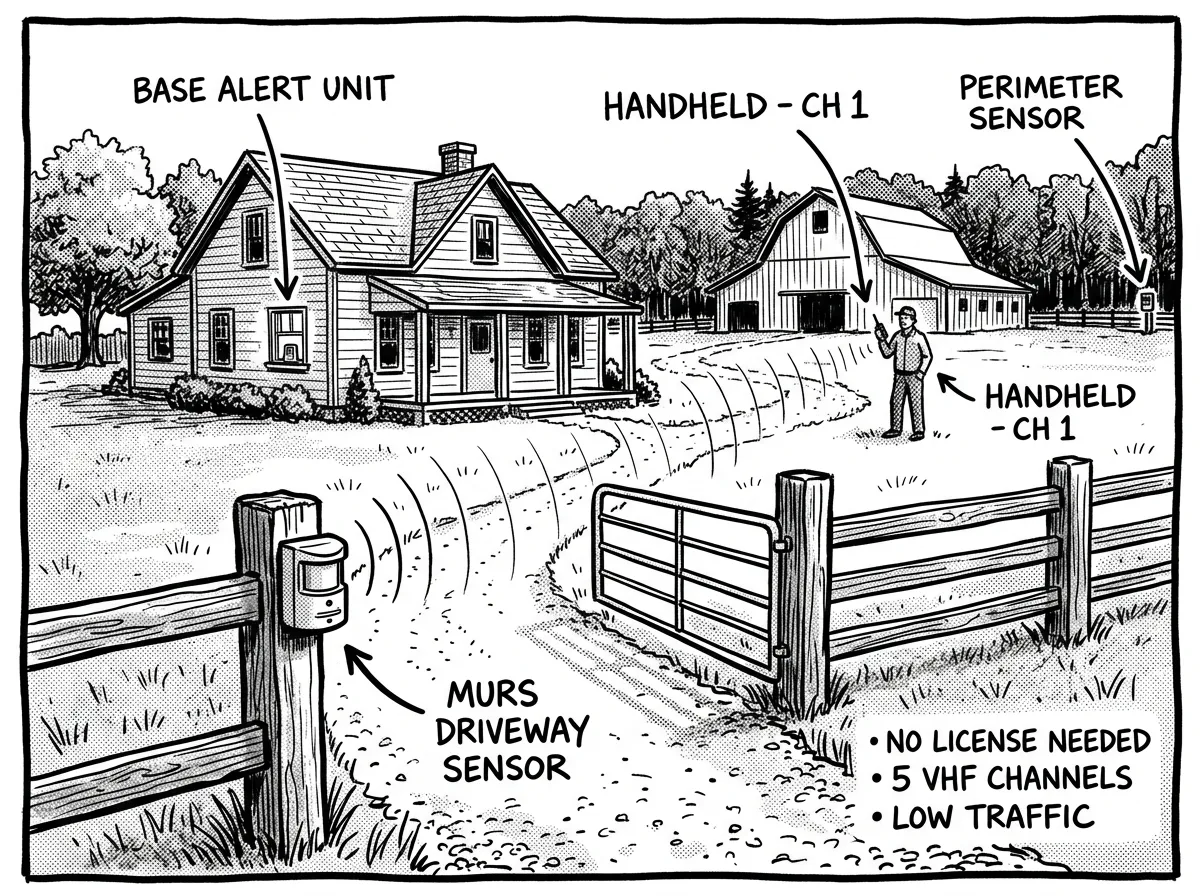 MURS-based property monitoring setup on a rural homestead
You’ve got acreage. You need perimeter awareness and communication between buildings, fields, and outbuildings.
Best choice: MURS. The license-free operation, VHF propagation advantages in open rural terrain, and compatibility with Dakota Alert sensor systems make MURS vs GMRS for rural property a closer call than most people think — and MURS often wins for the monitoring role. Nobody’s scanning MURS channels in your area, and the VHF signal handles rolling terrain well.
Extended Family Communication Across a Metro Area
You’ve got family members spread across a city, 10–20 miles apart. Cell towers are down.
Best choice: GMRS with repeater access. This is the only realistic option from these three services. Find your local GMRS repeaters at mygmrs.com, program them into your radios, and test them before you need them. A 5W handheld hitting a repeater can reach across an entire metro region.
FRS and MURS simply can’t bridge those distances.
Battery and Storage: The Silent Killer
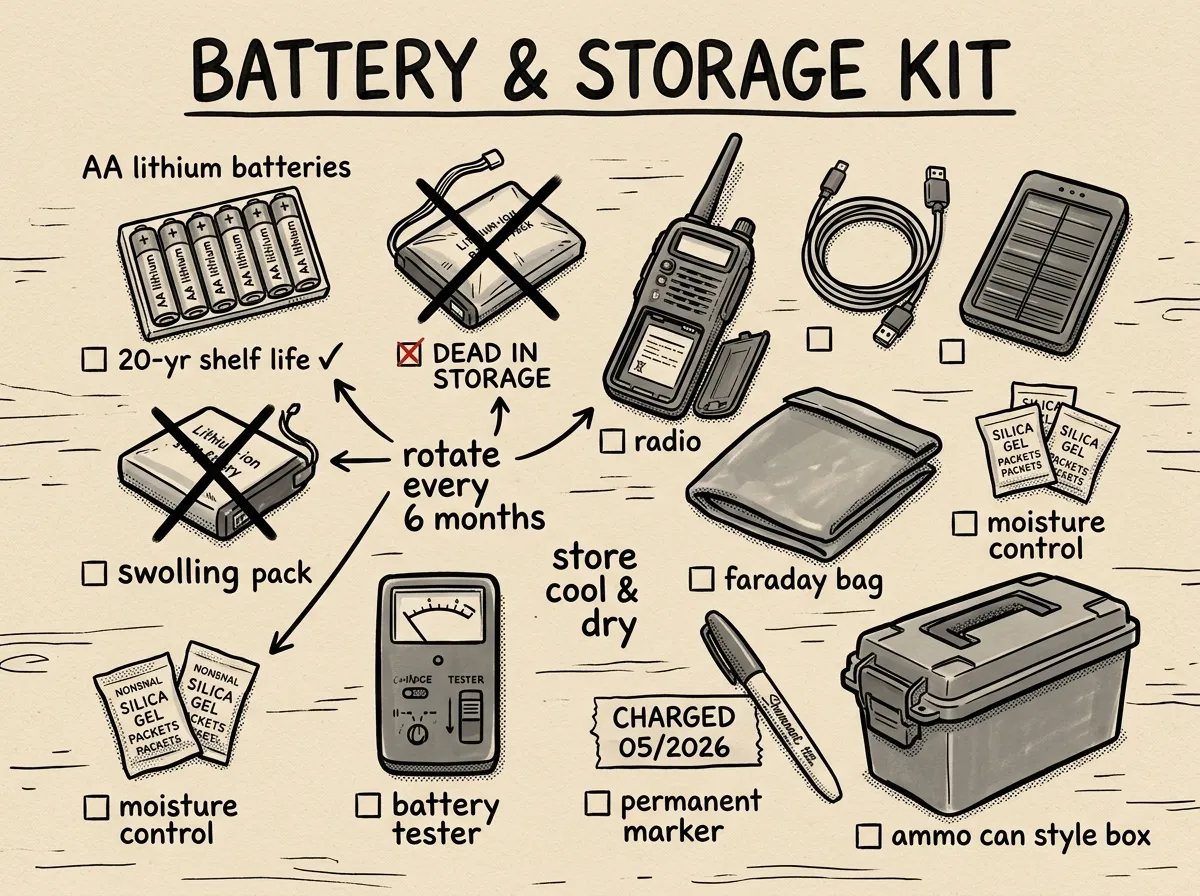 Radio battery and storage essentials laid out for inspection
This is where more prepper communication plans fail than anywhere else.
Typical GMRS or FRS radios come with rechargeable NiMH battery packs. You charge them, put them in a closet, and assume they’ll work in three years. They won’t. NiMH batteries self-discharge over months and degrade over years of neglect. You’ll grab that radio during an emergency and get a blinking low-battery light.
- Charge all radios fully every 3 months — set a calendar reminder
- Test each radio with a partner at realistic range at least twice a year
- Stock AA lithium batteries (Energizer Ultimate Lithium, ~$15/8-pack) as backup — they have a 20-year shelf life
- For GMRS base stations, consider a small solar panel and 12V battery bank for indefinite operation
- Label each radio with the date of last charge and test — accountability prevents surprises
NiMH battery packs left in storage for extended periods commonly fail to hold a charge — a radio pulled out after several months may be dead, or die within minutes of being switched on. AA lithium batteries (rated for a 20-year shelf life) make a more reliable backup: they’re lighter, they last longer, and they don’t degrade from sitting on a shelf the way NiMH packs do.
Radio Recommendations: What to Buy
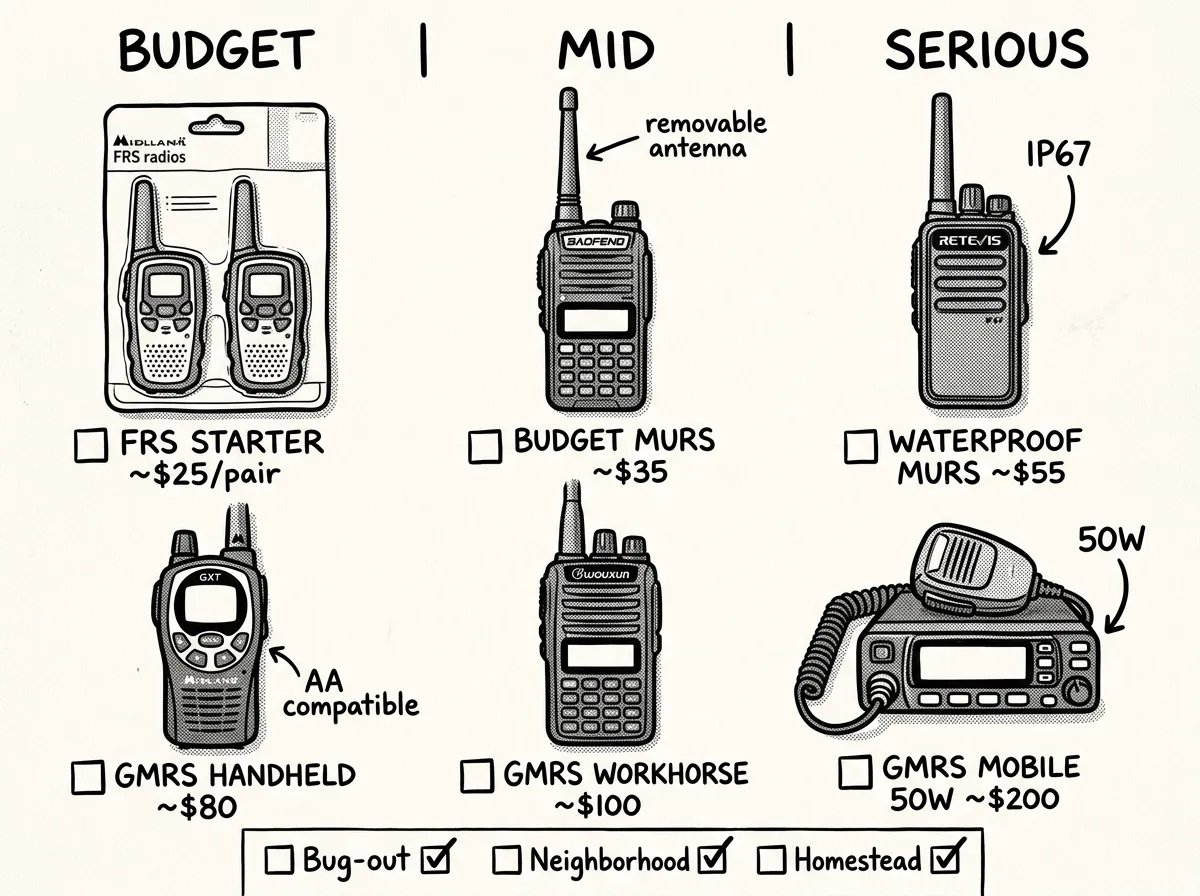 Radio picks for every budget and scenario
So what do you put in the cart? Here’s a breakdown by service, including what it costs to outfit an actual group.
- FRS: Motorola Talkabout T100 ($25/pair) — cheap, reliable, AA batteries, give one to every household
- GMRS Handheld: Midland GXT1000VP4 ($80/pair) — good range, NOAA weather alerts, comes with rechargeable packs AND AA battery trays
- GMRS Handheld (Mid-Range): Radioddity GM-30 ($50) — solid 5W GMRS handheld with USB-C charging, strong budget alternative to Midland
- GMRS Mobile: Midland MXT275 ($120) — 15W, solid build, vehicle-mount capable
- MURS: Baofeng MURS-V1 ($30–40) — affordable entry point for MURS; verify narrowband/wideband settings per channel before use
- MURS Sensors: Dakota Alert MURS Alert Kit ($100–200) — driveway/perimeter monitoring that integrates with handheld MURS radios
A note on FRS/GMRS combo radios: Many modern radios like the Midland GXT series are technically FRS/GMRS combo radios. They transmit at FRS power levels on shared channels without a license, and unlock full GMRS power once you have your license. This means you can buy the radios now for your group, use them on FRS power immediately, and then file for your GMRS license to unlock their full capability. Smart way to phase in your investment.
Group outfitting cost example: Equipping a 6-household neighborhood with 2 GMRS handheld pairs for team leads, 3 FRS pairs for distribution, and 1 MURS sensor kit for the group’s meeting point runs approximately $350–400 plus the $35 GMRS license. That’s comprehensive emergency communication for less than a single smartphone.
Baofeng radios have a reputation for inconsistent quality control. For MURS specifically, the MURS-V1 comes pre-programmed on the five legal frequencies, which eliminates one common headache with Baofeng products. For GMRS, Midland and Radioddity radios tend to offer better customer support and work reliably out of the box. When communication is life-safety, “good enough” gear isn’t good enough. For a GMRS radio suited to a bug-out bag, the Radioddity GM-30 is compact, affordable, and takes standard AA batteries with an adapter.
Common Mistakes That Kill Your Radio Plan
Here are the errors that show up over and over among community preparedness groups.
Mistake 1: Buying radios but never testing them. Range claims mean nothing until you’ve walked your actual routes and tested from your actual locations. Do it. This weekend.
Mistake 2: Everyone in the group using different channels. Write your channel plan down. Print it. Laminate it. Put a copy in every go-bag. Channel 1 is where the whole world defaults to — pick something less obvious and make sure everyone knows it.
Mistake 3: Assuming more power always means better communication. A 50W GMRS base station with a terrible antenna at ground level will get outperformed by a 5W handheld on a ridge. Antenna height and location beat raw power almost every time.
Mistake 4: Ignoring CTCSS/DCS privacy codes. These don’t encrypt your signal — anyone can hear you — but they do filter out other people’s traffic so you only hear your group. Program matching privacy codes across all your radios.
Mistake 5: Not having a backup power plan. Battery management matters, but this extends to your base station setup. A GMRS mobile running off a 12V battery bank charged by a 50W solar panel gives you indefinite communication capability. That’s a game-changer in a prolonged grid-down scenario.
Frequently Asked Questions
What is the difference between GMRS, FRS, and MURS radios?
All three are FCC-authorized two-way radio services for personal use, but they differ in power, licensing, and frequency band. FRS is license-free UHF with 2W max and fixed antennas. GMRS is also UHF but allows up to 50W, external antennas, and repeater access — it requires a $35 license. MURS is license-free VHF with 2W max and external antennas allowed, but only 5 channels and no repeater access. See the comparison table above for a full side-by-side breakdown.
Is GMRS or MURS better for preppers?
For most preppers, GMRS is the better primary radio service — it offers more power, repeater access for extended range, and interoperability with FRS radios your neighbors might already own. However, MURS is better for specific use cases like rural property monitoring, quiet-channel operations, and situations where you want license-free VHF coverage. The ideal setup layers both: GMRS as primary communication, MURS for property sensors and backup.
Can you use GMRS without a license in an emergency?
The FCC’s general emergency provisions and Part 97.405 allow unlicensed transmissions when there’s an immediate threat to life or property and no other communication means is available. However, this is not a substitute for getting your license now. You should never plan to use equipment you haven’t practiced with — and the $35 license lets you train and test legally before any emergency occurs.
What is the range of MURS vs FRS?
In real-world terrain, both are limited: FRS typically reaches 0.5–2 miles, MURS reaches 1–3 miles. MURS has a slight edge in open terrain and wooded areas because VHF signals propagate farther at those frequencies. FRS performs better inside buildings and dense urban environments because UHF penetrates structures more effectively. Neither will reliably exceed 3–4 miles handheld-to-handheld without elevation advantage.
Do GMRS and FRS radios work together?
Yes. GMRS and FRS share channels 1–22, so any FRS radio can talk to any GMRS radio on the same channel with matching privacy codes. This makes them ideal for groups with mixed equipment — hand out cheap FRS radios to everyone, and equip team leads with GMRS handhelds for the additional power and repeater capability.
What is the best radio for preppers?
There’s no single best radio — it depends on your scenario. For most preppers, a GMRS handheld like the Midland GXT1000VP4 or Radioddity GM-30 paired with a $35 license offers the best balance of range, capability, and ease of use. Supplement with inexpensive FRS radios for group distribution and a MURS setup for property monitoring. The best system is a layered one that covers multiple scenarios for under $400 total.
The Complete
Prepper's Reference.
149 articles synthesized into one comprehensive PDF — twelve chapters covering water, food, shelter, first aid, comms, and scenario-specific preparedness. Free with your email.
Unsubscribe anytime · We never share your email
You're in. Check your inbox.
Keep Reading
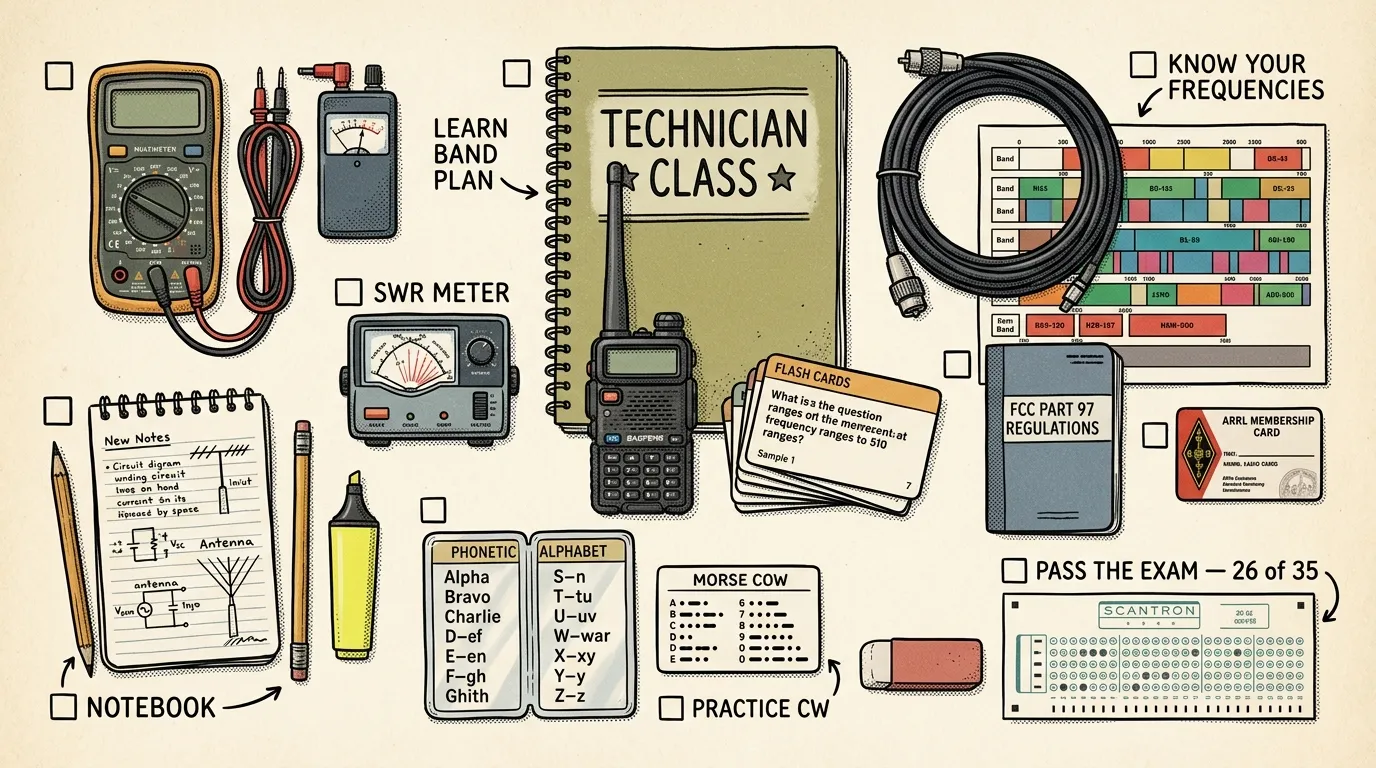
Ham Radio Technician License Study Guide for Preppers
A ham radio technician license study guide for preppers. Exam strategy, best resources, 4-week plan, and key concepts. Start studying today.
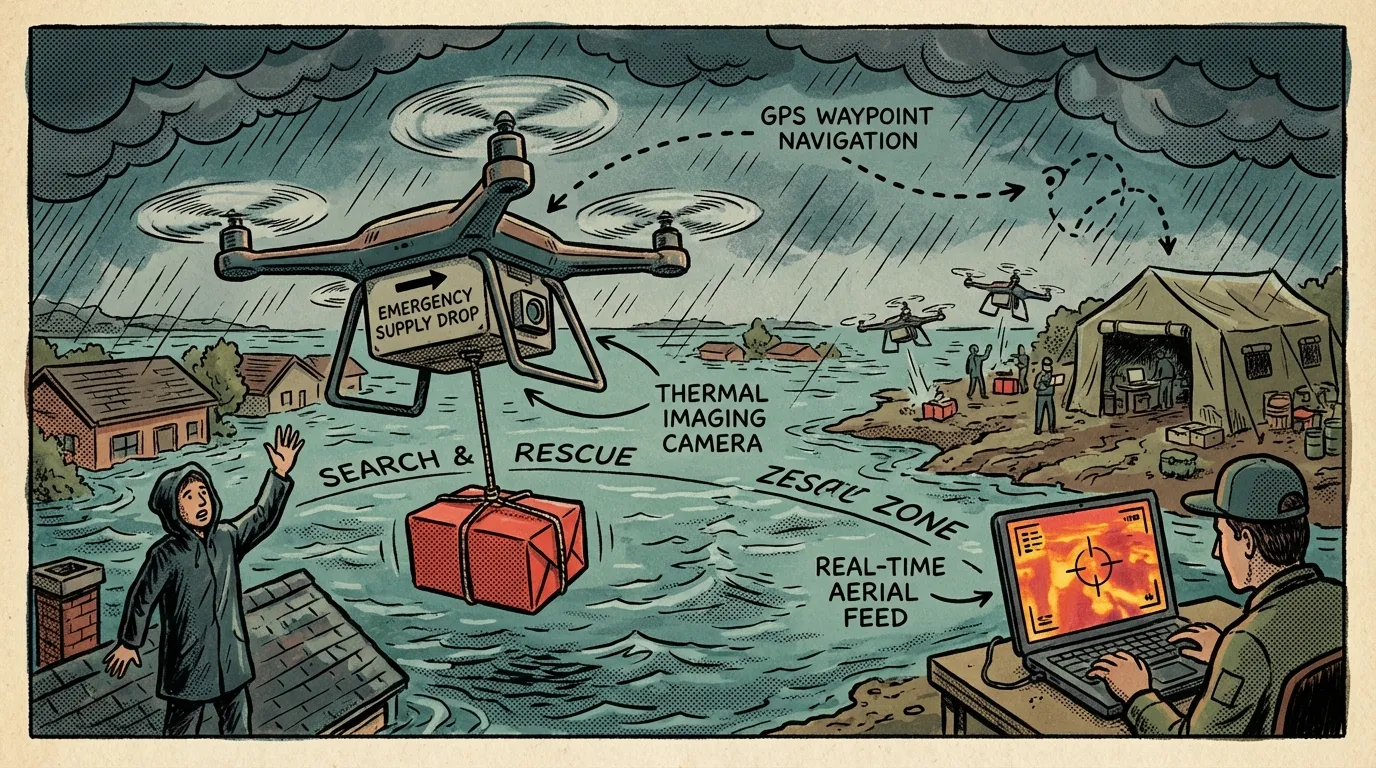
The Role of Drones in Emergency Preparedness
Learn how drones improve emergency preparedness with faster scouting, search and rescue support, damage assessment, and smarter prepper planning.
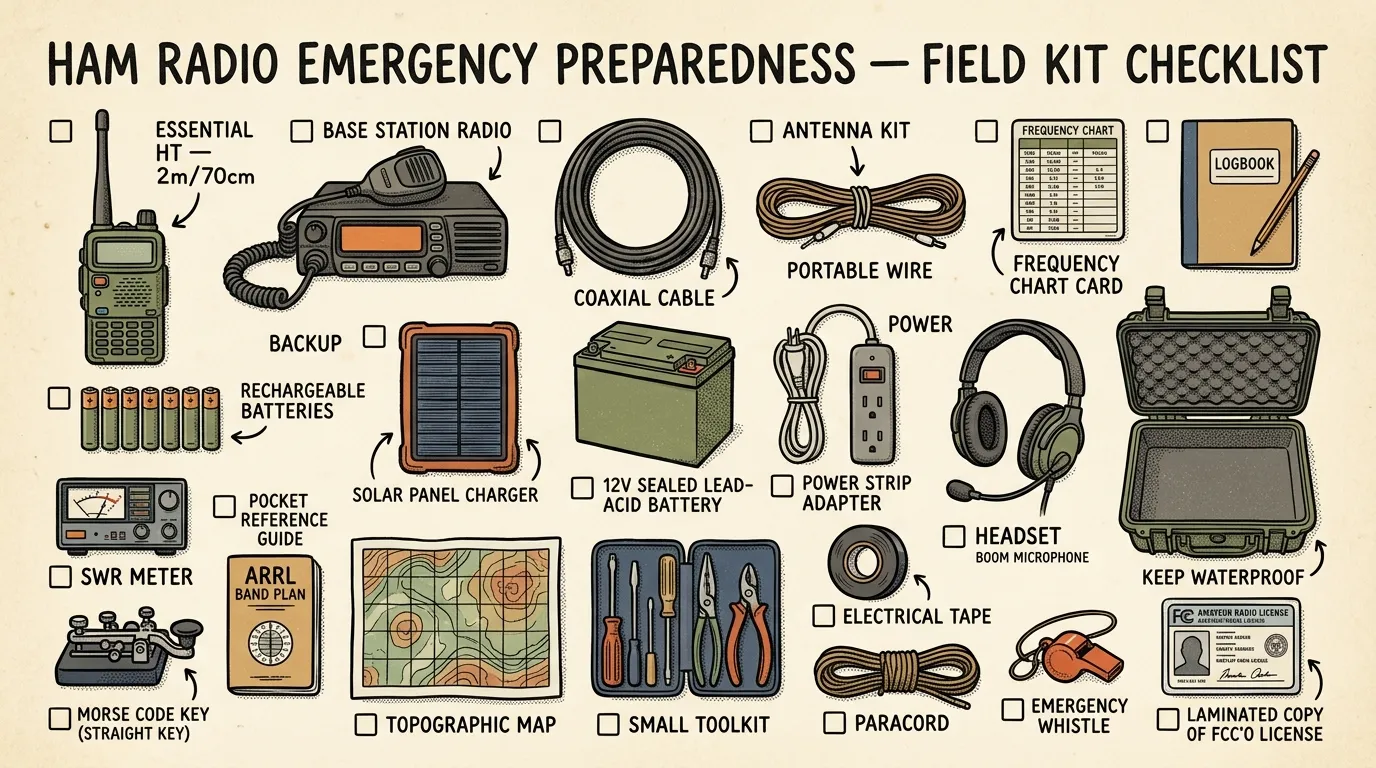
Ham Radio Emergency Preparedness: A Field Guide
Ham radio emergency preparedness explained. Gear, licensing, frequencies, and step-by-step starter plan. Start building your comms kit today.