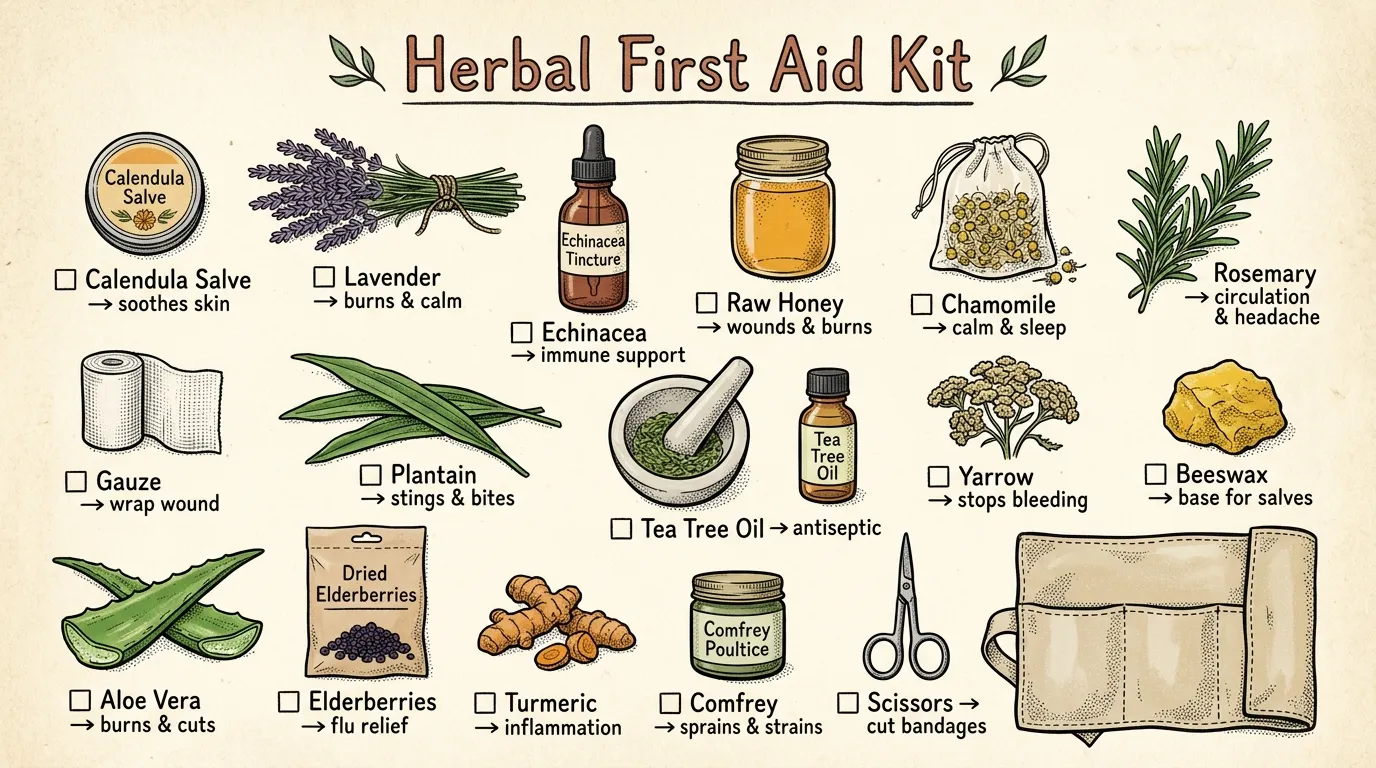
Herbal medicine can strengthen an emergency preparedness plan by providing affordable, renewable support for common minor issues like burns, stress, digestion, and seasonal illness support. Beginner preppers should start with a few well-known herbs such as aloe vera, lavender, peppermint, chamomile, and calendula, and learn safe use before relying on them.
Key Takeaways
- Stock 3-5 versatile herbs like aloe, lavender, peppermint, chamomile, and calendula — they cover the most common non-urgent issues you'll face in an extended emergency.
- Store herbs in multiple forms: dried in airtight glass jars, alcohol tinctures for multi-year shelf life, and salves for immediate topical use.
- Always verify drug interactions and allergies before using any herbal remedy — a single conversation with your pharmacist now could prevent a dangerous reaction later.
- Practice making at least one preparation (tea, tincture, or salve) before an emergency forces you to learn under stress.
- Herbal medicine supplements your first aid kit — it never replaces professional medical care for serious injuries or illness.
Herbal Medicine for Preppers: Build a Natural First Aid Kit
Herbal medicine for preppers isn’t about ditching your conventional first aid supplies — it’s about adding a practical, renewable layer of care for the minor issues that chew through your stockpile fastest. Herbs like yarrow and calendula salve can be carried right alongside conventional wound care supplies. They’re not competing. They’re complementary.
During extended emergencies — such as winter storms that shut down pharmacies for days at a time — herbal teas and tinctures can serve as comfort care for colds, stress, and sleeplessness. Every person who takes preparedness seriously should know at least a handful of medicinal herbs and how to use them safely.
This guide covers which herbs to stock, how to prepare them at home, honest pros and cons, critical safety information, and how to assemble a natural first aid kit that actually works when things go sideways.
Quick Summary
- Herbal medicine for preppers provides practical options for minor burns, skin irritation, digestive upset, and stress relief when pharmacies and supply chains aren’t available.
- Start with 3-5 versatile herbs: aloe vera, lavender, peppermint, chamomile, and calendula cover the most ground.
- Store herbs in multiple forms — dried, as tinctures, and as salves — for maximum shelf life and flexibility.
- Always check drug interactions, verify plant identification, and start with low doses before relying on any herbal remedy.
- Herbs supplement your conventional first aid kit and OTC medications. They don’t replace professional medical care for serious conditions.
- Growing at least one medicinal plant gives you a renewable supply and hands-on familiarity you can’t get from reading alone.
Defining Herbal Medicine in a Prepper Context
Let’s get the terms straight so we’re on the same page:
- Herbal medicine means whole plants or plant extracts used for symptom relief and comfort — teas, tinctures, salves, and poultices. This isn’t about prescription drugs or antibiotics.
- Prepper context refers to the supplies, skills, and plans that help you maintain health during supply interruptions or local emergencies.
That distinction matters. You’re not trying to become a doctor. You’re building a comfort care toolkit that fills the gap between “everything’s fine” and “help arrives.”
Why Herbal Medicine Belongs in Your Preparedness Plan
Think about the scenarios where herbal knowledge proves its value. A multi-day power outage after an ice storm knocks out pharmacy inventory systems. Rural isolation during wildfire evacuations when roads close for days. A post-earthquake supply chain disruption that leaves your neighborhood waiting weeks for resupply.
When the grid goes down, the ability to brew a chamomile tea for an anxious neighbor or apply a calendula salve to a kid’s scraped knee isn’t a luxury — it’s practical community care.
Here’s why emergency herbal remedies deserve space in your plan:
- Practical backup when pharmacies or deliveries are unavailable. Aloe soothes burns, peppermint settles nausea, and calendula supports minor wound care — all without a supply truck.
- Renewable supplies you can regrow from seed or cuttings. Save seeds and propagate plants to rebuild stocks season after season.
- Versatile uses. Lavender helps with sleep and can be used in an infused oil for minor wounds. Ginger warms you in cold conditions and settles digestion.
- Low-tech setups work. A drying rack, mason jars, high-proof alcohol for tinctures, and beeswax for salves are all you need.
Herbs don’t replace your first aid kit — they extend it into the days and weeks when the pharmacies stay dark.
Even FEMA’s community resilience frameworks acknowledge that holistic wellness support — including stress management and comfort care — matters during extended emergencies. Herbs fill exactly that role.
Essential Herbs for Emergencies
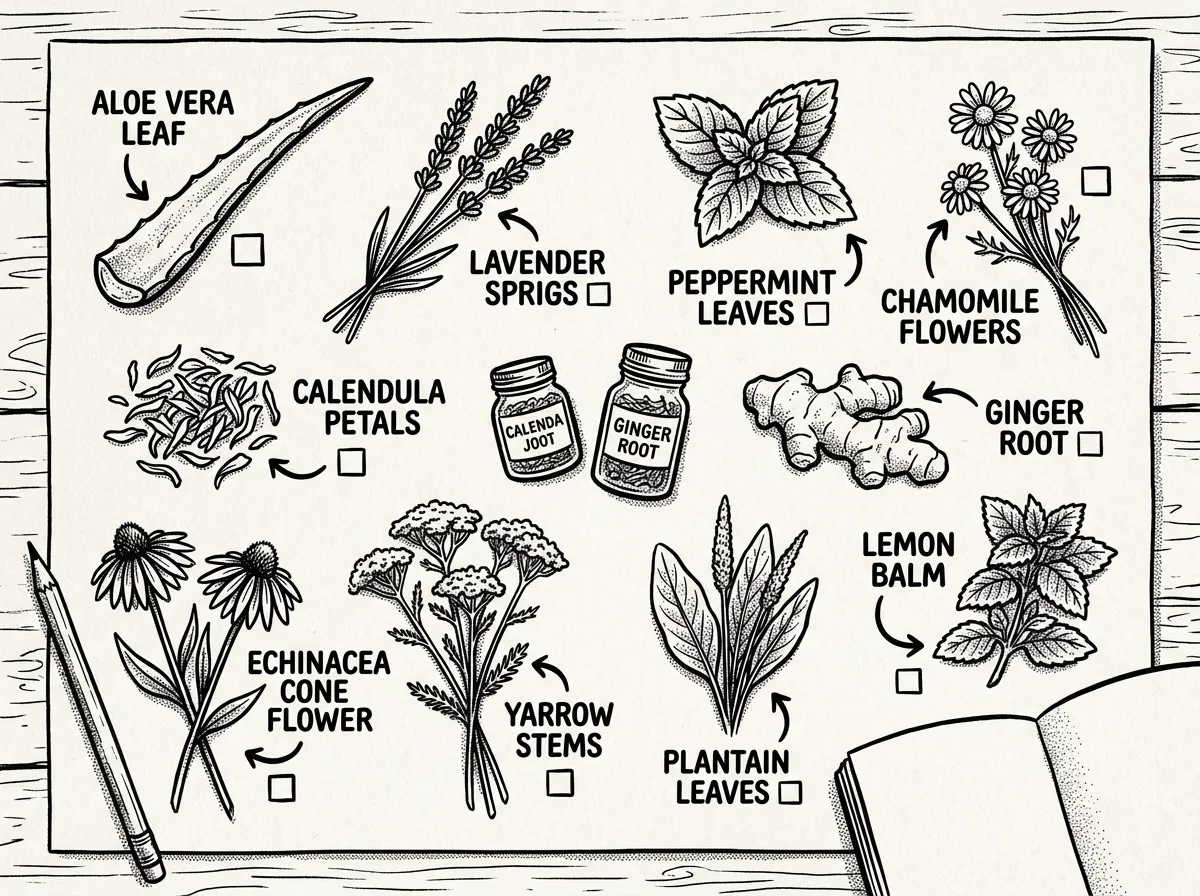 Core medicinal herbs every prepper should stock
So which herbs should you actually stock? The core list below covers the widest range of non-urgent scenarios.
A common mistake is building an enormous herbal apothecary with 30+ herbs and then freezing up when it’s time to actually use one. Start with five herbs you know cold — their uses, dosages, and contraindications — before expanding. Depth beats breadth every time.
Aloe Vera
- Uses: Fresh gel for minor burns and skin soothing.
- Forms: Live plant, sealed gel in a jar.
- Dosage: Apply fresh gel directly to affected skin 2-3 times daily.
- Caution: Don’t use on deep or infected burns. Watch for contact allergy. The NCCIH notes limited evidence for internal use.
Lavender
- Uses: Helps with sleep, reduces anxiety, mild topical antiseptic properties.
- Forms: Dried flower, diluted essential oil in a carrier oil, infused oil.
- Dosage: Tea: 1-2 teaspoons dried flowers per 8 oz hot water, steeped 5-10 minutes, up to 3 cups daily. Essential oil: 2-3 drops in 1 tablespoon carrier oil for topical use.
- Caution: Always dilute essential oils before skin application. Avoid internal use of essential oil in infants and young children.
Peppermint
- Uses: Eases mild nausea, soothes indigestion, topical cooling for tension headaches.
- Forms: Dried leaves for tea, diluted essential oil topically, tincture.
- Dosage: Tea: 1-2 teaspoons dried leaves per 8 oz hot water, steeped 5-7 minutes, up to 3 cups daily. The NCCIH recognizes peppermint oil’s role in digestive comfort.
- Caution: Can worsen acid reflux. Concentrated oils aren’t safe for internal use by children under 6.
Chamomile
- Uses: Calming tea for sleep and mild digestive discomfort, mild topical anti-inflammatory.
- Forms: Dried flowers, infused oil.
- Dosage: Tea: 1-2 teaspoons dried flowers per 8 oz water just below boiling, steeped 5-10 minutes, up to 3 cups daily. NCCIH notes some evidence supporting chamomile’s calming properties.
- Caution: Avoid if you’re allergic to ragweed or other plants in the daisy (Asteraceae) family.
Calendula
- Uses: Topical support for minor cuts, scrapes, chapped skin, and mild rashes.
- Forms: Infused oil, salve, dried flowers.
- Dosage: Apply salve or infused oil to clean skin 2-3 times daily. Tea for topical rinse: 2 teaspoons dried petals per 8 oz hot water.
- Caution: Avoid if allergic to composite-family plants. Not for deep or infected wounds.
Ginger
- Uses: Nausea relief, digestive aid, warming in cold conditions.
- Forms: Dried root, candied, tincture, fresh root.
- Dosage: Tea: 1-inch piece of fresh root (or 1/2 teaspoon dried) per 8 oz water, simmered 10 minutes. Tincture: follow product directions, typically 1-2 ml up to 3 times daily.
- Caution: High doses may interact with blood thinners. The NCCIH acknowledges ginger’s traditional use for nausea.
Echinacea
- Uses: Short-term support for upper respiratory symptoms at early onset.
- Forms: Dried root or aerial parts, tincture.
- Dosage: Tincture: 2-3 ml three times daily at first sign of symptoms, for up to 10 days.
- Caution: Avoid long-term use with autoimmune conditions. Evidence for efficacy is mixed per NCCIH review.
Yarrow
- Uses: Traditional topical wound support — staunching minor bleeding and cleaning shallow wounds.
- Forms: Dried, infused oil, poultice from fresh leaves.
- Dosage: Poultice: crush fresh or rehydrate dried leaves, apply directly to clean wound with light pressure.
- Caution: Accurate plant identification is critical — correct ID is a skill that takes practice with a reliable field guide before you ever need it under pressure. Possible skin sensitivity in some individuals.
Plantain (Plantago major)
- Uses: Poultices for insect bites, stings, and minor skin irritation.
- Forms: Fresh leaves (chewed or crushed), dried for rehydration.
- Dosage: Crush fresh leaf and apply directly as a poultice. Change every 30-60 minutes.
- Caution: Be absolutely sure you’ve got the right plant — broadleaf plantain is common throughout the Pacific Northwest, but always cross-reference with a field guide.
Lemon Balm and Holy Basil (Tulsi)
- Uses: Calming, mild sleep support, stress relief.
- Forms: Dried leaf, tincture, live plant.
- Dosage: Tea: 1-2 teaspoons dried leaf per 8 oz hot water, steeped 5-10 minutes.
- Caution: Lemon balm can increase sedation when combined with other sedatives or sleep medications.
Advantages and Limitations — An Honest Look
Before you build your herbal first aid kit, you need a straight assessment of what herbs can and can’t do. It’s common to swing to both extremes — dismissing herbs entirely or treating them as miracle cures. Neither serves you well.
Five practical advantages:
- Renewable and growable. Unlike OTC meds, you can grow herbs from seed year after year. One calendula plant produces hundreds of flower heads per season.
- Low cost. A packet of chamomile seeds costs a few dollars and yields years of tea.
- Multi-use. Most medicinal herbs pull double duty — lavender is calming, antiseptic, and pleasant-smelling for morale.
- No prescription required. You can stock, prepare, and use herbal remedies without navigating a collapsed healthcare system.
- Long shelf life as tinctures. A properly made alcohol tincture stays potent for 3-5 years or longer.
Five honest limitations:
- Not suitable for serious trauma. No herb stops arterial bleeding or sets a broken bone.
- Variable potency. Homegrown herbs vary in concentration depending on soil, sunlight, harvest timing, and prep method.
- Drug interaction risks. Ginger with blood thinners, echinacea with immunosuppressants, lemon balm with sedatives — these interactions are real.
- Misidentification danger. Yarrow looks similar to poison hemlock to untrained eyes. The consequences of a mistake can be fatal.
- No standardized dosing. Unlike pharmaceutical tablets, herbal preparations lack precise dosing, which means you’ve got to learn conservative approaches.
The bottom line: herbs for survival situations are a supplement to your medical preparedness, not a substitute. Use them for comfort care and minor issues while you work to access professional help for anything serious.
How to Make Basic Herbal Preparations
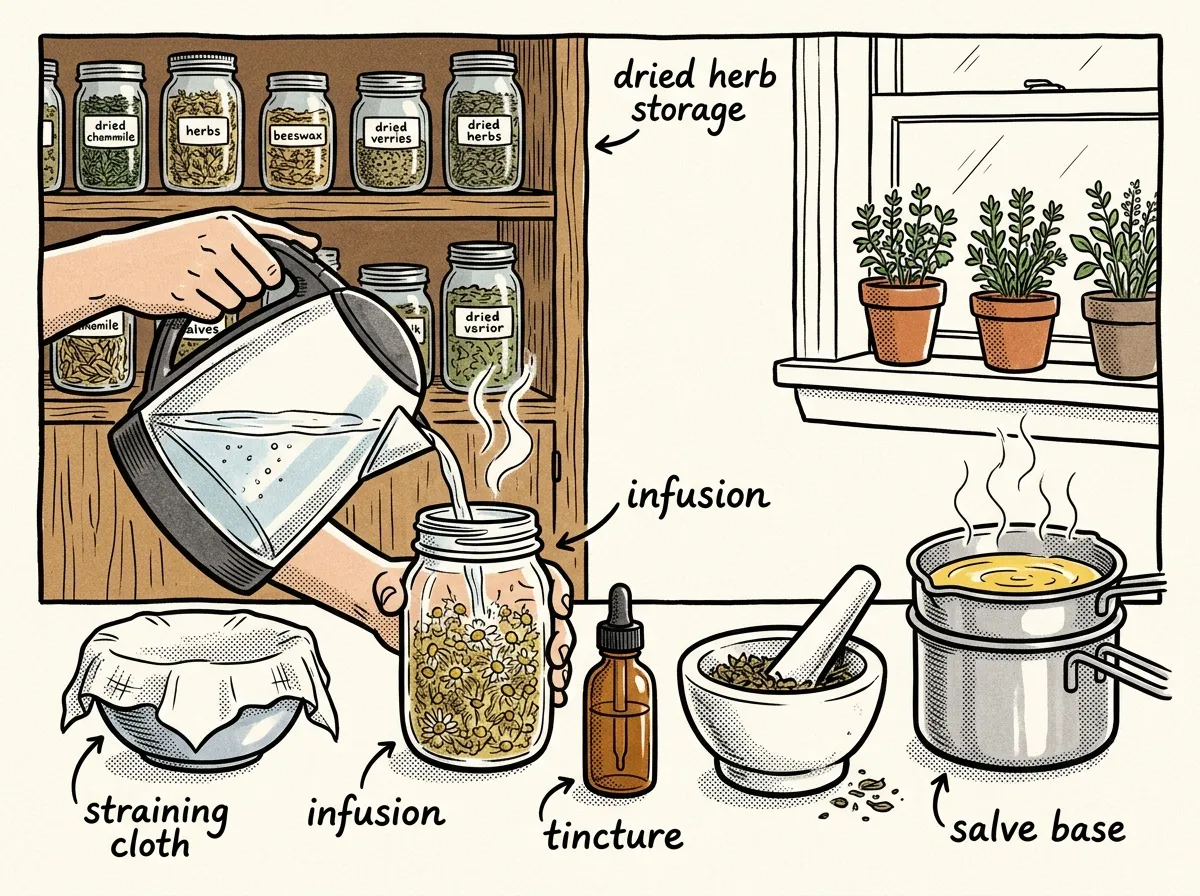 Preparing herbal remedies at a home workstation
Knowing how to make your own preparations is a core prepper skill. Using too little alcohol when making a tincture can result in mold within weeks — a lesson worth learning on a Tuesday evening, not during an ice storm.
Simple Herbal Tea (Infusion)
- Measure 1-2 teaspoons of dried herb per 8 oz of water
- Bring water to a boil, then let it cool about 30 seconds (roughly 200°F works for most herbs)
- Pour water over herbs in a mug or jar, cover, and steep 5-10 minutes for leaves and flowers or 10-15 minutes for roots
- Strain through a fine mesh strainer or cheesecloth
- Drink up to 3 cups daily for most herbs unless otherwise noted
Shelf life: Brew fresh each time. Refrigerated tea lasts about 24 hours.
Basic Alcohol Tincture (Folk Method)
- Fill a clean glass jar halfway with dried herb (or three-quarters with fresh herb).
- Pour 80-proof vodka over the plant material until it’s covered by at least 1 inch of liquid.
- Seal tightly, label with herb name and date, and store in a cool, dark place.
- Shake gently once daily for 4-6 weeks.
- Strain through cheesecloth into dark glass dropper bottles. Squeeze out all liquid from the plant material.
Shelf life: 3-5 years or longer in a cool, dark location. Label every bottle with the herb name, alcohol percentage, and date prepared.
Calendula Salve
- Infuse dried calendula petals in olive oil: fill a jar with dried petals, cover with oil, and let sit in a warm (not hot) spot for 2-4 weeks, shaking occasionally. You can also warm gently in a double boiler at low heat for 2-3 hours.
- Strain the infused oil through cheesecloth.
- In a double boiler, melt 1 oz of beeswax per 8 oz of infused oil.
- Pour into small tins or jars. Let cool completely before capping.
- Label with contents and date.
Shelf life: 6-12 months. If it smells rancid, toss it.
Hygiene matters for all preparations — wash hands thoroughly, sterilize jars, and use clean utensils. Contaminated preparations can cause more harm than good.
Tinctures vs. Dried Herbs for Long-Term Storage
Which form should you prioritize? Both have a place in your kit. Here’s how to decide:
- Dried herbs are lightweight, affordable, and versatile. Store them in airtight glass jars away from light and heat.
- Tinctures are concentrated, portable, and last years. Their high alcohol content acts as both solvent and preservative — ideal for grab-bags and evacuation kits.
- Salves bridge the gap for topical care — ready-to-use wound and skin support.
Recommended approach: stock dried herbs for your home supply and tinctures for your go-bag. Keep salves in both locations, and always maintain seeds or a live plant for at least one herb as a renewable backup.
Precautions and Safety
What should you watch out for? This is the most critical section here — herbs can cause real harm if you’re careless.
Drug Interactions
Several common herbs interact with prescription medications:
- Ginger and yarrow can increase bleeding risk with blood thinners like warfarin.
- Lemon balm and chamomile may amplify the effects of sedatives and anti-anxiety medications.
- Echinacea can interfere with immunosuppressant drugs.
- St. John’s Wort (not on our core list for good reason) interacts with dozens of medications including birth control and antidepressants.
Checking the Natural Medicines Comprehensive Database before using any new herb is good practice. If you take any regular medications, talk to your pharmacist before adding herbal remedies to your kit.
Allergic Reactions
If you’re allergic to ragweed, you may react to chamomile, calendula, echinacea, and yarrow — all members of the Asteraceae (daisy) family. Test any new herb by applying a small amount to the inside of your wrist and waiting 24 hours before broader use.
Foraging Dangers
Misidentification while foraging is potentially lethal. Yarrow and poison hemlock can look similar to the untrained eye. Wild carrot and water hemlock share habitat. Never forage a plant you can’t identify with 100% certainty using multiple features — leaf shape, stem, flower, smell, habitat. Growing or buying from trusted suppliers is always safer.
Vulnerable Populations
- Pregnant and nursing individuals: Many herbs haven’t been studied for safety during pregnancy. Avoid echinacea, yarrow, and high-dose ginger unless cleared by a healthcare provider.
- Children under 6: Don’t use concentrated essential oils internally or apply undiluted oils to skin. Stick to mild teas in appropriate doses.
- People with chronic illness: Autoimmune conditions, liver disease, and kidney disease all warrant extra caution.
Product Quality
If you buy commercial herbal products, look for third-party testing certifications (USP, NSF, or ConsumerLab). Brands like Herb Pharm (around $10-15 per tincture bottle) publish organic certification and sourcing information, which is worth checking for any brand you consider. Unknown or uncertified brands carry a higher risk of weak potency and questionable labeling.
Growing Medicinal Herbs at Home
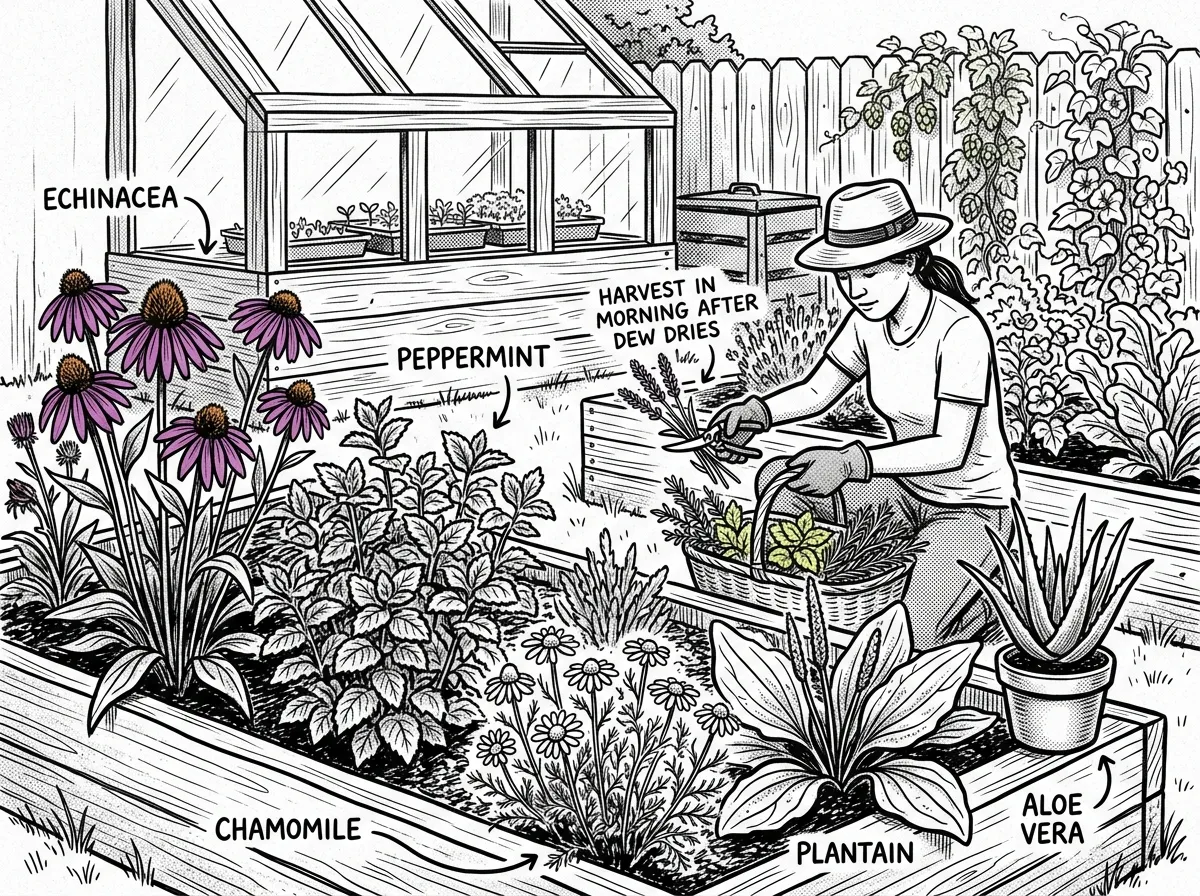 A small medicinal herb garden ready for harvest
Why not grow your own renewable supply? Start with 3-5 herbs you’ll actually use and can realistically maintain. Here’s Pacific Northwest-specific guidance for USDA zones 7-8b — if you’re in a humid Gulf Coast climate or high desert, your plant selection and watering needs will look different.
Outdoor Growing
- Calendula, lavender, and echinacea: Plant in spring after last frost. All three thrive in well-drained soil with full sun. Calendula self-seeds aggressively — you’ll have a perpetual supply after year one.
- Yarrow: Already grows wild throughout the Cascades and lowland meadows. If planting, it tolerates poor soil and drought once established.
- Lemon balm: Grows vigorously in partial shade — almost too vigorously. Consider a container to prevent it from taking over your yard.
Indoor Growing
- Aloe vera: Perfect windowsill plant. Needs bright indirect light and infrequent watering. Even if you’re in a small apartment, you can keep one.
- Peppermint: Grows well in containers indoors with moderate light. Keep soil moist but not waterlogged.
Harvest Timing
Harvest calendula flowers when fully open in mid-summer for peak potency. Pick lavender just before flowers fully open. Harvest peppermint and lemon balm leaves in the morning after dew dries but before midday heat. Dig echinacea roots in fall of the plant’s second or third year.
Companion planting helps: calendula planted near vegetables attracts pollinators and deters some pests, giving your medicinal herb garden double duty in a survival garden.
Assembling a Layered Herbal First Aid Kit
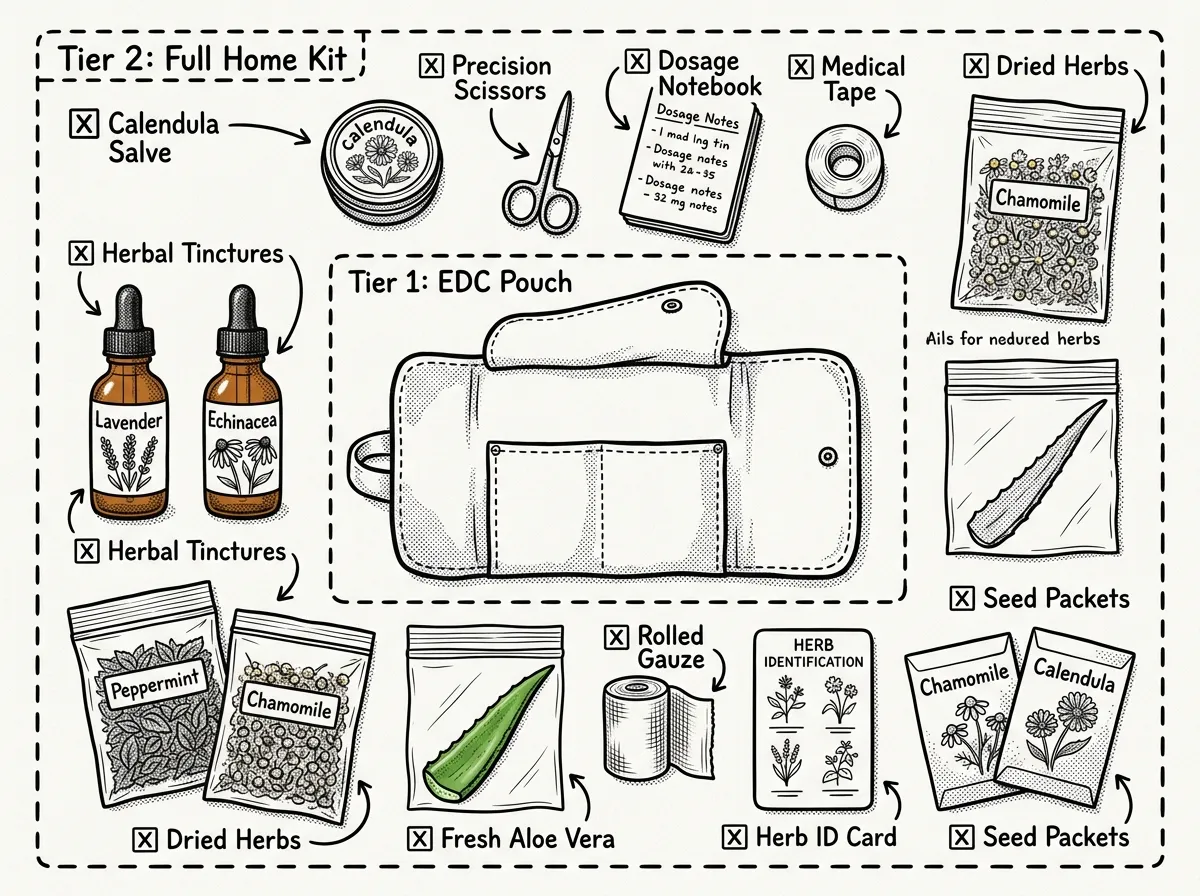 Complete layered herbal first aid kit laid out for inspection
Your emergency herbal medicine kit should work alongside — not replace — your conventional supplies. For guidance on the conventional side, see our checklist for building a comprehensive first aid kit.
- 3 tinctures in dark glass droppers: peppermint, chamomile, echinacea
- 2 salves in small tins: calendula and lavender
- 4-5 sterile bandages, antiseptic wipes, disposable gloves
- One-page laminated reference card with herb uses, dosages, and contraindications
Tier 2: Full Home Kit
This stays at your primary shelter and supports extended scenarios:
- Full dried herb supply in labeled glass jars (5-10 herbs from the list above)
- Extra tinctures and salves
- Sealed aloe gel or a live aloe plant
- Seed packets for at least 3 medicinal herbs (calendula, chamomile, peppermint)
- OTC basics: acetaminophen or ibuprofen, antihistamine, antidiarrheal, oral rehydration salts
- Sterile bandages, antiseptic solution, tweezers, disposable gloves
- Copies of prescriptions, medical conditions, and allergy lists
- A trusted herbal reference book and basic first aid manual
Store everything in a waterproof container, such as a dry bag inside a plastic bin, to protect labels and contents from water damage.
A common pattern in preparedness circles: people build a gorgeous herbal kit, photograph it, then shove it in a closet and never touch it. That kit is useless if it’s never been used to brew a tincture or apply a poultice. Use herbs regularly — for headaches, for sleep, for minor cuts around the house. By the time they’re needed in a real emergency, the process should feel like muscle memory, not guesswork.
When Herbs Aren’t Enough
Seek immediate medical help for any of the following — no herbal remedy addresses these conditions:
- Difficulty breathing or swelling of the face or throat
- Chest pain or signs of a heart attack
- Heavy or uncontrolled bleeding
- Suspected fracture or head injury with altered consciousness
- High or persistent fever, spreading infection, or red streaks from a wound
- Severe dehydration or altered mental status
- Any serious condition in infants, people who are pregnant, or those who are breastfeeding
For more on recognizing and managing these situations, see our guide on wilderness first aid basics. Herbal medicine supports your preparedness — it doesn’t substitute for training and professional care.
Frequently Asked Questions
Can herbal remedies replace conventional medicine in an emergency?
No. Herbs support minor, non-urgent issues like mild burns, digestive discomfort, skin irritation, and stress. They don’t treat serious trauma, infections requiring antibiotics, or life-threatening emergencies. Always prioritize reaching professional medical care for serious conditions, and use herbs as a comfort care layer in your overall preparedness plan.
Which herb should a beginner start with?
Start with aloe vera — it’s practical for burns and general skin care, nearly impossible to misidentify, and easy to grow indoors. Chamomile, peppermint, and lavender are also excellent starting points because they’re widely available, well-documented, and versatile.
Are dried herbs good enough for preparedness?
Yes. Dried herbs are affordable, lightweight, and useful for teas, poultices, and infused oils. For longer-term storage and portability, supplement with alcohol tinctures that last several years.
Should I forage in a crisis?
Only forage plants you can identify with absolute certainty using multiple identifying features. Growing your own herbs or purchasing from trusted suppliers is far safer. Misidentification kills — this isn’t a skill to improvise under stress.
What precautions should be taken while using medical herbs?
Always check for drug interactions with a pharmacist, especially if you take blood thinners, sedatives, or immunosuppressants. Start with low doses and monitor for allergic reactions. Avoid herbs in the daisy family if you have ragweed allergies. Don’t give concentrated essential oils internally to children. Pregnant and nursing individuals should consult a healthcare provider before using most herbal remedies. When in doubt, err on the side of caution.
How long do dried herbs and tinctures last in storage?
Dried herbs hold best quality for about 1 year but remain usable beyond that with declining potency. Alcohol tinctures last 3-5 years or more in cool, dark storage. Salves typically last 6-12 months. Label everything with contents and dates, and rotate during your annual preparedness review.
Your Next Steps
Pick one herb from this list. Just one. Learn its uses, its cautions, and one way to prepare it. Then actually make something with it this week — a tea, a tincture, a salve. That single action puts you ahead of most people who’ll be scrambling when the pharmacies go dark.
Here’s the full action plan:
- Choose 3-5 starter herbs and learn one preparation method for each.
- Practice making preparations now. Brew chamomile tea tonight. Start a peppermint tincture this weekend.
- Grow at least one medicinal plant. An aloe on your windowsill or a pot of peppermint on your patio gives you renewable supply and hands-on familiarity.
- Get a trusted herbal reference and a basic first aid manual. Keep both in your kit.
- Assemble and label a mini herbal kit. Use it in non-emergency situations so the process feels natural when it counts.
- Review your medications for interactions. One conversation with your pharmacist now saves you a dangerous surprise later.
Herbal medicine for preppers is a practical, low-tech layer of preparedness. It won’t set a bone or stop a heart attack. But it’ll help you manage the minor discomforts and everyday ailments that compound into real problems during an extended emergency — sleeplessness, nausea, anxiety, minor burns, small cuts, and skin irritation. Start small. Learn thoroughly. Integrate your natural remedies alongside conventional first aid supplies, solid training, and a clear plan. That layered approach is what separates real preparedness from wishful thinking.
The Complete
Prepper's Reference.
149 articles synthesized into one comprehensive PDF — twelve chapters covering water, food, shelter, first aid, comms, and scenario-specific preparedness. Free with your email.
Unsubscribe anytime · We never share your email
You're in. Check your inbox.
Keep Reading
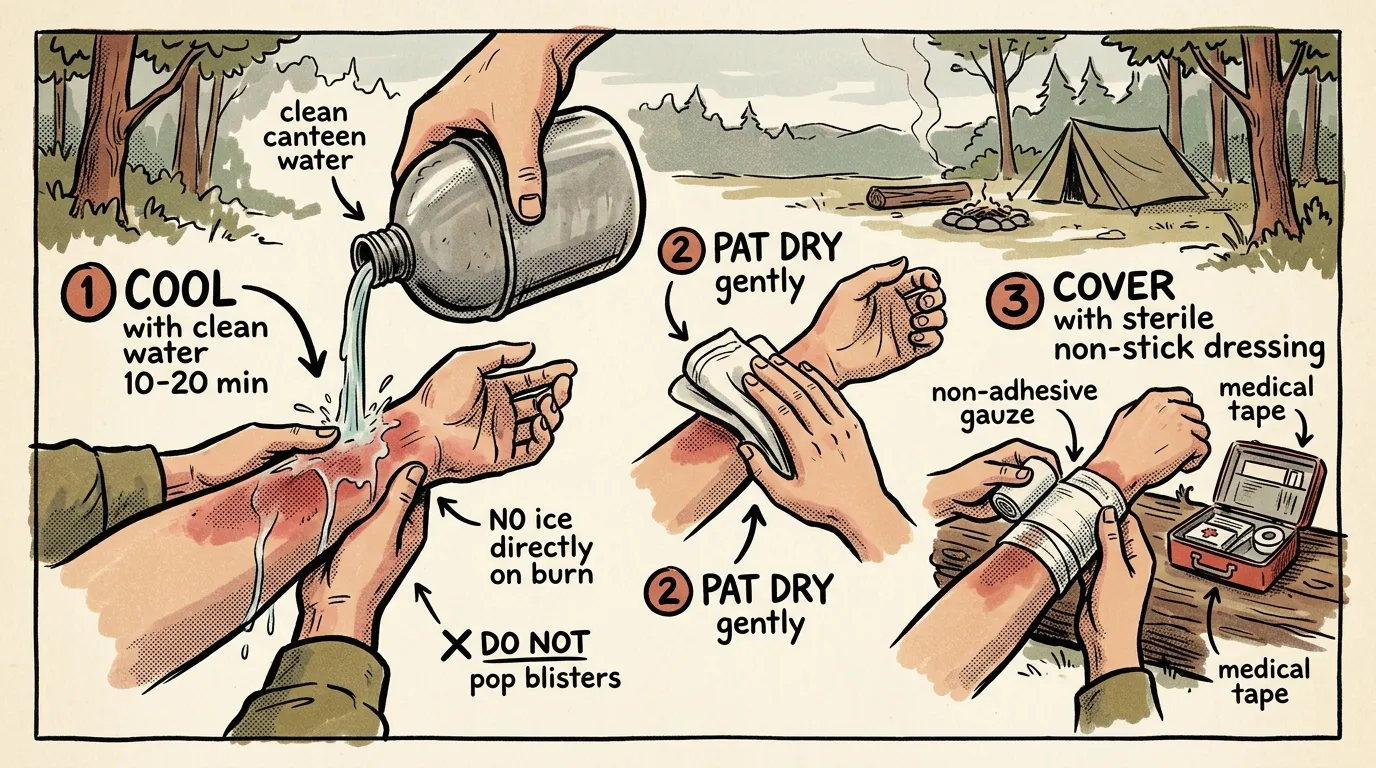
How to Treat Burns in the Field: Step-by-Step Guide
Learn how to treat burns in the field with this protocol. Cool, clean, cover — plus when to evacuate. Step-by-step guide.
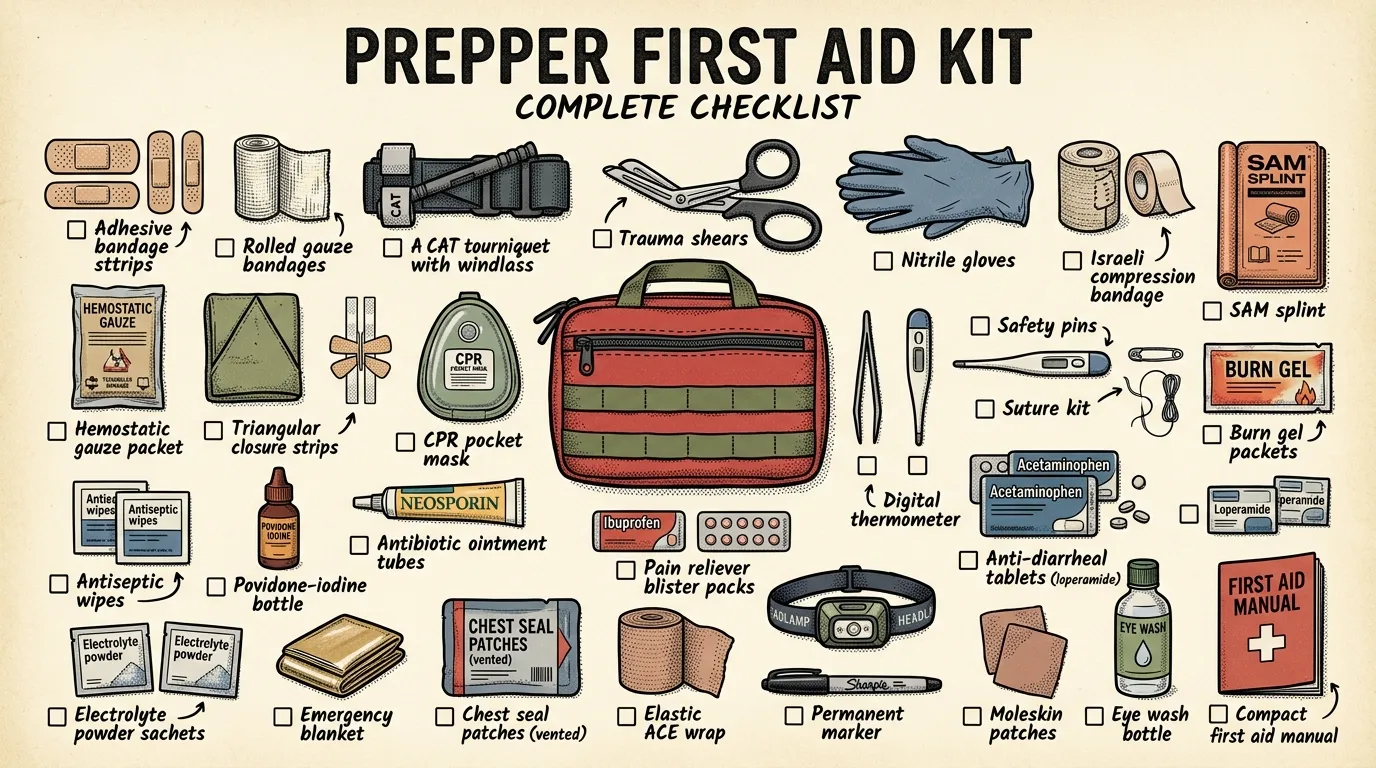
Prepper First Aid Kit: Complete Checklist & Guide
Build the ultimate prepper first aid kit with our complete checklist, budget tiers, and maintenance plan.
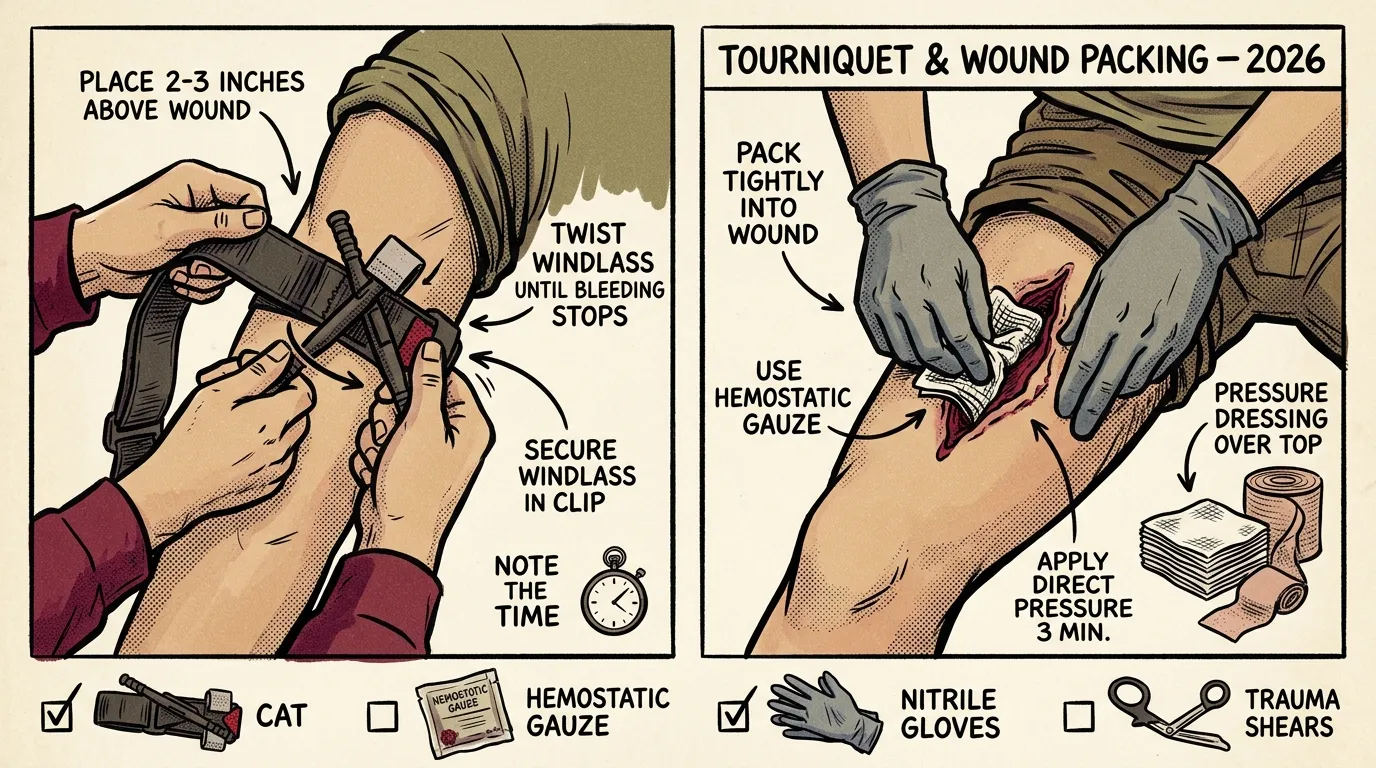
How to Use a Tourniquet and Pack a Wound (2026)
Learn how to use a tourniquet and pack a wound step by step.