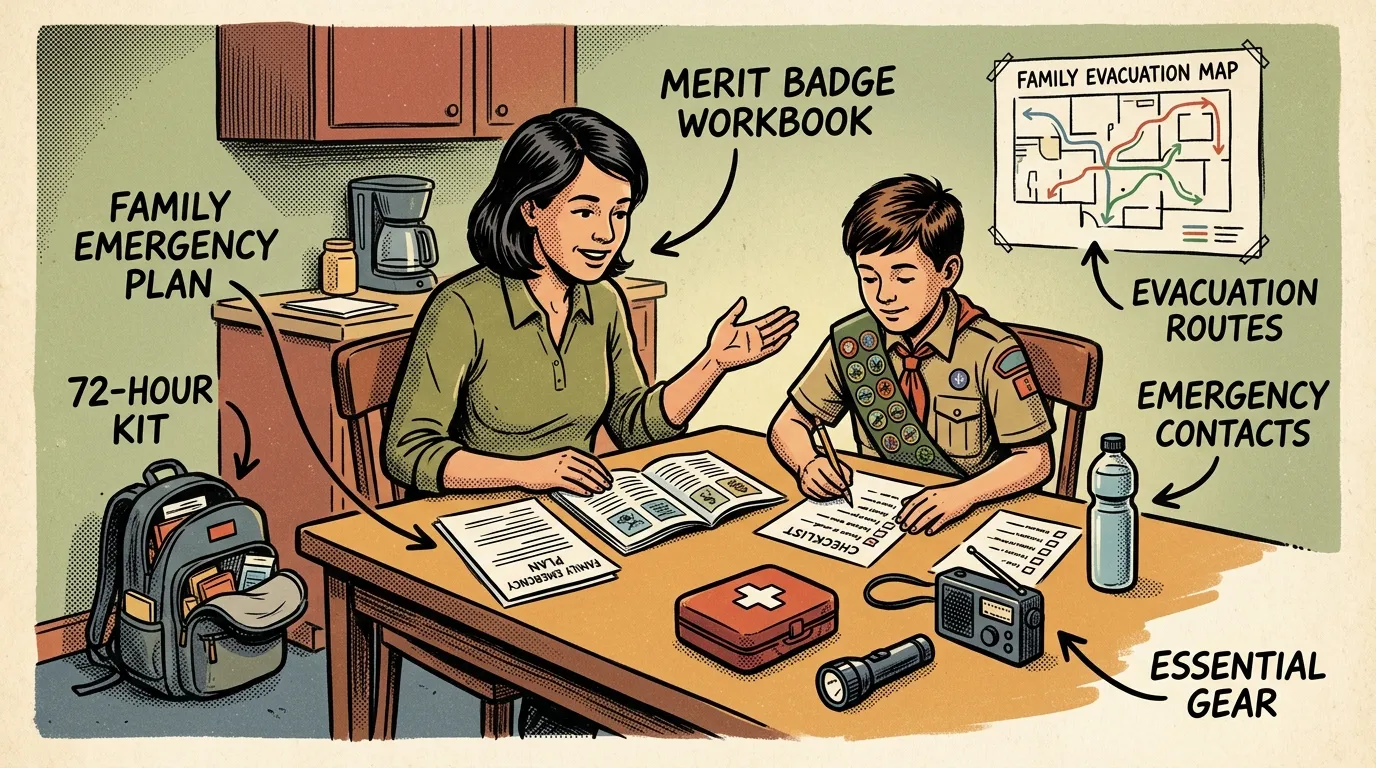
This article helps prepper parents use the Boy Scout Emergency Preparedness merit badge requirements as a structured framework to teach children practical survival skills at home, with hands-on activities aligned to each official requirement.
Many kids get a “fire safety talk” at school that amounts to “stop, drop, and roll” — and literally nothing else. No shelter-in-place basics. No understanding of what to grab in an evacuation. Zero practical skills.
The emergency preparedness merit badge requirements offer one of the best structured frameworks for teaching kids real survival skills — whether or not a child is enrolled in Scouts. Whether your child is working toward Eagle Scout or has never worn a neckerchief in their life, these requirements map out a complete curriculum you can run at home. Each requirement can be adapted into hands-on family activities, which this guide walks through.
Quick Summary
- The emergency preparedness merit badge covers nine requirement areas, and every one of them translates into a practical home activity you can do with your kids
- You don’t need to be a Scout to use this framework — it’s a free, well-organized curriculum for teaching emergency skills
- Building a family emergency plan and two emergency kits are core requirements that every prepared household should complete anyway
- The badge requires an emergency service project, which you can adapt into neighborhood-level preparedness outreach
- Kids who complete these activities will understand hazard types, first aid basics, shelter-in-place protocols, and evacuation planning
- This framework works best for ages 10-17, but you can simplify individual activities for younger children
Why the Emergency Preparedness Merit Badge Framework Works for Teaching Kids
Most parents know they should be teaching their kids emergency skills, but they don’t know where to start. They buy a kit, maybe run a fire drill once, and call it done.
The merit badge framework solves that problem because it’s sequential and comprehensive. It starts with understanding what emergencies exist, moves through prevention and response, requires building actual gear, and finishes with a service project that cements everything. That’s not a checklist — that’s a learning arc.
You don’t need a troop number to teach your kids the most practical survival curriculum ever written for young people.
And here’s the thing most parents miss: earning this merit badge helps a Scout learn the actions needed before, during, and after an emergency. That three-phase structure — before, during, after — is exactly how professional emergency managers think. You’re teaching your kid to think like a pro.
Requirement 1: Earn the First Aid Merit Badge (or Equivalent Skills)
The first official requirement is that the Scout has already earned the First Aid merit badge. At home, this means your kid needs a solid first aid foundation before you dive into the rest.
Don’t overthink this. You’re not certifying them as an EMT.
- Teach wound cleaning, direct pressure, and bandaging using real gauze and tape on a willing sibling or stuffed animal
- Practice splinting with SAM splints or improvised materials like sticks and bandanas
- Walk through CPR hand placement and rhythm using a pillow — even without a formal mannequin, they’ll understand the mechanics
- Cover choking response for both adults and infants, practicing the Heimlich on each other with gentle pressure
- Run a scenario where someone has a simulated allergic reaction and they need to find the EpiPen trainer and call 911
A common mistake is handing a kid a first aid manual and saying “read this.” Kids don’t learn from reading. They learn from doing. Get the gauze out. Make a mess. Let them wrap an arm badly, then show them how to do it right.
The Adventure Medical Kits Ultralight/Watertight .7 — around $35 — is compact enough for a kid to manage, according to the manufacturer’s specifications, and contains real supplies rather than toy-grade stuff.
Requirement 2: Understanding Emergency Types and Government Response
This requirement asks Scouts to discuss what types of emergencies could happen in their area and how government agencies respond. Perfect dinner table material.
Start by asking your kid: “What’s the worst thing that could happen where we live?” Let them brainstorm. Then fill in the gaps.
In the Pacific Northwest, that list includes earthquakes, volcanic lahars, wildfire smoke events, and winter storms that knock out power for days. If you’re on the Gulf Coast, you’re talking hurricanes, storm surge, and flooding. High desert? Extreme heat, flash floods, and wildfire. Make it local.
Then explain the response chain. Most kids have no idea that local fire and police respond first, that FEMA doesn’t show up for days, and that they might be genuinely on their own for 72 hours or more.
Have your kid draw a simple chart: local responders → county emergency management → state resources → federal (FEMA). This visual sticks with them way better than a lecture.
Requirement 3: Home Safety Inspection — the Scavenger Hunt
The badge asks Scouts to complete a home safety checklist, inspecting for hazards. Turn this into a competitive scavenger hunt and your kids will be absurdly into it.
- Locate the main water shutoff valve and practice turning it
- Find the electrical panel and identify which breaker controls which room
- Check every smoke detector — replace batteries if needed
- Identify two exit routes from every bedroom
- Find and check the expiration date on every fire extinguisher
- Look for heavy furniture or shelves that aren’t anchored to walls (earthquake risk)
- Locate the gas meter shutoff and discuss when you’d use it
- Check that medications and chemicals are stored where younger siblings can’t reach them
Give points for each item found. Bonus points if they can demonstrate how to use the shutoff valves. It’s common for this exercise to turn up dead batteries in smoke detectors — which is exactly the point.
Requirement 4: Building Your Family Emergency Plan
This is where the emergency preparedness merit badge really shines as a home curriculum. The requirement asks Scouts to create a family emergency plan, including meeting locations, communication protocols, and evacuation routes.
Sit down with your entire household. This isn’t a solo assignment for the kid — it’s a family project they’re leading.
- Choose two meeting spots: one right outside your home (for fires) and one outside your neighborhood (for evacuations)
- Write down three out-of-area contacts everyone can call — relatives who live far enough away to not be affected by the same disaster
- Map two driving evacuation routes out of your area, avoiding highways that will gridlock
- Assign roles: who grabs the family kit, who grabs the pets, who checks on the neighbor who lives alone
- Practice the plan twice a year — once announced, once unannounced
Many family emergency plans end up as pieces of paper in a drawer that never get used. The plans that work best are the ones kids help build. A child who helps choose the rally point is more likely to remember it than one who is simply told where it is. Letting kids take ownership of the plan improves how well they retain it.
Requirement 5: Building Two Emergency Kits
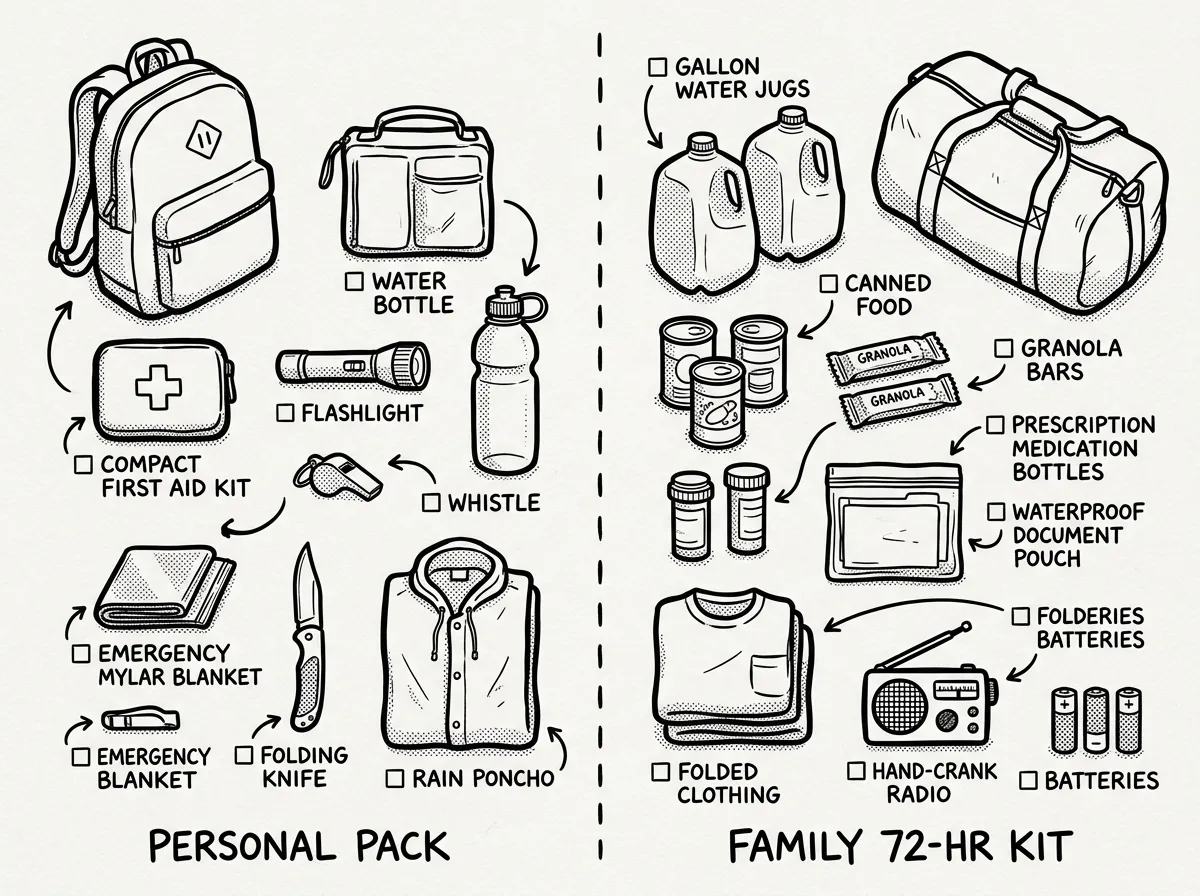 Personal emergency pack and family 72-hour kit essentials laid out for inspection
The badge requires two separate kits: a personal emergency service pack (a go-bag for rapid deployment) and a family emergency kit for sheltering in place or evacuating.
This is hands-on work your kids will love. Give them a budget and let them shop for their personal pack.
Personal Emergency Service Pack (for your kid):
- Small backpack they can actually carry
- Flashlight with extra batteries
- Water bottle (filled)
- Whistle
- Emergency mylar blanket
- Snack bars (rotate every 6 months)
- Rain poncho
- Small first aid kit
- Notebook and pencil
- Copy of the family emergency plan
Family Kit (72-hour minimum):
- One gallon of water per person per day — that’s three gallons per person minimum
- Three days of non-perishable food per person
- Copies of important documents in a waterproof bag
- Medications (30-day supply of prescriptions if possible)
- Change of clothes for everyone
- Battery-powered or hand-crank radio
- Cash in small bills
- Phone chargers (portable battery pack)
Weigh your kid’s personal pack when it’s loaded. If it’s more than 15% of their body weight, it’s too heavy and they won’t actually carry it when it matters. Cut weight ruthlessly.
Requirement 6: Knowing How to Respond During Specific Emergencies
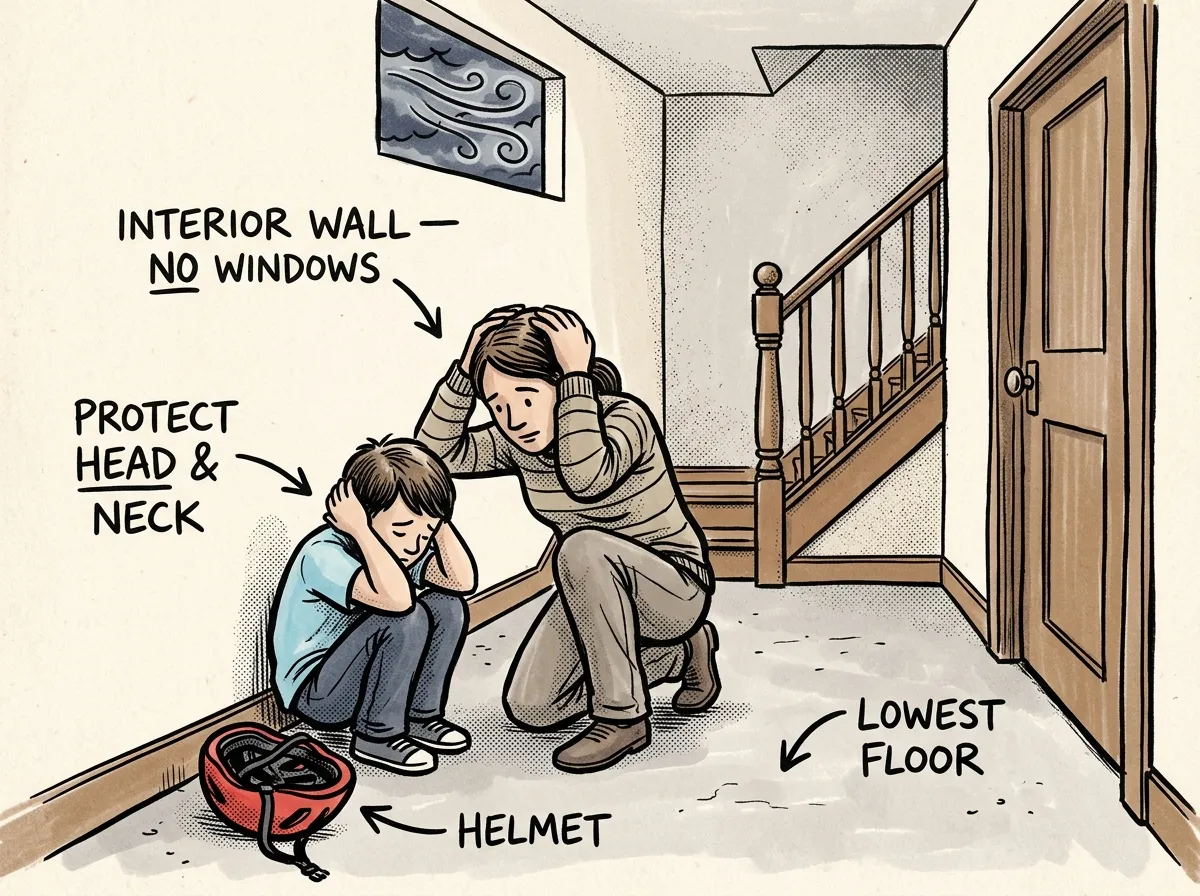 A child practicing shelter-in-place positioning during a tornado drill at home
This requirement covers the “during” phase — what to actually do when an earthquake hits, when a tornado siren goes off, when floodwaters rise. The badge requires discussing at least five types of emergencies.
Run tabletop scenarios at your kitchen table. Describe the situation, then let your kid talk through their response before you correct or add information.
It’s 6 PM on a Tuesday in January. The power goes out. Temperature outside is 28°F and dropping. Your phone shows a winter storm warning for the next 36 hours. What do you do in the first 15 minutes? What changes if the power is still out at hour 12?
Don’t just cover the dramatic stuff. Yes, earthquakes and tornadoes are important. But also cover the quiet emergencies: carbon monoxide alarms, a family member having a medical emergency when you’re the only one home, getting separated from your parents in a crowded public space. These are the scenarios kids are statistically more likely to face.
Requirement 7: The Emergency Service Project
Here’s where the rubber meets the road. The badge requires Scouts to take an active role in an emergency service project — merely being present doesn’t count.
For home-based learners, adapt this into a neighborhood outreach project. Some ideas:
- Help three neighbors create their own family emergency plans
- Organize a neighborhood emergency supply drive
- Create and distribute a one-page emergency info sheet for your street (shelter locations, hospital directions, utility shutoff guides)
- Volunteer with your local Community Emergency Response Team (CERT) — many accept youth volunteers with a parent present
This requirement teaches something critical: emergencies aren’t individual events. Communities survive together. Having your kid knock on a neighbor’s door and ask “do you have an emergency plan?” is uncomfortable, valuable, and builds exactly the kind of person you want them to become.
Which Is Easier: Emergency Preparedness or Lifesaving?
This is probably the most common question parents and Scouts ask. Short answer: Emergency Preparedness is easier for most kids.
The Lifesaving merit badge requires strong swimming skills and the ability to demonstrate rescue techniques in the water. If your kid isn’t a confident swimmer, that’s a significant barrier. Emergency Preparedness is more knowledge-based and gear-based, with physical requirements that any reasonably active kid can handle.
That said, “easier” doesn’t mean “less valuable.” I’d argue the Emergency Preparedness merit badge teaches skills your kid will use more often in daily life. Knowing how to shut off a gas valve or build an evacuation kit matters whether you’re twelve or forty-two.
Adapting the Framework for Younger Kids (Ages 7-9)
So what if your kid’s too young for the official merit badge? Scale it down.
Focus on three core concepts: know your address and phone number (you’d be stunned how many nine-year-olds can’t recite these), know two ways out of every room, and know how to call 911 and what to say.
Build a “mini go-bag” together — a small drawstring bag with a flashlight, whistle, snack, and a card with emergency contacts written on it. Hang it on their bedroom doorknob. Make it theirs.
Competence creates calm. A kid who has practiced something three times is less likely to panic when it happens for real, while a kid who has only heard about it once may freeze. Repetition isn’t wasted time — it’s the difference between a kid who acts and one who stands there crying. Run your drills.
Making It Stick: The Practice Schedule
Knowledge without practice decays fast. Here’s a realistic schedule that won’t burn out your family:
- Monthly: Check go-bags, rotate snacks and water, test flashlight batteries
- Quarterly: Run one tabletop scenario at dinner — takes ten minutes
- Twice yearly: Full family drill — evacuate the house, meet at rally point, time it
- Annually: Review and update the family emergency plan, re-inspect the home safety checklist, replace expired first aid supplies
That’s maybe four hours total per year. Four hours to produce a kid who knows what to do when everything goes sideways.
Turning the Emergency Preparedness Merit Badge Into a Family Culture
The real power of this framework isn’t any single requirement. It’s the mindset shift. When your kid starts noticing exit signs in restaurants, or asks “what would we do if…” unprompted, or casually mentions to a friend that their family has a meeting point — that’s when you know it worked.
Families who handle emergencies best aren’t the ones with the most gear. They’re the ones who talked about it, practiced it, and built it into their normal life. The emergency preparedness merit badge gives you the structure to do exactly that. Whether your kid earns the badge officially or just works through the requirements at your kitchen table, they’ll come out the other side more capable, more confident, and genuinely ready.
Start tonight. Pick one requirement. Run one activity. You’ll be surprised how quickly your kid takes ownership of it — and how much safer your whole household becomes in the process.
The Complete
Prepper's Reference.
149 articles synthesized into one comprehensive PDF — twelve chapters covering water, food, shelter, first aid, comms, and scenario-specific preparedness. Free with your email.
Unsubscribe anytime · We never share your email
You're in. Check your inbox.
Keep Reading
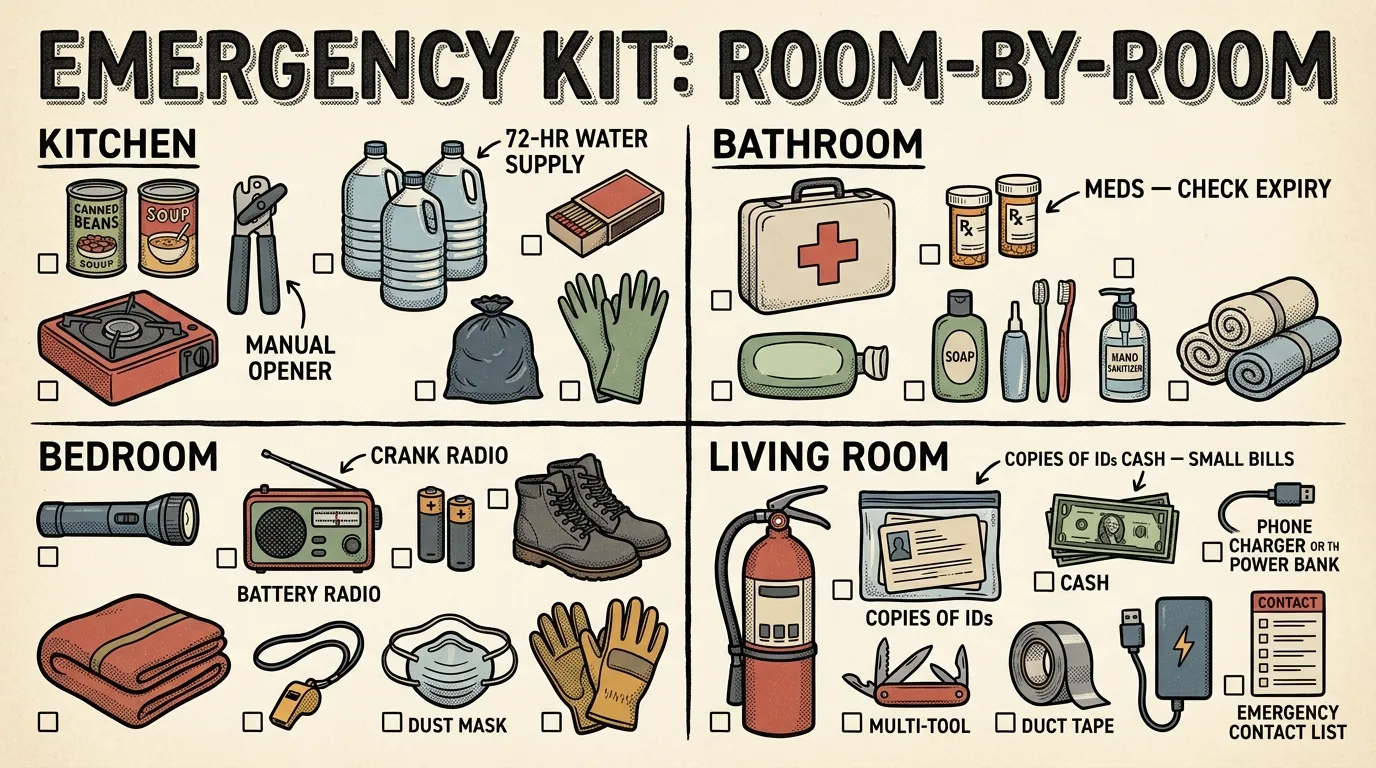
Emergency Preparedness Kit: Room-by-Room Home Guide
Build your emergency preparedness kit room by room for 14-day shelter-in-place readiness. Budget-friendly system. Start tonight.
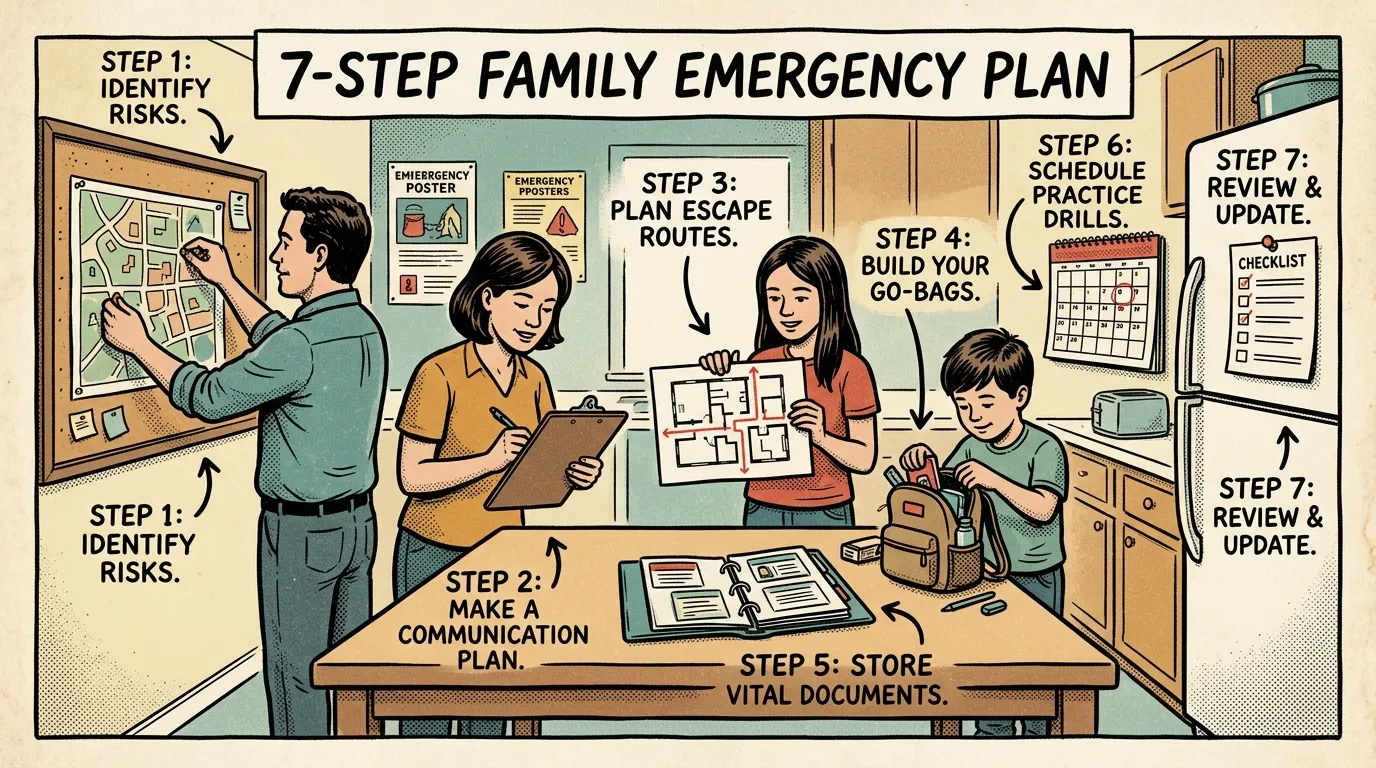
Emergency Preparedness Plan: 7-Step Family Guide
Build a complete emergency preparedness plan with evacuation routes, role assignments, and supply checklists. Step-by-step guide.
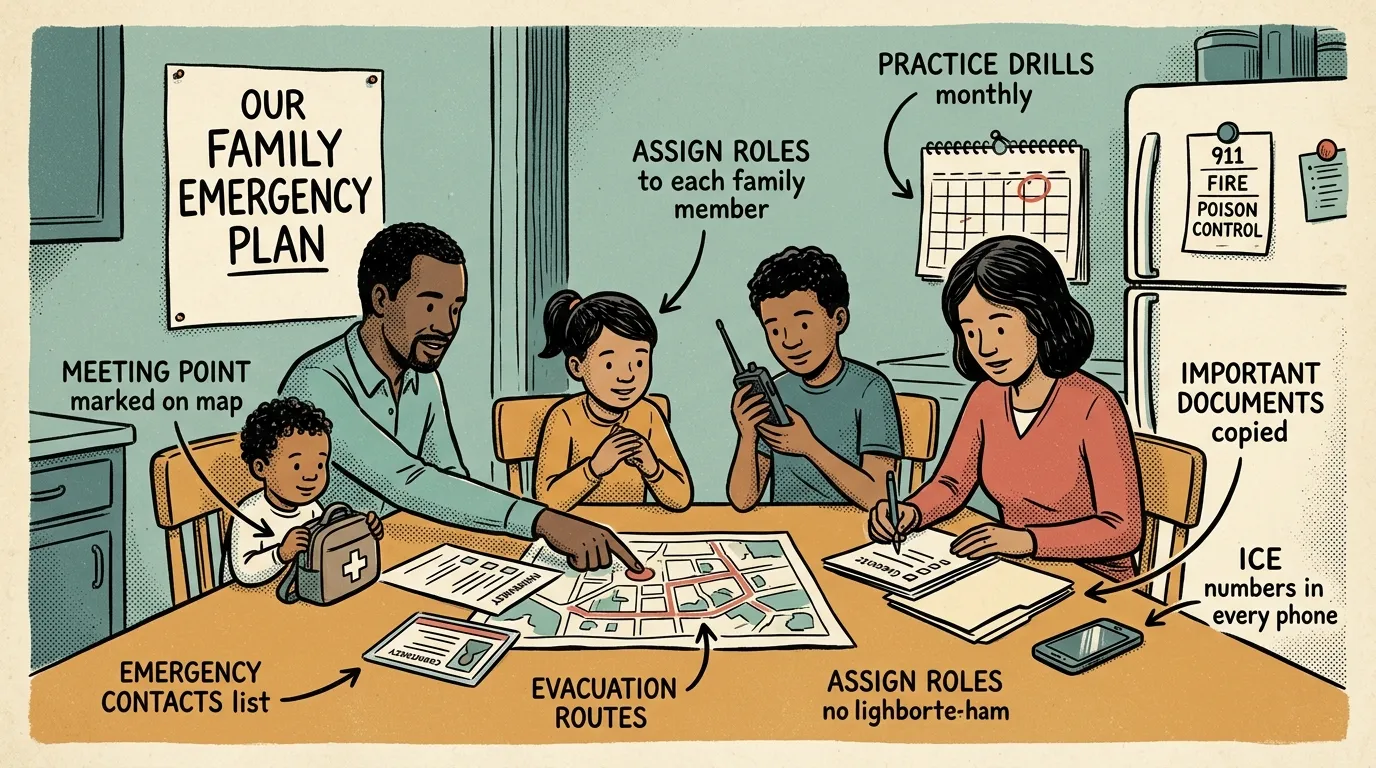
Family Emergency Plan: A Practical Step-by-Step Guide
Build a practical family emergency plan with step-by-step communication, supply kit, and drill guidance. Start today.