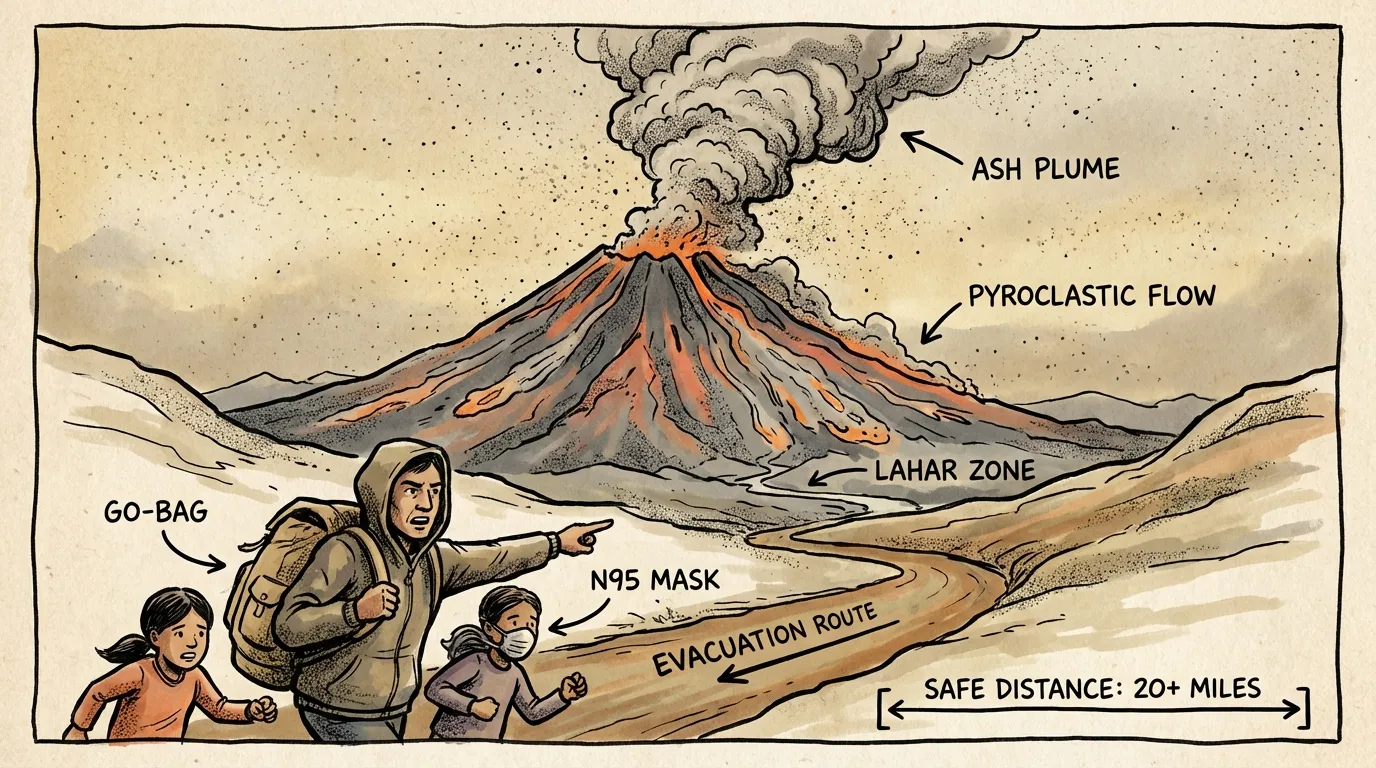
Volcanic eruptions can provide days to weeks of warning from well-monitored volcanoes through seismic activity and ground deformation, but some events like lateral blasts occur with virtually no warning. Lahars can reach populated valleys in 30 to 45 minutes. Warning time depends entirely on the specific volcano and eruption type.
Key Takeaways
- Evacuate lahar zones immediately; you may have only 30-45 minutes before mudflows arrive.
- Wear N95 or P100 respirators and sealed goggles before going outside during any ashfall.
- Clear ash from your roof early; just 4 inches of wet ash can collapse a residential roof.
- Shut down HVAC or switch to recirculate mode to prevent glass-particle ash from entering your home.
- Maintain a 30-day supply of critical medications and two weeks of water before any eruption occurs.
When It Happened Before
On May 18, 1980, Mount St. Helens didn’t just erupt — it exploded sideways. A massive landslide triggered a lateral blast that moved at 300 mph, obliterating 230 square miles of forest in minutes. Trees over a hundred feet tall were snapped like matchsticks and laid flat in perfect radial lines pointing away from the crater. Fifty-seven people died that day, including USGS volcanologist David Johnston, who was stationed at an observation post he believed was a safe distance away. His last radio transmission: “Vancouver! Vancouver! This is it!” He was six miles from the summit. It wasn’t enough. The blast reached him in seconds. Ash from St. Helens fell across 11 states, turning day into night as far away as Spokane, 250 miles to the northeast. Cars stalled. Visibility dropped to ten feet. People who had never given a moment’s thought to volcanic eruption preparedness were suddenly shoveling glass-like grit off their roofs and wondering if they could breathe safely.
Eleven years later, Mount Pinatubo in the Philippines delivered the largest eruption of the 20th century. But here’s the thing — Pinatubo is actually a success story. Scientists detected escalating seismic activity weeks in advance, and the Philippine government, working with USGS volcanologists, evacuated over 200,000 people from the danger zone. That decision saved tens of thousands of lives. Still, more than 800 people died, many from lahars — volcanic mudflows that raced down river valleys for months after the eruption, burying entire towns. The eruption injected so much sulfur dioxide into the stratosphere that it cooled the entire planet by 0.5°C for over a year. One volcano changed global weather patterns. Let that sink in.
Then there’s the eruption that reminded us volcanoes don’t need to kill anyone to cause chaos. In 2010, Iceland’s Eyjafjallajökull (a name notoriously difficult to pronounce, even for volcanologists) erupted and sent an ash cloud drifting across European airspace. Zero deaths. But over 100,000 flights were cancelled over six days, stranding roughly 10 million passengers and costing airlines an estimated $1.3 billion. Supply chains broke. Perishable goods rotted. And in 2022, the Hunga Tonga–Hunga Haʻapai eruption in Tonga generated a shockwave that circled the Earth twice, triggered a 15-meter tsunami, blanketed islands in thick ash, and severed the single undersea internet cable connecting Tonga to the rest of the world. The nation was effectively cut off for five weeks. No internet. No phone calls. No way to coordinate outside aid efficiently. If you want a modern example of how a volcanic event creates total isolation, Tonga is it.
How Much Warning You’ll Actually Get
Here’s the honest truth: it depends entirely on the volcano, and sometimes it depends on luck. Major eruptions from well-monitored volcanoes like those in the Cascades Range (Rainier, St. Helens, Hood) or in Hawaii are typically preceded by days to weeks of escalating seismic activity — swarms of small earthquakes, ground deformation measurable by GPS and tiltmeters, increased gas emissions. The USGS Volcano Hazards Program monitors these systems around the clock and issues alert levels ranging from Normal to Warning. Before Pinatubo blew in 1991, scientists had roughly two months of escalating warning signs, and they used every day of it. That’s the best-case scenario.
But not every eruption plays by those rules. Lateral blasts, like St. Helens, can be virtually instantaneous once the triggering landslide occurs. Phreatic (steam-driven) explosions can happen with minimal seismic precursor. And if you’re downwind of a volcano you didn’t even know was a threat — and remember, St. Helens sent measurable ash across 11 states — your warning might be a weather forecast and a strange yellow-gray sky. For lahars, the math is terrifying: if you live in a river valley downstream of a glaciated volcano like Mount Rainier, a lahar could reach populated areas in the Puyallup Valley in as little as 30 to 45 minutes after initiation. The lahar warning system exists, but 30 minutes to evacuate an entire valley is not generous. Rural residents near volcanic systems may actually have a slight advantage here — less traffic, shorter distances to high ground — but only if they know the risk exists in the first place. Most people living in lahar zones have no idea they’re in one.
The First 72 Hours
The first hour is about one thing: not dying. And what kills you depends on your proximity to the eruption. Within the immediate blast zone, pyroclastic flows are the primary killer — superheated clouds of gas, ash, and rock fragments moving at speeds up to 450 mph at temperatures exceeding 1,000°F. There is no surviving a pyroclastic flow. You don’t outrun it. You don’t shelter from it. You get out of its path before it happens, or you don’t. If you’re within the lahar inundation zone along river valleys, you need to move to high ground immediately — not across the valley, not downstream, up. If you’re farther out and ash is falling, get indoors. Close every window. Shut down your HVAC system or switch it to recirculate — volcanic ash will destroy your filters and fill your ducts with microscite glass particles. Put on an N95 mask (at minimum) and sealed goggles before going outside for any reason. Volcanic ash is not like wood ash from your fireplace. It’s pulverized rock and glass. It lacerates lung tissue. It scratches corneas. It does not belong in your body.
In the first 24 hours, the immediate eruption hazards may stabilize or they may intensify — eruptions can last hours, days, or weeks. Your priorities shift to air quality, structural safety, and communication. Ash accumulation on roofs is a genuine structural threat. Dry volcanic ash weighs roughly 400 to 700 kg per cubic meter, and when it gets wet — from rain or the steam generated by the eruption itself — that weight can double. Just four inches of wet ash can collapse a residential roof. You need to clear it, carefully, wearing respiratory protection and goggles, and you need to start early. Don’t wait until it’s a foot deep. Check on neighbors, especially elderly residents who can’t get on a roof. Your car is also at immediate risk: volcanic ash clogs air filters rapidly, and if it gets ingested into the engine, the glass particles score cylinder walls and destroy the motor. Do not drive through heavy ashfall unless you are evacuating for your life. If you must drive, change the air filter as soon as possible after exposure and drive slowly to reduce ash intake.
By hour 48 to 72, you’re dealing with the cascade effects. Power may be out — ash is conductive when wet and shorts out transformers and power lines. Water treatment plants can be overwhelmed by ash contamination, so municipal water may be unsafe or simply unavailable. Cell towers may be down, either from ash damage or power loss. This is where your basic preparedness — stored water, food supplies, a battery-powered or hand-crank radio, a family communication plan — becomes the difference between manageable discomfort and genuine crisis. If you’re just getting started with building that foundation, Becoming a Prepper: The Beginner’s Guide to Survival Readiness walks through the essentials without the overwhelm.
When Days Become Weeks
After 72 hours, the systems we take for granted start failing in sequence, and volcanic events have a nasty habit of dragging on. Ash continues to fall intermittently. Lahars can be triggered by rainfall on ash-covered slopes for months or even years after the initial eruption — Pinatubo’s lahars continued for over a decade, displacing communities long after the eruption itself ended. Supply chains fracture because trucks can’t safely drive through ash-covered roads, and airports in the affected area will be shut down (remember Eyjafjallajökull grounding 100,000 flights, and that was hundreds of miles from the eruption). Grocery stores empty out. Pharmacies run dry. If you depend on daily medication — insulin, blood pressure meds, anti-seizure drugs — and you don’t have a 30-day buffer supply, you’re now in a medical emergency that has nothing to do with lava.
Water becomes the critical resource faster than most people expect. Ashfall contaminates open water sources, and the increased sediment load can clog or damage municipal water treatment infrastructure for weeks. Air quality may remain hazardous long after the eruption calms down, as wind re-suspends settled ash — a phenomenon called remobilization that plagued communities around St. Helens for months. Your N95 supply matters. Your stored water matters. Your ability to seal your living space and filter air matters. If you’ve been thinking about upgrading your gear situation, The Best Camping Gear for Emergency Preparedness covers a lot of dual-use equipment that serves you well in extended shelter-in-place scenarios like this one.
Long-Term: If It Doesn’t Resolve Quickly
History shows us that volcanic eruptions can reshape life for months to years. After Pinatubo, the global temperature drop of 0.5°C disrupted agricultural growing seasons worldwide. Crop yields fell. In the affected region of the Philippines, entire communities were permanently relocated because their towns were buried under lahar deposits that hardened like concrete. After St. Helens, the timber industry in the region was devastated, fisheries were wrecked by sediment-choked rivers, and the psychological toll on displaced communities — people who lost homes, livelihoods, and neighbors — lasted a generation. The long-term threats from a major eruption aren’t dramatic. They’re grinding. Chronic respiratory illness from prolonged ash exposure. Economic collapse in affected regions. Insurance battles. PTSD. The slow realization that the place you lived doesn’t exist anymore in the same way.
For those in the broader impact zone — the 11 states that saw ash from St. Helens, the entire hemisphere that felt Pinatubo’s climate effects — the long-term impact looks different but is still real. Agricultural disruption. Air travel interruptions that ripple through economies. Extended poor air quality events that strain healthcare systems. Volcanic eruption preparedness isn’t just for people living on the flanks of a volcano. If you’re within 500 miles of an active volcanic system, or downwind of one, you have skin in this game. And if Tonga taught us anything, it’s that isolation can happen fast and last far longer than you’d expect. Knowing how to navigate without GPS and manage your own logistics becomes a real skill, not a hobby. If that’s a gap in your readiness, Navigating the Wilderness: Basic Orienteering for New Preppers is worth your time.
Your Volcanic Eruption Preparedness Checklist
Before — Preparedness Phase
- Know your risk. Check if you live near one of the 16 Decade Volcanoes or any active volcanic system. The USGS Volcano Hazards Program provides interactive maps and real-time monitoring data. Decade Volcanoes are identified because of their history of large, destructive eruptions and proximity to populated areas — Rainier, Vesuvius, and others make the list.
- Understand lahar inundation zones. If you live in a river valley downstream of a glaciated or snow-capped volcano, determine whether you’re in a lahar hazard area. Many counties near Cascade volcanoes publish lahar evacuation maps. Know yours.
- Plan evacuation routes that avoid river valleys. Lahars follow waterways. Your escape route needs to go up and away, not along the river road. Have at least two routes mapped.
- Stock N95 respirator masks (minimum) for every household member. Volcanic ash is composed of tiny glass and mineral fragments that cause silicosis-like lung damage. P100 respirators are better for heavy or prolonged exposure.
- Buy sealed safety goggles — not sunglasses, not vented shop goggles. Ash particles are fine enough to get behind vented eyewear and abrade corneas.
- Evaluate your roof’s load-bearing capacity. Talk to a structural engineer if you’re within 100 miles of an active volcano. Know how much weight your roof can handle and have a plan (and tools) to clear ash safely.
- Purchase replacement HVAC filters and car air filters in advance. During ash events, you may go through multiple filters. Stock extras.
- Set your HVAC system to recirculate capability — know how to do this before you need to. Consider standalone HEPA air purifiers for key rooms.
- Store at least two weeks of water (one gallon per person per day) and non-perishable food. Volcanic events routinely disrupt supply chains for longer than 72 hours.
- Maintain a 30-day supply of critical medications.
- Keep a battery-powered or hand-crank NOAA weather radio. Cell networks and internet may go down for extended periods.
- Sign up for USGS Volcano Notification Service (VNS) alerts for volcanoes in your region.
During — Immediate Response
- If within the blast or pyroclastic flow zone: evacuate immediately. Do not wait for confirmation. If authorities issue an evacuation order near an erupting volcano, leave.
- If in a lahar zone: move to high ground now. You may have as little as 30 minutes. Don’t gather belongings. Go up.
- If ash is falling: get indoors. Close all windows and doors. Seal gaps with damp towels or plastic sheeting.
- Shut down HVAC or switch to recirculate mode. Do not pull outside air into your home.
- Wear N95 mask and sealed goggles any time you must go outside.
- Do not drive unless evacuating. Ash destroys engines, reduces visibility to near zero, and makes roads slick.
- Begin clearing ash from your roof early — don’t let it accumulate. Wear respiratory and eye protection. Wet it down lightly to reduce airborne dust while shoveling, but remember wet ash is heavier.
- Cover vehicles and outdoor equipment with tarps if possible.
- Monitor USGS and local emergency management channels continuously.
After — Recovery Phase
- Replace car air filters before driving any significant distance through ash-affected areas. Inspect the engine intake for ash infiltration.
- Replace HVAC filters and have ducts inspected before returning to normal air handling.
- Do not let children or pets play in ash deposits. The particles remain hazardous long after the eruption ends.
- Be alert for lahars for months after the eruption — rainfall on ash-covered slopes can trigger mudflows long after volcanic activity ceases.
- Watch for roof damage from ash weight, even after clearing. Structural fatigue may not be immediately visible.
- Avoid areas near river valleys downstream of the volcano until authorities confirm lahar risk has diminished.
- Monitor air quality reports daily. Ash remobilization by wind can make air hazardous again weeks or months later.
- Seek medical attention for persistent cough, eye irritation, or breathing difficulty. Volcanic ash exposure can cause serious respiratory damage that worsens over time.
- Document property damage thoroughly for insurance claims. Photograph everything before cleaning.
What Most People Get Wrong
The biggest misconception about volcanic eruption preparedness is that it’s only relevant if you live on the side of a volcano. It’s not. Ash from St. Helens was measurable across 11 states. Pinatubo changed global temperatures. Eyjafjallajökull grounded flights across an entire continent. Tonga lost communications for a month. The secondary and tertiary effects of volcanic eruptions reach far beyond the blast zone, and the people caught in those effects are almost universally unprepared because they never thought of themselves as living near a volcano.
The second major mistake is treating volcanic ash like a nuisance instead of a hazard. Online forums are full of posts about just “sweeping it up” or “hosing off the car.” Volcanic ash is not dust. It’s microscopically jagged glass. It destroys engines. It collapses roofs. It scars lungs permanently with prolonged exposure. A bandana over your face is not sufficient protection — you need a proper N95 or P100 respirator and sealed goggles. People also underestimate lahar risk because they picture lava as the primary volcanic threat. Lava flows are
The Complete
Prepper's Reference.
149 articles synthesized into one comprehensive PDF — twelve chapters covering water, food, shelter, first aid, comms, and scenario-specific preparedness. Free with your email.
Unsubscribe anytime · We never share your email
You're in. Check your inbox.
Keep Reading
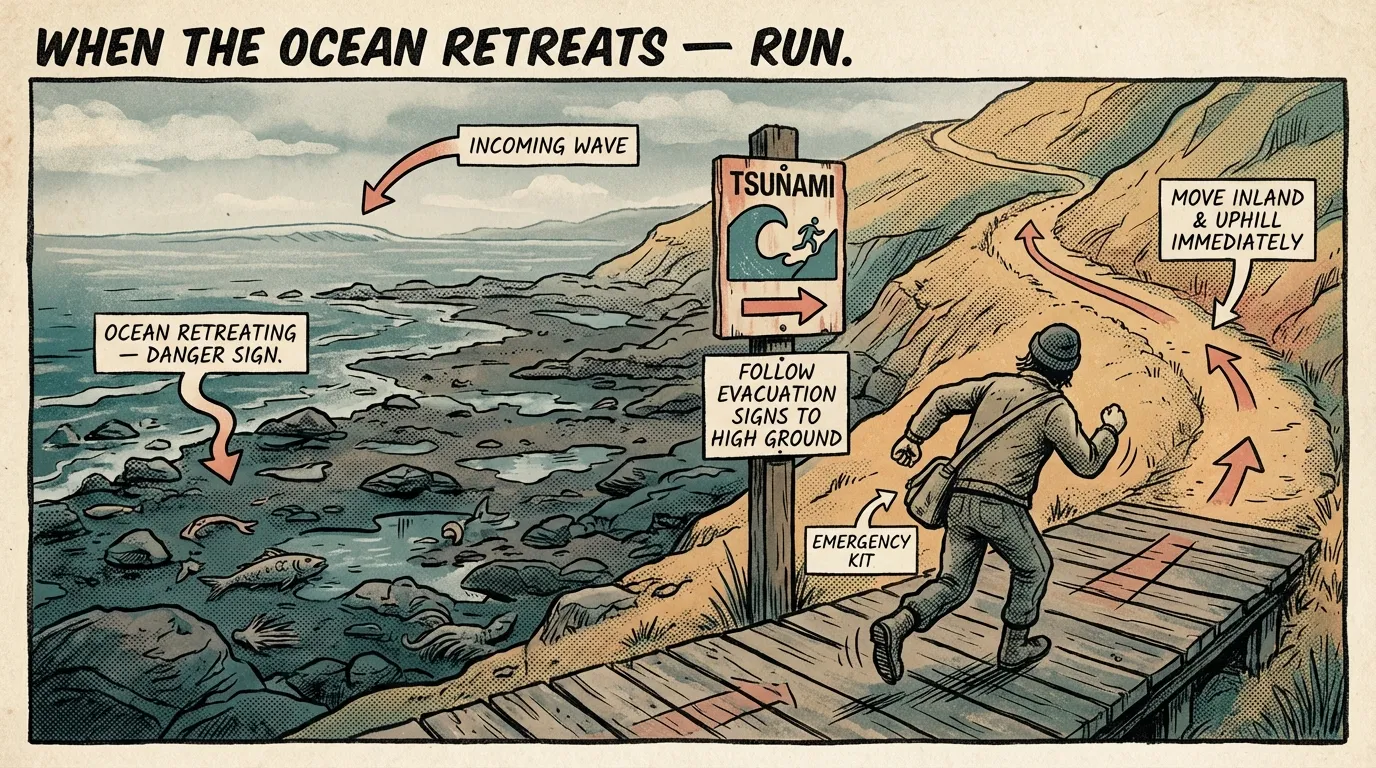
Tsunami Preparedness: What to Do When the Ocean Retreats
The 2004 Indian Ocean tsunami killed 227,000 people in 14 countries in under 8 hours. A 10-year-old girl's geography lesson saved 100 lives on a Thai beach. Here's what tsunamis actually look like — and the knowledge that makes the difference between life and death.
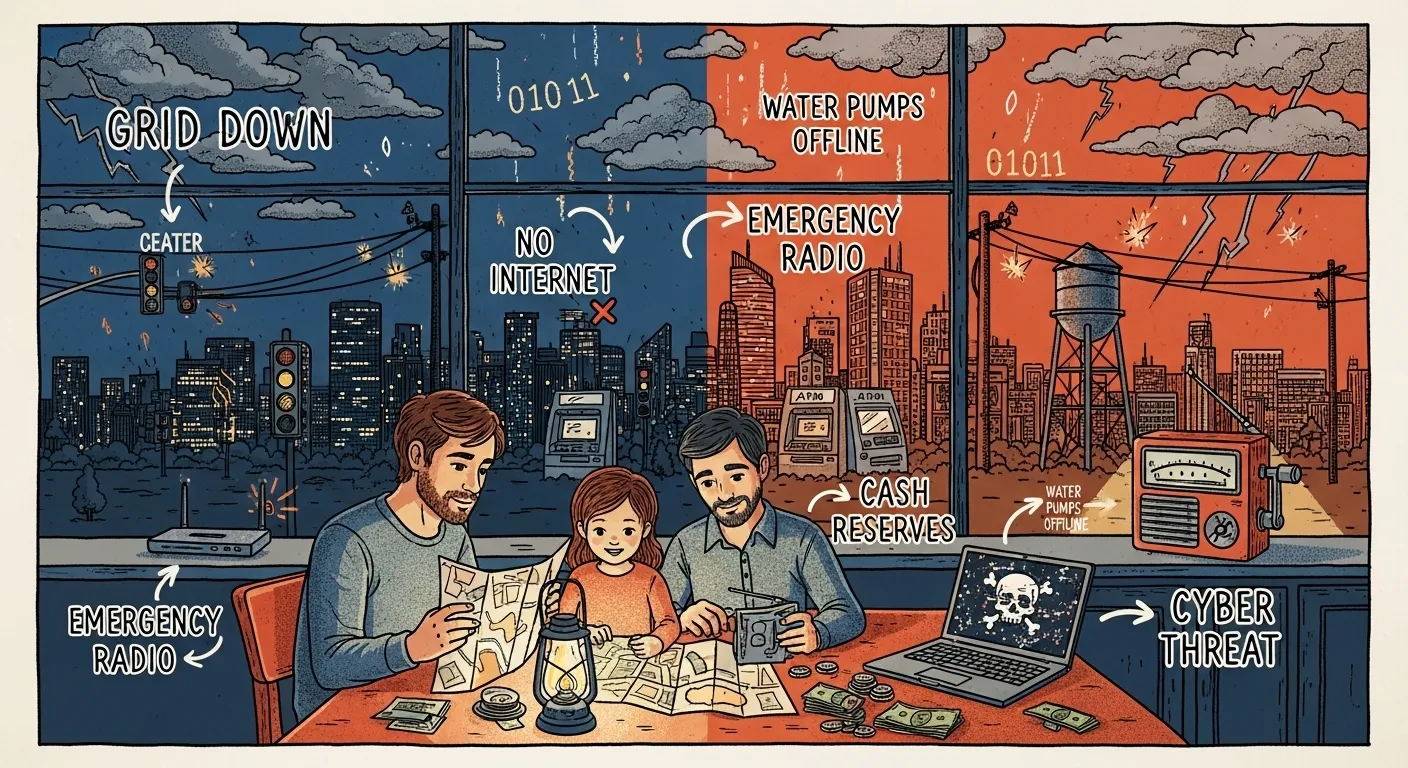
Cyberattack and Infrastructure Failure: The Invisible Emergency
In 2021, a ransomware attack shut down the Colonial Pipeline and caused gas shortages across the Southeast in 6 days. In 2015, hackers turned off power for 230,000 Ukrainians. Digital attacks on physical infrastructure are here — here's how to prepare for when they hit yours.
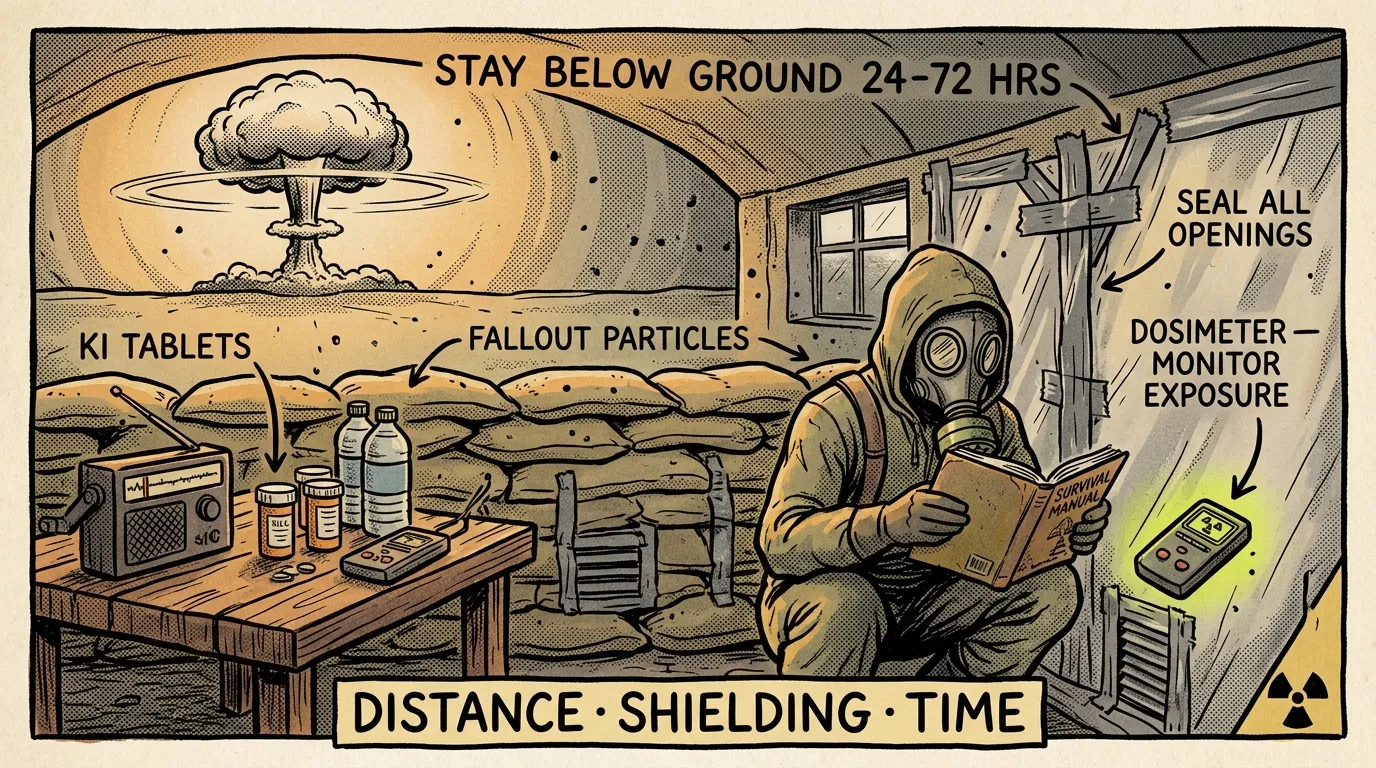
Nuclear Preparedness: Radiation, Fallout & Survival Guide
Lessons from Chernobyl and Fukushima shaped modern nuclear preparedness. Learn the science of radiation survival, fallout sheltering, and your action plan.