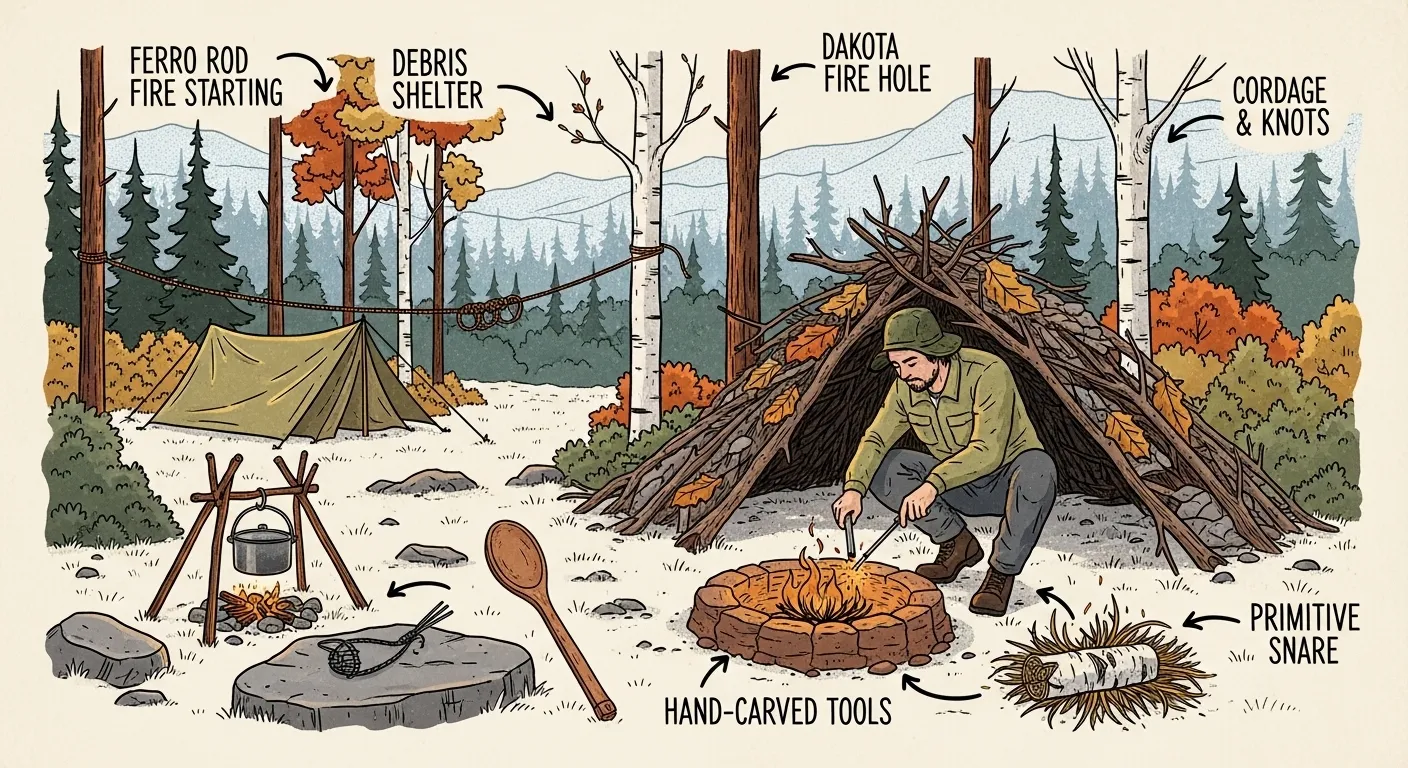
Bushcraft skills are traditional wilderness survival skills that help preppers become more self-reliant, adaptable, and confident in emergencies. For beginners, learning fire-starting, shelter-building, navigation, water sourcing, and safe tool use can significantly strengthen overall preparedness and complement modern survival gear.
Key Takeaways
- Nail fire-building with matches and a lighter in wet, windy conditions before you ever rely on a ferro rod.
- Pitch a tarp shelter and sleep in it overnight in your own yard before you need it to save your life.
- Run a real navigation leg with only a printed topo map and compass — no phone, no GPS backup.
- Pre-filter cloudy surface water through cloth, then compare a pump filter against chemical tablets so you know both.
- Learn three knots cold — square knot, bowline, clove hitch — and use them to rig an actual shelter, not just a practice loop.
Bushcraft Skills for Preppers: Essential Wilderness Survival for Emergency Readiness
Gear fails and skills don’t. Your headlamp dies. Your filter clogs. Your phone battery hits zero right when you need the map most. Bushcraft skills are what’s left when the tech quits — fire, shelter, water, navigation, and basic tool use, done with your hands and whatever’s around you.
This isn’t about romanticizing the woods or turning into a full-time hermit. It’s about closing the gap between what’s in your bug-out bag and what you can actually do with your two hands when things go wrong.
Quick Summary
- Bushcraft skills are low-tech wilderness techniques — fire, shelter, water, navigation, tool use, and basic plant awareness — that keep you functional when gear or infrastructure fails.
- Start with fire-building using matches and a lighter before you ever touch a ferro rod or attempt friction fire.
- Skills and gear aren’t competing philosophies. A ferro rod needs prepared tinder to work, and a pump filter lasts longer when you pre-filter cloudy water first.
- Build skill in stages, starting in your backyard or a known campsite, and always carry safety backups when you practice.
- The biggest beginner mistake is relying on a single method for anything — one fire-starting tool, one water source, one navigation aid.
What Is Bushcraft, Really?
Bushcraft is the set of hands-on skills people use to live and travel outdoors with minimal reliance on powered gear. It’s built on observation — reading the terrain, spotting good tinder, knowing which deadwood burns clean and which one smokes you out of your own camp. The techniques are simple by design. Simple things hold up under stress. Complicated systems break down exactly when you need them most.
None of this requires you to abandon modern equipment. A headlamp, a water filter, and a solid knife remain useful on any trip. Bushcraft just means you’re not helpless the moment one of those things fails.
Why Bushcraft Skills Matter for Preppers
Here’s the question that comes up constantly: if you’ve already got a stocked bug-out bag, why learn any of this?
Because stuff runs out, breaks, or gets left behind. A prepper with three weeks of stored water is in good shape — until the water’s gone and they’ve never actually purified a stream on their own. A family with a solid fire-starting kit is prepared — until that kit gets soaked crossing a creek and nobody in the group has ever lit a fire with wet hands and cold fingers.
Gear gets you through the first crisis. Skill gets you through the second one.
People who stay calm in an emergency are typically the ones who’ve already done the thing before — in practice, in daylight, with no pressure. That rehearsal is what bushcraft training gives you.
The Core Skills Worth Your Time
You don’t need fifty skills. You need five, done well, and done under less-than-ideal conditions.
Fire-Starting
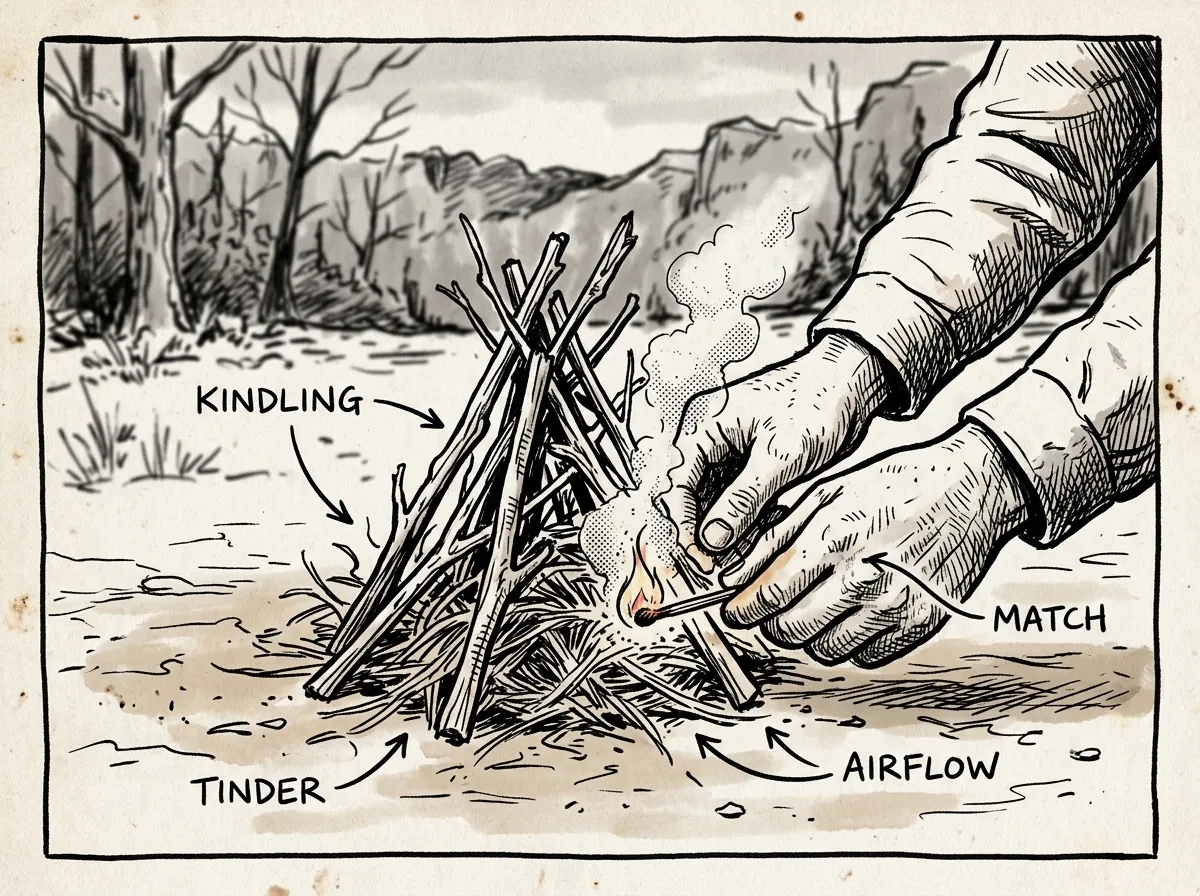 Building a fire from tinder to flame
Fire is priority one. It gives you warmth, a way to purify water through boiling, a signal, and — don’t underestimate this — a serious morale lift when everything else is going wrong.
Start with strike-anywhere matches and a basic butane lighter. Get to the point where you can reliably light a fire in wind, in light rain, with cold hands. Only then move to a ferro rod. Prepare your tinder ahead of time — cotton balls, char cloth, dry inner bark — because a spark with nothing good to catch it is just a light show.
A ferro rod is a phenomenal backup — it works wet, it works cold, and manufacturers typically rate it for thousands of strikes — but it’s also less forgiving than a lighter. Without practice beforehand, getting a flame from one during an actual emergency can be frustrating. Practice with it under controlled conditions first, not during an actual storm when it’s needed most.
Shelter and Site Selection
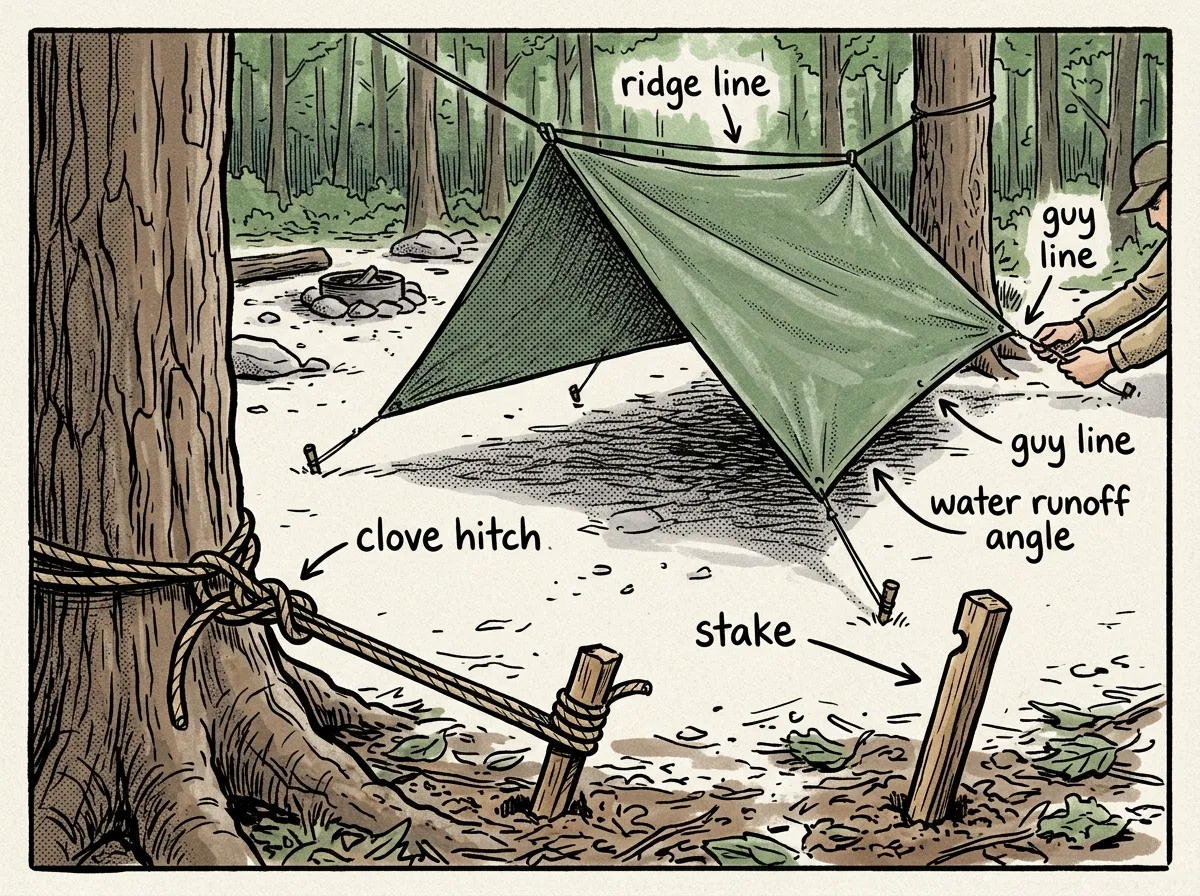 Selecting and pitching a tarp shelter
A tarp, some cord, and the right site beat a fancy tent you’ve never pitched. Learn to build a basic lean-to and a debris shelter, and learn to spot bad campsites — dry creek beds that flash flood, slopes that funnel wind, anything under standing dead trees. That last one matters more than people think — standing dead trees are sometimes called widowmakers for a reason.
An emergency bivvy — usually $15 to $25 — is a smart addition here. It won’t replace a proper shelter for a multi-night stay, but for immediate protection while you build something better, it’s cheap insurance that weighs almost nothing.
Water Sourcing and Purification
 kit](/images/articles/benefits-of-learning-bushcraft-skills-for-preppers-section-3.webp) Complete water purification kit
Complete water purification kitCollect it, pre-filter it through cloth or let it settle, then boil it or run it through a certified filter. This is where overconfidence is most common. People assume clear water is safe water. It isn’t. Giardia doesn’t care how pretty the stream looks.
The Sawyer Squeeze — around $30 — filters more volume per squeeze than a LifeStraw, according to manufacturer specifications, and is easy to backflush in the field. For backup, chemical treatment tablets — usually $8 to $15 for a supply — cost almost nothing to keep in a kit, but learn the contact-time and taste tradeoffs before you’re relying on them for real.
Navigation
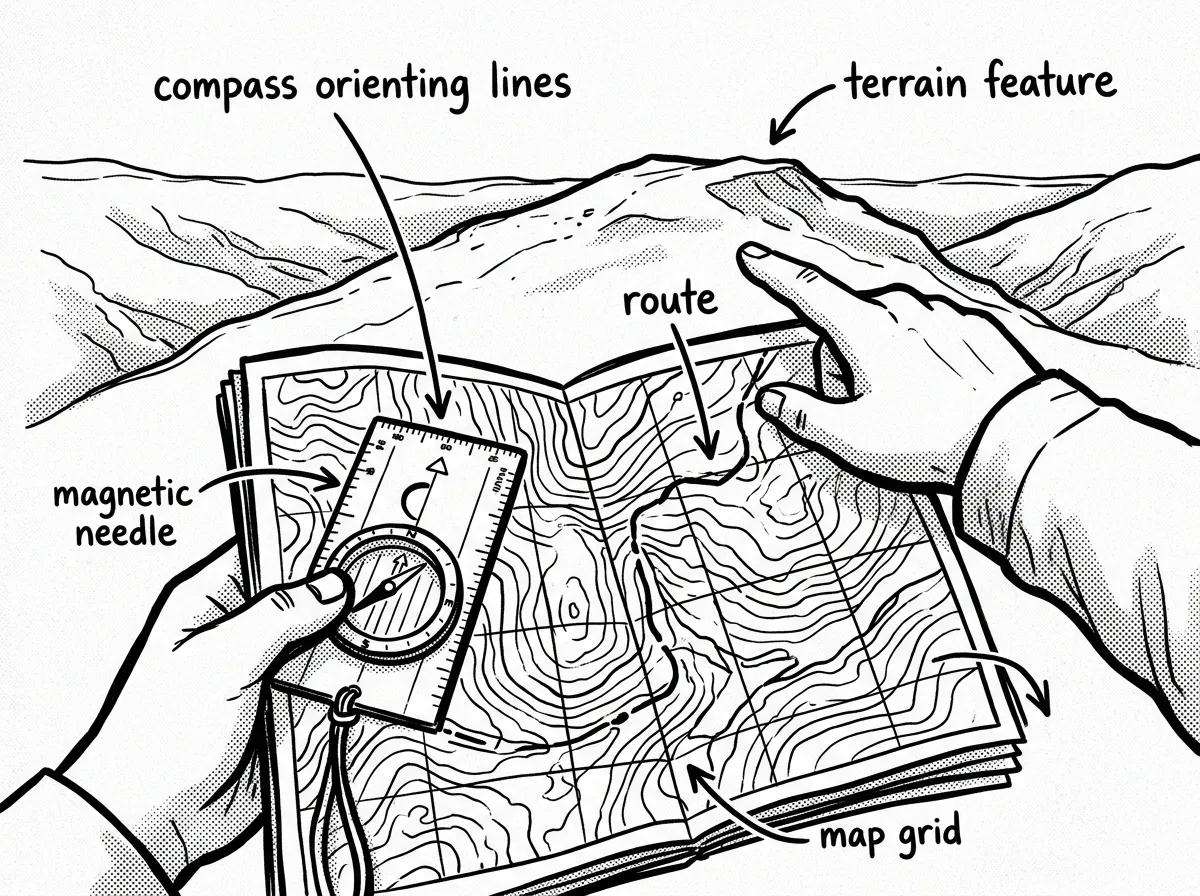 Navigating with map and compass in the field
Phones die. GPS units lose signal in canyons and dense timber. A paper topo map and a compass don’t need batteries, ever. Learn to orient your map, take a bearing, account for magnetic declination in your region, and pace-count distance. Then actually use it — walk a real route with map and compass only, no phone in your pocket as a crutch.
Knife Handling and Cordage
A good fixed-blade knife and sharpening stone — expect to spend $50 to $120 for something durable — does more work more safely than a cheap blade that slips because it’s dull. Practice safe grips, carve feather sticks for tinder, and learn to baton wood for fire prep. Pair that with a handful of knots you actually know cold: square knot, bowline, clove hitch. Those three will secure a tarp, lash a pole, or rig an improvised litter in a pinch.
Plant Awareness
Learn a handful of reliable local edibles and, more importantly, know the dangerous look-alikes cold. If you can’t identify a plant with total certainty, don’t eat it. This isn’t a skill where “pretty sure” is good enough.
How Bushcraft and Modern Gear Work Together
This isn’t skills versus gear. It’s skills plus gear, every time.
A ferrocerium rod — usually $8 to $15 — produces sparks at over 3,000 degrees, but it’s useless without prepared tinder. A pump filter runs faster and lasts longer when you pre-filter murky water through a bandana first. A high-quality knife cuts more safely than a dull one because it takes less force and slips less. Modern gear reduces risk and effort. Skill is what makes that gear actually perform when conditions turn bad.
Debates about which piece of gear is “the best” miss the point. The more useful question is whether you know how to use what you’ve got when your hands are cold and shaking. A less expensive, well-practiced knife will often outperform an expensive one that’s unfamiliar in the user’s hands.
A Practice Progression That Actually Works
Don’t try to learn everything at once. Stack skills in this order and give each one real repetition before moving on.
- Master fire-building with matches and a lighter until it’s automatic, then move to a ferro rod
- Pitch a tarp shelter, then attempt a debris shelter — sleep in the tarp overnight when weather allows
- Navigate a short route with only a map and compass, phone left behind entirely
- Collect surface water, pre-filter it, then boil it — try a pump filter and chemical tablets separately to learn both
- Practice knife handling: feather sticks, batoning, and tying the three core knots to secure a shelter
- Take an instructor-led course to catch mistakes you can’t see in yourself
One-Page Practice Checklist
Before you head out to practice any of this, get this together first.
- Matches in a waterproof container, lighter, ferro rod
- Tinder kit — cotton balls, char cloth, dry bark
- Tarp or emergency bivvy plus paracord
- Compass and a printed topo map of your practice area
- Small pump filter and chemical treatment tablets
- Fixed-blade knife and sharpening stone
- First-aid kit, whistle, extra insulating layer
- Practice log — date, skill, weather, and what you’d do differently
Safe Practice and Legal Considerations
Start close to home. A backyard or an established campground is where you find out what doesn’t work — before it matters. Only push into remote or solo territory once you’ve got real reps under your belt.
Check local rules before you strike a match or pull a plant. Fire bans, deadwood collection restrictions, and foraging regulations vary a lot by state and even by county — what’s fine on BLM land in the high desert might get you a citation in a national forest.
Practice the higher-risk skills — fire, knife work, foraging — with a partner or an instructor whenever you can. Carry backups every time: a basic first-aid kit, a charged phone or comms device, extra water, and a paper map even if you’re testing a GPS unit. And follow Leave No Trace — don’t cut live trees, don’t overharvest plants, leave the site better than you found it.
Common Beginner Mistakes
Relying on a single fire-starting method is the big one. Bring matches, a lighter, and a ferro rod — always. Same goes for water. One source, one filter, and you’re one clog away from a problem.
Training only in perfect weather is another. Anyone can light a fire on a calm, dry afternoon. The real test is wind, cold, and rain — train there too, when it’s safe to do so, because that’s when you’ll actually need the skill.
You’re two hours into a downpour, your matches are soaked through the container seal, and your hands have gone numb. This is exactly the moment a practiced ferro rod technique — and dry tinder stashed in a separate waterproof bag — separates a minor inconvenience from a genuine problem.
And don’t start with friction fire. It’s a great skill eventually, but building confidence with a lighter and a ferro rod first will save you a lot of frustration and a lot of blistered palms.
FAQ
What are bushcraft skills? Practical, hands-on techniques for shelter, fire, water, navigation, and tool use — the stuff you can do without relying on batteries or powered equipment.
Why learn bushcraft for prepping? So you stay capable when gear breaks, infrastructure goes down, or supply chains stall. It reduces how much you depend on any single tool or system working perfectly.
What should I learn first? Fire, a tarp shelter, map-and-compass navigation, water purification, and basic knife safety — in that order, with real repetition at each stage before moving forward.
Further Learning and Verification
Look for instructor-led courses through reputable outdoor schools — hands-on correction from someone who’s watched a thousand students make the same mistakes you’re about to make is worth more than a dozen videos. Preparedness guides from FEMA and the American Red Cross are solid for planning templates and legal considerations around fire and land use. Before you commit money to any program, check reviews and talk to past students to confirm it actually teaches the skills you’re after, not just a weekend of camping with a survival label slapped on it.
Bottom Line
Stored supplies get you through the first few days. Bushcraft skill is what keeps you capable after that — when the filter clogs, the lighter runs dry, or the map is the only thing left that works. Pick one skill, practice it locally and safely, then add the next. That’s how a stack of gear turns into actual readiness.
The Complete
Prepper's Reference.
149 articles synthesized into one comprehensive PDF — twelve chapters covering water, food, shelter, first aid, comms, and scenario-specific preparedness. Free with your email.
Unsubscribe anytime · We never share your email
You're in. Check your inbox.
Keep Reading
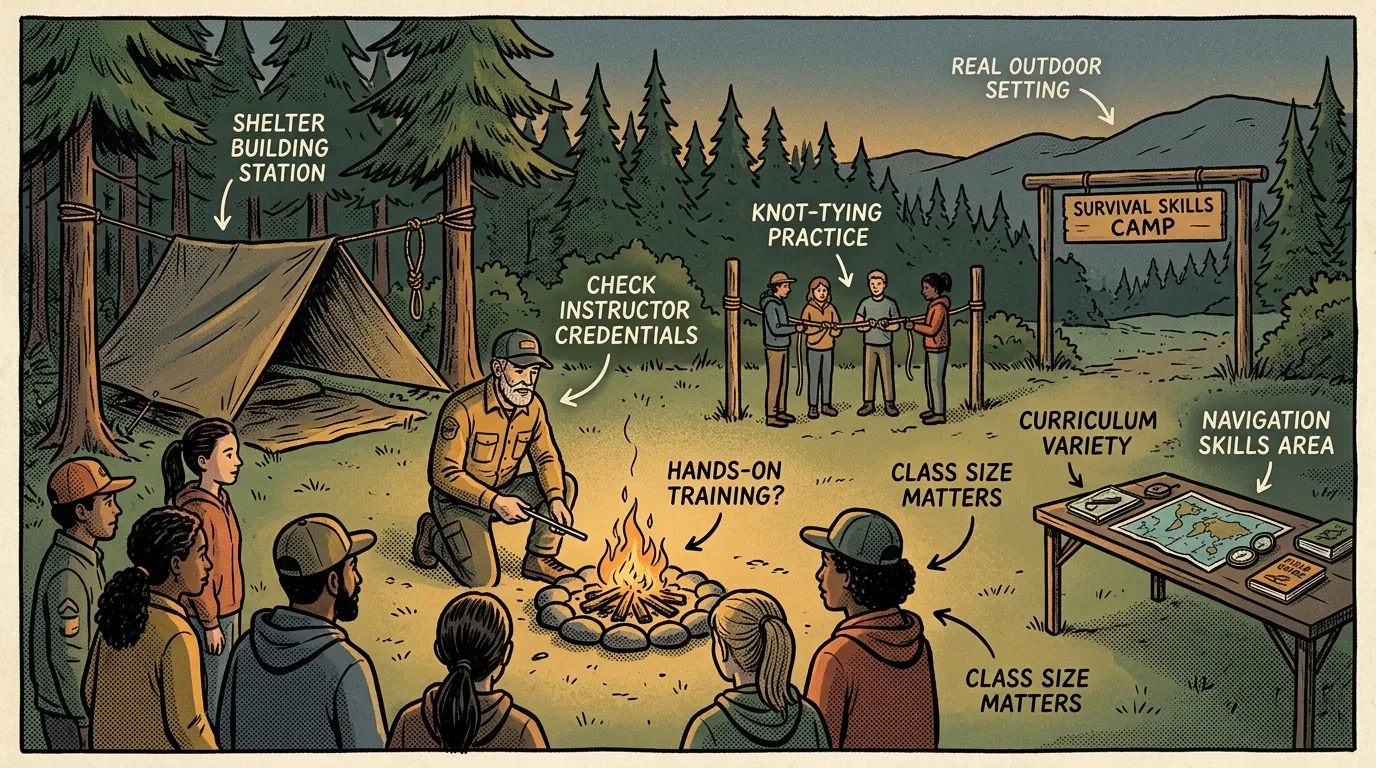
Survival Skills Camp: How to Choose the Right One
Choosing a survival skills camp? Here's what to look for, red flags to avoid, and what real training teaches you.
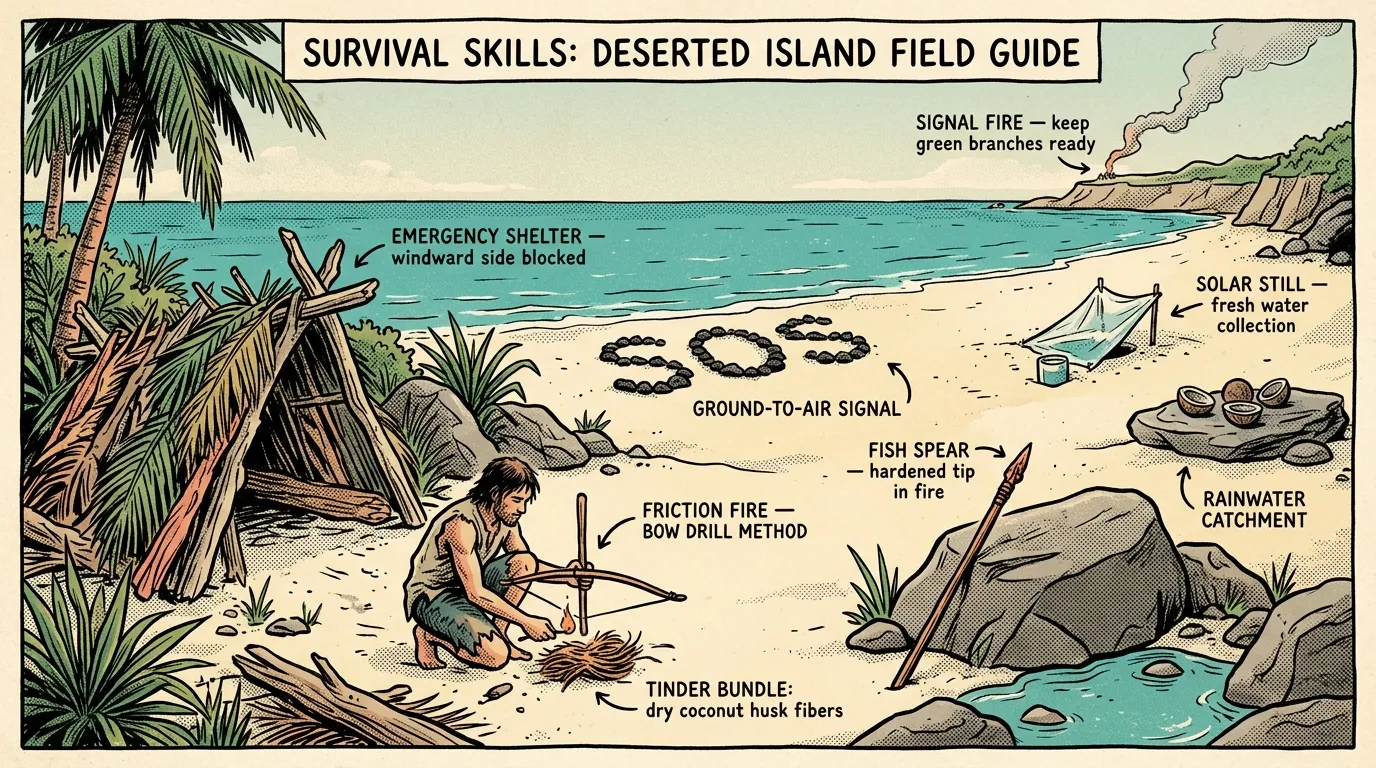
Survival Skills on a Deserted Island: Field Guide
Master survival skills on a deserted island — water, shelter, fire, food, and rescue signaling. Start learning now.
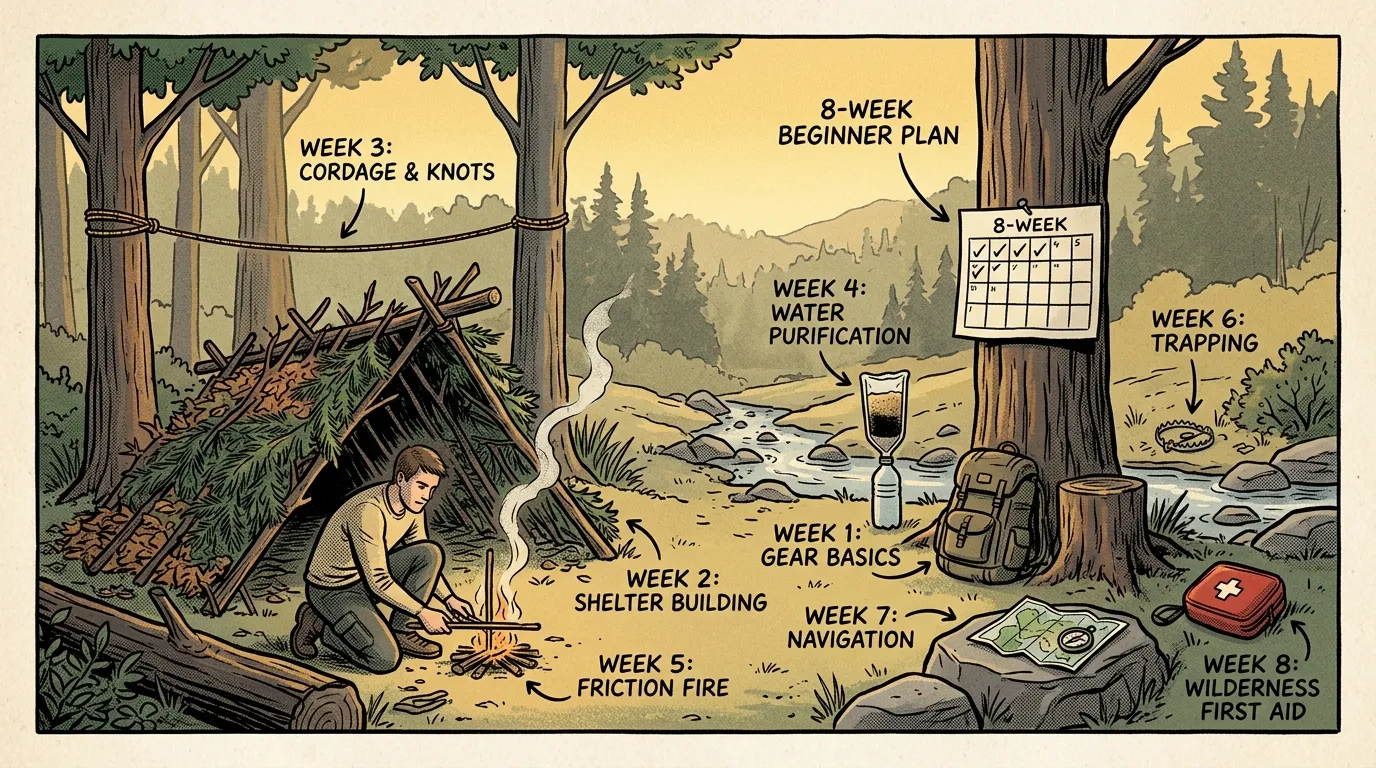
Survival Skills Training: 8-Week Plan for Beginners
Follow this 8-week survival skills training plan to master shelter, fire, water, navigation & first aid. Start this weekend.