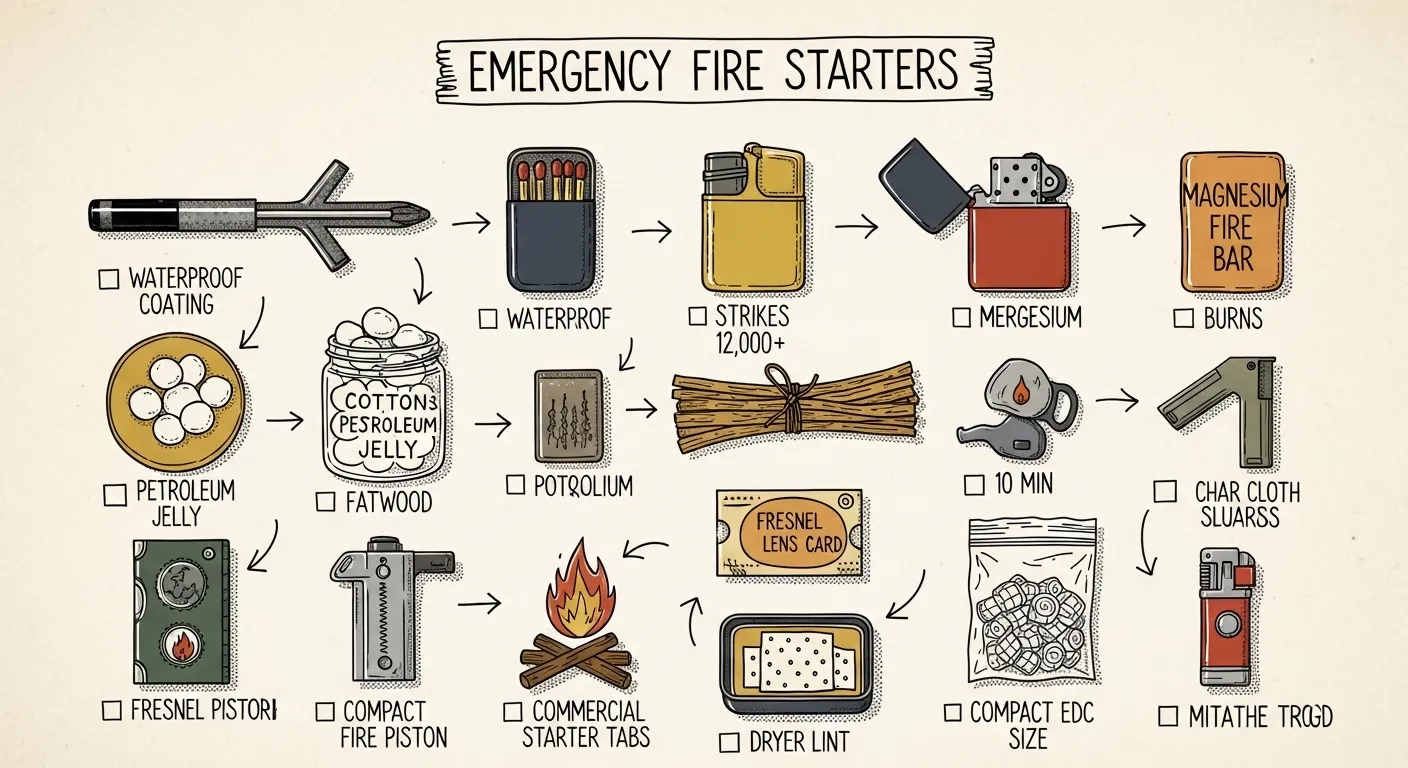
The best fire starters for emergencies are windproof lighters, waterproof storm matches, and ferro rods used together for redundancy. For beginners, the most practical setup is a lighter for ease, matches for backup, and a ferro rod with tinder for long-term reliability in bad weather.
Key Takeaways
- Carry at least two independent ignition methods in every kit — three if it's a bug-out bag or vehicle kit.
- A ferro rod is the only fire starter that reliably works soaking wet with zero fuel dependency.
- Store all fire-starting gear in waterproof containers; a wet match strip is dead weight.
- Dry tinder matters more than the ignition tool — practice catching a spark before you need it.
- Test every fire starter in your kit once, in a safe location, before you're relying on it in the dark.
Best Fire Starters for Emergencies: Reliable Gear for Home, Car, and Outdoors
Picture the power out for three days, temps in the 30s, and someone trying to light a campfire with a soggy book of matches from a gas station. It doesn’t work. The best fire starters for emergencies aren’t the ones that look cool in a gear photo — they’re the ones that still throw a flame when your hands are numb and everything around you is wet.
That means layering: a fast primary for speed, a weather-resistant backup for when the primary fails, and a fuel-free option that doesn’t care how long it’s been sitting in your pack. Bring a windproof butane lighter for speed, waterproof matches for backup, and a ferrocerium rod or magnesium block for when everything else runs dry. Add dedicated tinder, seal it all in waterproof containers, and never rely on a single ignition method.
Quick Summary
- Layer three tools: a lighter for speed, waterproof matches as backup, and a ferro rod for long-term, fuel-free reliability.
- A ferro rod throws sparks hot enough to ignite tinder even when the rod is dripping wet — no other option matches that.
- Dry tinder matters as much as your ignition source. A spark with nothing to catch is just a spark.
- Store every fire tool in a waterproof case or sealed pouch. A soaked match strip is dead weight in your pack.
- Vehicle kits need temperature-tolerant gear — storm matches and a ferro rod outlast most lighters in a hot trunk.
- Practice with your gear once, in a safe legal spot, before you’re depending on it in the dark and cold.
Why a Fire Starter Matters More Than People Think
Ask most people why fire matters in an emergency and they’ll say “warmth.” That’s true, but it’s only part of it. Fire dries out wet clothing, which cuts hypothermia risk dramatically — wet skin combined with wind can bring on hypothermia even in relatively mild temperatures, per CDC guidance. Fire also lets you boil water when the tap’s not running and the grid’s down, which matters more than most people realize during a multi-day outage.
There’s a psychological piece too. A working fire steadies people, giving everyone a task, a focal point, and a reason to sit still and think clearly instead of making rushed decisions.
An ice storm knocks out power across your region for three days. Temps drop into the 20s overnight. Your gas fireplace has an electronic ignition that won’t fire without electricity — and your only lighter is nearly empty from months of use.
That scenario isn’t hypothetical — ice storms regularly knock out power for days at a time. The households that stayed comfortable were the ones with a backup ignition method that didn’t depend on the same failure point as their primary heat source.
The Three-Layer Fire Kit
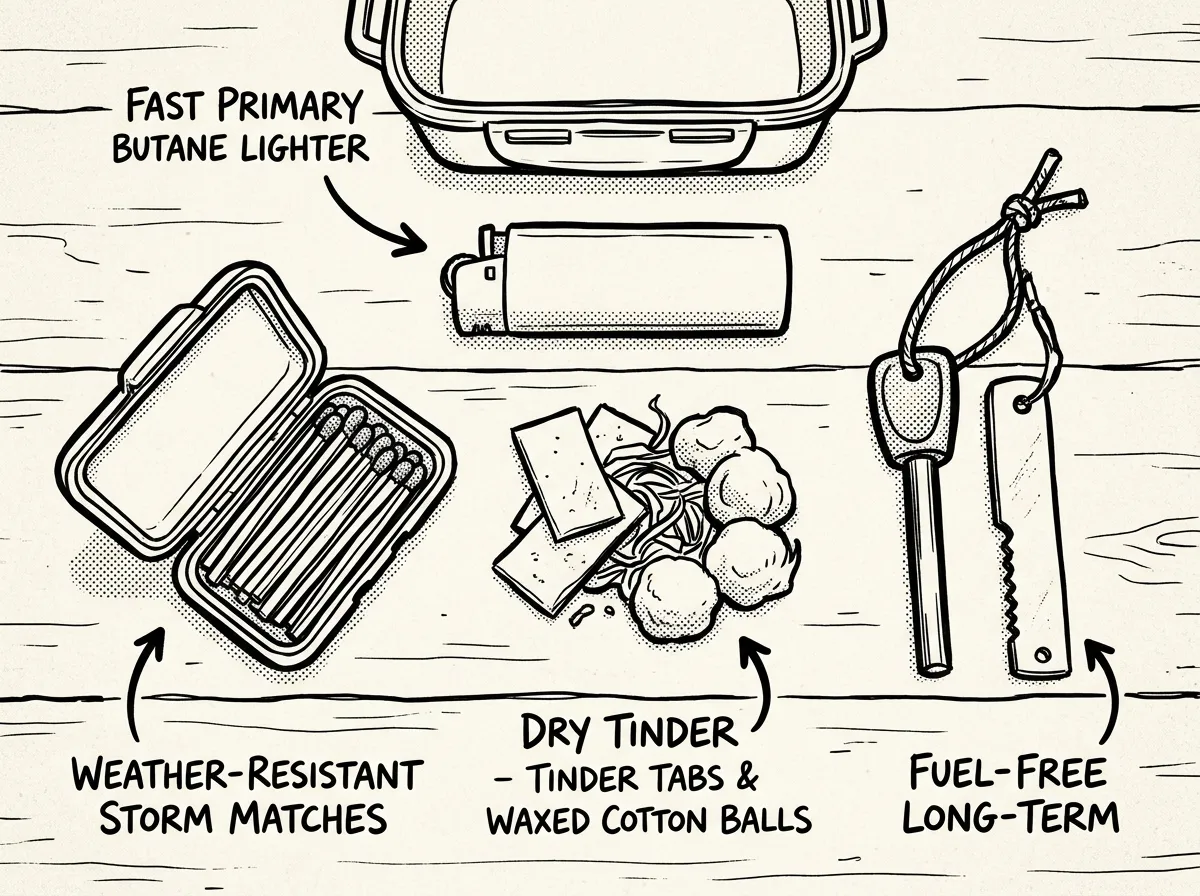 Essential three-layer fire starter kit layout
This is the layered approach recommended in basic emergency preparedness training. It’s not complicated, but skipping a layer is where people get burned — figuratively and sometimes literally.
- Pick a fast primary — a windproof butane lighter you can operate one-handed in the cold
- Add a weather-resistant backup — waterproof matches sealed in a case, separate from the lighter
- Include a fuel-free tool — a ferro rod that works no matter how long it’s been stored
- Pack dedicated tinder — waxed cotton or tinder tabs, kept dry in their own pouch
- Test the full kit once in a controlled setting so you know it actually works
Skipping step five is a common mistake. People buy the gear, throw it in a bag, and never strike it once. The first time they try, they’re doing it in the rain at 2 a.m.
Breaking Down Your Options
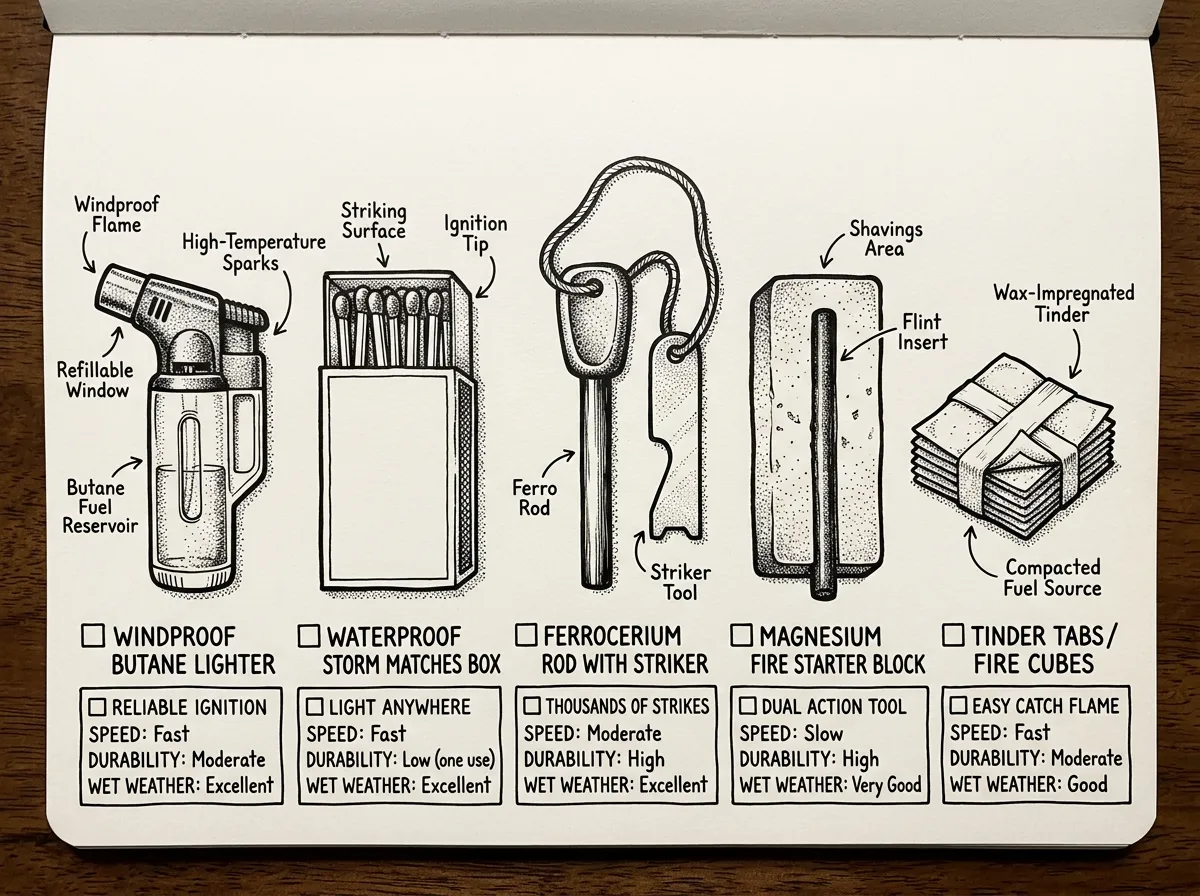 Complete fire starter tool comparison lineup
Windproof Butane Lighter — Best for Speed
A quality windproof lighter runs around $10–20 and is typically the fastest option for most situations. It’s fast, intuitive, and works one-handed, which matters a lot when you’re cold and your fine motor skills aren’t cooperating. The catch is fuel — it runs out, and butane lighters can struggle to ignite in extreme cold or high altitude. Keep a spare and check the fuel level every few months.
Waterproof / Storm Matches — Best Backup
These are dead simple. No technique, no learning curve, just strike and go. A sealed match case runs about $8–15 and gives you a genuinely reliable backup as long as the seal holds. The downside is quantity — you get a finite number of strikes, and once they’re gone, they’re gone. Treat these as a backup, not a primary.
Ferrocerium Rod — Best Long-Term Option
A solid ferro rod, around $10–25 depending on size, is a staple of survival packs because it throws sparks hot enough to ignite tinder even when the rod itself is wet. No fuel to run dry, no seal to break — just metal and friction. The tradeoff is technique. It takes practice to get a good spark angle and to have tinder ready to catch it.
People often buy a $15 ferro rod, toss it in their bug-out bag, and assume they’re covered — then struggle to strike it for the first time during an actual outage, fumbling the angle and getting frustrated. A ferro rod is one of the best long-term fire tools available, but it’s the one piece of gear in this list that requires practice before it’s needed. Ten minutes of practice now can save a miserable, cold hour later.
Magnesium Fire Starter — Best for Wet Climates
If you’re in a consistently damp environment — coastal Pacific Northwest, Gulf Coast humidity, anywhere fog and rain are the norm — a magnesium block is worth the extra step. You shave curls of magnesium onto your tinder, then strike the attached ferro rod to ignite the shavings, which burn hot enough to dry and light damp material around them. It’s slower to prep than a straight ferro rod, maybe 30–60 extra seconds, but that extra heat output makes a real difference when your tinder isn’t bone dry.
Tinder Tabs and Fire Cubes — The Unsung Companion
Here’s the thing nobody tells beginners: your ignition tool is only half the equation. A spark or small flame needs something to catch on, and wet leaves or damp bark won’t cut it. Tinder tabs or waxed cotton balls solve that problem cheaply — a pack runs $5–10 and lasts years in storage. The Sawyer-style approach to redundancy applies here too: cheap, lightweight, easily replaced.
Keep your tinder in a separate waterproof pouch from your ignition tools. If your tinder gets wet while your lighter stays dry, you’ve still got a fire-starting problem. Redundancy means both halves stay protected, not just one.
Comparison at a Glance
| Type | Ease of Use | Reliability | Wet Weather | Storage Life | Best Use |
|---|---|---|---|---|---|
| Windproof butane lighter | Excellent | High | Moderate | Moderate | Home, car, camping |
| Waterproof / storm matches | Excellent | High | Good if sealed | High when sealed | Backup, camping |
| Ferrocerium rod | Moderate | Very high | Excellent | Very high | Survival, bug-out bags |
| Magnesium fire starter | Moderate | High | Excellent | Very high | Wet outdoor conditions |
| Tinder tabs / cubes | Excellent | High as a support item | Good | High | Any kit |
Building Kits by Scenario
What you pack depends heavily on where that kit is going to live. A home kit sitting in a closet has different demands than one riding in your glovebox through a Phoenix summer or a Montana winter.
Home emergency kit: Windproof lighter, waterproof matches, and tinder tabs. For most short-term outages, this covers you with built-in redundancy without overcomplicating things.
Camping and general outdoors: Lighter, waterproof matches, tinder, and a ferro rod as your fuel-free option. Practice with the ferro rod before your trip, not during it.
Bug-out and long-term kits: Ferro rod, magnesium block, waterproof matches, and dry tinder. Here you’re prioritizing durability and fuel independence over speed, since you don’t know how long this gear needs to last.
Vehicle kit: Storm matches in a waterproof case, a ferro rod, and tinder tabs. High desert heat and winter cold both take a toll on lighters over time — a car in Phoenix in July can hit temps that stress butane canisters, and a car in Montana in January can drop cold enough to affect ignition reliability. Matches and ferro rods handle both extremes better.
New to fire-starting: Start with a lighter, a weather-resistant backup, and tinder. Skip the ferro rod at first if you haven’t practiced — add it once you’ve built some baseline confidence.
- Windproof butane lighter (check fuel every 3-6 months)
- Waterproof matches in a sealed case
- Ferrocerium rod rated for 1,000+ strikes
- Waxed cotton balls or commercial tinder tabs
- Small waterproof container to hold everything together
Storage and Maintenance
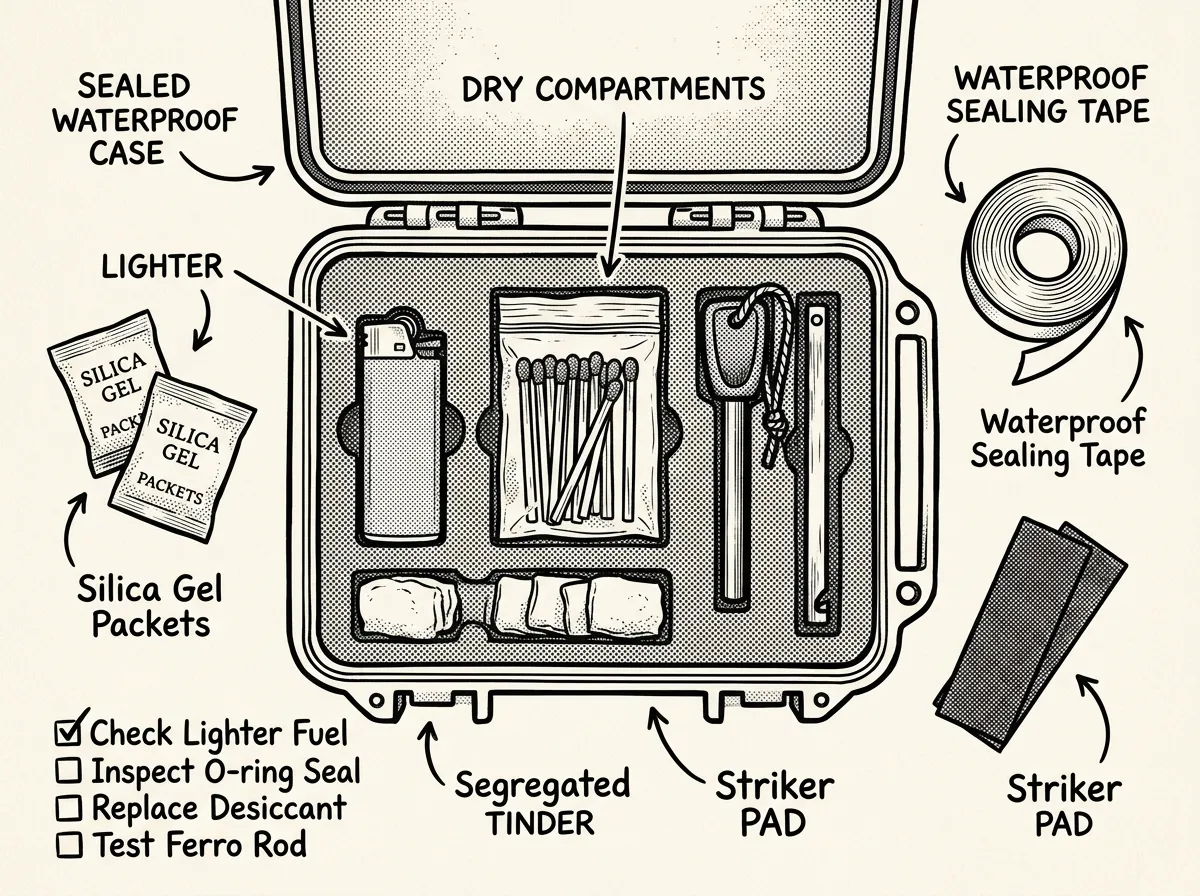 Proper fire starter storage and care setup
Store gear in waterproof containers or sealed pouches — a simple $5–10 hard case beats a plastic bag every time, since bags puncture and cases don’t. Carry at least two independent ignition methods, always. Practice with your tools in safe, legal locations to build real skill instead of theoretical confidence. Staged kindling and dry tinder matter as much as the tool itself; sparks still need something catchable to work with.
Follow local fire regulations and skip open flames entirely during burn bans — that’s not optional, and it’s the kind of thing that gets people cited or worse during dry seasons. Inspect and rotate consumables like tinder tabs and match packs on a schedule, and check lighter fuel every few months so you’re not discovering an empty lighter mid-emergency. Keep fire tools out of reach of unsupervised kids, full stop.
The best fire starter is the one you’ve already tested — not the one still in its packaging.
Common Mistakes to Avoid
One common mistake: people buy expensive gear and never touch it until they need it. Striking a ferro rod in the kitchen might feel a little silly, but that ten-minute practice session is the difference between confident, quick ignition and fumbling around while your fingers go numb.
A common failure point in wet conditions is tinder stored loose in a backpack pocket, where it can soak through from a leaky water bottle or rain. The fix: keep tinder separate, waterproof, and check it as often as the ignition tool itself.
Another common error — relying entirely on a single lighter as your only fire source. Lighters are great until they’re not: empty, cracked, or struggling in the cold. That single point of failure is exactly why the three-layer approach exists.
Frequently Asked Questions
What is the most reliable fire starter for emergencies? A ferrocerium rod is the most reliable option for long-term emergencies because it produces hot sparks without fuel, works when wet, and delivers thousands of strikes per rod. For speed when your hands are cold and shaking, though, a windproof lighter is still the better first grab.
How many fire starters should you carry in an emergency kit? Carry at least two independent ignition methods; three is recommended for anything beyond a basic home kit — a fast primary, a weather-resistant backup, and a fuel-free option, plus dry tinder kept separate from all of them.
What fire starter works best in wet conditions? Magnesium fire starters and ferrocerium rods both perform well in wet weather. Magnesium shavings burn hot enough to ignite damp material, and ferro rods throw sparks even when soaked. In both cases, keeping your tinder dry is the real challenge.
Should I put a fire starter in my car emergency kit? Yes. Storm matches in a waterproof case, a ferro rod, and tinder tabs handle temperature extremes better than most lighters do, whether your car sits in a hot desert parking lot or a freezing garage overnight.
Verify Before You Buy
Check FEMA and the American Red Cross for current guidance on emergency kit contents and local recommendations for your region. Confirm manufacturer claims about cold and wet performance before relying on them in an actual emergency — “waterproof” claims don’t always hold up under real-world testing, so don’t take packaging at face value.
The best fire starters for emergencies are the ones you can use when conditions are cold, wet, windy, or just plain chaotic. Build a layered kit, test it before you need it, store it waterproofed, and keep that redundancy. It’s a small amount of prep work that pays off exactly when you can least afford for it not to.
Further reading: How to Build a Bug Out Bag, Water Storage Guide, Beginner’s Preparedness Guide
The Complete
Prepper's Reference.
149 articles synthesized into one comprehensive PDF — twelve chapters covering water, food, shelter, first aid, comms, and scenario-specific preparedness. Free with your email.
Unsubscribe anytime · We never share your email
You're in. Check your inbox.
Keep Reading
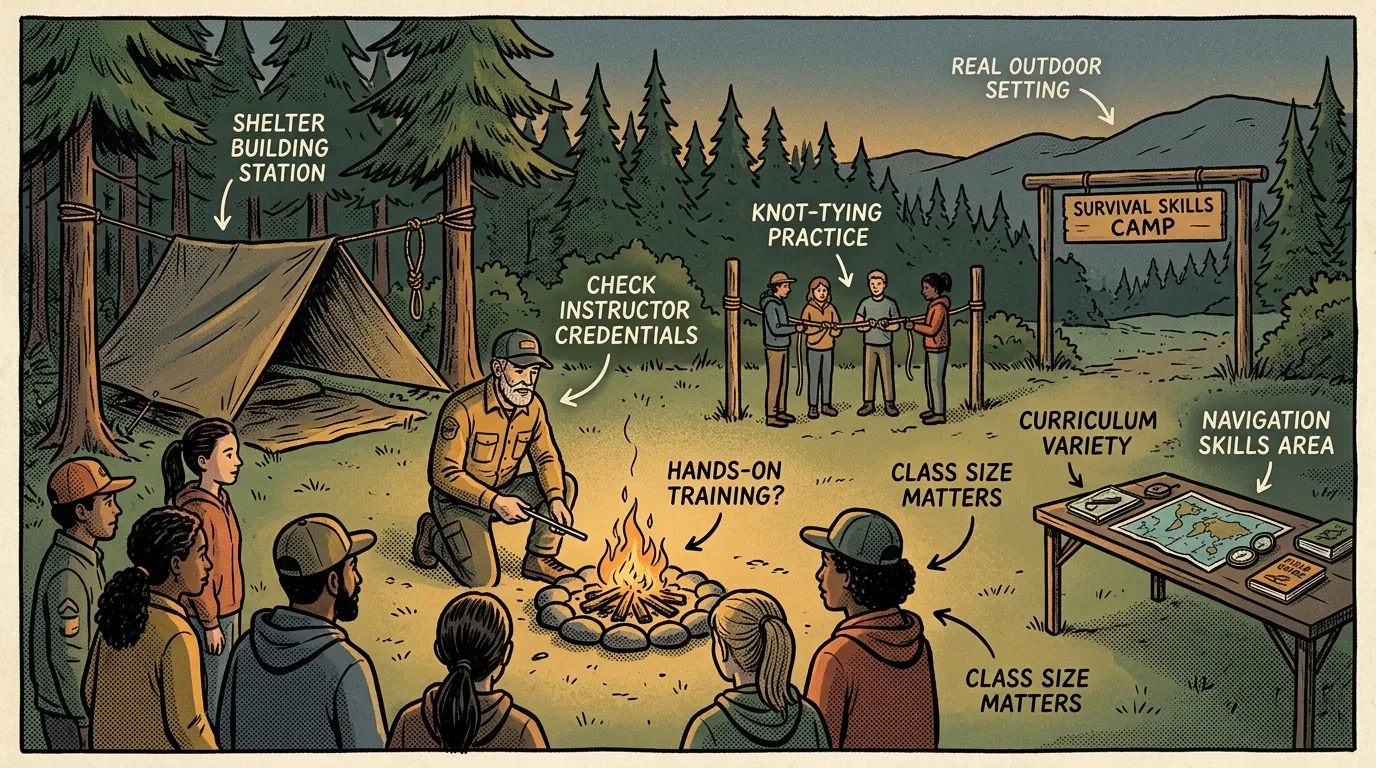
Survival Skills Camp: How to Choose the Right One
Choosing a survival skills camp? Here's what to look for, red flags to avoid, and what real training teaches you.
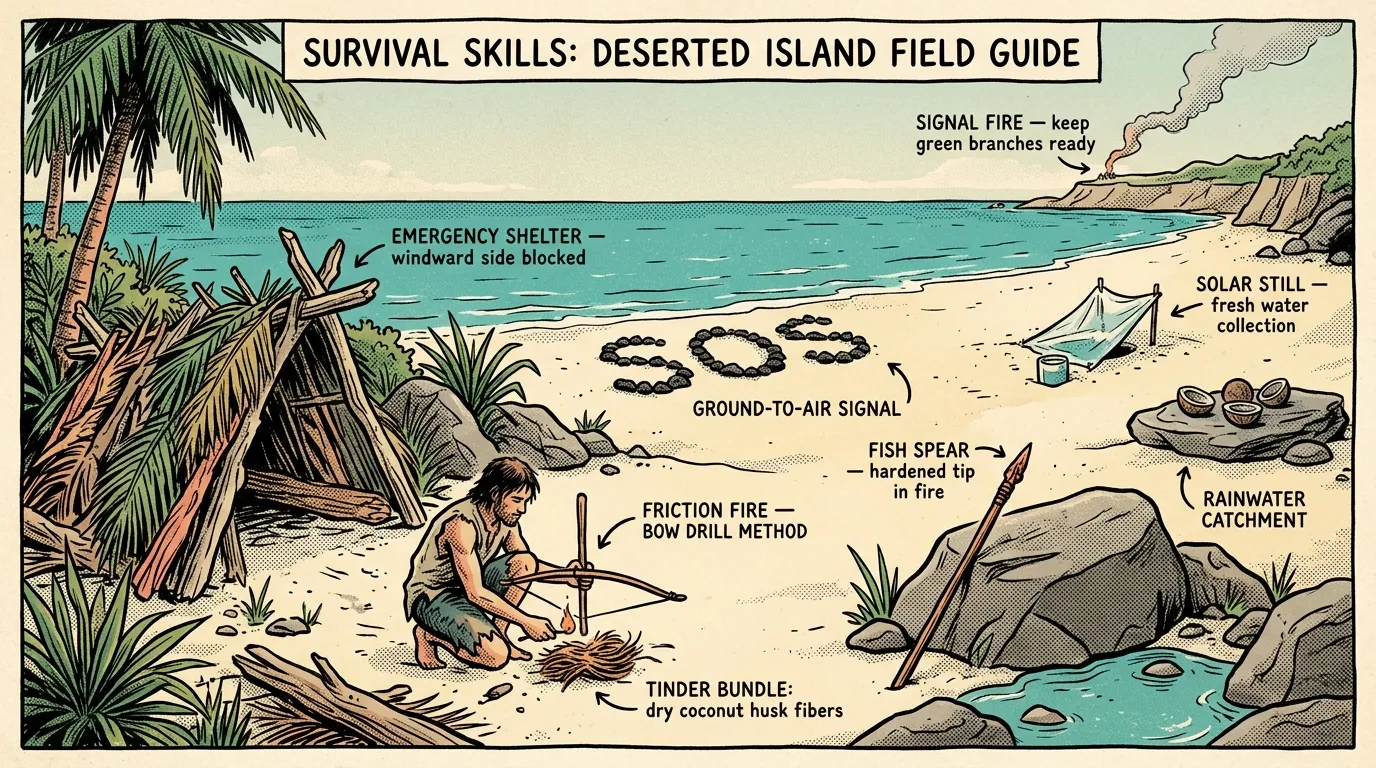
Survival Skills on a Deserted Island: Field Guide
Master survival skills on a deserted island — water, shelter, fire, food, and rescue signaling. Start learning now.
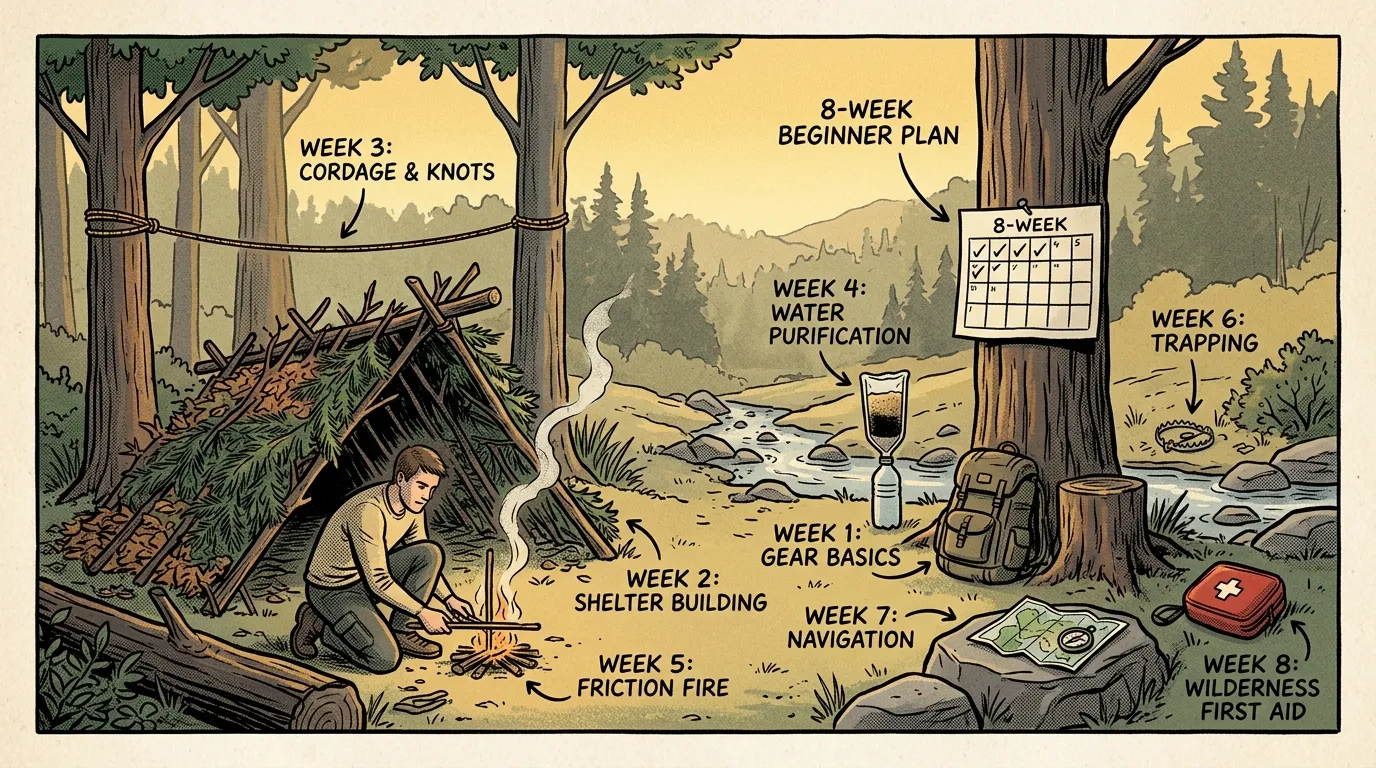
Survival Skills Training: 8-Week Plan for Beginners
Follow this 8-week survival skills training plan to master shelter, fire, water, navigation & first aid. Start this weekend.